


 Manufacturing
 Logistics
 Real Estate
 Retail
 Finance
 Healthcare
 Hospitality
 Automotive
Generative AI in sales: Scope, adoption, use cases, challenges, considerations and trends

Listen to the article
Sales has always been about building relationships, creating value for customers and driving frictionless experiences. Despite these enduring principles, the tools available for enhancing productivity in sales are rapidly evolving, particularly with the advent of Generative AI (GenAI) in recent years.
Why is GenAI becoming essential in sales? The promise of GenAI has led companies at various technological stages to explore its potential impacts on their business operations. In B2B sales, early adopters have reported robust business outcomes and a significant impact from their initial GenAI implementations, pointing towards an inevitable widescale adoption.
Companies that have leveraged technology in their sales processes, including automation, now report consistent efficiency upticks of 10 to 15 percent. Furthermore, McKinsey estimates that GenAI could unlock an additional $0.8 trillion to $1.2 trillion in productivity within the sales and marketing sectors. McKinsey’s research shows that 71% of consumers expect personalization—and 76% get frustrated when they don’t receive it.
According to Gartner, over 80% of enterprises expect to deploy generative AI by 2026, yet only 10% are scaling at least one GenAI solution across the enterprise. This gap underscores the transformative potential and the challenges in scaling GenAI solutions.
How does GenAI reshape the future of sales? This article explores its role in boosting efficiency, driving sales growth, and enhancing sales processes. We also examine practical steps companies can take now to prepare for a future where GenAI is a fundamental part of the sales process.
- How can generative AI transform your sales strategy?
- Current landscape of generative AI in sales
- Different approaches to integrating generative AI into sales processes
- Generative AI use cases for sales
- Measuring the ROI of generative AI in sales
- Future trends: Expanding the reach of generative AI in sales
- Key generative AI implementation challenges in sales and mitigation strategies
- Empowering sales teams with ZBrain: An end-to-end AI enablement platform
How can generative AI transform your sales strategy?
Generative AI refers to the application of artificial intelligence technologies that can autonomously generate content such as text, images, videos, and audio from large data sets. This technology leverages advanced machine learning models like Generative Adversarial Networks (GANs), transformers, and diffusion models to understand data patterns and generate new content, enabling human-like creativity and understanding. GenAI learns from existing data and uses that knowledge to generate novel outputs similar in style or content to the training data. This allows generative AI to write content, compose music, design logos, and even create realistic images of people who don’t exist.
Why is GenAI critical in sales?
Sales is a dynamic field that demands constant innovation and responsiveness to customer needs and market changes. Traditionally involving direct engagement with customers, understanding their needs, and responding with tailored solutions, sales is inherently data-intensive and time-consuming. GenAI transforms these processes by boosting efficiency, enhancing personalization, and enabling real-time assistance, allowing sales teams to focus more on strategic activities and less on administrative tasks.
Key benefits of generative AI in sales
-
Increased efficiency and productivity: GenAI can handle repetitive tasks such as scoring leads, managing follow-ups, and generating data-driven insights, significantly freeing up sales professionals to focus on higher-value activities.
-
Enhanced personalization: With its deep learning capabilities, GenAI can create highly personalized content for customers, improving engagement rates and customer satisfaction. Personalized interactions are more likely to convert leads into sales, as they directly address specific customer needs and preferences.
-
Scalability and flexibility: Generative AI allows sales operations to scale without the linear increase in human resources typically required. This scalability is particularly beneficial in industries with high sales volumes or fluctuating demand.
-
Real-time assistance: GenAI can provide real-time support to sales teams by offering instant data retrieval, product information, and customer insights, which are crucial for dynamic sales environments.
-
Cost efficiency: GenAI significantly reduces labor costs by automating routine and repetitive tasks. Sales teams can allocate more resources to strategic planning and relationship building rather than administrative tasks.
Generative AI transforms sales by automating tasks that traditionally require extensive human input and creativity. Its ability to quickly process and analyze large datasets and then apply those insights to real-world sales scenarios makes it an indispensable tool in the modern sales landscape. This technology increases operational efficiency and significantly improves sales strategies’ effectiveness through customization and real-time decision-making support.
Current landscape of generative AI in sales
Generative AI transforms sales operations by enhancing efficiency, personalizing customer interactions, and automating routine tasks. This integration is reshaping sales strategies, allowing businesses to optimize their processes, improve customer engagement, and drive revenue growth.
A comprehensive overview
GenAI is transforming sales by enabling smarter, faster, and more efficient operations. Platforms powered by advanced models like GPT-4 facilitate hyper-personalized customer interactions, automate routine tasks like email follow-ups and lead qualification, and provide actionable insights. These capabilities free sales teams to focus on high-value tasks, such as nurturing relationships and closing deals, significantly improving overall productivity.
A Bain & Company survey reveals that 40% of enterprises adopt GenAI for sales, marketing, and customer support. Key applications include lead generation, automated sales reporting, and personalized marketing content creation. Sales representatives are leveraging GenAI tools for creating tailored pitches, qualifying leads, and automating mundane tasks, enhancing efficiency and effectiveness.
In sales training and enablement, GenAI is personalizing learning paths, offering real-time feedback, and reducing ramp-up times for new hires. By analyzing sales performance data, these tools deliver targeted insights, enabling sales representatives to continuously improve their skills.
In analytics, GenAI provides valuable insights into customer behavior, sales trends, and competitive landscapes, helping businesses refine their strategies, improve pipeline management, and enhance conversion rates.
Market dynamics
The adoption of generative AI in sales is growing rapidly due to its ability to streamline processes and deliver impactful insights. The global generative AI in sales market was valued at USD 310 million in 2023 and is projected to reach USD 850 million by 2033, growing at a CAGR of 10.9%. This growth reflects the increasing reliance on AI-driven solutions to transform sales processes.
Driving factors
Key factors driving the growing role of GenAI in sales operations include:
-
Enhanced personalization: GenAI tailors communication to individual customer needs, improving engagement and boosting conversion rates.
-
Operational efficiency: Automating lead generation, outreach, and follow-ups reduces manual workload, cutting costs and optimizing resource allocation.
-
Strategic insights: GenAI in sales provides actionable data that informs decision-making and aligns sales strategies with market trends.
-
Cost optimization: By automating routine tasks, GenAI in sales reduces operational costs and increases profitability.
-
Accelerated training: Personalized training modules powered by GenAI help sales professionals upskill faster and adapt to market changes effectively.
-
Improved customer experience: GenAI-driven personalization enhances customer interactions, fostering stronger relationships and loyalty.
The role of generative AI in sales is expanding rapidly, making it a critical tool for organizations seeking to stay competitive. From streamlining operations to enabling personalized customer engagement, GenAI is redefining sales strategies, paving the way for a future where AI-driven insights and automation are integral to success. As businesses continue to adopt and integrate GenAI, they set new benchmarks for efficiency, customer satisfaction, and revenue growth in the sales domain.
Different approaches to integrating generative AI into sales processes
Integrating generative AI into sales processes provides organizations with several strategic options, each offering distinct advantages and serving different operational needs and technological capabilities:
Developing a custom, in-house GenAI stack
Some organizations might choose to build their own generative AI solutions from the ground up or customize existing models to fit specific sales requirements. This approach involves building a custom AI infrastructure from scratch, utilizing open-source tools and libraries, and tailoring it to a company’s needs and data.
This approach involves crafting an AI solution tailored to tackle unique challenges within the sales process, such as lead scoring, customer segmentation, and sales forecasting. It requires building or fine-tuning AI models to align perfectly with a company’s specific processes and data.
Advantages:
-
Customization: Offers flexibility to specifically address sales pain points, like personalized customer interactions or predictive sales performance.
-
Full control: Allows companies to manage data privacy, model training, and adherence to internal and regulatory standards.
-
Long-term adaptation: Ensures the solution can evolve with the organization, adapting to future requirements and scaling with growth.
Utilizing GenAI point solutions
This strategy employs pre-built, off-the-shelf AI tools designed to handle specific tasks in the sales process, such as automated outreach, customer relationship management, or real-time sales analytics.
This strategy involves deploying standalone generative AI solutions that are either built on existing large language models or integrated into current sales tools to perform specific tasks, such as personalized content generation, email personalization or lead generation.
Advantages:
-
Quick deployment: Point solutions can be rapidly deployed, bringing immediate enhancements to customer engagement or sales reporting.
-
Cost-effectiveness: Generally requires less investment to implement compared to tailored solutions.
-
Ease of use: Typically designed for non-technical users, making them easy to integrate with existing sales systems and workflows.
Adopting a comprehensive platform like ZBrain
An AI enablement platform like ZBrain transforms the entire AI journey behind sales execution—from readiness assessment and use-case discovery to building, deploying, and scaling AI agents and applications that drive revenue growth. Rather than limiting its value to workflow automation, ZBrain helps organizations understand where AI creates the highest sales impact, design the right solutions, and operationalize them with enterprise-grade governance.ZBrain is built around these core platforms:
ZBrain XPLR
An AI readiness and opportunity assessment platform that helps organizations discover, prioritize, and roadmap high-impact AI use cases across sales—such as lead management, opportunity execution, customer engagement, and account growth.
ZBrain Builder
An agentic AI orchestration platform for developing, deploying, and managing custom AI agents and applications. It enables sales teams to automate prospecting, qualify leads, personalize outreach, generate pitches and proposals, monitor opportunities, enforce sales governance, and accelerate deal execution—without requiring deep AI expertise.
What does this mean for sales?
With ZBrain’s platforms, organizations can:
-
Identify high-value AI opportunities across prospecting, opportunity management, sales enablement, and account growth.
-
Rapidly build and deploy intelligent sales agents that score leads, personalize outreach, detect risks, generate proposals, automate activity capture, and guide representatives with next-best actions.
-
Continuously optimize sales strategies through data-driven insights, cross-functional collaboration, and improved governance—boosting pipeline quality, conversion rates, and revenue performance.
Together, these platforms enable organizations to adopt AI-driven sales operations that are strategic, measurable, and scalable—not just automated.
Advantages of an AI enablement platform like ZBrain for sales
Strategic AI readiness and alignment
Provides structured evaluation of AI maturity, data readiness, and sales-related opportunities of of existing systems, helping sales leaders invest in high-impact use cases rather than isolated experiments.
Unified lifecycle from discovery to deployment
Brings together ideation, solution design, and execution in a single ecosystem—enabling seamless progression from identifying gaps in the sales process to deploying AI agents that address them in real-world environments.
Custom AI agents for sales workflows
Empowers teams to build tailored agents for lead qualification, opportunity scoring, sales activity management, outreach personalization, proposal generation, and renewal preparation—reducing manual work and improving sales consistency.
Cross-functional collaboration and governance
Promotes structured ideation and alignment across sales, marketing, RevOps, and customer success—ensuring AI-driven processes reflect shared KPIs, compliant workflows, and organizational best practices.
Enterprise-grade security and scalability
Supports ongoing monitoring of AI agents and applications—including accuracy, governance, auditability, and business impact—allowing businesses to continuously refine and scale their AI-powered sales operations.
Continuous optimization and observability
Enables deep visibility into model performance, pipeline impact, sales cycle improvements, and generated revenue—so AI agents evolve with sales strategies, customer expectations, and market dynamics.
Scalability and extensibility
Integrates seamlessly with CRM systems, sales tools, communication platforms, and enterprise data sources—providing a flexible foundation that easily adapts to new products, sales motions, territories, or future AI innovations.
Choosing the right approach
Deciding on the most suitable AI integration strategy for sales involves evaluating several critical factors:
-
Specific business needs: Pinpoint which areas of the sales cycle need AI intervention, such as lead management, customer outreach, or performance analytics.
-
Resources and expertise: Assess the availability of internal expertise, budget, and technical infrastructure to support AI implementation.
-
Compliance and security requirements: Ensure the chosen AI solution adheres to industry regulations and aligns with stringent data security protocols.
-
Scalability and long-term goals: Opt for a strategy that supports future growth and aligns with broader business objectives.
By carefully considering these factors, businesses can choose the optimal approach to integrating generative AI into their sales systems, paving the way for improved efficiency, personalized customer engagement, and, ultimately, increased revenue.
Streamline your operational workflows with ZBrain AI agents designed to address enterprise challenges.
Generative AI use cases for sales
This section discusses the comprehensive use cases of generative AI in sales and ZBrain’s extensive capabilities through the following detailed tables.
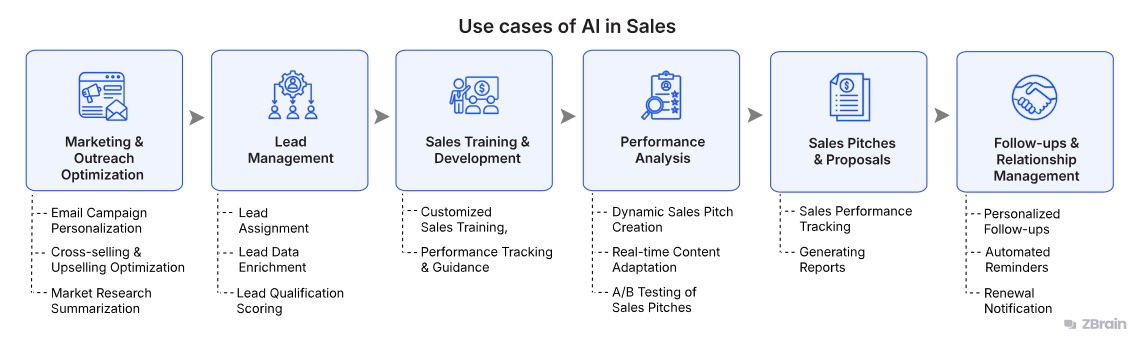
Lead management
| Use cases | Description | How ZBrain helps |
|---|---|---|
| Contact information verification | Verification of lead contact details to ensure accuracy for effective outreach. | ZBrain’s Contact Information Verification Agent can automatically validate lead contact to deliver accurate, up-to-date data, enhancing outreach performance and minimizing errors. |
| Prospect segmentation | Segmenting prospects by engagement history for targeted outreach. | ZBrain’s Prospect Segmentation Agent can group prospects by interactions and engagement history, helping sales teams tailor outreach, prioritize high-potential leads, and improve conversions. |
| Lead assignment | Assigning leads to the appropriate sales team member. | ZBrain’s Lead Assignment Agent can route qualified leads to the right teams using predefined rules, improving response times and ensuring focused, expert handling. |
| Lead data enrichment | Adding valuable information to lead profiles from online sources. | ZBrain’s Lead Data Enrichment Agent can pull additional data, such as news mentions, company details, and social activity, to give sales teams a comprehensive view of each lead. This helps them identify needs and craft more personalized, effective outreach. |
| Lead qualification scoring | Scoring leads to prioritize follow-up on those most likely to convert. | ZBrain’s Lead Qualification Scoring Agent can evaluate and score incoming leads using customizable criteria, helping teams prioritize the most promising prospects. |
| Identify potential leads | Analyzing data from various platforms to identify potential leads. | ZBrain’s Smart LinkedIn Prospecting Agent can automate prospecting by finding and ranking high-fit B2B leads, boosting pipeline quality and accelerating outreach. |
| Automate lead outreach | Initiating personalized email outreach for different lead segments. |
ZBrain’s Prospecting Outreach Optimization Agent can deliver personalized, multi-channel outreach by generating, scheduling, and optimizing engagement to boost response rates. Also, ZBrain’s Sales Outreach Scheduler Agent can queue and send emails at optimal engagement windows, improving deliverability and maximizing replies. |
| Ideal customer profile identification & persona alignment | Analyzing customer data, market signals, competitor landscapes, and behavioral attributes to define high-value customer segments. | ZBrain’s ICP Recognizer Agent can pinpoint your ideal customers and provides market, competitor, and messaging insights to strengthen your positioning. |
Sales training and development
| Use cases | Description | How ZBrain helps |
|---|---|---|
| Customized sales training | Creating personalized training modules and assessments for sales teams. | ZBrain agents can help tailor training content to match individual learning styles and needs, enhancing skill development. Its Training Material Compiler Agent can compile training materials specific to the new hire’s role, gathering content from existing resources like manuals, guides, and e-learning modules. |
| Sales training assignment | Assignment of appropriate sales trainings to the new hires. | ZBrain’s Training Module Assignment Agent can auto-assign job-specific training modules to new hires, enhancing readiness and productivity while reducing manual work. |
| Performance tracking and guidance | Comparing individual performance against team averages and benchmarks. | ZBrain agents can track performance metrics, providing feedback and areas for improvement. Its Performance Review Prep Guide Agent can generate a personalized performance review preparation guide for teams, summarizing goals, achievements, and development areas. |
Sales pitches and proposals
| Use cases | Description | How ZBrain helps |
|---|---|---|
| Dynamic sales pitch creation | Generating customized sales pitches for prospects and customers. | ZBrain agents can craft personalized pitches that resonate better with specific customer needs and preferences. It leverages customer data and interaction history to generate personalized pitches. |
| Automated proposal generation | Creating detailed, tailored proposals for each prospect automatically. | ZBrain agents can automate the creation of proposals, incorporating elements likely to appeal to each prospect based on analysis of their interactions and data. |
| Real-time content adaptation | Adjusting sales content based on audience feedback. | ZBrain agents can analyze real-time cues and feedback to suggest content adaptations, enhancing engagement and impact. |
| A/B testing of sales pitches | Testing different sales pitch variations. | ZBrain agents can evaluate various pitch strategies to optimize messaging effectiveness. |
| Sales collateral recommendation | Matching the right sales collateral to the prospect’s industry, pain points, and stage in the funnel. | ZBrain’s Sales Collateral Recommendation Agent can curate and suggest the most relevant case studies, product sheets, decks, and assets to support consistent and impactful outreach. |
| User story generation | Transforming raw, unstructured information such as call transcripts or meeting notes into structured, actionable user stories. | ZBrain’s User Story Generation Agent converts scattered inputs into clean, standardized user stories that support proposals, solution design, and product documentation. |
| Automated RFP response generation | Producing accurate and compliant responses to RFPs, RFIs, and questionnaires. | ZBrain’s RFP Response Automation Agent can generate accurate, compliant responses that incorporate product knowledge, policies, and prior submissions, while reducing turnaround time. |
| Automated renewal proposal generation | Creating data-driven renewal proposals that incorporate customer history, product usage, contract details and competitive context. | ZBrain’s Renewal Proposal Intelligence Agent can generate data-driven renewal proposals using customer insights, competitive intelligence, and negotiation analysis. |
Performance analysis
| Use cases | Description | How ZBrain helps |
|---|---|---|
| Tracking sales performance | Monitoring individual and team sales metrics over time. | ZBrain’s Sales Performance Analyzer Agent can consolidate sales data, tracks critical KPIs, and benchmarks representatives and territories to uncover strengths, gaps, and opportunities for growth. |
| Generating performance reports | Creating detailed reports on sales activities. | ZBrain agents can automate comprehensive sales reporting, aiding in strategic decision-making. |
| Assessing sales effectiveness | Evaluating the impact of different sales strategies. | ZBrain agents can help assess strategies to identify the most effective tactics for customer segments. It can compare and evaluate the most effective strategies for sales teams. |
Follow-ups and relationship management
| Use cases | Description | How ZBrain helps |
|---|---|---|
| Personalized follow-ups | Sending tailored messages based on past interactions. |
ZBrain’s Inquiry Follow-up Optimization Agent can resolve simple inquiries and routes complex ones with context—ensuring faster, more efficient follow-up. ZBrain’s Follow-up Intelligence Agent can automatically gather context, identify required follow-up actions, and generate next-step recommendations to streamline cross-team customer engagement. |
| Automated reminders | Sending automatic reminders for timely follow-ups. | ZBrain’s Follow-up Reminder Agent can automate follow-up reminders, ensuring timely responses and smoother customer engagement. |
| Feedback-driven communication | Adapting follow-ups based on customer feedback. | ZBrain’s Feedback Collection Agent can automatically gather and categorize customer feedback, helping teams improve service quality and identify recurring issues. |
| Meeting notes extraction | Extracts key points and action items from meeting transcripts. | ZBrain’s Meeting Notes Extraction Agent can assist sales teams by organizing meeting outcomes and simplifying follow-up on sales leads and action items. |
| Calendar invite creation | Creating calendar invites based on meeting notes. | ZBrain’s Calendar Invite Creation Agent can create calendar invites based on meeting notes, ensuring all stakeholders are aligned on scheduled activities. |
| Drive CRM insights | Deriving CRM insights to prioritize leads and identify lucrative opportunities for upselling and cross-selling. | ZBrain’s CRM Insight Agent is a conversational agent that can provide insights and answers to sales team queries from CRM data. |
| Renewal notification | Sending automated notifications about upcoming renewals. | ZBrain’s Renewal Notification Agent can send automated notifications to customers about upcoming renewals, ensuring timely reminders for uninterrupted availability. |
Account growth
| Use case | Description | How ZBrain helps |
|---|---|---|
| Automated cross-sell / up-sell recommendations | Analyzing product usage, purchase history, contract details, intent signals, and similarities with other successful customers to recommend the most relevant upsell or cross-sell opportunities. | ZBrain agents can support this by analyzing customer data patterns to surface adjacent products, expansion paths, and bundle recommendations aligned to customer needs. |
| AI-generated expansion playbooks | Creating tailored account growth playbooks that include whitespace opportunities, tailored value propositions, ideal champions, buying centers, and recommended objection handling. | ZBrain agents can generate structured account expansion playbooks that help teams identify growth paths, messaging opportunities, and targeted engagement strategies. |
| AI-driven account SWOT & whitespace mapping | Extracting signals from CRM notes, emails, support logs, product analytics, and communications to detect adoption gaps, underused features, competitive threats, and new whitespace areas. | ZBrain agents can analyze conversational, behavioral, and usage data to provide SWOT-style insights and reveal whitespace for expansion. |
| Next best action guidance | Recommending the optimal next step—who to contact, what message to send, which channel to use, and when—based on opportunity signals, risk indicators, and customer context. | ZBrain’s Action Recommendation Agent can continuously monitor cross-channel customer data to identify objections and opportunities early, generate targeted recommendations to strengthen renewals and accelerate expansion. |
| Customer health prediction | Evaluating product usage patterns, NPS scores, support activity, sentiment, and engagement signals to identify risk or reveal growth opportunities. | ZBrain’s Net Promoter Score Collection Agent can automatically trigger NPS surveys at key lifecycle points, capture customer sentiment and surface early indicators of account risk or satisfaction. |
| Territory & segment growth insights | Identifying high-value verticals, micro-segments, or geographic regions showing strong intent or underpenetrated opportunity. | ZBrain’s Territory Risk Intelligence Agent can continuously monitor territories, detect emerging risks or potential growth regions, issue alerts, and guide teams with data-driven recommendations. |
| 360° customer intelligence | Consolidating CRM data, product usage metrics, support tickets, communication logs, and sentiment into a unified customer view to inform account decisions. | ZBrain’s Customer Profile Unification Agent can create a single, trusted customer profile by aggregating and harmonizing multi-source data and enriching incomplete records. |
| Automated contract preparation | Generating compliant, renewal-ready or expansion-ready contract drafts aligned with product usage, entitlements, pricing rules, and policy requirements. | ZBrain’s Contract Drafting Agent can automatically prepare contract drafts using organizational policy frameworks and customer-specific data, reducing errors and manual effort. |
| Deal compliance validation | Validating renewal or expansion deals to ensure alignment with legal, pricing, and policy guardrails before approval. | ZBrain’s Deal Closure Compliance Agent can synchronize post-deal data across business systems, check compliance elements, and flag gaps requiring resolution before final closure. |
Measuring the ROI of generative AI in sales
The Return on Investment (ROI) for generative AI in sales is determined by evaluating the cost savings and efficiency gains against the initial and ongoing investments in the technology. This assessment includes direct financial benefits such as increased sales volumes, reduced operational costs, and indirect advantages like improved customer satisfaction, better lead conversion rates, and enhanced data analysis capabilities. Key ROI metrics typically involve quantitative measures such as the increase in leads converted and the reduced time spent on repetitive tasks, alongside qualitative benefits like improving customer engagement quality and precision in targeting potential clients.
ZBrain implementation: Key ROI indicators
Lead generation and management
-
Use case: Automation of lead capturing, sorting, and scoring.
-
ROI metrics: Increase lead conversion rates and reduce time spent on lead qualification.
-
Example: ZBrain’s AI-driven solutions automate lead categorization and prioritization by analyzing data from sources like website forms and marketing campaigns. They rank leads based on criteria such as demographics and engagement and create personalized outreach messages. This automation reduces manual scoring and improves lead prioritization accuracy, streamlining the sales funnel and increasing follow-up effectiveness.
Customer engagement and personalization
-
Use case: Automated customization of marketing messages and sales pitches.
-
ROI metrics: Higher engagement rates and increased customer retention.
-
Example: With ZBrain, sales teams can deliver highly personalized content tailored to each prospect’s individual preferences and behaviors. This personalized approach can drive higher engagement rates and foster customer loyalty, ultimately boosting sales growth.
Sales cycle acceleration
-
Use case: Reduction in the sales cycle duration through streamlined processes.
-
ROI metrics: Shorter sales cycles, faster time-to-close for deals.
-
Example: ZBrain can enhance the sales process by quickly generating accurate and compelling proposals, contracts, and communications, thereby reducing the time from initial contact to deal closure. Faster sales cycles increase the overall throughput of deals, boosting revenue.
Operational efficiency improvement
-
Use case: Automation of repetitive sales tasks like data entry and follow-ups.
-
ROI metrics: Reduction in operational costs and increased time for strategic tasks.
-
Example: ZBrain helps automate routine sales activities, allowing sales professionals to focus on higher-value interactions and strategic decision-making. This shift can reduce labor costs and enhance the sales team’s productivity.
Sales training and onboarding
-
Use case: Generate personalized training materials for new sales representatives.
-
ROI metrics: Reduced sales onboarding time, improved sales representative performance and productivity, faster ramp-up time for new hires.
-
Example: ZBrain can create personalized training materials for new sales representatives, providing customized learning paths and assessments tailored to their learning styles and skill levels. It can also generate quizzes to enhance learning and retention.
Analytics and reporting enhancement
-
Use case: Automated generation of sales reports and performance analytics.
-
ROI metrics: Improved decision-making based on enhanced data accuracy and availability.
-
Example: ZBrain agents support comprehensive analytics and detailed reports on sales activities, customer trends, and market conditions. This capability ensures sales teams can access real-time data, facilitating more informed and timely business decisions.
Implementing ZBrain solutions in sales operations can significantly enhance ROI by automating key processes such as lead management, customer engagement, and performance analysis. This automation can reduce the time and costs associated with manual sales activities and improve the accuracy and effectiveness of sales strategies.
Future trends: Expanding the reach of generative AI in sales
Generative AI (GenAI) is poised to transform sales processes across all sectors, blending cutting-edge technology with traditional sales techniques to drive unprecedented efficiency and customization.
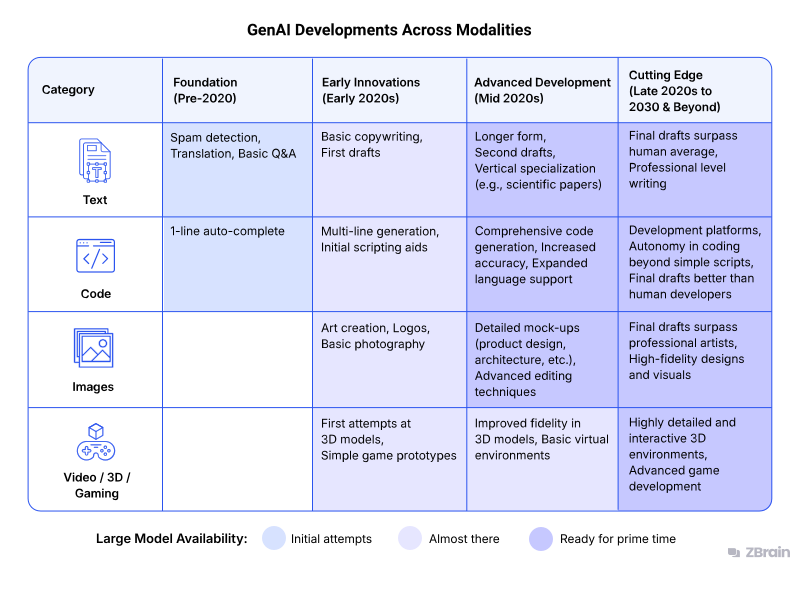
Advanced multi-modal applications
GenAI will increasingly support complex multi-modal interactions in sales, including image and video asset creation and advanced 3D product visualizations. These capabilities will enhance selling and shopping experiences by providing customers with interactive and immersive product demonstrations, crucial for various sectors.
Enhanced creative processes
From text-based content creation to complex creative campaigns involving multiple brands, GenAI will streamline creative processes in sales. This includes automating the generation of co-branded campaigns and optimizing cross-merchandising and cross-selling opportunities, significantly boosting operational efficiency.
Transforming sales training and enablement
Sales training and enablement will be modernized by GenAI, providing sales representatives with customized, role-specific training content that adapts to their learning progress and changing market dynamics, improving sales performance and adaptability.
Enhanced personalization and customer interaction
GenAI will refine customer interaction strategies by leveraging advanced analytics to enable highly personalized customer engagement. This involves dynamic visual content and marketing campaigns that adjust to consumer preferences and behaviors, enhancing customer satisfaction and conversion rates.
Advanced customer journey mapping
GenAI is set to transform customer journey mapping by efficiently analyzing extensive sales interaction data to identify pivotal engagement patterns and touchpoints. This technology allows for the segmentation of customers based on their past interactions, enabling sales teams to tailor experiences more precisely. Such advancements ensure businesses can enhance customer engagement and satisfaction by optimizing each interaction based on historical insights, making it a significant future trend in sales strategies.
As GenAI continues to advance, its integration into sales will redefine how businesses engage with and understand their customers. By enhancing everything from sales training to personalized customer journeys, GenAI streamlines sales processes and significantly enriches customer interactions and experiences across various sectors.
Streamline your operational workflows with ZBrain AI agents designed to address enterprise challenges.
Key generative AI implementation challenges in sales and mitigation strategies
While generative AI offers significant advantages for enhancing sales processes, its implementation comes with challenges that businesses must navigate to maximize its effectiveness and ROI. Below are a few major challenges, along with strategies for mitigation:
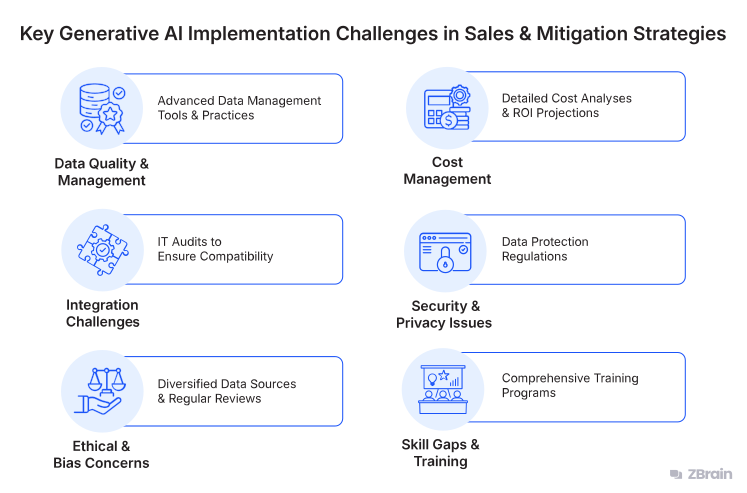
Data quality and management
High-quality data is crucial for the success of any generative AI system in sales. Poor data quality can lead to misleading AI insights and ineffective sales strategies.
-
Potential negative impact: Inaccurate decisions leading to ineffective sales efforts.
-
Mitigation strategy: Invest in advanced data management tools and practices. Regularly clean and update data to ensure accuracy and relevance.
Integration with existing systems
Seamless integration of generative AI into existing sales systems is essential. Incompatibilities can disrupt sales operations and delay the benefits of AI implementation.
-
Potential negative impact: Disruption to existing sales workflows and systems.
-
Mitigation strategy: Conduct thorough IT audits to ensure compatibility and plan integrations carefully with the involvement of experienced IT professionals.
Ethical and bias concerns
Bias in AI models can result in unfair or unethical sales practices, potentially harming customer relationships and brand reputation.
-
Potential negative impact: Discriminatory practices and loss of customer trust.
-
Mitigation strategy: Use diversified data sources and implement regular reviews of AI decisions for fairness and ethical compliance.
Security and privacy issues
With sales teams handling sensitive customer data, ensuring the security and privacy of this information within AI systems is paramount.
-
Potential negative impact: Data breaches could lead to severe reputational and financial damage.
-
Mitigation strategy: Implement state-of-the-art cybersecurity measures and comply with international data protection regulations.
Scalability challenges
As sales volumes and data grow, the AI system must scale accordingly without losing performance.
-
Potential negative impact: Inability to handle increased operations could lead to system failures.
-
Mitigation strategy: Design AI solutions with scalable architectures from the start and perform regular system upgrades.
Cost management
The initial setup and ongoing maintenance of generative AI systems can be costly, requiring careful financial planning.
-
Potential negative impact: High costs could strain budgets and divert resources from other critical areas.
-
Mitigation strategy: Prepare detailed cost analyses and ROI projections to manage expenses effectively.
Skill gaps and training
Ensuring the sales team and IT staff have the necessary skills to use and manage AI tools is crucial for success.
-
Potential negative impact: Lack of proficiency can lead to underutilization and inefficiencies.
-
Mitigation strategy: Provide comprehensive training programs and consider hiring or partnering with AI experts.
Maintaining human oversight and control
Balancing AI automation with human expertise ensures that sales strategies are grounded in human judgment and experience. Excessive reliance on automated systems can result in overlooked opportunities and a lack of nuanced understanding of customer relations.
-
Potential negative impact: Loss of personalized customer interaction and potential oversight in complex decision-making scenarios.
-
Mitigation strategy: Employ a human-in-the-loop system where AI supports rather than replaces human decision-making. Sales professionals should oversee and validate AI-generated insights and actions, ensuring they align with broader business goals and ethical standards.
Change management
Implementing generative AI involves significant changes in processes and roles, which can lead to resistance from sales teams accustomed to traditional methods.
-
Potential negative impact: Resistance to change can hinder adoption and limit the potential benefits of generative AI.
-
Mitigation strategy: Develop a comprehensive change management strategy that includes clear communication, education, and involvement of sales teams in the deployment process. Demonstrating the value and benefits of AI in daily tasks can help gain their buy-in.
In conclusion, while GenAI presents transformative opportunities for sales operations, its successful implementation requires addressing challenges proactively. By investing in robust data management, ethical oversight, and effective change management strategies, businesses can unlock the full potential of generative AI to drive efficiency, enhance customer engagement, and achieve sustainable growth.
Empowering sales teams with ZBrain: An end-to-end AI enablement platform
ZBrain, with its advanced AI capabilities, is poised to transform sales strategies across industries. It offers a suite of features designed to enhance automation, elevate efficiency, and empower informed decision-making in sales operations.
-
AI readiness assessment: ZBrain’s AI readiness framework, ZBrain XPLR, evaluates an organization’s capacity and readiness to adopt AI in sales processes. It delivers actionable insights by identifying strengths and pinpointing areas for improvement, ensuring a successful AI integration.
-
Low-code development: The ZBrain Builder platform allows sales teams to develop custom AI-driven sales solutions with minimal coding, making powerful AI accessible to professionals without deep technical expertise.
-
Proprietary data utilization: ZBrain Builder enables organizations to harness their proprietary data effectively, ensuring AI solutions are finely tuned to specific sales goals and challenges.
-
Enterprise-ready: Designed for large-scale operations, ZBrain Builder offers robust security, scalability, and seamless integration with existing sales systems, meeting the demands of large organizations.
-
End-to-end support: ZBrain provides comprehensive management of AI applications within sales—from assessment, development and deployment to continuous support—ensuring that sales strategies continuously evolve and remain competitive.
-
Flexible data ingestion: ZBrain Builder integrates data from various sources, enriching sales strategies with real-time insights and analytics to improve decision-making and campaign outcomes.
-
Intelligent agent creation: AI agents created using ZBrain Builder can automate key sales tasks such as lead analysis, customer research, and personalized outreach, significantly reducing manual effort and enhancing campaign ROI.
These capabilities position ZBrain as a pivotal tool for organizations aiming to optimize and automate their sales processes, increasing effectiveness, precision, and scalability in their sales operations.
ZBrain’s benefits for sales teams
-
Tailored AI solutions: ZBrain enables the creation of custom AI solutions that address businesses’ specific needs, allowing sales teams to efficiently solve their unique challenges.
-
Automation of complex sales processes: ZBrain agents can automate intricate workflows, from lead generation to customer relationship management, reducing manual work and enabling teams to focus on strategic sales planning and execution.
-
Enhanced decision-making: ZBrain agents can analyze large volumes of data quickly, leading to faster and more informed decisions about customer engagement, sales opportunities, and market positioning.
-
Increased efficiency: Automating repetitive tasks and streamlining sales workflows can result in faster sales cycles, improved operational efficiency, and reduced costs, helping teams run more effectively.
-
Scalability: ZBrain Builder empowers sales teams to develop solutions tailored to their evolving needs, which allows them to scale their operations without compromising quality or efficiency.
By automating routine operations, enhancing data analysis, and optimizing sales workflows, ZBrain solutions can empower sales teams to concentrate on what truly matters—delivering precise, timely, and effective sales outcomes. As the sales landscape evolves, ZBrain emerges as an essential tool for any organization aiming to leverage generative AI and succeed in a competitive market environment.
Endnote
The integration of generative AI into sales processes is transforming the way organizations interact with customers, manage leads, and streamline operations. AI-driven solutions automate repetitive tasks, enable personalized customer engagements, and deliver deep insights, enhancing decision-making and efficiency. As this technology advances, it promises to further refine sales strategies, positioning businesses at the forefront of innovation and competitiveness. Embracing AI-driven solutions equips organizations to navigate the evolving market dynamics with agility and confidence, ensuring they not only keep pace but also set the pace in a rapidly transforming sales landscape.
Elevate your sales operations with ZBrain. Build AI-driven solutions that streamline workflows, sharpen insights, and accelerate deal outcomes. Connect with us today and start transforming your sales strategy.
Listen to the article
Author’s Bio


CEO LeewayHertz
An early adopter of emerging technologies, Akash leads innovation in AI, driving transformative solutions that enhance business operations. With his entrepreneurial spirit, technical acumen and passion for AI, Akash continues to explore new horizons, empowering businesses with solutions that enable seamless automation, intelligent decision-making, and next-generation digital experiences.
Table of content
- How can generative AI transform your sales strategy?
- Current landscape of generative AI in sales
- Different approaches to integrating generative AI into sales processes
- Generative AI use cases for sales
- Measuring the ROI of generative AI in sales
- Future trends: Expanding the reach of generative AI in sales
- Key generative AI implementation challenges in sales and mitigation strategies
- Empowering sales teams with ZBrain: An end-to-end AI enablement platform
Share Article


Frequently Asked Questions
What is ZBrain, and how can it optimize sales strategies with GenAI?
ZBrain is an end-to-end AI enablement platform designed to facilitate the readiness assessment, identification, development, and deployment of AI solutions in sales environments. From AI readiness assessment, integrating sales data, and selecting models to developing and deploying solutions, ZBrain offers complete support for implementing AI across sales functions.
Here’s how ZBrain can transform sales processes:
-
AI readiness assessment with ZBrain XPLR: ZBrain XPLR provides a comprehensive AI readiness assessment, enabling organizations to evaluate their existing capabilities and identify opportunities for AI implementation in sales. This prepares businesses for strategic AI adoption to improve sales effectiveness and customer conversion rates.
-
Seamless data ingestion and integration: ZBrain Builder connects with various CRM systems and sales platforms, ensuring efficient data integration. This unified data approach allows for precise, real-time sales analytics and customer insights.
-
Low-code development environment: ZBrain Builder’s intuitive, low-code interface allows sales teams to create GenAI agents with minimal programming knowledge, drastically cutting down development time and hastening the rollout of sales AI tools.
-
Cloud and model flexibility: ZBrain supports multiple AI models, and its solutions integrate smoothly with cloud environments like AWS, Azure, and GCP, providing the flexibility to select the optimal infrastructure for cost, performance, and scalability in sales processes.
-
Enhanced customer targeting and segmentation: ZBrain’s AI capabilities enable advanced customer segmentation and targeting, boosting personalized sales initiatives and enhancing customer acquisition and retention.
How does ZBrain Builder ensure the security and privacy of sales data?
ZBrain Builder prioritizes data security and privacy, ensuring that sensitive sales data is protected throughout its lifecycle. Here are some ways ZBrain Builder secures sales data:
-
Private cloud deployments: ZBrain solutions can be deployed in a private cloud setting, keeping sensitive sales data under organizational control and secured from external threats.
-
Robust security protocols: ZBrain Builder includes extensive security features like encryption, role-based access controls, and continuous security monitoring, complying with international standards – ISO 27001:2022 and SOC 2 Type II to protect sales data.
Can ZBrain agents be integrated with existing sales systems?
Yes, ZBrain agents are designed to integrate seamlessly with existing sales systems. The ZBrain Builder platform supports various data formats and standards, ensuring smooth interoperability with CRM systems, sales analytics platforms, and other sales tools.
This integration enables organizations to:
-
Leverage existing infrastructure: Enhance current sales strategies without the need to extensively modify legacy systems.
-
Enrich data and workflows: Integrate ZBrain agents with existing tools to automate sales workflows and enhance data-driven decision-making.
-
Drive GenAI-driven insights: Utilize AI capabilities to refine sales strategies and improve customer interactions while maintaining compatibility with existing technologies.
What kind of sales agents can be built on ZBrain Builder?
ZBrain Builder allows the creation of custom AI agents tailored to various sales functions. These agents can support tasks such as lead generation, deal scoring, and personalized customer interactions. ZBrain’s sophisticated AI capabilities optimize sales strategies, automate key sales tasks, and deliver insights for strategic decision-making.
How does ZBrain cater to diverse sales needs across different campaigns?
ZBrain’s adaptability enables it to effectively meet varied sales needs. You can develop tailored AI agents to automate lead nurturing, optimize deal closure rates, enhance customer profiling, and execute dynamic sales strategies. Its powerful AI agents help boost campaign effectiveness, increase engagement, and ensure cohesive messaging across multiple sales channels.
How can we measure the ROI of ZBrain in our sales processes?
Measuring the ROI of ZBrain in sales involves evaluating key performance indicators (KPIs) related to automation, conversion rates, and campaign effectiveness. Consider these metrics:
-
Increased sales efficiency: Automating routine tasks like lead management and deal scoring can lead to more efficient sales operations and better resource allocation.
-
Enhanced customer engagement: Personalized sales strategies powered by GenAI can result in higher conversion rates and improved customer loyalty.
-
Cost savings: Reductions in manual efforts and optimized resource allocation contribute to lower operational costs and enhanced sales ROI.
How can I get started with ZBrain to enhance my sales processes?
To start using ZBrain for your sales needs, contact us at hello@zbrain.ai or fill out the inquiry form on our website. We’ll help you build AI-powered solutions that integrate with your current sales tools and processes, enabling smoother workflows and smarter decision-making.
Insights
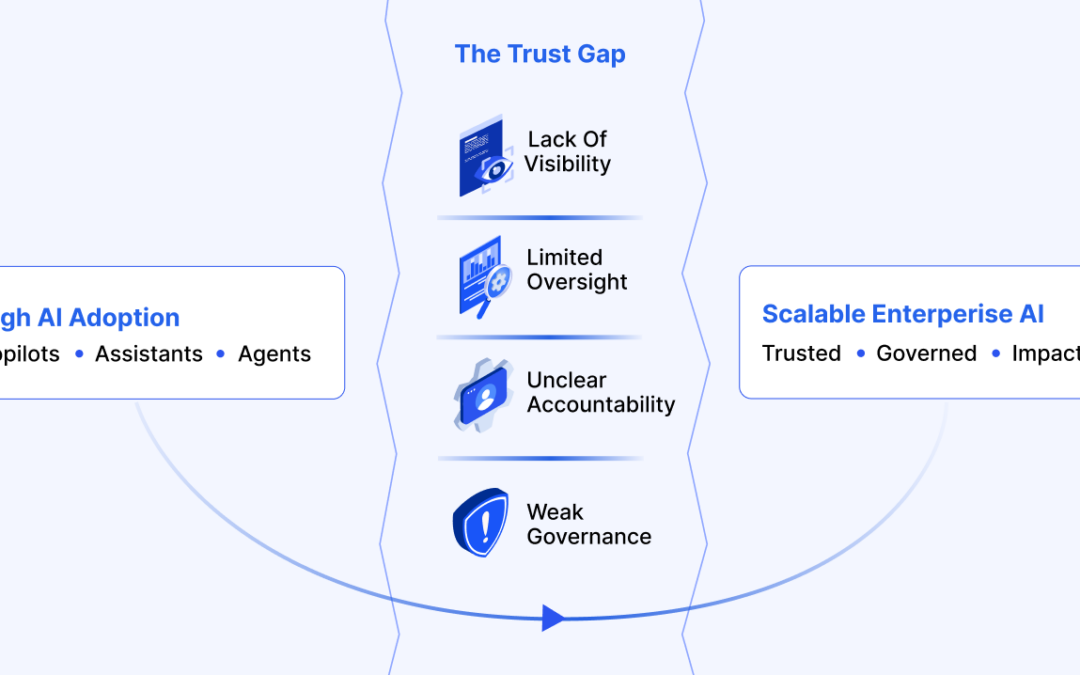
The AI Trust Gap: Why Governance Architecture Determines Enterprise Value
The trust gap surrounding enterprise AI is fundamentally an architectural challenge, and its solution is increasingly well understood.
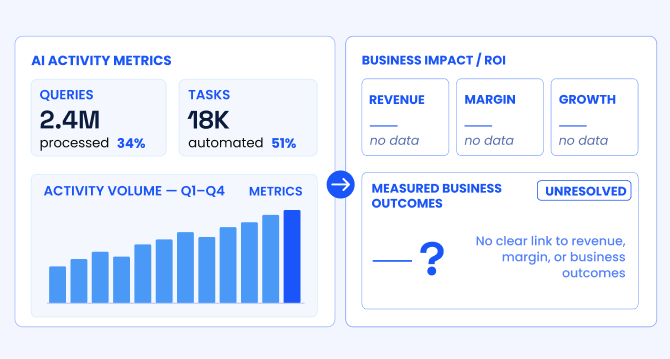
The AI ROI illusion: Why enterprises struggle to measure AI impact
Organizations with stronger measurement discipline are better positioned to link AI deployments to measurable business outcomes, prioritize high-impact use cases across the enterprise, allocate capital more effectively, and continuously refine models using real-world performance feedback.
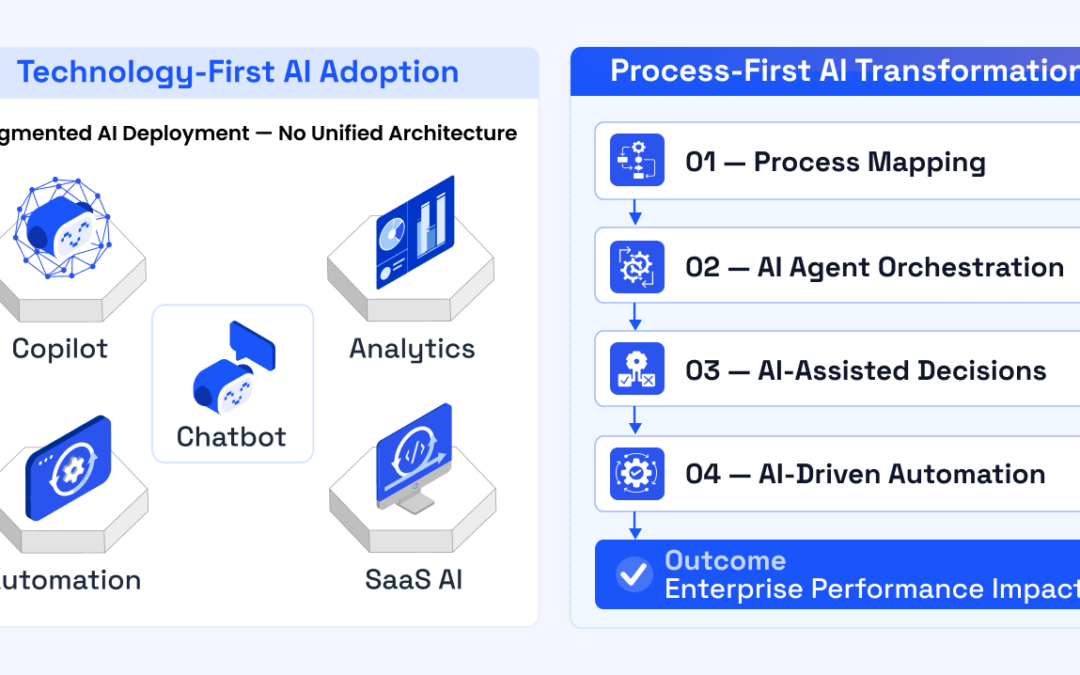
The agentic enterprise: Why AI success requires an operating model redesign
Organizations that redesign their operating models around agentic AI are beginning to outperform those that apply AI only incrementally.
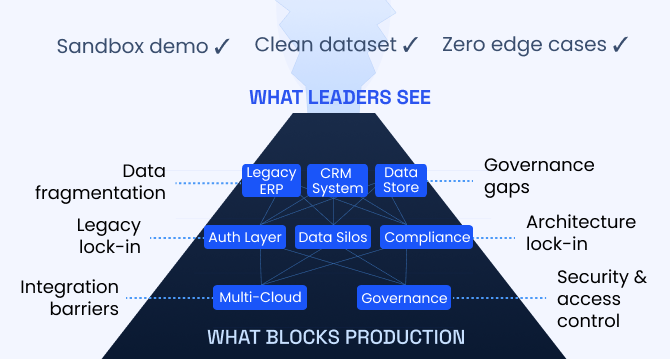
Enterprise AI pilot-to-production gap: Root causes & how to address them
The underlying cause is structural. In many enterprises, AI pilots are developed on infrastructure that was not designed to support production deployment.
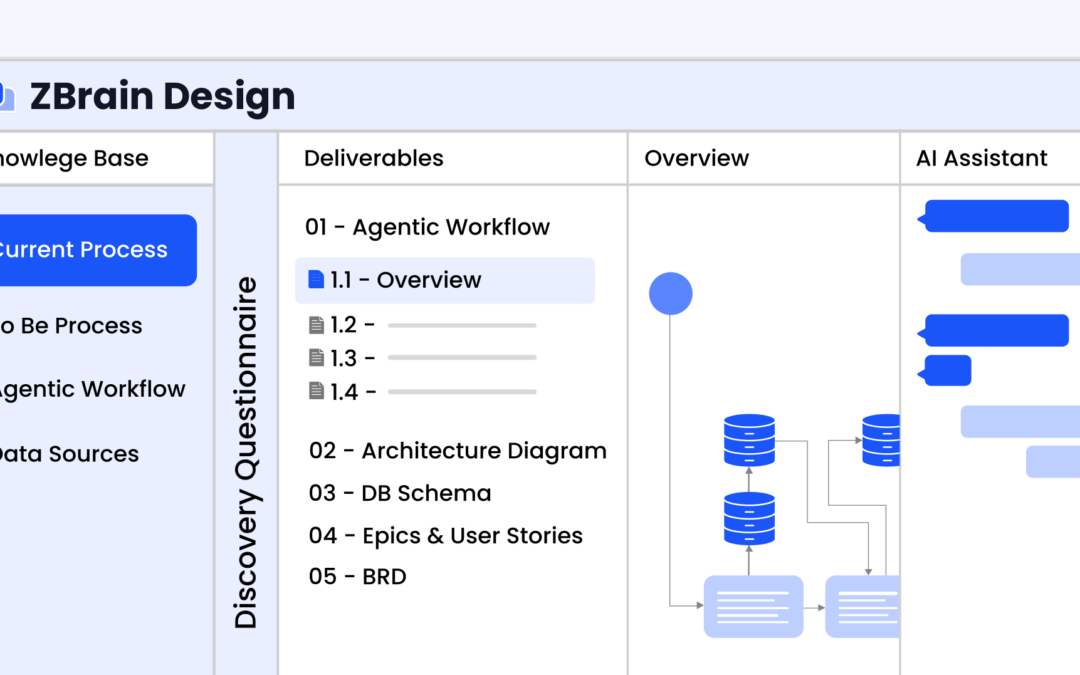
Solution architecture best practices: A guide for enterprise teams
The architecture design process culminates in a set of documented artifacts that communicate the solution to development, operations, and business teams.
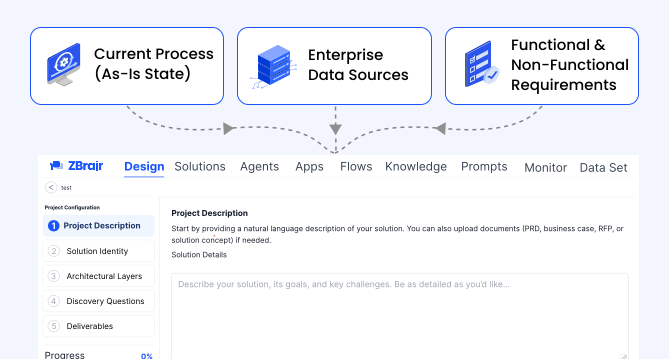
Common solution architecture design challenges and solutions
Solution architecture must evolve from fragmented documentation practices to a structured, collaborative, and continuously validated design capability.
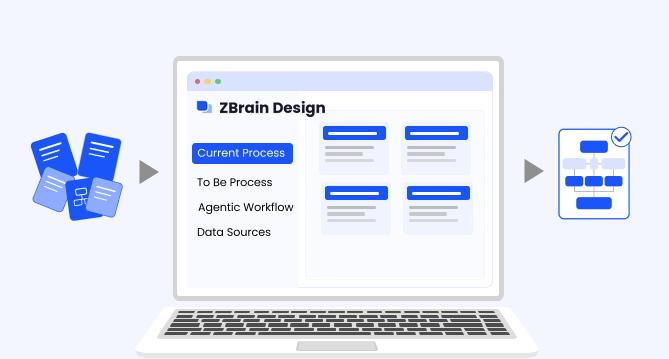
Why structured architecture design is the foundation of scalable enterprise systems
Structured architecture design guides enterprises from requirements to build-ready blueprints. Learn key principles, scalability gains, and TechBrain’s approach.
Intranet search engine guide: How it works, use cases, challenges, strategies and future trends
Effective intranet search is a cornerstone of the modern digital workplace, enabling employees to find trusted information quickly and work with greater confidence.
Company knowledge base: Why it matters and how it is evolving
A centralized company knowledge base is no longer a “nice-to-have” – it’s essential infrastructure. A knowledge base serves as a single source of truth: a unified repository where documentation, FAQs, manuals, project notes, institutional knowledge, and expert insights can reside and be easily accessed.

