Manufacturing
 Logistics
 Real Estate
 Retail
 Finance
 Healthcare
 Hospitality
 Automotive
See how ZBrain Design helps enterprise architecture teams move from solution requirements to executable designs with AI-assisted design support.
Architecture is Where Execution Breaks Down
While enterprises identify high-value solution opportunities, translating them into a structured technical architecture design can be complex. Key challenges include:
- Requirements scattered across structured and unstructured sources
- Manual reconciliation of process flows and system dependencies
- Technology landscape assumptions left undefined
- Static diagrams disconnected from technical specifications
- Design discussions spread across disconnected communication channels
- Limited traceability between business objectives and technical execution
- Governance and observability are addressed late in the solution lifecycle.
The result is ambiguity that surfaces during implementation, driving rework, misalignment, and delayed delivery. ZBrain Design addresses this structural gap.
From Solution Requirements to Executable Design
ZBrain Design consolidates scope and solution requirements, reconciles system dependencies, and formalizes execution logic within a governed framework.

Capture
Captures process context, system landscape, solution requirements and governance considerations within a consolidated design environment.

Clarify
Gathers additional information through a structured, query-driven framework to ensure clarity on all relevant aspects of the solution, including data sources, performance expectations, and system interactions.

Standardize
Standardizes validated solution concept into a coherent technical blueprint that includes architecture diagrams, functional specifications, epics and user stories.
Core Capabilities
Architecture Workspace & Governance
Structured Architecture Workspace
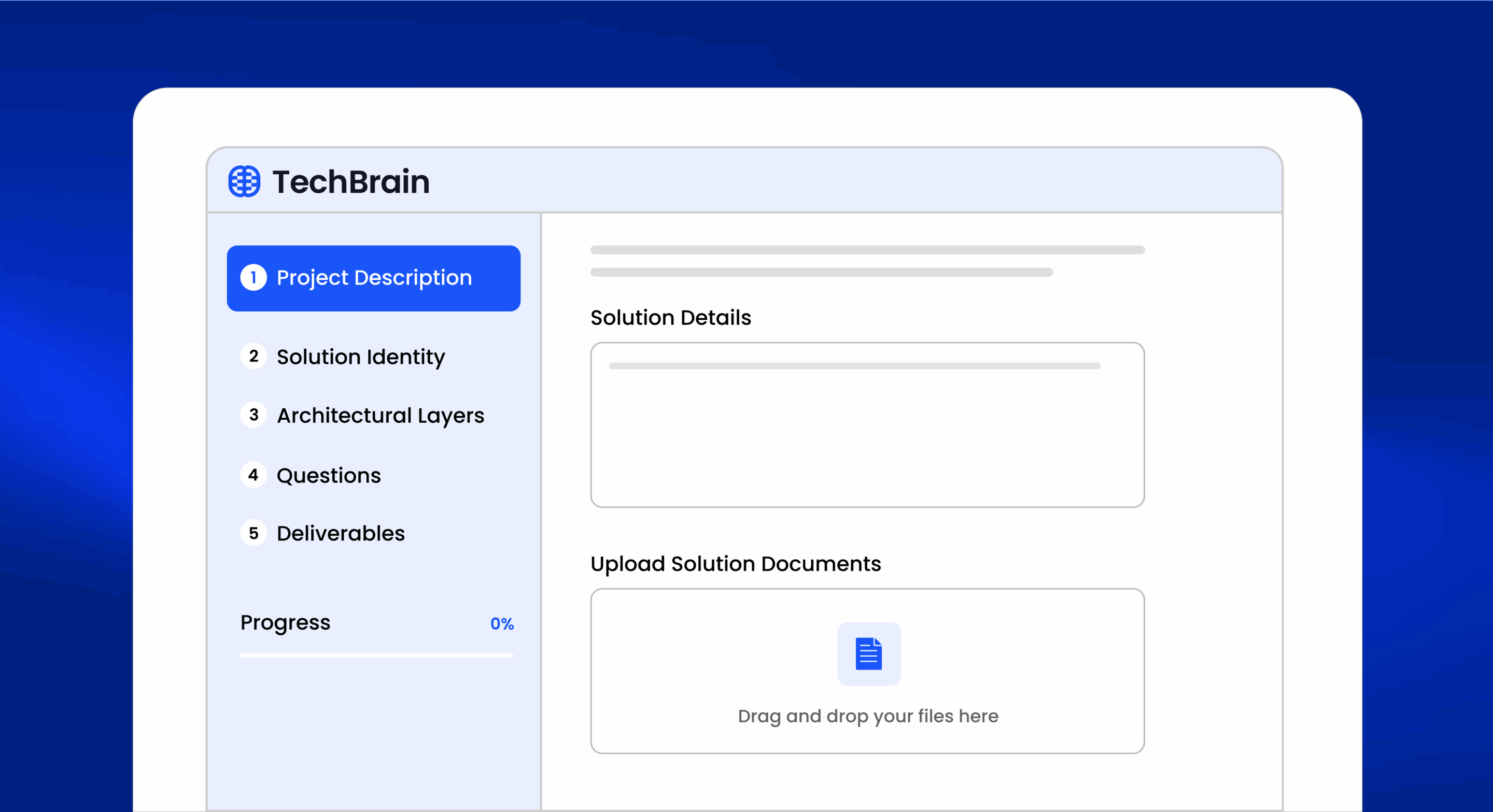
Create a dedicated project workspace for each initiative to centralize requirements, technical dependencies, and design artifacts within a controlled workflow.
Scope & Objectives Definition
Define technical scope, assumptions, design objectives, and governance requirements within the organization’s operational and technology context to prevent ambiguity downstream.


Detailed Technical Architecture
AI-assisted Question-driven Validation
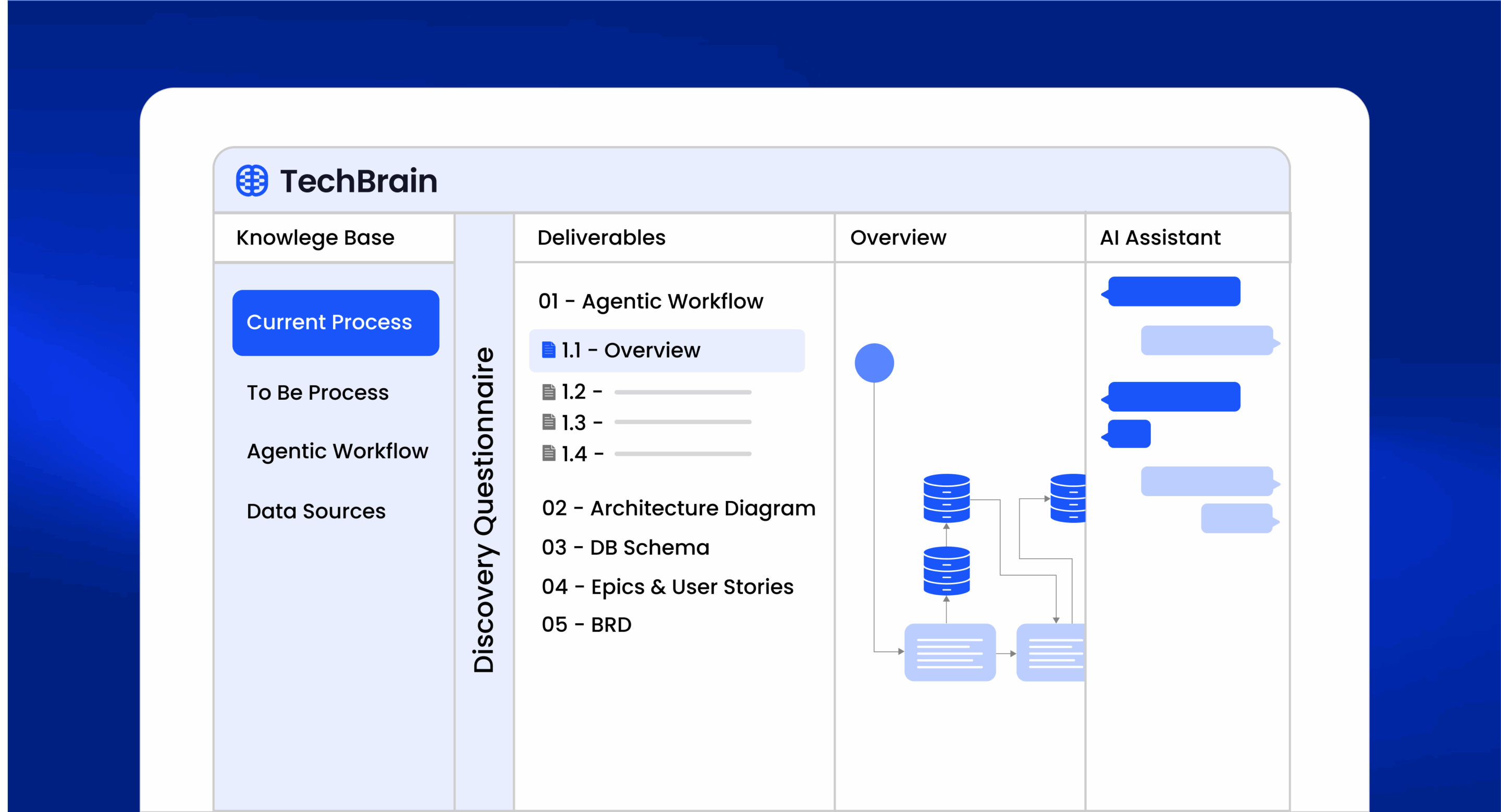
Surfaces targeted architectural questions that require explicit answers for integration, data, and security, strengthening overall architectural completeness.
Enterprise-aligned Architecture Blueprints
Generate editable solution architecture blueprints that define system integrations, data flows, dependencies, approval requirements, and monitoring and observability considerations.
Deployment & Environment Considerations
Outlines the deployment framework, defining target environments, hosting and infrastructure requirements, network architecture, CI/CD, release approvals, and rollback procedures.
Implementation-ready Outputs
Comprehensive Technical Design Artifacts
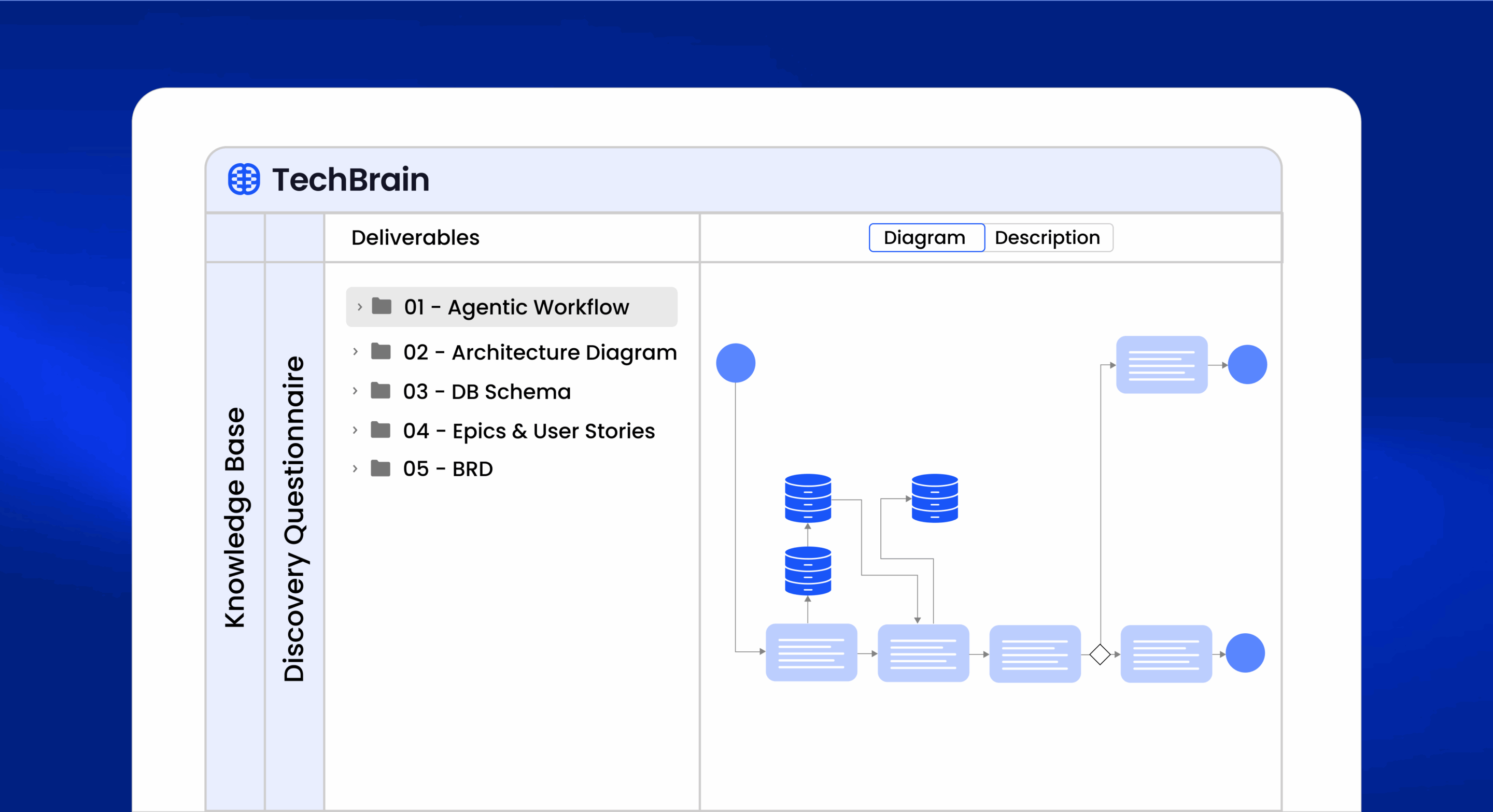
Generates comprehensive artifacts, including technical specifications, epics, BRDs, schemas, ERDs, data flow diagrams, governance and operational framework, and a statement of work, all grounded in the finalized architecture design.
Editable Outputs
All deliverables remain fully editable by technical teams, with AI-assisted refinement available to support iteration.
End-to-end Traceability
Maintains a documented record of the technical design process so teams can trace how the design evolved, from solution requirements to design artifacts.

Core Capabilities
Architecture Workspace & Governance
Structured Architecture Workspace
Create a dedicated project workspace for each initiative to centralize requirements, technical dependencies, and design artifacts within a controlled workflow.
Scope & Objectives Definition
Define technical scope, assumptions, design objectives, and governance requirements within the organization’s operational and technology context to prevent ambiguity downstream.
Detailed Technical Architecture
AI-assisted Question-driven Validation
Surfaces targeted architectural questions that require explicit answers for integration, data, and security, strengthening overall architectural completeness.
Enterprise-aligned Architecture Blueprints
Generate editable solution architecture blueprints that define system integrations, data flows, dependencies, approval requirements, and monitoring and observability considerations.
Deployment & Environment Considerations
Outlines the deployment framework, defining target environments, hosting and infrastructure requirements, network architecture, CI/CD, release approvals, and rollback procedures.
Implementation-ready Outputs
Comprehensive Technical Design Artifacts
Generates comprehensive artifacts, including technical specifications, epics, BRDs, schemas, ERDs, data flow diagrams, governance and operational framework, and a statement of work, all grounded in the finalized architecture design.
Editable Outputs
All deliverables remain fully editable by technical teams, with AI-assisted refinement available to support iteration.
End-to-end Traceability
Maintains a documented record of the Technical Design process so teams can trace how the design evolved, from solution requirements to design artifacts.
Designed for Enterprise Complexity and Scale
ZBrain Design supports technical design across a wide range of initiatives, including:

Agentic AI Systems
Design structured architectures for AI-driven solutions, including agent orchestration, model integration, data pipelines, and multi-agent workflows.

AI-orchestrated Workflows
Translate automation initiatives into implementation-ready technical designs with clearly defined execution workflows, integration patterns, etc.

Digital Experience Platforms
Design architectures for enterprise web applications, dashboards, and user-facing platforms, focusing on UI specifications and seamless backend integrations.

Enterprise Application Enhancements
Implement enhancements to existing applications by defining explicit integration points, mapping data flows, and performing architectural impact analysis.

Enterprise System Integration
Define structured integration architectures across enterprise systems, APIs, and data environments.

Data Intelligence & Knowledge Systems
Design scalable data architectures, knowledge systems, schema definitions, and system interactions aligned to business objectives.

Cloud Architecture & Infrastructure
Design architectures that define application deployment models, cloud environments, infrastructure dependencies, and scalable platform configurations.

Edge AI & Connected Systems
Design architectures for edge environments and connected devices, including real-time data processing, device integration, distributed workloads, and edge-to-cloud interactions.
Why ZBrain Design?
Cycles
Shortened Design Cycles
Organizes requirements, execution logic, and architectural decisions within a governed workflow to streamline the transition from intent to design.

Clear Pre-implementation Definition
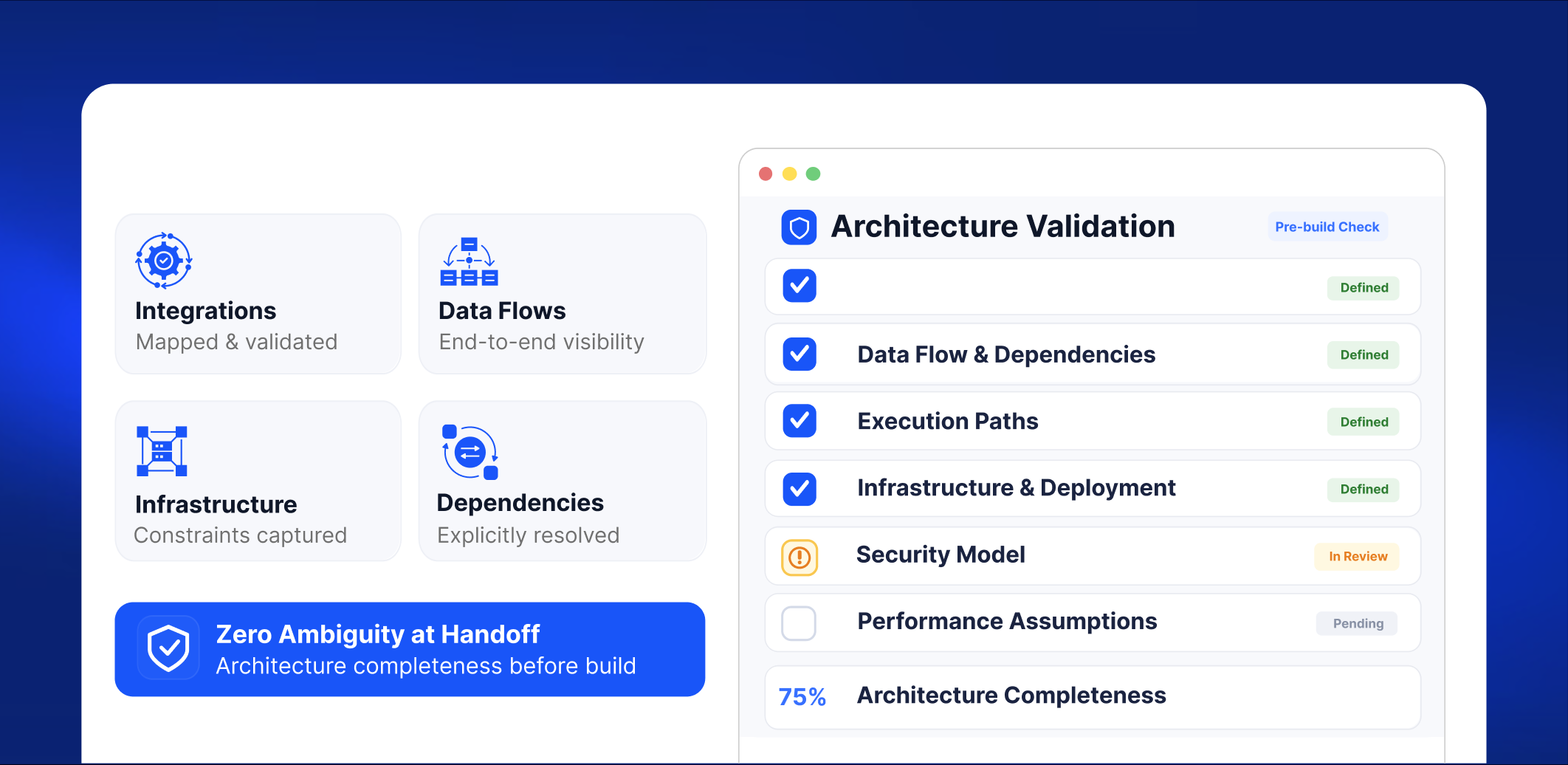
Ensures integrations, data flows, execution paths, infrastructure considerations, and architectural dependencies are explicitly defined before development begins.
Reduced Implementation Rework
Surfaces gaps and unresolved assumptions early in the design lifecycle, limiting downstream revisions.

Governance Readiness
Captures ownership, access, approval, monitoring and audit requirements before the solution moves into build.

Requirement-to-execution Alignment
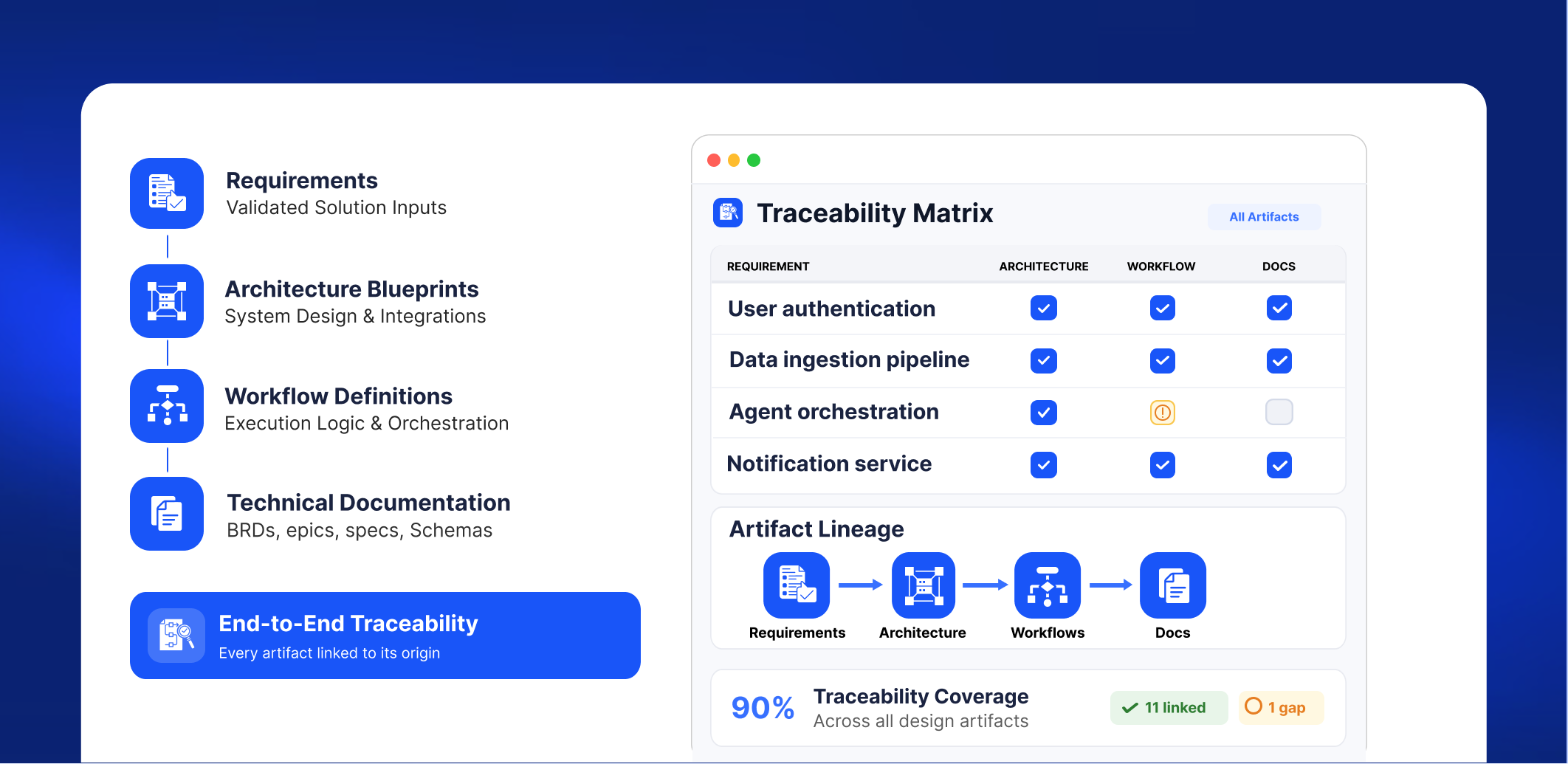
Preserves end-to-end traceability between validated requirements, solution architecture blueprints, workflow definitions, and final technical documentation.
Implementation-ready Documentation
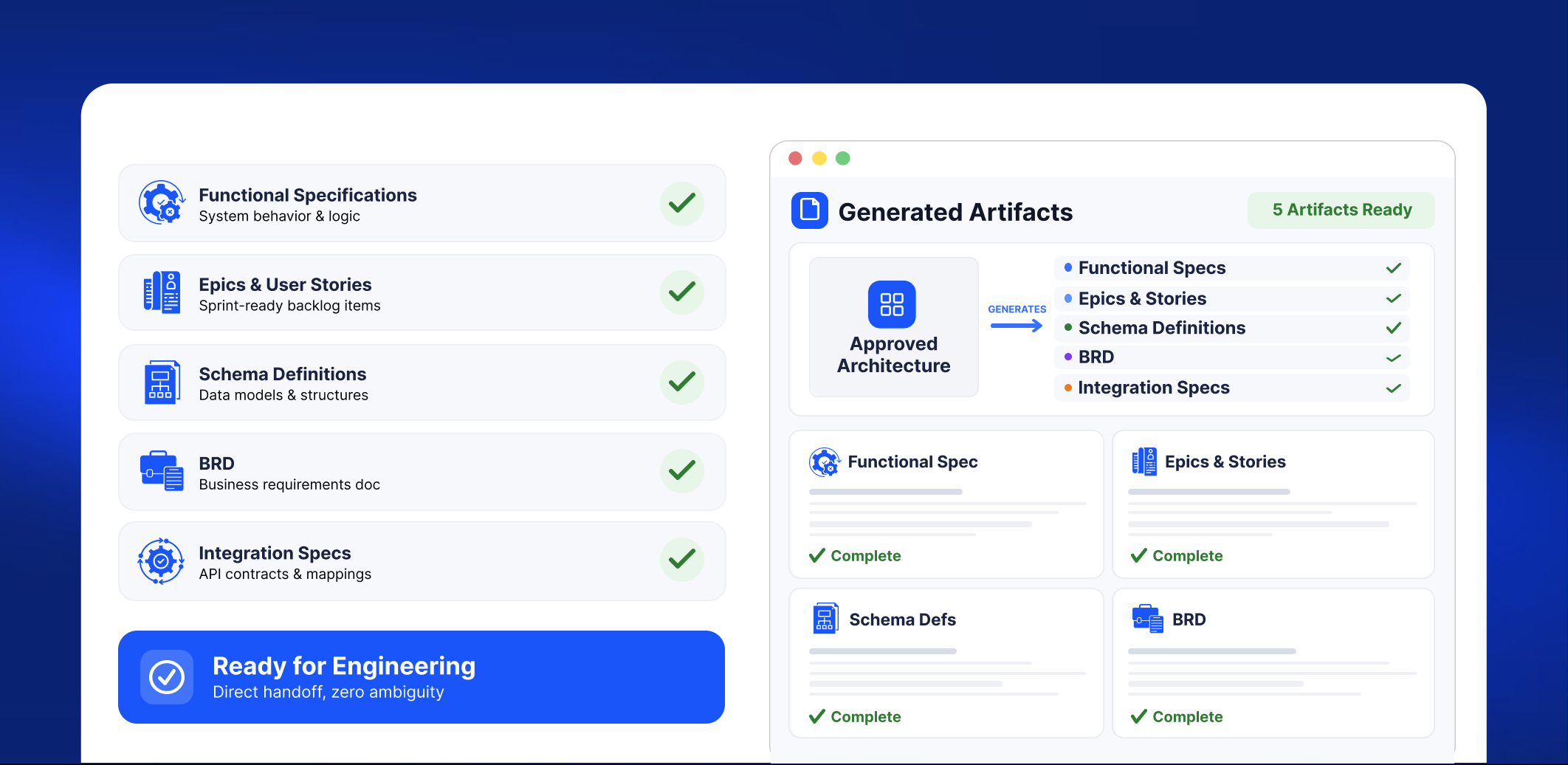
Transforms approved architecture designs into structured technical documentation suitable for direct engineering handoff and execution.
Cross-stakeholder Collaboration
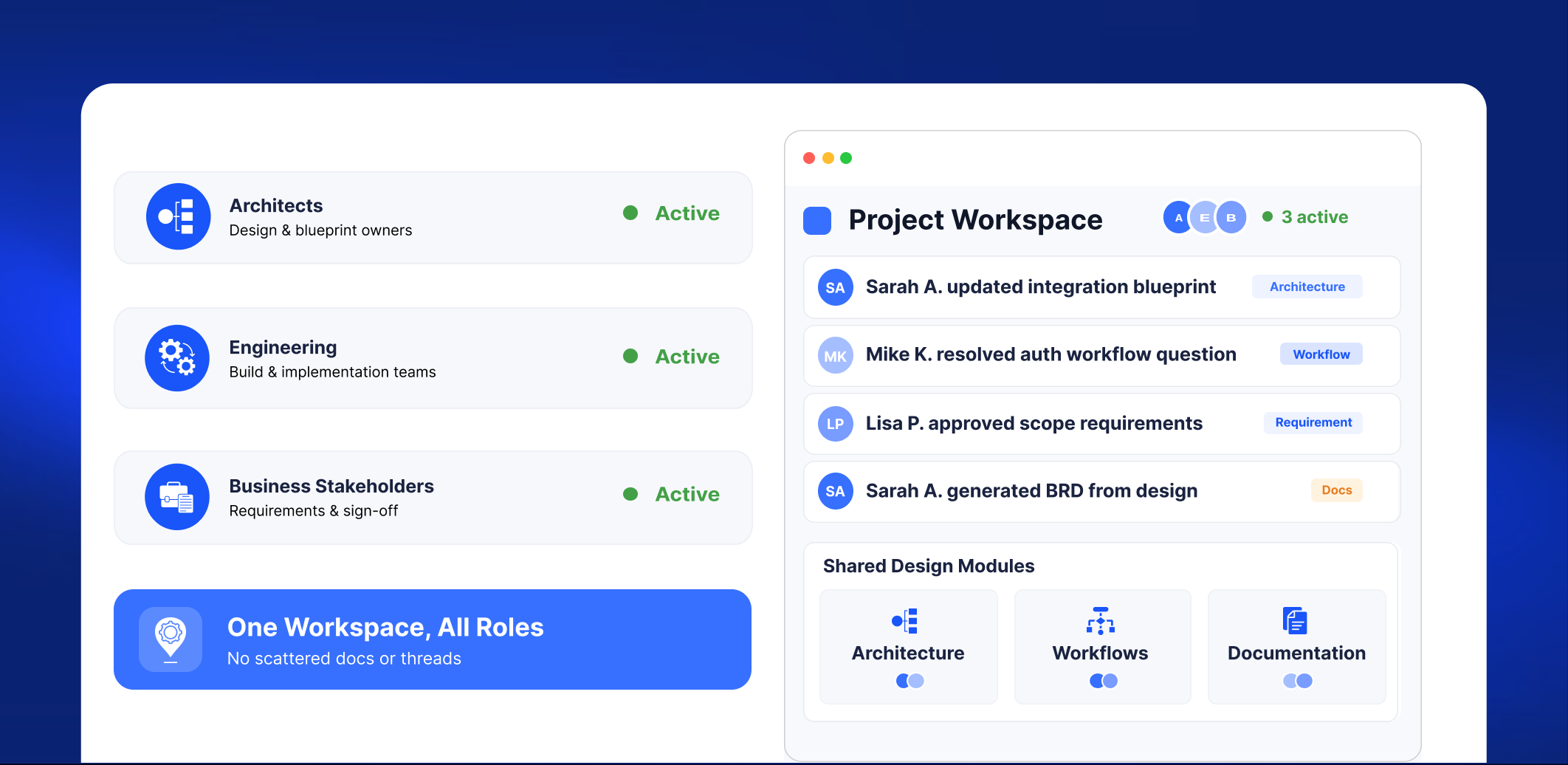
Enables structured collaboration across architects, engineering, and business stakeholders without relying on disconnected documents and threads.
Who Benefits From ZBrain Design


Frequently Asked Questions
1. What is a technical design?
A technical design is the structured process of defining how a selected solution should be built, integrated, deployed and operated.
It translates solution requirements and enterprise context into detailed specifications covering workflows, architecture, data, integrations, security, deployment, governance, monitoring and operational considerations. A complete technical design gives engineering teams the clarity required to begin development with fewer unresolved assumptions.
2. How does ZBrain Design facilitate building technical designs for solutions?
ZBrain Design provides a structured workspace for translating solution requirements and enterprise context into a detailed technical design. It consolidates relevant inputs, recommends the deliverables required for the solution and generates a comprehensive set of technical artifacts, including BRDs, functional requirement specification, user journey, architecture diagram, agentic workflow design, compliance and security considerations, SOW and implementation roadmap, monitoring and observability and governance and operative model. Teams can then review and refine the proposed design to align it with existing systems and enterprise standards before engineering handoff.
3. What makes ZBrain Design different from traditional architecture tools?
ZBrain Design is an AI-assisted technical design module within the ZBrain platform. It supports the full architecture design workflow within a single, governed workspace. The module goes beyond architecture diagramming by structuring requirements, guiding clarification through AI-assisted requirement clarification, and generating implementation-ready technical artifacts, including architecture and agentic workflow designs, data and integration specifications, security and governance documentation, monitoring requirements, and implementation plans.
4. How does ZBrain Design convert solution requirements into a technical design?
ZBrain Design translates solution requirements into a structured technical design by capturing scope, requirements, system landscape context, process flows, integration constraints and governance considerations within a connected workspace. It uses AI-assisted clarification to address missing or ambiguous information relevant to the solution scope, architecture, data, integrations, AI capabilities, security, and governance.
Using this context, ZBrain Design generates the relevant technical design deliverables, covering requirements, architecture, workflows, data, integrations, security, governance, monitoring, and implementation planning. Teams can review and refine these artifacts while maintaining traceability.
5. Can ZBrain Design automate technical design documentation?
Yes. ZBrain Design automates technical design documentation by generating a project-specific set of structured technical artifacts.
The module recommends AI-identified deliverables based on the solution inputs, including a BRD, functional requirement specification, user journey, microservice architecture & API specifications, epics and user stories, compliance and security, monitoring and observability and governance and operative model.
Optional deliverables can include an ETL pipeline, data migration plan, training and fine-tuning, SOW + implementation roadmap, device security architecture, edge processing architecture, third-party integration details, device management and OTA strategy, and device inventory and specifications.
Outputs remain fully editable by technical teams, with AI-assisted refinement available during iteration.
6. How does ZBrain Design support governance?
ZBrain Design defines and documents governance considerations within the technical design before development begins. Depending on the solution, these can include governance objectives, decision rights, accountable roles, approval checkpoints, change-control processes, escalation paths, and requirements for human oversight.
It can also document control requirements across identity and access, data handling and retention, AI and model lifecycle governance, security, compliance, monitoring, auditability, third-party risk, and incident management. Known gaps, assumptions, and unresolved policy decisions are recorded so they can be addressed before implementation.
The resulting governance and operational framework gives engineering teams clear direction for building, validating, deploying, and operating the solution. Applicable runtime policies and controls are enforced when the deployed solution operates under ZBrain Governance.
7. Who can use ZBrain Design?
ZBrain Design is built for solution architects, enterprise architects, technical leads, and transformation teams responsible for translating validated solution concepts into structured, implementation-ready technical designs.
8. What outputs can ZBrain Design generate during architecture design?
ZBrain Design recommends a tailored set of deliverables for each project based on your project description, solution identity, architectural layers, and discovery inputs. These deliverables are dynamically generated and grouped into primary and secondary sets. Some examples of the primary and secondary deliverables are
Primary deliverables (auto-recommended)
- Business Requirements Document (BRD)
- User Journey
- DB Schema & ERD
- Agentic Workflow Design
- Data Flow Diagram
- Architecture Diagram
- Epics and User Stories
- Compliance and Security
- Monitoring and Observability
- Governance and Operative Model
- Functional Requirement Specification
- Microservice Architecture & API Specifications
These are auto-recommended by AI. You can choose to remove any of them before finalizing.
Secondary deliverables (optional)
- ETL Pipeline
- Data Migration Plan
- Training and Fine Tuning
- SOW + Implementation Roadmap
- Device Security Architecture
- Edge Processing Architecture
- Communication Protocol Design
- Third-Party Integration Details
- Edge-Cloud Synchronization Design
- Device Management and OTA Strategy
- Device Inventory and Specifications
The exact set varies according to the solution context and architecture requirements.