Manufacturing
 Logistics
 Real Estate
 Retail
 Finance
 Healthcare
 Hospitality
 Automotive
Internal search for enterprises: Scope, capabilities, benefits, best practices and AI-powered solution
Listen to the article
Inside most organizations, the information people need already exists—it’s just difficult to find. Employees create and reference knowledge across an ever-expanding set of tools: cloud drives, collaboration platforms, project trackers, CRMs, internal wikis, and ticketing systems. Yet access to this knowledge remains inefficient. Enterprise search research shows that nearly nine out of ten internal searches fail on the first attempt, and over 81 % of employees rely on colleagues to help them locate information. Despite this widespread friction, nearly three-quarters of organizations still do not use a dedicated enterprise search solution, leaving teams to manually navigate fragmented systems.
As organizations scale, this problem becomes structural rather than incidental. Adding more tools increases operational capability but also increases cognitive load; employees must remember where information lives before they can begin searching. Traditional, tool-specific search was never designed for this reality. What modern organizations need is a way to cut across systems, understand intent, and surface relevant information securely and reliably. This is where internal search emerges as a foundational capability. In this article, we explore what internal search truly means, why improving internal information search is critical to modern work, how internal search capabilities differ, what features define an effective solution, how to approach implementation, and how platforms like ZSearch are redefining internal search for today’s enterprises.
- What is internal search?
- Why do organizations need better internal information search?
- Comparing internal search capabilities: From basic to AI-powered
- Key benefits of implementing internal search across the enterprise
- Core features of an effective internal search solution
- Best practices for choosing and implementing an internal search solution
- How AI-powered internal search solutions like ZSearch elevate enterprise search
What is internal search?
Internal search is a centralized capability that enables employees to find information across an organization’s digital ecosystem through a single, secure search experience. It connects users to documents, files, and resources stored across internal platforms, without requiring access to the public internet. By operating exclusively on private organizational data, internal search provides a controlled information retrieval layer tailored to the organization’s content, systems, and access rules.
At a functional level, internal search tools index information from a wide range of internal sources, including knowledge bases, intranet systems, shared drives, communication platforms, project management tools, and core enterprise applications. This indexing process organizes fragmented and siloed information into a unified, searchable knowledge layer. When a user submits a query, the system retrieves the most relevant results from across these repositories, regardless of where the information physically resides within the digital workspace.
This unified access changes how employees interact with organizational knowledge. Instead of navigating multiple tools or relying on tacit or institutional knowledge, employees can quickly locate the documents, reports, and resources they need to perform their roles effectively and make informed decisions. For example, a customer support agent can instantly retrieve a client’s interaction history, while a compliance officer can access the latest regulatory update without switching between systems.
As organizations continue to digitize their operations and distribute information across an increasing number of platforms, a unified internal search capability becomes essential to avoid fragmentation and inefficiency. Without internal search, locating and analyzing information tied to specific processes is slow, fragmented, and heavily dependent on manual effort, limiting both operational efficiency and decision quality.
By connecting people to information across the organization, internal search reduces knowledge silos, enables faster and more confident decisions, improves cross-team collaboration, and ultimately drives higher productivity.
Why do organizations need better internal information search?
Understanding what internal search is only addresses part of the problem. The more pressing question for organizations is: why is internal search essential to modern work?
The average technology-driven organization relies on well over a hundred digital tools across departments, from collaboration platforms and CRMs to document repositories and specialized internal systems. In many cases, this number can exceed 200 applications, creating significant complexity in how information is accessed and managed. While these tools increase operational capability, they also fragment information.
As a result, finding internal information often requires employees to follow a multi-step, inefficient process:
- Identify which application is most likely to contain the required information
- Search within that application for the relevant document or resource
- Manually scan the content to locate the specific detail they need
This approach has been the default model for internal information retrieval for years. However, as the number of tools and data sources grows, it becomes increasingly time-consuming, error-prone, and unsustainable.
Key challenges without an effective internal search
Organizations that rely on tool-by-tool searching commonly face several challenges:
- Information fragmentation: Knowledge is spread across dozens or hundreds of disconnected systems
- Low discoverability: Employees often do not know where information is stored
- Time lost searching: Significant work hours are spent navigating tools instead of executing tasks
- Duplicate work: Teams recreate documents or processes because existing resources are hard to find
- Inconsistent decision-making: Decisions are made with incomplete or outdated information
- Knowledge silos: Critical insights remain locked within teams or individuals
These challenges directly impact productivity, collaboration, and business outcomes.
The business impact of effective internal search
By enabling easier and more intuitive access to internal information, internal search fundamentally changes how employees work. A unified internal search experience reduces time spent searching, shortens decision cycles, and allows employees to focus on higher-value tasks.
More importantly, internal search removes friction from everyday workflows. Employees no longer need to remember where information lives or which tool to search; they can simply ask for what they need and receive relevant results across systems.
In an environment where speed, accuracy, and agility are critical, internal search becomes a foundational capability that supports better decisions, higher efficiency, and scalable growth across the organization.
Streamline your operational workflows with ZBrain AI agents designed to address enterprise challenges.
Comparing internal search capabilities: From basic to AI-powered
Internal search solutions differ significantly in how they retrieve information, understand context, and support decision-making. The table below highlights how AI-powered internal search extends beyond traditional enterprise search by incorporating semantic understanding, knowledge graphs, and contextual intelligence.
| Capability | Basic internal search | Enterprise search | AI-powered internal search |
|---|---|---|---|
| Search scope | Limited to a single application | Connects multiple enterprise systems | Unified search across tools, unstructured content, and enterprise data |
| Query understanding | Exact keyword matching | Keywords, metadata, and predefined rules | Semantic understanding, natural language queries, contextual relevance |
| Context awareness | None | Limited (filters, metadata) | Deep understanding of intent, context, and role |
| Semantic understanding | Not supported | Partial (synonyms, tagging) | Full semantic search understanding meaning, intent, and relationships |
| Knowledge graphs | Not available | Minimal or static relationships | Dynamic knowledge graphs mapping relationships between documents, entities, users, and processes |
| Personalization | Same results for all users | Basic role-based results | Highly personalized results guided by knowledge graphs and user context |
| Relevance ranking | Static ranking | Rule-based tuning | AI-driven ranking that continuously improves with usage signals |
| Information retrieval | Retrieves documents only | Retrieves documents and links | Retrieves answers, summaries, and contextually related information |
| Actionability | View or download files | Navigate to linked resources | Summarize content, extract insights, suggest next steps |
| Analytics and insights | Basic search logs | Usage and performance analytics | Knowledge gap analysis, behavior insights, and content optimization |
| Trust and accuracy | Depends on the source | Dependent on integration quality, indexing rules, permission mapping, and relevance tuning | Results sourced only from authorized, up-to-date systems with traceability |
| Data relationships | Flat document-level results | Cross-document linking | Entity-level understanding across clients, transactions, processes, and regulations |
| Security & compliance | Platform-level permissions | Integrated access controls | Permission-aware retrieval with traceability and audit readiness |
| Scalability & adaptability | Limited | Scales with manual configuration | Learns and adapts automatically as data and usage grow |
| Integration | Simple on the platform | Can be complex | Designed for fast integration with existing tools |
| Business impact | Helps locate information | Enterprise-wide info discoverability | Accelerates decisions, reduces cognitive load, and boosts productivity |
This progression illustrates how AI-powered internal search evolves from a retrieval function into an intelligent knowledge infrastructure that combines semantic understanding, contextual ranking, and permission-aware access to support scalable, high-confidence information access across the enterprise.
Key benefits of implementing internal search across the enterprise
A strong internal search system enhances how employees access information, collaborate, and make decisions across the organization. By making knowledge easy to find and use, internal search delivers consistent value at both the individual and organizational levels.
1. Increased employee productivity
Internal search enables employees to quickly locate the information they need from a single interface, regardless of where it is stored. By reducing time spent navigating tools and switching contexts, employees stay focused on their core responsibilities. Faster access to relevant documents, data, and context allows teams to complete tasks more efficiently, minimize workflow interruptions, and consistently deliver high-quality outcomes.
2. Faster and smoother employee onboarding
Internal search helps accelerate onboarding by giving new employees immediate access to training materials, policies, workflows, and role-specific documentation. New hires can independently search for answers as questions arise, helping them understand organizational processes and expectations more quickly. This self-serve access shortens ramp-up time, builds early confidence, and enables new employees to drive impact earlier.
3. Improved decision-making and confidence
When accurate and relevant information is readily accessible, employees can make decisions with greater confidence. Internal search capability ensures teams can easily retrieve historical context, policies, and supporting data needed for everyday decisions. This enables faster, more consistent decision-making across teams while reducing uncertainty and dependency on informal information channels.
4. Enhanced collaboration and knowledge sharing
By connecting information across tools and departments, internal search creates a shared knowledge layer for the organization. Teams can discover and reuse others’ work, build on existing insights, and operate with a shared understanding. This shared access improves alignment across functions, encourages knowledge sharing, and strengthens collaboration at scale.
5. Better customer and client experience
Internal search directly supports customer-facing teams by providing quick access to accurate and up-to-date information. When employees can respond promptly and confidently, customer interactions become more efficient and consistent. This leads to faster resolution times, improved service quality, and stronger, more trusted customer relationships.
6. Greater visibility into organizational knowledge
Internal search provides valuable insight into how information is accessed and used across the organization. These insights help teams identify knowledge gaps, improve documentation quality, and align resources with actual employee needs. Over time, this visibility supports continuous improvement and helps organizations strengthen their overall knowledge foundation.
As organizations grow and information volumes increase, internal search becomes a key enabler of productivity, agility, and informed decision-making. By making knowledge accessible and actionable, internal search helps organizations operate more efficiently and scale with confidence.
Core features of an effective internal search solution
An effective internal search solution enables employees to find the right information quickly and confidently by delivering a search experience that is intuitive, relevant, and consistent across the organization. The following features define a mature and high-impact internal search solution.
Everything in one place
A strong internal search solution provides a single, centralized access point for all organizational knowledge. Employees can submit a query once and receive results from across internal documents, collaboration tools, support systems, and project platforms, without navigating individual applications.
Example:
A search for “vendor onboarding” returns procurement guidelines, legal approval checklists, related project documentation, and prior onboarding tickets from multiple systems in a single unified results view.
Understands real questions
An effective internal search solution understands user intent rather than relying solely on exact keyword matching. It supports natural language and conversational queries, allowing employees to search using everyday language.
Example:
Instead of searching for a specific document name, the procurement manager asks, “What steps are required to onboard a new vendor?” The system surfaces onboarding policies, step-by-step workflows, required forms, and internal process documentation, even though different teams refer to the process using varied terminology.
Displays relevant information
A well-designed internal search experience adapts to the user’s context. Search results are prioritized by role, department, and prior interactions, ensuring employees see information most relevant to their responsibilities.
Example:
When searching for “vendor onboarding requirements,” the procurement manager first sees contract templates, approval workflows, and supplier evaluation criteria. Meanwhile, a finance user running the same search would see tax forms, payment setup guidelines, and compliance checks prioritized in their results.
Enables advanced filters
An effective internal search solution allows users to refine results through simple filtering and sorting options. Filters such as content type, date, department, or relevance help users quickly narrow results in content-rich environments without requiring advanced search syntax.
Example:
To prepare for an upcoming onboarding review, the procurement manager filters results to show only onboarding checklists and approval documents created in the last six months, quickly isolating the most current and relevant materials.
Connects related ideas
An AI-powered internal search solution recognizes relationships between concepts, including related topics and synonymous terms. This allows relevant information to surface even when users phrase queries differently.
Example:
A search for “client offboarding” also surfaces content related to account closure procedures, transition checklists, and contractual obligations, even when those terms are not explicitly included in the query.
Together, these features create an efficient, reliable search experience aligned with employees’ workflows. Teams can access information without knowing its location or label, enabling smoother workflows and better use of organizational knowledge.
Best practices for choosing and implementing an internal search solution
Selecting the right internal search solution requires a clear understanding of organizational needs, existing systems, and long-term goals. A thoughtful approach ensures the solution delivers lasting value and scales effectively as the organization grows.
Start with your organizational knowledge landscape
Begin by assessing the volume and complexity of your internal knowledge. Understand how much information exists, how it is structured, and where it is stored. Consider the number of tools in use and the types of content that need to be searchable across the organization.
Evaluate integration requirements
An effective internal search solution should integrate seamlessly with the platforms your teams already use. Prioritize solutions that integrate with multiple systems so key data sources are accessible through a single search interface.
Match the solution to your technical capacity
Consider the level of technical support available for setup and ongoing maintenance. Some organizations benefit from solutions that deliver value with minimal configuration, while others may require deeper customization. Choose a solution that aligns with your internal capabilities and operational preferences.
Prioritize intelligent search capabilities
Look for solutions that go beyond basic keyword matching. Strong internal search solutions should understand natural language queries and deliver results that are relevant and useful, not just a list of links. This ensures employees can find what they need quickly and confidently.
Review pricing and scalability carefully
Pricing should be transparent and predictable. Evaluate how costs scale as usage grows to ensure the solution remains sustainable over time. A clear pricing model helps avoid unexpected cost increases as the organization expands.
Monitor usage and continuously improve
Implementation is only the beginning. Track how employees use the search solution and gather regular feedback. Monitoring usage patterns helps identify opportunities to refine content, improve relevance, and strengthen the overall search experience.
A well-chosen, thoughtfully implemented internal search solution forms a foundation that supports productivity, informed decisions, and efficient access to organizational knowledge as the business evolves.
Streamline your operational workflows with ZBrain AI agents designed to address enterprise challenges.
Transforming enterprise search with AI-powered internal search solutions like ZSearch
As organizations adopt internal search as a foundational capability, the effectiveness of the solution depends on how well it unifies enterprise knowledge, understands context, and enforces security at scale. This is where ZSearch fits into the modern internal search landscape.
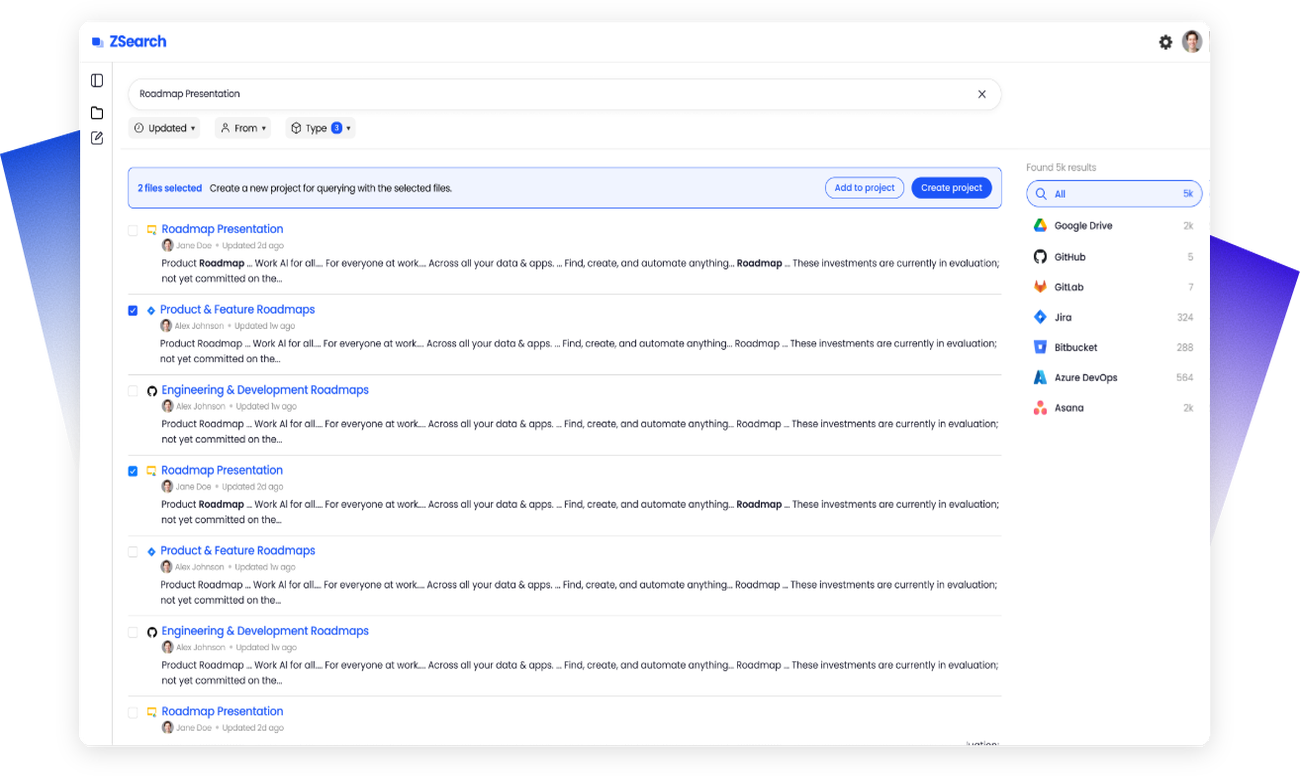
ZSearch is ZBrain’s AI-powered enterprise knowledge search solution designed specifically for searching across private organizational data. It enables employees to securely search information across internal systems through a single interface while strictly adhering to access controls and compliance requirements. It is purpose-built for environments where trust, accuracy, and governance are as critical as speed and usability.
Key features of ZSearch
-
Universal search across enterprise systems
ZSearch securely connects to all major internal systems, including cloud drives, collaboration tools, issue trackers, and wikis, so employees can find what they need in a single interface without switching tools. -
Intent-aware retrieval
Combining semantic understanding with natural language capabilities, ZSearch interprets the meaning behind queries, enabling users to search as they think rather than as they remember keywords. -
Context-adaptive ranking
Results are intelligently ranked based on relevance, contextual significance, and recency, ensuring the most accurate and useful responses appear first. -
Continuous and automatic indexing
ZSearch keeps content up to date by automatically syncing and indexing changes across connected systems in the background, eliminating manual maintenance. -
Shared knowledge workspaces
Teams can curate search results into collaborative workspaces, each with an embedded AI assistant that answers questions strictly based on the selected content. -
Secure, permission-aware design
The platform enforces enterprise-grade access controls and identity-based permissions, ensuring users only see information they are authorized to access. -
Compliance ready
Workflows align with major compliance standards, including SOC 2 Type II, HIPAA, GDPR, and ISO 27001:2022, making ZSearch suitable for regulated environments.
Benefits of using ZSearch
Reliable, context-aware results
ZSearch delivers search results grounded in enterprise context and aligned with user intent, reducing noise and increasing relevance across large, complex datasets.
Secure and governed access
By respecting source-level permissions and access controls, ZSearch ensures that only authorized users see sensitive or restricted information, embedding security into every search.
Traceable and trustworthy information
Every result includes clear links back to its origin, supporting auditability and enabling employees to verify accuracy and context before acting.
Seamless integration with existing systems
ZSearch integrates effortlessly with the enterprise tools teams already use, connecting data sources without disrupting established workflows.
Flexible deployment and scalability
Whether deployed in public cloud, private cloud, or hybrid environments, ZSearch scales with organizational growth while maintaining performance, accuracy, and governance.
Enhanced team productivity and collaboration
By reducing time spent searching and increasing visibility into critical knowledge, ZSearch enables teams to work more efficiently, make better decisions, and collaborate with shared context.
These capabilities make ZSearch more than a search tool—they turn internal search into a strategic knowledge layer that empowers individuals and teams to find, understand, and act on organizational information with confidence.
Endnote
Internal information ecosystems are growing rapidly in size and complexity, and the ability to find and use organizational knowledge now plays a critical role in how effectively teams operate. Internal search is no longer a supporting feature; it is a core capability that shapes productivity, decision quality, and collaboration across the enterprise. Organizations that invest in modern internal search solutions gain more than faster access to information; they remove friction from daily work and establish a foundation for scalable, data-driven decision-making. By unifying knowledge across systems, understanding intent, and enforcing security by design, platforms like ZSearch represent the next evolution of internal search, helping organizations transform scattered information into reliable, actionable insight that supports long-term growth.
Still relying on tool-by-tool fragmented search? Learn how ZSearch unifies enterprise knowledge access and delivers the right information at the right time, securely and in context.
Listen to the article
Author’s Bio


CEO LeewayHertz
An early adopter of emerging technologies, Akash leads innovation in AI, driving transformative solutions that enhance business operations. With his entrepreneurial spirit, technical acumen and passion for AI, Akash continues to explore new horizons, empowering businesses with solutions that enable seamless automation, intelligent decision-making, and next-generation digital experiences.
Table of content
- What is internal search?
- Why do organizations need better internal information search?
- Comparing internal search capabilities: From basic to AI-powered
- Key benefits of implementing internal search across the enterprise
- Core features of an effective internal search solution
- Best practices for choosing and implementing an internal search solution
- How AI-powered internal search solutions like ZSearch elevate enterprise search
Share Article


Frequently Asked Questions
What is internal search?
Why do traditional keyword-based search systems struggle in modern enterprises?
What are the core technical requirements of an effective internal search solution?
An effective internal search solution must support:
- Secure integration with multiple enterprise systems
- Continuous indexing of structured and unstructured data
- Permission- and identity-aware retrieval
- Semantic and natural language query understanding
- Scalable architecture to handle growing data volumes
- Auditability and compliance alignment
Without these capabilities, search accuracy and trust degrade rapidly at scale.
What role does AI play in modern internal search solutions?
How does ZSearch differ from generic AI search tools?
What is ZSearch’s indexing and retrieval approach?
What are the key benefits of using ZSearch in enterprise environments?
What core capabilities does ZSearch provide for enterprise internal search?
How does ZSearch support collaborative knowledge work?
How do we get started with ZSearch for our organization?
To begin your enterprise search journey with ZSearch:
- Contact us at hello@zbrain.ai
- Or fill out the inquiry form on ZBrain
Our team will connect with you to understand your enterprise search and knowledge discovery needs, assess your existing systems and workflows, and outline next steps.
Insights
Solution architecture best practices: A guide for enterprise teams
The architecture design process culminates in a set of documented artifacts that communicate the solution to development, operations, and business teams.
Common solution architecture design challenges — and how to overcome them
Solution architecture must evolve from fragmented documentation practices to a structured, collaborative, and continuously validated design capability.
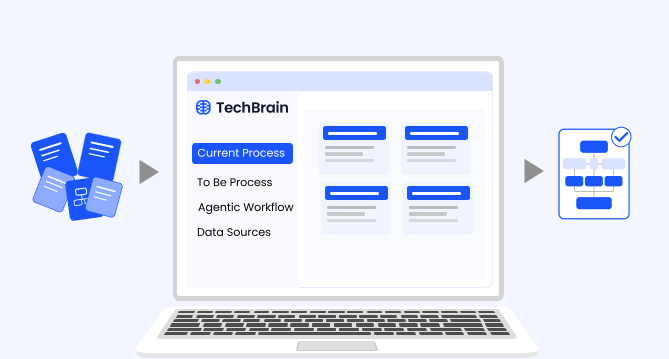
Why structured architecture design is the foundation of scalable enterprise systems
Structured architecture design guides enterprises from requirements to build-ready blueprints. Learn key principles, scalability gains, and TechBrain’s approach.
A guide to intranet search engine
Effective intranet search is a cornerstone of the modern digital workplace, enabling employees to find trusted information quickly and work with greater confidence.
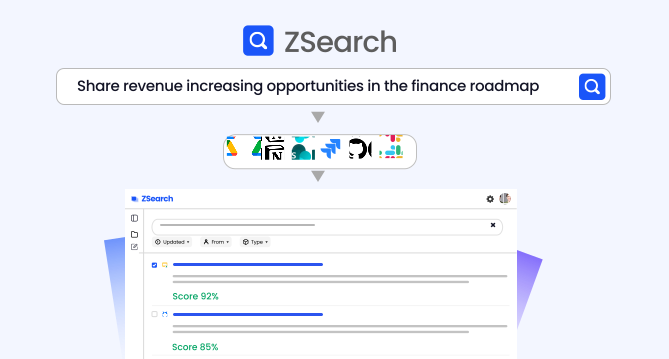
Enterprise knowledge management guide
Enterprise knowledge management enables organizations to capture, organize, and activate knowledge across systems, teams, and workflows—ensuring the right information reaches the right people at the right time.
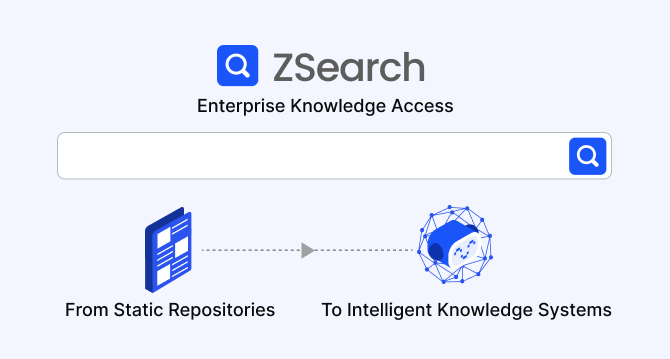
Company knowledge base: Why it matters and how it is evolving
A centralized company knowledge base is no longer a “nice-to-have” – it’s essential infrastructure. A knowledge base serves as a single source of truth: a unified repository where documentation, FAQs, manuals, project notes, institutional knowledge, and expert insights can reside and be easily accessed.
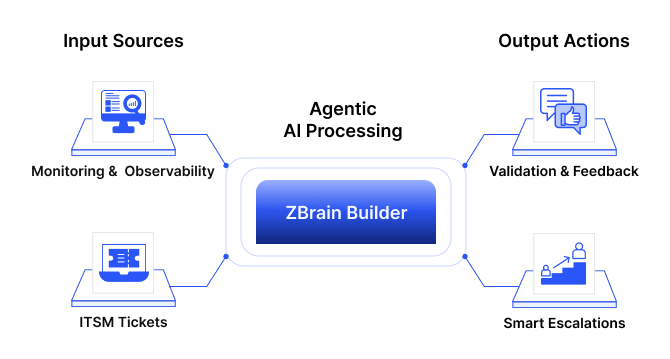
How agentic AI and intelligent ITSM are redefining IT operations management
Agentic AI marks the next major evolution in enterprise automation, moving beyond systems that merely respond to commands toward AI that can perceive, reason, act and improve autonomously.
What is an enterprise search engine? A guide to AI-powered information access
An enterprise search engine is a specialized software that enables users to securely search and retrieve information from across an organization’s internal data sources and systems.
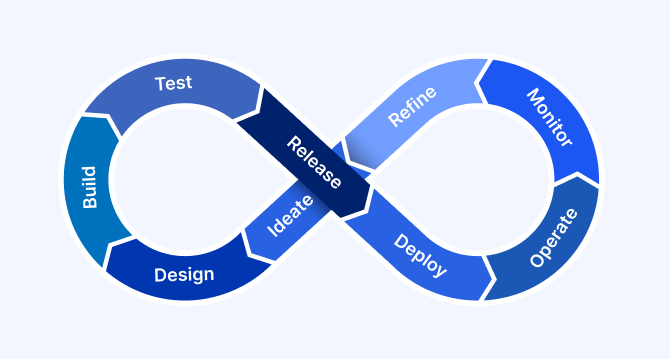
A comprehensive guide to AgentOps: Scope, core practices, key challenges, trends, and ZBrain implementation
AgentOps (agent operations) is the emerging discipline that defines how organizations build, observe and manage the lifecycle of autonomous AI agents.