Manufacturing
 Logistics
 Real Estate
 Retail
 Finance
 Healthcare
 Hospitality
 Automotive
Intranet search engine guide: How it works, use cases, challenges, strategies and future trends
Listen to the article
Efficient access to information within an organization is no longer a nice-to-have capability—it is a business necessity. In today’s digital-first workplaces, employees rely on internal systems to access policies, project documentation, training materials, and operational knowledge required to perform their roles effectively. Yet as enterprise content continues to grow and spread across intranets, collaboration tools, and document repositories, many organizations struggle to ensure that critical information is easy to find, reliable, and up to date.
The cost of ineffective internal search is high and measurable. An enterprise employing 1,000 knowledge workers can waste approximately $48,000 per week, nearly $2.5 million [1] annually, simply due to employees’ inability to locate and retrieve information efficiently. This loss stems from duplicated work, delayed decisions, and repeated requests for the same knowledge across teams.
These challenges are reflected in the growing strategic importance of workplace search technologies. The global enterprise search market was valued at USD 5.34 billion in 2025 and is projected to reach USD 12.71 billion by 2035 [2], growing at a compound annual growth rate (CAGR) of 9.05%. This sustained growth underscores how organizations are increasingly prioritizing search and information discovery as foundational elements of their digital workplace strategies.
This guide explores what intranet search engines are, how they work, key enterprise use cases, common challenges that limit their effectiveness, and best practices for building scalable search experiences for modern digital workplaces.
- What is an intranet search engine, and why does it matter?
- Intranet search vs. web search: Key differences in enterprise environments
- The anatomy of a modern intranet search engine
- The evolution of intranet search: From keyword to agentic discovery
- Enterprise use cases for intranet search
- Key challenges limiting the effectiveness of intranet search
- Benefits of intranet search engines
- Trends shaping intranet search in 2026 and beyond
- Building a future-ready intranet search strategy
What is an intranet search engine, and why does it matter?
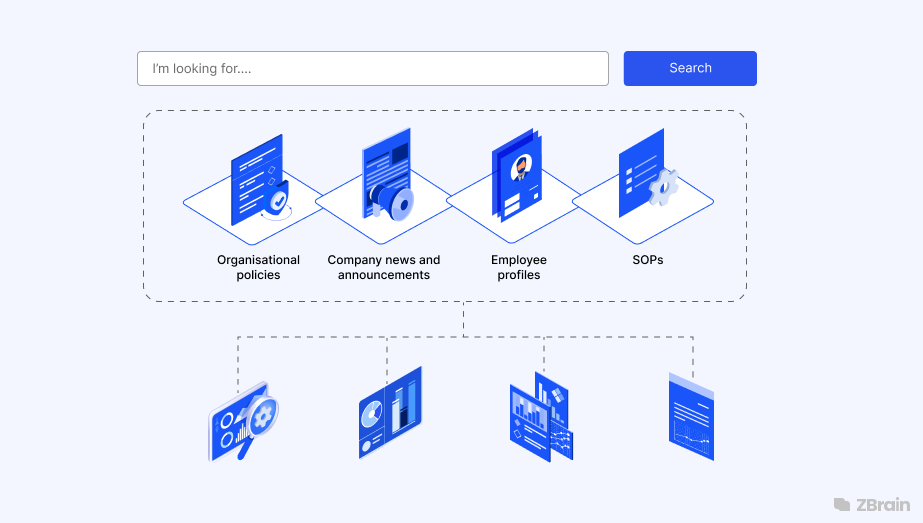
An intranet search engine is a specialized tool designed to help employees quickly and accurately locate information within an organization’s internal systems and data sources. It enables search across intranet pages, documents, policies, files, and other internal resources from a single interface, ensuring that relevant information can be accessed without navigating complex menus or folder structures. Built specifically for enterprise use, intranet search engines account for organizational context, content structure, and access permissions to deliver precise and secure results.
At a deeper level, an intranet search engine functions as a discovery layer for an organization’s private digital ecosystem. Rather than forcing employees to remember where information resides—whether in a document repository, a collaboration platform, or a legacy system—it provides a single, consistent point of entry to internal knowledge. By enforcing permission-aware access (often referred to as security trimming), the search engine ensures that users only see information they are authorized to access, preserving privacy and compliance.
Why intranet search matters
Three structural shifts have made intranet search a strategic capability rather than a utility:
- Content fragmentation: Information is no longer confined to the intranet; it is siloed across cloud repositories, collaboration platforms, and line-of-business applications. Without a unified discovery layer, employees resort to manual browsing, leading to duplicate work and information silos.
- The hybrid work mandate: With distributed teams, the “hallway conversation” has been replaced by the “search box.” It is now the primary gateway for employees to find critical policies, procedures, and institutional knowledge.
- AI has reset expectations: Employees using generative AI tools at home now expect the same level of intuitiveness in their workplace systems. They expect to ask a question in plain language and receive a grounded, sourced answer—not just a list of ten links to scan.
When information is consistently discoverable, employees make better decisions, collaborate more effectively, and stay aligned with organizational processes. When it is not, organizations pay a hidden tax in the form of duplicated work, slow decision-making, and erosion of trust in internal systems.
From keywords to intent
Modern intranet search engines go beyond simple keyword-based retrieval. They leverage semantic understanding, metadata, and intelligent ranking to interpret user intent and surface the most relevant information in context. Instead of returning long lists of loosely related results, these systems prioritize accuracy, relevance, and usability—helping employees reach the right information faster.
Today’s search systems further enhance this experience with Retrieval-Augmented Generation (RAG)—an AI approach that connects vast internal data with natural language understanding. This allows search engines to provide:
- Concise answers: Synthesizing information into a single, verified summary.
- Semantic understanding: Interpreting user intent rather than relying on exact keyword matching.
- Contextual relevance: Prioritizing results based on the user’s role and access permissions.
In essence, RAG-enabled search transforms the intranet into an intelligent, efficient knowledge hub, reducing search time and improving information retrieval.
When paired with strong content governance and intranet best practices, intranet search engines serve as the foundation for effective information access within an organization. They transform the intranet from a static repository into a reliable, intelligent knowledge hub that fosters collaboration, communication, and efficient day-to-day operations.
Intranet search vs. web search: Key differences in enterprise environments
Although search may appear to be a universal problem, searching within an organization is fundamentally different from searching the public web. The two environments operate under distinct constraints, expectations, and risks—making intranet search a unique challenge.
Security and permissions are non-negotiable
One of the most critical distinctions between intranet and web search is security. Public search engines are designed to maximize visibility, whereas intranet search must strictly enforce access controls. Search results must respect roles, departments, and compliance requirements at all times.
This requirement—often referred to as security trimming—ensures employees only see content they are authorized to access. Unlike web search, enterprise search must never “over-share.” Even a single permissions failure can expose sensitive information and undermine trust in internal systems.
Why ranking works differently inside organizations
Web search engines rely on popularity signals such as links, click behavior, and engagement metrics to determine relevance. Algorithms such as PageRank use backlinks and collective behavior to identify authoritative content. Employees rarely link to internal policies or procedural documents.
As a result, intranet search engines must rely on enterprise-specific signals—such as metadata quality, document status, ownership, and recency—to rank results effectively. Poor metadata directly leads to poor search results, making content governance and taxonomy essential components of intranet search success.
The challenge of enterprise language
Enterprises also introduce language complexity. Every organization develops its own acronyms, project names, and internal terminology. A search engine must understand that different terms may refer to the same concept, even if the language used by employees does not match the wording in official documents.
To address this, intranet search engines depend on synonym management and taxonomies that map informal queries to structured content, ensuring relevant information is discoverable regardless of how employees phrase their searches.
The data silo factor
A significant difference between public and intranet search lies in the data structure. Web search engines primarily crawl a relatively uniform format (HTML), whereas intranets often contain a wide variety of content types, including PDFs, PowerPoint presentations, Excel sheets, database entries, and content across business tools such as Jira or Slack. Intranet search engines must be able to ingest and normalize these diverse file formats, whereas web search engines typically handle more structured, standardized web pages.
Intent-driven search at work
Finally, user intent in the workplace is task-focused rather than exploratory. Employees search to complete actions—such as locating a policy, accessing a system, or understanding a process. Intranet search must recognize this intent and surface the most relevant, authoritative information quickly, rather than overwhelming users with volume.
These differences explain why intranet search requires a purpose-built approach—and why applying web search assumptions inside the enterprise often falls short.
Streamline your operational workflows with ZBrain AI agents designed to address enterprise challenges.
The anatomy of a modern intranet search engine
A modern intranet search engine is more than a simple keyword-matching tool. It is a layered system designed to discover, organize, and deliver information from across an organization’s internal environment in a way that is fast, secure, and context-aware. While implementations may vary, most intranet search engines rely on a common set of foundational components.
Indexing and connectors: Discovering internal content
At the foundation of intranet search is the ability to discover and index content from multiple internal sources. Search engines use connectors, APIs, and crawlers to scan systems such as intranet portals, document repositories, collaboration tools, and business applications. These may include platforms like SharePoint, Google Drive, Jira, Confluence, or internal knowledge bases.
During this process, the search engine collects both full-text content and metadata—such as titles, authors, dates, departments, and permissions—and stores it in a searchable index. This indexed layer acts as a structured map of the organization’s knowledge, enabling fast retrieval without querying each system individually at search time.
Federated search: One experience, many systems
In many organizations, information is spread across disconnected platforms. Federated search addresses this challenge by enabling employees to search once and retrieve results from multiple systems through a single interface. Rather than forcing users to know where information lives, federated search abstracts system boundaries and presents a unified discovery experience.
This approach reduces tool-switching, improves findability, and ensures that employees can access relevant information regardless of its source—provided they have permission to view it.
Natural Language Processing (NLP): Understanding intent
Traditional keyword search relies on exact term matching, which often fails in real-world workplace scenarios. Modern intranet search engines increasingly use Natural Language Processing (NLP) to interpret intent, understand synonyms, and handle conversational queries.
For example, a query phrased as a question can be mapped to relevant policies, guides, or resources even if its wording does not exactly match a document title. NLP allows search systems to move from literal matching to intent-based discovery, making search more intuitive and effective for employees.
Ranking and relevance: Deciding what comes first
Once results are retrieved, the search engine must determine which ones are most useful. Unlike web search, intranet search cannot rely solely on popularity signals. Instead, it balances multiple relevance factors, including:
- Recency, to reflect updated information
- Authority, such as official or approved documents
- Contextual factors, such as user role or department
The goal is to surface the most accurate and appropriate information, not simply the newest or most frequently accessed content.
Faceted search and filters: Reducing cognitive load
To help users refine results quickly, modern intranet search engines provide filters and facets—such as department, date, file type, or content source. These tools reduce cognitive load by allowing employees to narrow large result sets without having to rephrase queries repeatedly.
Combined with features like autocomplete and suggestions, filters help employees reach the right information faster and with less effort.
Together, these components form the technical backbone of a modern intranet search engine—enabling efficient discovery, secure access, and a more intuitive way to navigate an organization’s growing body of knowledge.
As organizations mature digitally, many find that even the most advanced intranet search capabilities are only part of the solution. While intranet search engines are designed to optimize discovery within internal portals and curated knowledge hubs, modern workplaces often require search to extend beyond these to a broader ecosystem of enterprise tools and systems.
The evolution of intranet search: From keyword to agentic discovery
Intranet search has moved through four distinct phases, each addressing the limitations of the previous one. Understanding this evolution helps explain why expectations today look so different from those of even three years ago.
Phase 1: Lexical search
The first generation of intranet search relied on inverted indexes and exact keyword matching, with ranking driven by term frequency and document statistics. It worked when employees knew the right words, but it broke down whenever the vocabulary diverged between query and content.
Phase 2: Semantic and vector search
The second wave introduced semantic understanding through embeddings and vector databases. Search systems began to capture meaning, not just words, allowing employees to query in natural language and receive results that matched intent. Synonyms, paraphrases, and conceptual relationships are treated as core signals, helping the system understand meaning beyond exact keyword matches.
Phase 3: Retrieval-Augmented Generation
Retrieval-augmented generation (RAG) combined retrieval with generative AI. Instead of returning ten links, the system retrieves relevant passages from authorized sources, hands them to a language model, and produces a grounded answer with citations. RAG addresses the fundamental weakness of large language models inside the enterprise: their inability to know proprietary, current, and permission-controlled information without retrieval. It has become the dominant pattern for AI-powered enterprise search.
Phase 4: Agentic search
The current frontier is agentic search, in which AI agents plan, retrieve iteratively, reflect on their own results, and call tools to complete a task. Rather than following a fixed retrieve-then-generate flow, an agentic search system can decompose a question into sub-queries, search multiple sources, validate findings, and even execute a workflow such as drafting a response or initiating a request.
Agentic search is now being realized through platforms like ZBrain Builder’s Agentic retrieval. It enhances agentic search by structuring retrieval into a decision-driven workflow, where AI agents decide when and what to retrieve, validate results, and refine queries iteratively. This advanced capability ensures that knowledge retrieval is not only accurate and context-aware but also adaptive to user intent, providing more actionable, synthesized answers rather than simple links.
In addition, ZBrain’s Graph RAG extends traditional RAG by integrating graph-based traversal, enabling retrieval beyond document content to explore relationships within a knowledge graph. This approach enhances the relevance of search results by connecting related data points, improving both accuracy and comprehensiveness in responses.
VentureBeat notes that the original RAG architecture is being supplemented by approaches such as GraphRAG, agentic document analytics, and contextual memory, which together expand discovery beyond single-pass retrieval. [3]
The practical implication for intranet search is significant. As enterprise information becomes more fragmented across documents, messages, systems, and workflows, users need search experiences that can connect related context rather than surface isolated results. Employees increasingly expect to ask, “What did we agree with this client at the last review, and what is still outstanding?” and receive a synthesized, sourced answer that draws on meeting notes, contracts, and ticket histories simultaneously. Intranet search is shifting from a list of links to an answer surface that supports decisions and workflows.
Enterprise use cases for intranet search
An intranet search engine supports far more than basic document retrieval. When implemented effectively, it becomes a core productivity layer—enabling employees to find information, complete tasks, and make decisions faster across a wide range of everyday scenarios. Below are key enterprise use cases that highlight the practical value of intranet search.
1. Quickly finding updated company policies
Company policies are among the most frequently accessed—and most time-sensitive—internal documents. Employees regularly search for answers to questions such as:
- What is the current dress code?
- When is the next company holiday?
- What steps should I follow for an unplanned leave of absence?
Intranet search provides on-demand access to the most current, authoritative policies, reducing dependency on HR and minimizing the risk of outdated guidance. This is especially valuable in sensitive situations where employees prefer to find information privately and quickly.
2. Accessing relevant team resources
Intranet search enables access to shared folders, project files, and reference materials that employees are authorized to view, ensuring teams work with the latest versions. Instead of navigating complex folder structures or requesting files from colleagues, employees can search directly and see when content was last updated and by whom.
This improves collaboration, reduces version confusion, and ensures consistency across teams.
3. Finding individual employee details
Advanced intranet search makes employee directories more useful by enabling the discovery of:
- Employee locations or time zones
- Skills, expertise, and certifications
- Birthdays and work anniversaries
Managers and HR teams can use this information to improve workforce planning, strengthen recognition programs, and assign work based on skills rather than guesswork.
4. Enabling IT self-service
Employees can resolve common technical issues independently by using the intranet search to find:
- Troubleshooting guides
- System documentation
- How-to videos
- Open or resolved ticket references
By reducing reliance on helpdesk tickets for routine issues, intranet search frees IT teams to focus on higher-impact initiatives.
5. Supporting new employee onboarding
For new hires, intranet search serves as a critical onboarding companion. It provides easy access to training materials, policies, role-specific documentation, and internal processes—allowing employees to ramp up faster and with greater confidence.
A strong search experience during onboarding sets the tone for long-term engagement and self-sufficiency.
6. Fostering knowledge base adoption
A centralized knowledge base is only effective if employees can easily find and use it. Intranet search ensures that FAQs, how-to articles, and shared expertise are surfaced at the moment of need.
As usage increases, search systems can learn from employee behavior to improve relevance—creating a continuous improvement loop between content and discovery.
7. Supporting compliance and audit readiness
In regulated industries, employees often need fast access to approved procedures, compliance guidelines, and audit documentation. Intranet search helps teams locate:
- Standard operating procedures (SOPs)
- Compliance checklists
- Approved templates and records
This reduces risk, improves consistency, and ensures employees follow the most up-to-date guidance.
8. Improving internal communications and announcements
Important updates—such as leadership messages, organizational changes, or operational announcements—can quickly become buried in feeds or email threads. Intranet search ensures employees can retrieve past communications when they need context or clarification.
This is particularly valuable for distributed teams and employees working across time zones.
9. Enabling cross-department collaboration
Intranet search helps break down silos by making knowledge discoverable across departments. Employees can find:
- Best practices from other teams
- Shared templates and playbooks
- Subject-matter experts across the organization
This encourages reuse of existing knowledge, reduces duplicated effort, and promotes a more connected workplace.
Across all these scenarios, intranet search delivers the same core benefits: faster access to information, reduced friction, and greater employee autonomy. When employees can reliably find what they need, organizations operate more efficiently—and internal knowledge becomes a strategic asset rather than a hidden cost.
Key challenges limiting the effectiveness of intranet search
While intranet search engines are critical to enabling efficient information access, they rarely work optimally out of the box. As organizations grow and content volumes increase, several common challenges can undermine search accuracy, usability, and adoption. Addressing these challenges requires a combination of technology, governance, and ongoing optimization.
1. Incomplete indexing and data silos
One of the most common issues with intranet search is incomplete or outdated indexing. Beyond technical misconfiguration, this problem is often amplified by data silos—where information is spread across disconnected systems such as intranets, document repositories, collaboration tools, and ticketing platforms. When content is not indexed uniformly, employees risk working with inaccurate or incomplete information.
How to overcome it:
Modern intranet search engines use a combination of scheduled crawlers, event-based indexing, and content connectors to continuously monitor changes across systems. AI-driven indexing can further help by detecting updates in real time, flagging stale content, and ensuring that authoritative sources remain searchable regardless of where they reside.
2. Poor search relevance and accuracy
Employees frequently encounter search results that feel generic or noisy, even when relevant content exists. Traditional intranet search engines relied primarily on lexical search techniques, leading to results that match keywords but not meaning.
How to overcome it:
Modern intranet search engines use semantic and vector-based search techniques to interpret intent rather than relying solely on keyword frequency. Relevance can be further improved through rank tuning, where enterprise-specific signals—such as document type, approval status, or folder authority—are deliberately weighted so that official policies consistently outrank drafts or informal files.
3. Inconsistent tagging and metadata
Inconsistent naming conventions and poorly managed metadata significantly reduce search effectiveness. When teams apply different labels to similar content—or skip tagging altogether—search engines lose critical context needed for accurate retrieval.
How to overcome it:
Establishing a standardized taxonomy and metadata framework is essential. Advanced search systems can also compensate for inconsistencies by supporting synonym libraries, flexible schema indexing, and metadata enrichment—helping normalize content without requiring perfect human input.
4. Information overload and disorganized results
As intranets grow, employees may be overwhelmed by the sheer volume of content returned by a single query. Poorly structured results increase cognitive load and make it harder to identify the most useful information quickly.
How to overcome it:
Faceted navigation, intelligent filters, and relevance-based ranking help users narrow results efficiently. Increasingly, organizations are also adopting AI-powered answer generation, where search engines summarize key information from multiple documents using Retrieval-Augmented Generation (RAG), reducing the need to open and compare several files manually.
5. Security and access control conflicts
Search engines must strike a careful balance between accessibility and security. Misconfigured permissions can either expose sensitive data or overly restrict access, both of which erode trust.
How to overcome it:
Effective intranet search engines enforce permission-aware indexing—commonly known as security trimming—ensuring that results are filtered at query time based on the user’s current access rights. Audit trails and content classification further strengthen governance and compliance.
6. Low user adoption and search literacy
Even technically sound search systems can fail if employees do not trust or understand how to use them effectively. Lack of familiarity with filters or advanced features often leads to underutilization.
How to overcome it:
An intuitive search interface with autocomplete, predictive suggestions, and minimal learning curves encourages adoption. Search analytics—such as tracking zero-result queries or low click-through rates—enable continuous optimization of both content and ranking logic.
These challenges highlight an important reality: intranet search is not a static feature, but an evolving capability. Its success depends on continuous tuning across data sources, relevance signals, security, and user behavior. Organizations that actively manage these elements are far more likely to deliver a trusted, efficient search experience—transforming their intranet from a content repository into a true knowledge enablement platform.
Streamline your operational workflows with ZBrain AI agents designed to address enterprise challenges.
Benefits of intranet search engines
An effective intranet search engine delivers tangible benefits across productivity, collaboration, and knowledge accessibility. When search is treated as a core capability rather than a basic feature, it becomes a powerful enabler of modern digital work.
Centralized access to information
Intranet search provides a single point of access to internal policies, announcements, onboarding materials, and operational documents. Employees no longer need to navigate multiple portals or folder structures, reducing friction and improving day-to-day efficiency.
Improved organization and findability
By automatically indexing and structuring content using metadata and tags, intranet search engines ensure information remains discoverable as content volumes grow. This significantly reduces time spent searching and increases confidence in internal systems.
Faster, more informed decision-making
Quick access to relevant and up-to-date information enables employees to make decisions faster. Instead of waiting for colleagues’ responses or revalidating documents, teams can act with clarity and confidence.
Enhanced data security and compliance
Modern intranet search engines enforce role-based access controls and permission-aware indexing. Employees only see information they are authorized to access, ensuring sensitive data remains protected while maintaining transparency.
Greater employee engagement and collaboration
Easy discovery of people, resources, and internal communications improves collaboration across teams. Employees are empowered to work independently while staying connected to organizational knowledge and expertise.
Reduced IT and support burden
By enabling self-service access to documentation, guides, and troubleshooting resources, intranet search reduces the need for routine support requests. IT teams can focus on strategic initiatives instead of repetitive queries.
Stronger knowledge management
Intranet search supports better knowledge capture, reuse, and sharing across the organization. As employees rely more on search, the knowledge base becomes increasingly valuable and continues to improve.
AI-powered enhancements
AI-driven intranet search further improves relevance and usability through semantic understanding and intent-based retrieval. By learning from user behavior and search patterns, AI helps surface more accurate results over time, increasing productivity and improving the overall employee experience.
Trends shaping intranet search in 2026 and beyond
Several developments are converging to redefine what employees expect from intranet search and how organizations design for it. Here are some key trends that will shape the future of enterprise search:
1. Agentic search and reasoning
Agentic search is evolving from research labs to real-world applications. Instead of executing a single retrieve-and-rank cycle, agents now plan multi-step searches, validate their results, and iterate when answers are incomplete. Gartner has named agentic AI a top trend for 2026, with predictions suggesting 60% of enterprises using generative AI will deploy autonomous agents in the next two years [4] intranet search, this shift means moving from simple queries like “answer my question” to more complex tasks like “complete this information task.”
2. Multimodal discovery
Documents are no longer the only target for enterprise search. With an increasing range of knowledge formats—including images, diagrams, recorded meetings, and video walkthroughs—multimodal search enables employees to query across these various formats. For example, a question like “show me the failure pattern from the last quarterly review” would return not just text, but also relevant charts, transcripts, and supporting documentation.
3. Conversational and voice interfaces
Conversational search is rapidly emerging as a key technology, with Precedence Research forecasting an 8.7% CAGR for conversational and NLP search through 2035 [5]. Voice-driven search is gaining popularity, especially among frontline and field workers who require hands-free access to information. The shift is moving from a search box to a more intuitive, dialogue-driven experience, where employees can simply “ask” and receive answers, much like engaging in a conversation.
4. Contextual and persistent memory
By 2026, contextual memory will be considered “table stakes” for many operational agentic AI deployments. For intranet search, this means systems that remember prior questions, projects, and preferences across sessions. This allows searches to build on previous context, providing more accurate and relevant results without having to start from scratch each time.
5. Knowledge Graphs and GraphRAG
Knowledge graphs encode relationships between people, projects, documents, and processes. When integrated with GraphRAG (Retrieval-augmented generation), they enable complex queries like program-level questions, root-cause analysis, and cross-document reasoning that flat retrieval cannot support. This becomes invaluable in scenarios such as compliance, investigations, and deep internal research, where understanding the relationships between data points is critical.
6. Action-oriented search
The distinction between search and workflow is blurring. Increasingly, employees expect not just search results but also actions—such as opening a ticket, drafting an email, scheduling a meeting, or initiating approval processes. Intranet search is evolving into a launchpad for tasks, not just a window into documents. This shift enables faster decision-making and task execution.
7. AI governance and observability
As AI increasingly plays a role in answering questions, organizations are investing in AI observability for search. Key metrics such as latency, faithfulness, citation accuracy, and user feedback loops are becoming critical. For agentic RAG deployments, the focus is on tying search performance to business KPIs like ticket deflection and policy-query resolution time. Explicit thresholds for latency and answer quality ensure that AI-driven search is reliable, accurate, and aligned with organizational goals.
Building a future-ready intranet search strategy
The organizations getting the most from intranet search treat it as a discipline, not a feature. A practical strategy rests on four pillars.
1. Treat search as a product, not a project
Search is never finished. Content evolves, users learn, and AI capabilities advance. Assign clear ownership of the search experience, define a roadmap, and regularly review performance against it. The most mature organizations run search as a product team, with engineers, content specialists, and business stakeholders working together.
2. Invest in content governance and metadata hygiene
No retrieval system, however sophisticated, can fully compensate for poor source content. Establish a taxonomy, define ownership for each content domain, and put refresh cycles in place. Industry practices underscore that metadata enrichment, classification, and filtering are now essential preconditions for both search quality and AI ROI. Content governance is the essential foundation that makes everything above it effective.
3. Define the right success metrics
Vanity metrics such as total searches reveal little. Useful metrics include:
- Click-through rate on the top result
- Zero-result query rate
- Query refinement and abandonment rates
- Time to first useful result
- For AI-powered answers: faithfulness, citation accuracy, and user feedback ratings
- Business outcomes: ticket deflection, policy-query resolution time, and onboarding time-to-productivity
These signals enable continuous improvement and connect search investment to organizational outcomes.
4. Build AI readiness into the foundation
Even if an organization is not yet deploying agentic search, the architectural choices made today determine what tomorrow may look like. Indexing pipelines that capture full content, rich metadata, and reliable permission information are reusable for AI. Source-of-truth content with strong governance is reusable. Identity and access management aligned across systems is reusable. Investing in these foundations now pays compounding returns as AI capabilities mature.
Endnote
Effective intranet search is a cornerstone of the modern digital workplace, enabling employees to find trusted information quickly and work with greater confidence. As content volumes grow and knowledge spreads across multiple systems, organizations must move beyond basic keyword search to deliver experiences that are accurate, secure, and intent-aware.
While intranet search addresses discovery within internal portals, today’s enterprises increasingly require broader, AI-powered search capabilities that unify access across tools and platforms.
Ultimately, the success of any search strategy lies in its ability to deliver the right information at the right time—securely, contextually, and without friction. Organizations that treat search as a strategic capability are better positioned to unlock the full value of their collective knowledge and keep pace with an evolving workplace.
Intranet search is essential, but modern enterprises demand more. Discover how ZBrain Builder helps organizations create agentic AI solutions that connect knowledge, workflows, and decision-making across the enterprise. Book a demo.
Listen to the article
Author’s Bio


CEO LeewayHertz
An early adopter of emerging technologies, Akash leads innovation in AI, driving transformative solutions that enhance business operations. With his entrepreneurial spirit, technical acumen and passion for AI, Akash continues to explore new horizons, empowering businesses with solutions that enable seamless automation, intelligent decision-making, and next-generation digital experiences.
Table of content
- What is an intranet search engine, and why does it matter?
- Intranet search vs. web search: Key differences in enterprise environments
- The anatomy of a modern intranet search engine
- The evolution of intranet search: From keyword to agentic discovery
- Enterprise use cases for intranet search
- Key challenges limiting the effectiveness of intranet search
- Benefits of intranet search engines
- Trends shaping intranet search in 2026 and beyond
- Building a future-ready intranet search strategy
Share Article


Frequently Asked Questions
What is an intranet search engine?
Beyond basic retrieval, a well-designed intranet search engine supports productivity by reducing navigation effort, minimizing duplicate work, and ensuring employees rely on approved and up-to-date information. It plays a foundational role in enabling efficient knowledge sharing within the intranet.
How is intranet search different from web search?
Additionally, intranet search must understand organizational structure, internal terminology, and compliance requirements—factors that are irrelevant in public web search but critical inside enterprises.
How does AI improve intranet search?
AI can reduce noise in results, improve accuracy for complex queries, and help employees reach answers faster—especially when information is scattered or phrased inconsistently.
What are the most common use cases for intranet search in an organization?
Common use cases for intranet search include:
-
Document retrieval: Quickly finding important documents, policies, reports, and guidelines across multiple internal systems.
-
Knowledge base access: Allowing employees to search for FAQs, troubleshooting guides, and how-to articles to solve problems independently.
-
Employee directory search: Locating team members, their roles, expertise, contact information, and reporting structures to facilitate collaboration.
-
Compliance and regulatory access: Ensuring employees can find up-to-date compliance documents, legal records, and operating procedures to stay compliant with industry standards.
-
Project management support: Searching for project-related documents, meeting notes, and task lists to support ongoing initiatives.
What is the difference between RAG and agentic search in an enterprise context?
Traditional retrieval-augmented generation (RAG) follows a fixed pattern: it retrieves relevant passages and then asks a language model to generate answers based on those. Agentic search, on the other hand, enhances RAG by adding reasoning, planning, and tool use. An agentic system can decompose a complex question into sub-queries, run multiple targeted retrievals, validate findings against each other, and even execute follow-up actions. RAG is best suited for question answering over static knowledge bases, while agentic search is ideal for multi-step, cross-system tasks where a single retrieval pass is insufficient.
How does multimodal search enhance intranet search capabilities?
Multimodal search enables intranet search engines to index and retrieve not only text-based content but also images, videos, audio files, and other formats. By enabling queries across multiple content types, multimodal search ensures that employees can access the most relevant information in the format they need, such as retrieving a video tutorial along with a related document or image for context.
What is the role of AI governance in intranet search?
AI governance ensures that AI systems, including those used for intranet search, are aligned with organizational goals and ethical standards. It includes monitoring latency, ensuring data integrity, and minimizing bias in search results. Additionally, AI governance ensures that AI systems are transparent and accountable, providing businesses with confidence that their AI-powered intranet search systems are operating securely and reliably.
What are the key benefits of having an effective intranet search system?
An effective intranet search system offers numerous advantages, including:
-
Increased productivity: Employees can quickly find the information they need without wasting time searching across multiple systems, enabling faster decision-making and more efficient workflows.
-
Improved knowledge sharing: With a well-organized search system, employees can easily access and share knowledge across departments, promoting collaboration and reducing duplication of effort.
-
Enhanced employee autonomy: Employees can access policies, resources, and internal documents independently, reducing reliance on colleagues or support teams for routine information.
-
Better compliance and risk management: A secure, context-aware search ensures that employees access only information they are authorized to view, reducing the risk of unauthorized access to sensitive data.
-
Stronger ROI from existing tools: By integrating enterprise systems and making them searchable, organizations can get more value from their existing technology stack.
What is ZBrain Builder, and how can it support intranet search use cases?
ZBrain Builder is an agentic AI orchestration platform for creating AI agents, applications and workflows across enterprise use cases. While it is not an intranet search tool or traditional search engine, it can support intranet search-related use cases by enabling agents to retrieve relevant information, apply context, reason over enterprise knowledge, and generate synthesized responses.
By combining retrieval-augmented generation, contextual memory, and workflow orchestration, ZBrain Builder can help organizations build AI experiences that go beyond document lookup, supporting more context-aware information access and decision-making across enterprise workflows.
How can organizations get started with ZBrain Builder?
Organizations can get started with ZBrain Builder for agentic AI development by contacting our team to schedule a personalized demo. During the demo, teams will explore how ZBrain Builder integrates with existing systems, enhances decision-making, and provides intelligent, context-aware assistance across workflows. Our onboarding process ensures a smooth integration aligned with your organizational structure, delivering immediate value without disrupting current operations.
To get started, reach out to us via email at hello@zbrain.ai to schedule your demo or connect with our team by filling out the form.
Insights
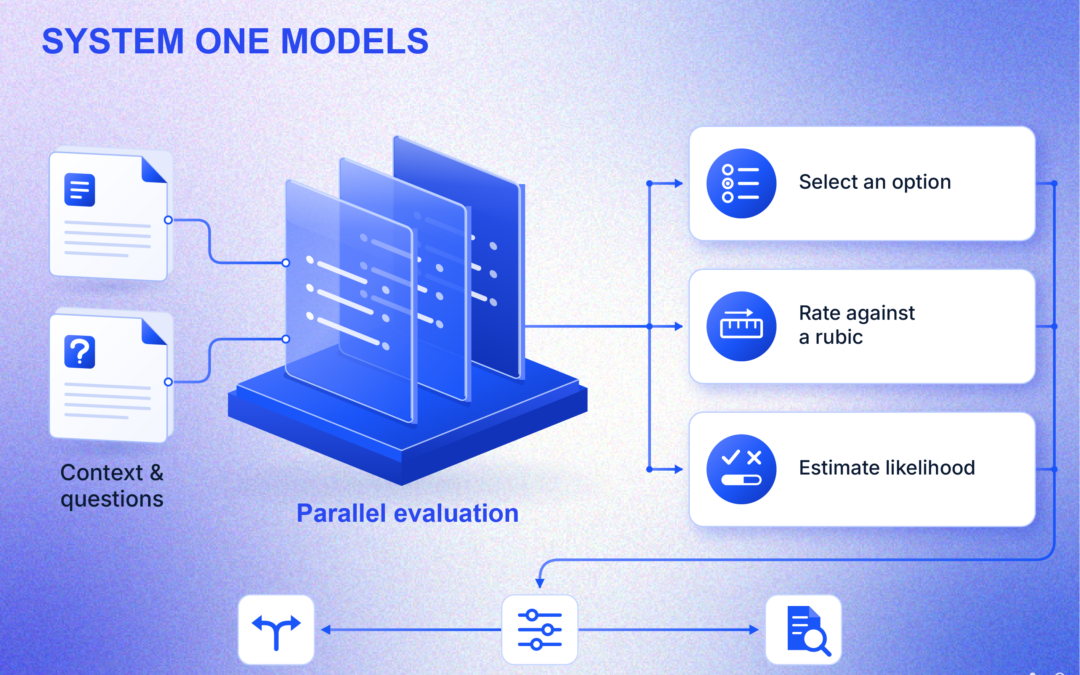
System One Models: A Technical and Enterprise Architecture Deep Dive
A System One model is a proposed class of AI model optimized for fast, bounded judgments that software can consume directly.
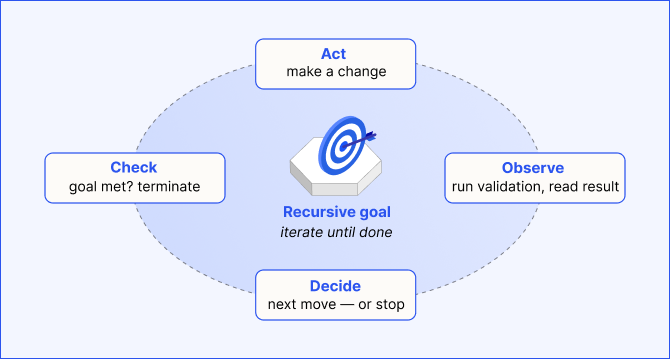
Loop engineering for AI agents: Building reliable autonomous systems
Loop engineering is the practice of designing, operating, and improving the feedback systems that let an AI agent plan, act, observe the results, and revise its approach until a goal is reached without a human driving every turn.
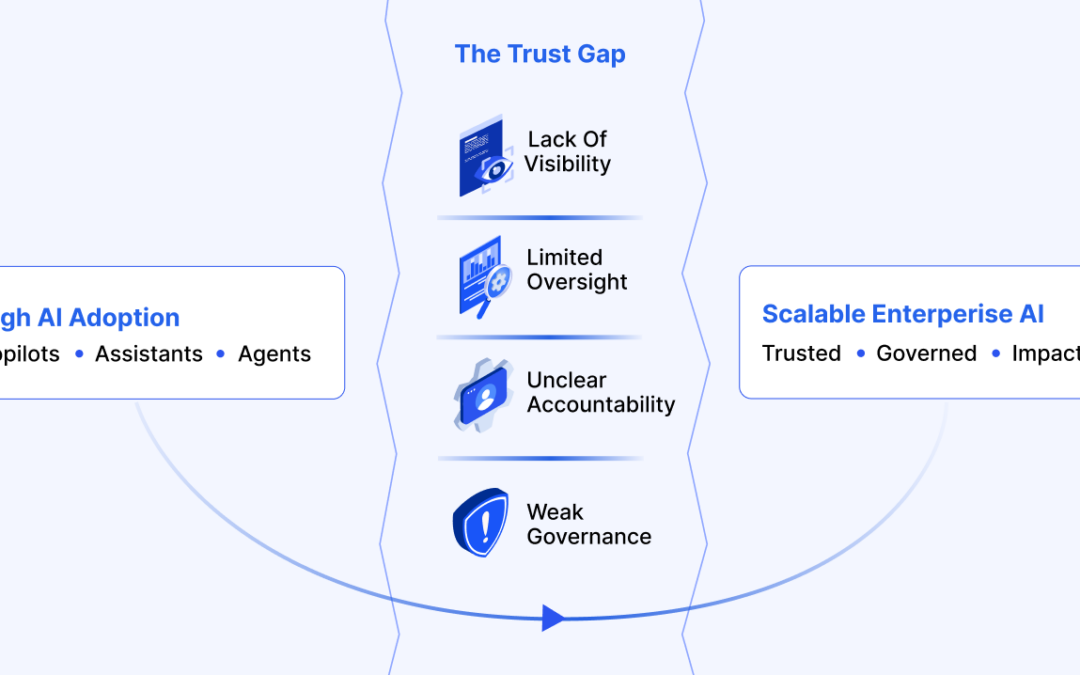
The AI trust gap: Why governance architecture determines enterprise value
The trust gap surrounding enterprise AI is fundamentally an architectural challenge, and its solution is increasingly well understood.
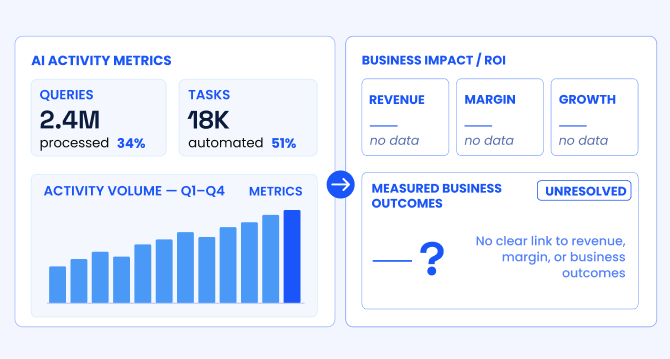
The AI ROI illusion: Why enterprises struggle to measure AI impact
Organizations with stronger measurement discipline are better positioned to link AI deployments to measurable business outcomes, prioritize high-impact use cases across the enterprise, allocate capital more effectively, and continuously refine models using real-world performance feedback.
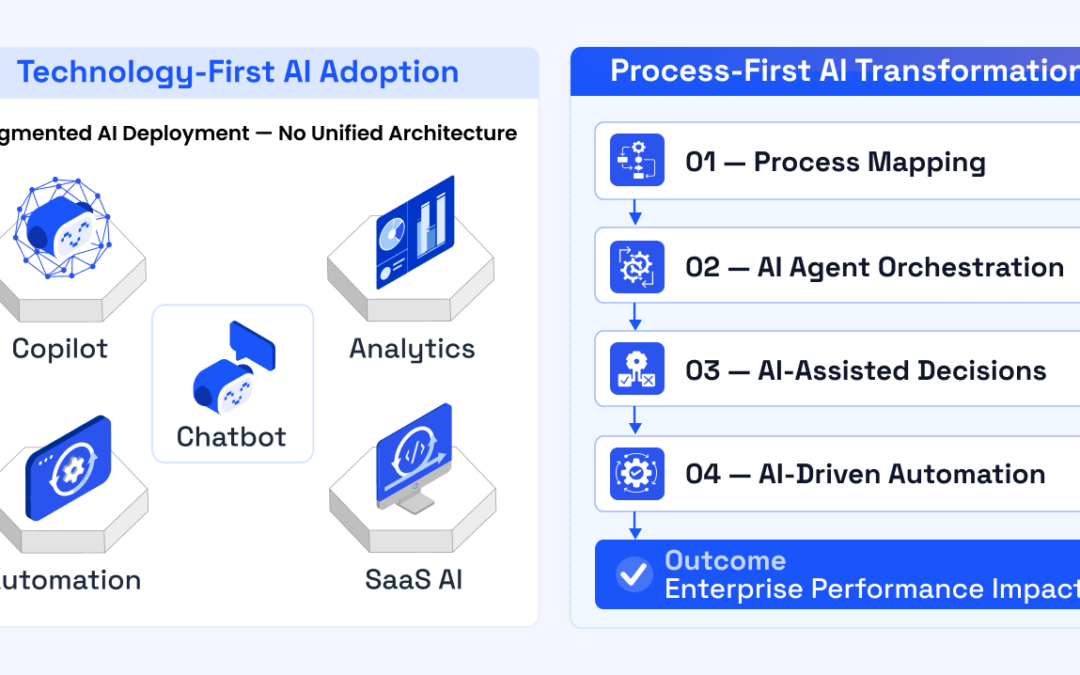
The agentic enterprise: Why AI success requires an operating model redesign
Organizations that redesign their operating models around agentic AI are beginning to outperform those that apply AI only incrementally.
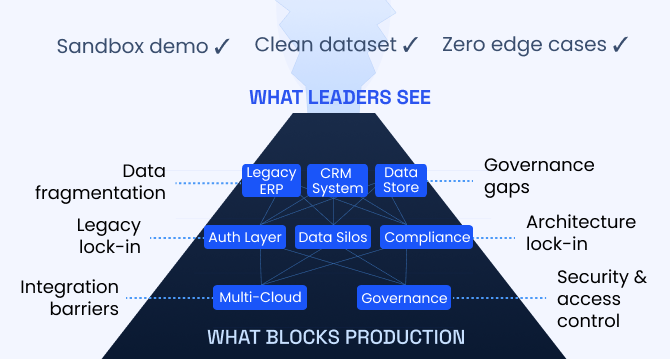
Enterprise AI pilot-to-production gap: Root causes & how to address them
The underlying cause is structural. In many enterprises, AI pilots are developed on infrastructure that was not designed to support production deployment.
Solution architecture best practices: A guide for enterprise teams
The architecture design process culminates in a set of documented artifacts that communicate the solution to development, operations, and business teams.
Common solution architecture design challenges and solutions
Solution architecture must evolve from fragmented documentation practices to a structured, collaborative, and continuously validated design capability.
Why structured architecture design is the foundation of scalable enterprise systems
Structured architecture design guides enterprises from requirements to build-ready blueprints. Learn key principles, scalability gains, and TechBrain’s approach.