Manufacturing
 Logistics
 Real Estate
 Retail
 Finance
 Healthcare
 Hospitality
 Automotive
Company knowledge base: Why it matters and how it is evolving
Listen to the article
In today’s digital-first business environment, organizations generate and consume more information than ever. A typical enterprise uses hundreds of different apps and cloud services, each housing its own silo of documents, data, and conversations. Knowledge lives everywhere – in wikis, SharePoint sites, Slack threads, emails, customer tickets, and employees’ heads – making it a challenge for teams to find the right information at the right time. For CXOs and enterprise leaders, ensuring employees can easily tap into the company’s collective knowledge has become both a strategic priority and a competitive necessity. Enterprise knowledge is a critical asset that drives productivity, innovation, and even revenue. Yet without a modern approach to manage it, knowledge remains scattered and underutilized.
This article explores why a centralized company knowledge base is so important in the modern digital enterprise and how knowledge management has evolved. We’ll look at the shortcomings of legacy knowledge systems, define the key traits of a modern knowledge base, and examine the impact of disconnected knowledge on productivity, onboarding, and decision-making. We’ll also discuss real-world scenarios where better search and context improve work, and highlight how intelligent enterprise search solutions (like ZSearch) enable smarter knowledge access through features such as hybrid search, permission controls, project workspaces, semantic understanding, and secure integration.
- The need for centralized knowledge in today’s digital enterprise
- Why legacy knowledge management systems fall short
- What a modern knowledge base should look like
- The impact of disconnected knowledge on productivity, onboarding, and decision-making
- How better search and context improve work: scenarios and examples
- Smarter knowledge access with AI-powered enterprise search
The need for centralized knowledge in today’s digital enterprise
Today’s enterprises operate in a complex digital workplace. Teams are often distributed across locations and time zones, relying on an ecosystem of SaaS tools to collaborate. Over the past decade, the volume of enterprise data has exploded – one analysis found the amount of electronic data increased tenfold in ten years – while the number of software applications in use has ballooned. In fact, enterprises now manage an average of roughly 275 different SaaS applications across their environment. Each system (from project management to CRM to file storage) contains pieces of organizational knowledge. The result is a fragmented knowledge landscape where information is abundant yet siloed across dozens or hundreds of systems.
In this environment, a centralized company knowledge base is no longer a “nice-to-have” – it’s essential infrastructure. A knowledge base serves as a single source of truth: a unified repository where documentation, FAQs, manuals, project notes, institutional knowledge, and expert insights can reside and be easily accessed. By centralizing information, companies can break down knowledge silos and make critical information available on-demand to those who need it.
The value of centralizing knowledge goes beyond convenience – it directly impacts business performance. Studies show that inefficiency and information scatter have tangible costs. Employees often waste time hunting for answers or duplicating work that’s already been done. According to one report, inefficiency (much of it due to poor knowledge sharing) costs companies about 25% of their annual revenue on average. Meanwhile, knowledge that sits untapped in silos is a missed opportunity: it’s expertise and data that could be informing decisions, accelerating projects, or helping win deals when searchable. A modern knowledge base aims to unlock this hidden asset by treating knowledge as a strategic resource – one that should be captured, curated, and made accessible enterprise-wide.
Streamline your operational workflows with ZBrain AI agents designed to address enterprise challenges.
Why legacy knowledge management systems fall short
If centralizing knowledge is so important, why do so many companies still struggle with it? The truth is that legacy knowledge management systems and approaches have often failed to live up to the challenge of today’s complex, fast-moving enterprises. Older intranet portals, static wiki pages, or file share systems might store information, but they lack the intelligence and agility needed to keep knowledge fresh, searchable, and useful.
Traditional knowledge bases were often designed as passive repositories – think of a static intranet site or SharePoint library where documents are uploaded and categorized. These systems do a great job of storing and retrieving files, but a poor job of understanding or improving knowledge over time. Once content is published, it tends to immediately start aging and get lost beneath newer content. There’s little support for identifying outdated information or filling knowledge gaps. Keeping a legacy knowledge base current requires manual effort from knowledge managers and content owners, who must continuously audit, update, and re-organize content – a task that often falls by the wayside in busy organizations.
Scaling is another major issue with legacy platforms. They were typically built for a simpler era – perhaps for a single department or a single-language knowledge repository. As businesses expand and data multiplies, these old systems “break down under the complexity”, unable to gracefully handle multiple brands, products, regions, and languages. Each new tool or content silo adds to the maintenance overhead. In short, legacy knowledge management doesn’t scale efficiently – it multiplies work rather than streamlining it.
Other common challenges with legacy knowledge systems include:
-
Knowledge silos and fragmentation: Older approaches often led to multiple disconnected knowledge bases (e.g., separate portals for each department or region). Important information ends up scattered, and employees don’t know where to look. One of the biggest mistakes companies made was creating separate knowledge systems for each team or location, resulting in inconsistent answers and duplicated efforts.
-
Poor search and findability: Legacy systems usually rely on basic keyword search or rigid taxonomy. Employees feel like finding information is “like finding a needle in a haystack.” If you don’t know exactly where something is saved or the exact keywords, it’s hard to retrieve. There’s no understanding of context or intent. In fast-paced environments, this simply isn’t good enough.
-
Outdated and low-quality information: Without active curation, knowledge bases can turn into graveyards of redundant, outdated, and conflicting information, which can cloud decision-making and erode trust in the system. Users lose confidence that the knowledge base has what they need, so they stop using it – a vicious cycle.
-
Lack of user engagement and ownership: Many legacy KM initiatives failed due to user resistance and cultural barriers. Employees might have seen contributing to the knowledge base as extra work, especially if the tools were clunky. Without a compelling user experience, the knowledge base never became part of daily workflows.
-
Maintenance burden: Traditional systems required significant manual effort to organize content and keep it up to date. It’s no surprise that content often falls out of date. and requires continuous improvement – something old platforms didn’t help with. Companies that invested heavily in legacy KM often found these systems required significant people and resources to run and manage, turning them into a cost center rather than a driver of value.
In summary, legacy knowledge management approaches have struggled in the face of rapidly growing data and more complex needs. They have been too static, siloed, and labor-intensive. This has paved the way for a new generation of solutions that address these pain points.
What a modern knowledge base should look like
What does a modern company knowledge base look like? In contrast to the static portals of the past, today’s knowledge base is envisioned as a dynamic, intelligent, and integrated system that truly empowers teams. Here are key characteristics that define a modern knowledge base:
-
Unified and searchable: A modern knowledge base isn’t one single database or website – it’s an integrated knowledge hub that can pull information from all of your enterprise systems. It provides a unified search experience across cloud drives, email, wikis, ticketing systems, CRM, and more. Rather than searching each tool separately or clicking through folders, employees get a single search box for the whole company’s knowledge.
-
Permission-aware and secure: In an enterprise, not everyone should see everything. A modern knowledge base respects permission controls and security policies by design. Search results are tailored to the user’s access rights – you only see content you’re allowed to see, no matter where it resides. This permission awareness ensures sensitive information isn’t accidentally exposed, maintaining zero data leakage even as you break down silos. Leading knowledge management solutions enforce enterprise-grade access controls (integrating with SSO, identity management, and compliance requirements) so that knowledge can be widely accessible without compromising security.
-
Real-time and up-to-date: Knowledge in a modern system is never static. The platform stays in sync with your data sources in real time or near-real-time, so new information is indexed and available immediately. For example, if an engineer updates a Confluence page or a salesperson adds notes to a CRM record, those changes reflect in the knowledge base search results without manual intervention. Advanced solutions offer automatic indexing and background synchronization across all connected tools, ensuring the information pool is continuously current. This addresses the age-old issue of content becoming stale – the knowledge base is always fresh and relevant.
-
AI-powered intelligence: Perhaps the biggest leap in modern knowledge bases is the infusion of artificial intelligence at its core. AI transforms a knowledge base from a passive library into an active, smart assistant for your organization. AI-driven algorithms can analyze the context of queries and user intent to deliver more accurate, relevant answers. Instead of simple keyword matching, modern systems use natural language processing and semantic understanding to actually grasp what the user is asking and find information that matches the meaning, not just the words. AI can also automatically organize content, tag it, and even suggest answers proactively. This means employees spend less time sifting through search results – the system can surface the right insight (often even pointing to the exact document section or video timestamp) that addresses their need.
-
Integrated into daily workflows: A modern knowledge base meets employees where they work. This could mean being accessible directly within tools like Slack, Microsoft Teams, or other chat and productivity apps. For example, some enterprise search solutions let users query the knowledge base via a chatbot in Teams, or use a browser extension to search while browsing any web app. The idea is to embed knowledge access in the flow of work so employees don’t have to interrupt their process to go hunt for information. The knowledge base also integrates with core business systems (CRM, ITSM, project management) so that relevant knowledge can pop up contextually – e.g. a support agent sees related knowledge base articles when viewing a support ticket. These seamless integrations eliminate the need for manual copy-pasting or constant app switching, making knowledge truly on-demand.
-
Collaborative and continuously improving: Modern knowledge bases are not just read-only libraries curated by a few; they support a culture of collaborative knowledge sharing. Employees can contribute content easily, annotate or comment on existing articles, and even create shared spaces (for example, project workspaces) to gather knowledge relevant to a specific project or team. Importantly, the system helps maintain quality by allowing feedback loops – if information is incorrect or missing, users can flag it and knowledge managers get insights on what needs updating. Some advanced solutions even use AI to monitor and highlight content that might be outdated or duplicate, prompting clean-up. The knowledge base thus becomes a living, evolving asset that gets better over time, rather than a static archive.
In short, a modern company knowledge base should be searchable, intelligent, integrated, secure, and user-friendly. It acts as a centralized, trusted information hub that people actually want to use because it makes their jobs easier. When designed right, it can dramatically improve productivity and create a “knowledge sharing” culture across the enterprise.
The impact of disconnected knowledge on productivity, onboarding, and decision-making
What happens if you don’t have a modern, centralized knowledge base? The consequences of disconnected knowledge are felt daily in lost productivity, slower onboarding, and sub-par decision-making. Business and tech leaders should recognize these pain points:
-
Productivity drain: When information is scattered and hard to find, employees spend a shocking amount of time each week just searching for answers or re-inventing solutions. Multiple studies confirm this. For instance, APQC found that the average knowledge worker spends 8.2 hours per week (over 10% of their time) searching for or recreating information instead of doing productive work. Even more striking, research by Bloomfire across 115 companies revealed that when knowledge is fractured across silos, employees end up spending 21% of their work time searching for knowledge and another 14% duplicating information they couldn’t find. That’s over a third of the workweek lost to knowledge chaos. The productivity cost is enormous – not to mention the frustration it causes. Knowledge mismanagement doesn’t just waste time; it saps morale when people hit walls repeatedly. On the flip side, when companies implement robust enterprise search and knowledge solutions, they significantly cut down search time. APQC noted that employees with enterprise search access spent 0.7 hours/week on information, compared with 2.8 hours for those without enterprise search access, and got more done.
-
Slower onboarding and training: For new employees, a disconnected knowledge environment is a huge hurdle. Without a central repository of up-to-date policies, process docs, and FAQs, onboarding relies on tribal knowledge and ad-hoc training, which is time-consuming and inconsistent. New hires might struggle to get basic questions answered, or they bother busy colleagues repeatedly. This delays the time to productivity for each hire. In contrast, a comprehensive knowledge base dramatically accelerates onboarding, allowing newcomers to self-serve a lot of information and learn the ropes faster. By ensuring that essential operational knowledge and institutional memory are systematically documented and searchable, organizations can significantly reduce onboarding time for new employees. They feel more confident and competent early on, which improves retention as well. Consistent knowledge also ensures everyone is trained to the same standards and best practices, something especially valuable in large or distributed organizations.
-
Hindered decision-making: Effective leadership and strategy depend on accurate, timely information. When knowledge is siloed or outdated, decision-makers lack a full 360° view. They might not realize someone in another department has relevant insights, or they base decisions on stale data. Disconnected data across teams often produces conflicting reports and confusion. In worst cases, employees may make strategic decisions using incomplete or incorrect data, simply because the correct knowledge was hidden or inaccessible. This can have serious consequences in terms of missed opportunities or avoidable mistakes. Moreover, when knowledge isn’t shared, organizations miss out on collective learning – lessons from one project aren’t applied to the next, so teams repeat errors. A modern knowledge base, by providing a “single source of truth”, improves confidence in information and speeds up decision-making. Leaders can retrieve reliable insights on demand and are less likely to be blindsided by something the organization “knows” but they didn’t see.
-
Reduced agility and innovation: In a fast-paced market, companies need to adapt quickly. But knowledge fragmentation is like sand in the gears. Employees spending hours chasing info are slower to respond to customers or changes. Cross-functional collaboration suffers – in fact, siloed knowledge can slow down collaboration by up to 30%, leading to redundant work and misalignment between teams. This lack of agility can hurt innovation; people don’t have visibility into ideas and data outside their bubble, so it’s harder to spark new solutions. Conversely, when knowledge flows freely across the organization, it creates fertile ground for innovation. Teams can build on each other’s work rather than constantly start from scratch.
In summary, disconnected knowledge imposes a hefty tax on the enterprise. It wastes time, delays employee ramp-up, and obscures judgment. On the other hand, companies that invest in connecting their knowledge see a direct payoff. They recover countless hours of productivity, make better decisions with confidence, and create a more nimble, collaborative culture. Organizations that treat knowledge as a true asset and make it easily accessible can achieve measurable lifts in key results – including improvements in team efficiency and even revenue per employee. The cost of inaction (sticking with the status quo of scattered information) is simply too high in today’s knowledge-driven economy.
How better search and context improve work: scenarios and examples
To make the benefits more concrete, let’s explore a few scenarios where a modern knowledge base and intelligent search significantly improve everyday work:
-
Faster problem-solving for support teams: Imagine a customer support agent trying to assist a client with a complex issue. In a fragmented knowledge setup, the agent might have to search an internal wiki, dig through old tickets, or ping subject-matter experts to find a solution – all while the customer waits on hold. This is slow and frustrating for everyone. Now contrast that with a modern knowledge base in place: the agent can type the customer’s error message or question into a unified search. Within seconds, the system searches across documentation, past ticket resolutions, product manuals, and even subject-matter experts’ posts. It surfaces a relevant troubleshooting guide or FAQ that directly addresses the issue. The agent resolves the question in minutes, improving first-call resolution and customer satisfaction. Moreover, because the knowledge base learns from usage, if the answer wasn’t there, the team can add the solution for next time, continuously improving the support knowledge.
-
Accelerated onboarding of a new hire: Consider a new engineer joining a software team. On day 1 in a legacy environment, they might get a dump of documents or have to schedule time with peers to learn basic processes. But in a company with a modern knowledge base, the new engineers are empowered to self-onboard. They search the knowledge portal for “deployment process” and instantly get the step-by-step documentation, plus a checklist for new developers. They watch a recorded onboarding session and find an internal Q&A thread where common newbie questions are answered. Within a week, the new hire is pushing code to production, having quickly gotten up to speed. The knowledge base acted like a 24/7 onboarding buddy, providing context and answers whenever questions arose, without pulling others away from their work.
-
High-performing sales and proposal teams: In many enterprises, sales representatives and proposal writers spend a lot of time hunting for the latest product information, case studies, or subject matter input to craft pitches. With disconnected knowledge, a representative might resort to emailing a bunch of colleagues (“Does anyone have info on X client use case?”) and digging through old presentations. That delays responses to prospects. Now imagine a modern, AI-powered knowledge system at play: the representatives can search in natural language, asking, “What are the top benefits of our product for [Industry]?” The system uses semantic search to understand the query and returns a curated list of relevant slides, a quote from an expert’s post, and a recent case study in that industry. It might even highlight the exact slide where those benefits are summarized. In seconds, the sales-person has the insignt needed to tailor the pitch, leading to faster proposals and a better chance at closing the deal. This kind of contextual search ensures no one is reinventing the wheel – the best knowledge the company has is at the team’s fingertips.
These scenarios demonstrate a common theme: when people can quickly find context-rich information, they perform better. Work that used to take hours (or simply stall out due to lack of info) can be completed in minutes. Teams become more self-sufficient and proactive. Customers get answers faster, new ideas get implemented sooner, and fewer balls get dropped. In essence, better search and knowledge context remove friction from daily workflows. Instead of knowledge being a bottleneck, it becomes an enabler for speed and quality in every department.
Smarter knowledge access with AI-powered enterprise search
To achieve the modern knowledge base vision, organizations are turning to intelligent enterprise search platforms as the key enabling technology. Solutions like ZSearch – an AI-powered enterprise search tool – illustrate how far knowledge access has evolved. Instead of just indexing documents, these platforms provide a sophisticated layer that understands, organizes, and secures your enterprise knowledge. Here are some of the advanced capabilities that intelligent search brings:
-
Hybrid search (keyword + semantic): Modern enterprise search uses a hybrid approach to retrieve information. This means it combines traditional keyword matching with semantic search that understands context and meaning. For example, if you search for “client onboarding process”, a semantic engine can surface a document titled “New Customer Welcome Guide” because it grasps the relevance, even if the exact keywords differ. By blending keyword and AI-driven semantic techniques, hybrid search delivers highly contextual results that match the intent behind a query, not just the literal words. This dramatically improves result relevance – employees get what they mean to find, not endless lists of keyword hits.
-
Semantic understanding of queries: Taking search a step further, AI-powered platforms interpret natural language questions and user intent. They can parse full-sentence queries (“How do I submit an expense report for international travel?”) and know that this relates to the travel policy document, even if that document doesn’t contain those exact words. Thanks to deep language models and contextual understanding, the search system can match on concepts and synonyms. In practice, this means the knowledge base feels less like a dumb database and more like an expert colleague who “gets” your question. In ZSearch, semantic understanding improves relevance by matching meaning – not just keywords – so users find the exact insights they need.
-
Permission control built-in: Intelligent enterprise search is permission-aware by design. As mentioned earlier, these systems integrate with your corporate identity and access controls, ensuring that search results strictly respect who is allowed to see each piece of content. For instance, if a confidential finance file exists, an employee without clearance won’t even know it exists from the search results. ZSearch, for example, enforces enterprise access control lists at every layer and guarantees that users only see content they’re authorized to view. This gives IT and security teams confidence that a unified search won’t become a security hole. It also means the knowledge base can index everything (even sensitive repositories) without risk – employees get a one-stop search experience, and the system filters results appropriately.
-
Project workspaces and collaboration: Some modern search platforms go beyond one-off queries and enable new ways to collaborate around knowledge. One innovative feature is the ability to create project workspaces out of search results. For example, an analyst could search for market research on a topic, select several relevant results, and instantly group them into a shareable workspace for her team. This workspace can serve as a focused mini knowledge base for that project – with documents, notes, and even an AI assistant that answers questions using just those project materials. ZSearch provides this kind of collaborative workspace, where teams can organize and explore information together, powered by a dedicated AI chatbot for the project. This feature is powerful for research-heavy tasks, due diligence, or any cross-team project where keeping everyone on the same page (literally) is critical. It shows how modern knowledge tools support not just finding information, but also using it collectively to drive action.
-
Secure integration with all tools: An intelligent search solution typically connects to a wide range of enterprise systems through secure integrations. The goal is to index “all your knowledge, wherever it lives,” without requiring you to move data out of its source system. ZSearch, for instance, offers 100+ enterprise-grade connectors to unify content from cloud drives, databases, intranets, ticketing systems, and more. Crucially, these integrations bring in data along with its permission metadata, so security is preserved. The result is a comprehensive, federated knowledge index that is up-to-date and secure. This kind of integration-first approach means you don’t have to rip-and-replace existing systems to get a unified knowledge experience. The search platform layers on top, enhancing your current tools by making their content searchable in one go. For enterprise leaders, this is key – you get the benefits of a modern knowledge base without a disruptive overhaul of your IT stack.
-
Continuous learning and improvement: The modern knowledge solutions also learn from user behavior to get better over time. They track which search results are being clicked or which queries yield poor results, and can use that feedback (sometimes with admin oversight) to tweak relevancy or suggest content gaps to fill. Some even leverage machine learning to auto-tune search rankings (surfacing what’s most useful) and to identify duplicate or stale content that should be updated. In this sense, the knowledge base can become somewhat self-maintaining – highlighting to knowledge managers where attention is needed, and automatically indexing new content as it appears.
By incorporating these capabilities, intelligent search platforms like ZSearch effectively serve as the brain of the modern knowledge base. They understand it, protect it, and deliver it in context. The outcome for enterprises is smarter knowledge access – employees get accurate answers quickly, with confidence that the information is up-to-date and from an authorized source.
Streamline your operational workflows with ZBrain AI agents designed to address enterprise challenges.
Endnote
For CXOs and enterprise teams, the message is clear: investing in a modern, AI-driven company knowledge base is no longer optional – it’s become foundational to operating efficiently in the digital age. The evolution of knowledge management means moving from scattered information and legacy systems to an intelligent, connected knowledge ecosystem. When companies make that leap, they unlock tangible benefits: reclaiming lost productivity, speeding up employee onboarding, enabling data-informed decisions, and fostering a culture where knowledge is readily shared and applied.
Adopting an enterprise search solution such as ZSearch is often the catalyst for this transformation. These tools act as a unifying layer across the organization’s knowledge, ensuring that what your company knows, everyone in your company can know (with appropriate permissions). The impact is organization-wide. Teams stop spending hours reinventing the wheel. Leaders gain visibility into insights that were previously buried. New employees get up to speed faster. And customers receive better, faster answers because your front-line staff have the information they need at their fingertips.
It’s important to note that implementing a modern knowledge base is not just a technology project – it’s a strategic initiative. It requires executive sponsorship and a mindset shift to treat knowledge as a valuable asset that merits investment and upkeep. But the payoff can be enormous. Companies that succeed in harnessing their collective knowledge often report higher success in achieving business objectives, faster innovation cycles, and a more empowered workforce. In a sense, a great knowledge base becomes the unseen engine behind high-performing organizations.
In conclusion, the evolution of the company knowledge base is about turning information overload into information advantage. By centralizing and intelligently leveraging knowledge, enterprises equip their people to work smarter, not harder. The modern knowledge base – centralized, searchable, permission-aware, real-time, and AI-powered – is the tool that makes this possible. For business and tech leaders, now is the time to assess your knowledge infrastructure and ask: Are we enabling our teams with fast, contextual access to the information they need? If not, the next generation of knowledge solutions is ready to bridge that gap. Those who embrace them will gain a decisive edge in productivity, agility, and innovation, powered by the collective intelligence already within their organization. Knowledge, after all, is power – especially when everyone can find it.
ZSearch turns enterprise knowledge into actionable insight with secure, context-aware search. See how modern teams access knowledge at scale. Book a demo.
Listen to the article
Author’s Bio


CEO LeewayHertz
An early adopter of emerging technologies, Akash leads innovation in AI, driving transformative solutions that enhance business operations. With his entrepreneurial spirit, technical acumen and passion for AI, Akash continues to explore new horizons, empowering businesses with solutions that enable seamless automation, intelligent decision-making, and next-generation digital experiences.
Table of content
- The need for centralized knowledge in today’s digital enterprise
- Why legacy knowledge management systems fall short
- What a modern knowledge base should look like
- The impact of disconnected knowledge on productivity, onboarding, and decision-making
- How better search and context improve work: scenarios and examples
- Smarter knowledge access with AI-powered enterprise search
Share Article


Frequently Asked Questions
What is a company knowledge base?
A company knowledge base is a centralized system that captures, organizes, and makes accessible an organization’s collective information. This includes documents, policies, processes, best practices, FAQs, historical decisions, and institutional knowledge.
In modern enterprises, a knowledge base is no longer limited to a single repository or wiki. Instead, it spans multiple systems and tools, providing employees with a unified way to find and use information across the organization.
Why do traditional knowledge bases fail in large enterprises?
Traditional knowledge bases often fail because they rely on manual documentation, static content structures, and keyword-based search. As enterprises scale, knowledge becomes fragmented across systems, content quickly becomes outdated, and users struggle to find relevant information.
Without intelligent search, real-time updates, and permission-aware access, employees lose trust in the system and revert to ad-hoc methods such as asking colleagues or recreating work—undermining the value of the knowledge base.
How does enterprise search improve knowledge access?
Enterprise search provides a unified interface to discover information across multiple tools and repositories. Instead of browsing folders or switching between systems, users can search once and retrieve relevant results from across the organization.
Modern enterprise search solutions enhance this further by using semantic understanding, natural language processing, and contextual ranking to surface the most relevant information—even when exact keywords are not used.
What is ZSearch?
ZSearch is ZBrain’s AI-powered, enterprise-grade, vector-based search solution built specifically for searching across private enterprise data or a company knowledge base. Organizations can connect internal data sources (such as Google Drive, SharePoint, CRMs, and other repositories) and enable employees to search across this data securely within a single interface. The core idea behind ZSearch functions like an enterprise search engine, but operates strictly within organizational data boundaries, respecting permissions and access controls.
What are the key capabilities of ZSearch?
ZSearch provides a comprehensive set of capabilities designed to enable secure, intelligent access to enterprise knowledge. Its core features include unified search across multiple enterprise systems, support for both keyword and natural language queries, and semantic understanding that improves result relevance beyond exact keyword matches.
ZSearch continuously indexes connected data sources to keep knowledge current and applies intelligent ranking with match scores to help users quickly assess relevance. It also enables focused knowledge searching through project-based workspaces, where users can group documents, collaborate with team members, and interact with an AI assistant grounded strictly in the selected content.
Built for enterprise scale, ZSearch integrates seamlessly with existing tools, supports high data volumes, and provides a secure foundation for modern, AI-powered knowledge access across the organization.
How does ZSearch support a modern company knowledge base?
ZSearch enables a modern knowledge base by acting as an intelligent access layer across enterprise systems. It connects to approved data sources, continuously indexes content, and applies AI-driven search to deliver relevant, context-aware results.
ZSearch supports both keyword and natural language search, respects enterprise permissions, and keeps knowledge up to date—allowing organizations to access their existing knowledge more effectively without changing how or where it is stored.
How does ZSearch ensure security and access control?
ZSearch is permission-aware by design. It enforces source-level access controls and ensures that users only see content they are authorized to access.
Permissions from connected systems are preserved during indexing and applied at query time, including for AI-generated responses. This allows organizations to unify knowledge access without compromising security, privacy, or compliance requirements.
What role does AI play in a modern knowledge base?
AI enhances a knowledge base by enabling semantic understanding, natural language interaction, and intelligent ranking of results. Instead of relying solely on keyword matching, AI helps interpret user intent and surface information based on meaning and relevance.
In ZSearch, AI is used to improve retrieval accuracy, support conversational queries, and enable contextual exploration of enterprise knowledge—while remaining grounded in authorized content.
How do projects in ZSearch enhance enterprise knowledge management?
Projects in ZSearch allow users to group selected search results into a focused workspace. Each project defines a scoped knowledge context, enabling teams to collaborate, query information, and interact with AI using only the documents added to the project.
This approach supports deeper analysis and decision-making while ensuring that AI interactions remain context-specific and reliable.
Can ZSearch replace existing knowledge management tools?
ZSearch is not designed to replace existing enterprise tools or repositories. Instead, it complements them by providing a unified, intelligent layer for accessing information across systems.
By integrating with existing platforms such as document repositories, collaboration tools, and databases, ZSearch enhances the value of current investments while improving discoverability and usability.
Who benefits most from a modern knowledge access approach?
A modern knowledge access approach benefits the entire organization, including:
-
CXOs, who gain faster access to reliable insights for decision-making
-
Enterprise teams, who spend less time searching and more time executing
-
New employees, who onboard faster with self-serve access to knowledge
-
IT and security teams, who retain control over access and compliance
By making knowledge accessible, trusted, and actionable, organizations improve productivity, collaboration, and organizational learning.
How can enterprises get started with ZSearch?
Getting started with ZSearch is designed to be straightforward and enterprise-ready. Organizations typically begin by engaging with the ZBrain team to understand their existing knowledge landscape, data sources, access controls, and search requirements.
ZBrain team works closely with enterprise stakeholders to demonstrate how ZSearch securely connects to existing systems—such as document repositories, collaboration tools, ticketing platforms, and databases—without disrupting current workflows. The onboarding process focuses on configuring enterprise context, permissions, and indexing to ensure accurate, relevant, and compliant search from day one.
To explore how ZSearch can help your organization move from static knowledge bases to intelligent knowledge access, book a demo or submit an inquiry through the ZBrain website.
Insights
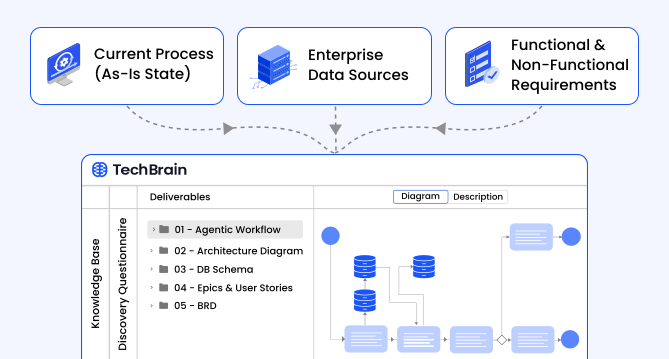
Common solution architecture design challenges — and how to overcome them
Solution architecture must evolve from fragmented documentation practices to a structured, collaborative, and continuously validated design capability.
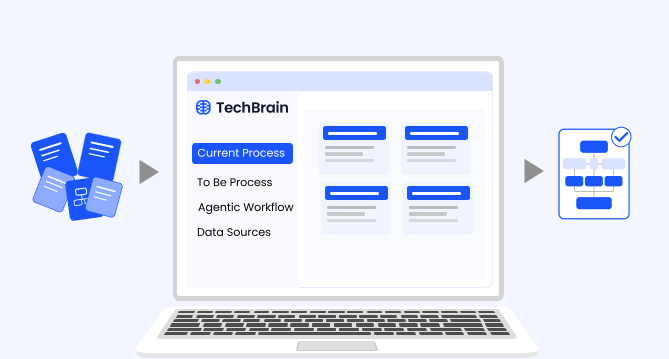
Why structured architecture design is the foundation of scalable enterprise systems
Structured architecture design guides enterprises from requirements to build-ready blueprints. Learn key principles, scalability gains, and TechBrain’s approach.
A guide to intranet search engine
Effective intranet search is a cornerstone of the modern digital workplace, enabling employees to find trusted information quickly and work with greater confidence.
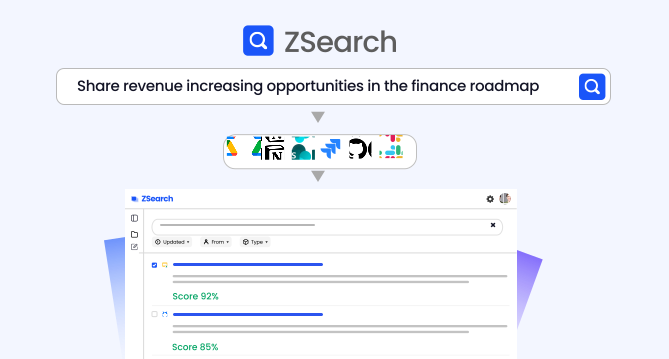
Enterprise knowledge management guide
Enterprise knowledge management enables organizations to capture, organize, and activate knowledge across systems, teams, and workflows—ensuring the right information reaches the right people at the right time.
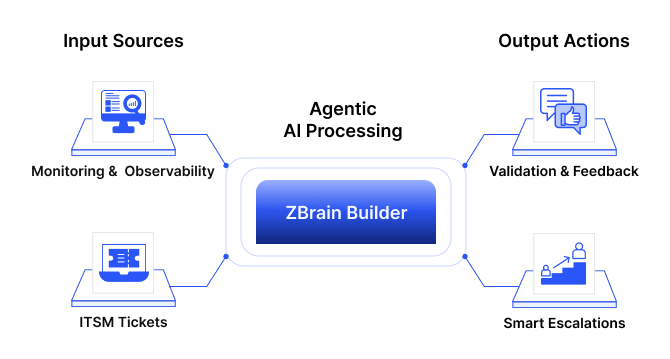
How agentic AI and intelligent ITSM are redefining IT operations management
Agentic AI marks the next major evolution in enterprise automation, moving beyond systems that merely respond to commands toward AI that can perceive, reason, act and improve autonomously.
What is an enterprise search engine? A guide to AI-powered information access
An enterprise search engine is a specialized software that enables users to securely search and retrieve information from across an organization’s internal data sources and systems.
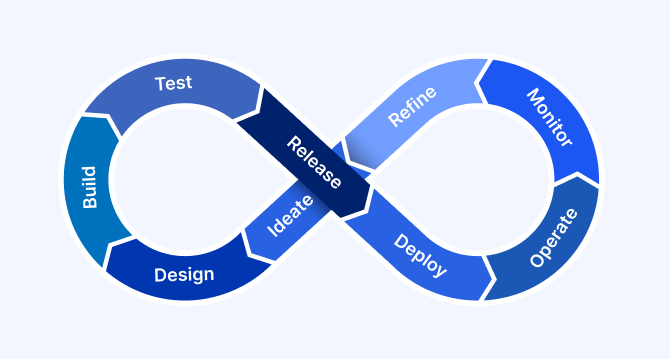
A comprehensive guide to AgentOps: Scope, core practices, key challenges, trends, and ZBrain implementation
AgentOps (agent operations) is the emerging discipline that defines how organizations build, observe and manage the lifecycle of autonomous AI agents.
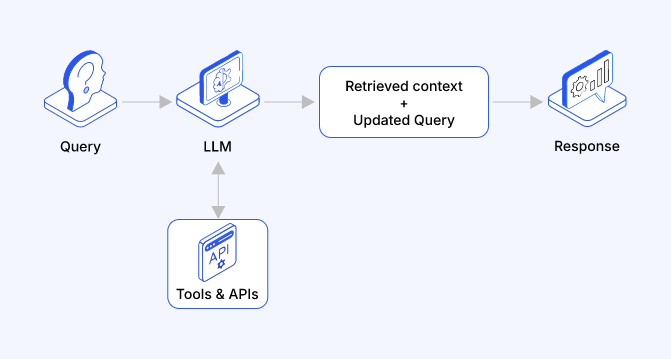
Adaptive RAG in ZBrain: Architecting intelligent, context-aware retrieval for agentic AI
Adaptive Retrieval-Augmented Generation refers to a class of techniques and systems that dynamically decide whether or not to retrieve external information for a given query.
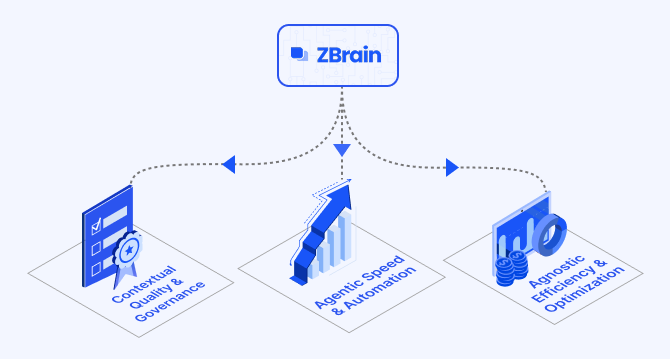
How ZBrain breaks the trade-offs in the AI iron triangle
ZBrain’s architecture directly challenges the conventional AI trade-off model—the notion that enhancing one aspect inevitably compromises another.