Manufacturing
 Logistics
 Real Estate
 Retail
 Finance
 Healthcare
 Hospitality
 Automotive
Common solution architecture design challenges and solutions
Listen to the article
In today’s global economy, technology is inseparable from business strategy. Across industries—digital systems drive operations, enable data-informed decision-making, shape customer experiences, and power innovation. As a result, digital transformation is no longer optional; it is a strategic imperative. According to McKinsey, nearly 90% of organizations [1] are actively engaged in some form of digital transformation initiative.
However, despite substantial investment and executive sponsorship, outcomes often fall short of expectations. Gartner reports that only 48% of digital initiatives [2] meet or exceed their business targets. Further compounding the issue, a study found that 75% of IT projects [3] fail due to errors made during the initial setup phase—the very stage where solution architecture decisions are most critical.
This disconnect between strategy and execution underscores a fundamental challenge: the quality of architectural design frequently determines whether transformation efforts succeed, stall, or collapse under complexity. Misalignment between business objectives and technical design, underestimated integration requirements, scalability limitations, and governance gaps create structural weaknesses that are difficult—and costly—to correct later.This is especially acute for agentic AI initiatives, where architectural decisions now extend to agent orchestration, model selection, tool governance, and human-in-the-loop checkpoints, concerns that most enterprise architecture playbooks were never designed to address.
In an environment defined by rapid technological evolution and increasing operational interdependence, solution architecture is not merely a technical blueprint. It is a strategic discipline that shapes resilience, agility, and long-term value realization. Organizations that approach architecture with rigor and foresight are far better positioned to translate digital vision into measurable business outcomes.This article explores the most common solution architecture design challenges and a structured approach to overcoming them in complex enterprise environments, with particular focus on agentic AI initiatives. It also shows how the ZBrain Design — an AI-assisted solution for designing agentic solutions — operationalizes this framework, and how its outputs flow downstream into Solution Builder for agent generation and PoCvalidation.
What is solution architecture?
Solution architecture is the strategic discipline of designing integrated technology ecosystems that translate business objectives into scalable, secure, and sustainable solutions. It sits at the intersection of strategy, technology, operations, and governance—ensuring that complex initiatives are not only technically sound but also commercially viable and aligned with the enterprise’s long-term goals.
Unlike enterprise architecture, which defines organization-wide standards and long-term technology roadmaps, solution architecture focuses on designing specific systems or programs that address defined business problems. It bridges high-level strategy and on-the-ground implementation, translating abstract objectives—such as improving customer experience, increasing operational efficiency, or enabling data-driven decision-making—into actionable architectural blueprints.
In today’s digital-first environment, solution architecture extends far beyond infrastructure diagrams. It must account for cloud-native design principles, API ecosystems, data strategies, cybersecurity frameworks, compliance requirements, performance engineering, and integration models across hybrid and multi-cloud environments. Architects are expected to design for distributed systems, real-time data flows, agentic AI components and their orchestration, AI-driven components, third-party integrations, and evolving regulatory landscapes — while ensuring these elements align cohesively within a structured, executable blueprint.
Crucially, modern solution architecture is no longer static. Traditional approaches relied heavily on upfront, monolithic design models that struggled to adapt to change. In contrast, contemporary architecture emphasizes modularity, scalability, resilience, and continuous evolution. It is iterative, measurable, and aligned to business outcomes through defined KPIs and governance checkpoints.
At its core, solution architecture ensures that transformation initiatives are not built on fragile foundations. It provides the structural integrity required for innovation—balancing agility with control, speed with security, and ambition with practicality. In an era where complexity is the norm rather than the exception, effective solution architecture is the difference between digital initiatives that merely launch and those that deliver sustained enterprise value.
Streamline your operational workflows with ZBrain AI agents designed to address enterprise challenges.
Common solution architecture design challenges
Designing solution architecture in modern enterprises is no longer about producing system diagrams or selecting technology stacks. It requires translating business ambition into executable technical blueprints within environments shaped by legacy systems, organizational silos, and accelerating innovation cycles.
Despite its strategic importance, solution architecture efforts frequently struggle due to recurring structural, operational, and organizational challenges.
Below are the most common and critical challenges architects face — and why they persist.
1. Fragmented and poorly defined requirements
One of the earliest and most damaging breakdowns in solution design is fragmented requirements. Architectural conversations often begin before organizations fully align on:
- Business objectives and measurable success metrics
- Service strategy and operating model
- Customer journey expectations
- Functional and non-functional priorities
In many transformation initiatives, especially digital service programs, solutions are designed before clarifying how services will be marketed, sold, delivered, and supported. Without a clearly defined operating model, requirements become reactive and inconsistent.
This creates architectural ambiguity. Design decisions are driven by assumptions rather than validated business intent, leading to scope creep, misaligned capabilities, and costly redesign later in the lifecycle.
Errors introduced at the requirements and design stage are exponentially more expensive to correct during build or post-deployment. When the architectural foundation is unstable, delivery becomes a continuous correction exercise.
2. Weak traceability between business strategy and technical design
Solution architecture is intended to bridge business ambition and technical execution. In practice, this bridge is often fragile.
Business teams prioritize speed-to-market and visible features. Delivery teams are pressured to produce incremental enhancements. Architectural quality attributes — scalability, resilience, maintainability, observability — are frequently deprioritized because their value is not immediately visible.
This misalignment results in:
- Architectures optimized for short-term projects instead of long-term products
- Accumulation of technical debt
- Systems that meet functional requirements but fail under scale or operational stress
When architectural decisions are not clearly traceable to stakeholder objectives and measurable business outcomes, securing executive buy-in becomes difficult. As a result, urgency overrides strategy.
3. Legacy system constraints and vendor lock-in
Few enterprises operate in entirely new or unconstrained technology environments. Most run complex ecosystems of ERP, CRM, HR, finance, and operational systems that have evolved over decades.
Architects must design new capabilities while accounting for:
- Unsupported or poorly documented legacy applications
- Custom integrations with unclear ownership
- Vendor-imposed technology constraints
- Long-term contracts limiting architectural flexibility
Legacy platforms often remain mission-critical despite plans for modernization. Architects are forced to design around aging infrastructure rather than reimagine the ecosystem.
Vendor lock-in compounds the challenge. When core capabilities are tightly coupled to specific platforms, migration and modernization efforts become economically and operationally prohibitive. Architects must balance innovation goals with practical constraints.
4. Integration complexity and data silos
Integration remains one of the most persistent bottlenecks in solution architecture.
Enterprise data is distributed across multiple applications, each operating under different standards, formats, and update cycles. Without a scalable integration strategy, introducing new capabilities increases systemic fragility.
Common integration challenges include:
- Brittle, point-to-point interfaces
- Lack of standardized APIs
- Inconsistent data models
- Limited real-time data exchange
- Manual ETL dependencies
As organizations pursue AI-enabled services, digital platforms, and real-time analytics, integration becomes even more critical. Service orchestration often spans CRM, ERP, IoT systems, billing platforms, analytics engines and other complex systems.
Without a cohesive integration architecture, each additional connection increases cost, time, and risk — making integration the primary constraint on innovation.
5. Disconnected architecture design workflows
In many enterprises, architecture design activities are distributed across disconnected tools and teams.
Requirements may live in backlog systems. Diagrams may be created in separate modeling tools. Data specifications may exist in spreadsheets. Security reviews occur in parallel workflows. Stakeholder feedback is scattered across collaboration platforms.
This fragmentation creates:
- Multiple versions of truth
- Lost assumptions and undocumented dependencies
- Limited cross-functional visibility
- Late discovery of design conflicts
- Gaps between documented and actual implementation
Without a unified and structured design workspace, architecture becomes a coordination challenge rather than a systematic discipline. Critical dependencies surface late, and architectural completeness is assumed rather than validated.
6. Static and outdated architectural artifacts
Even where formal architecture repositories exist, they are often static and disconnected from execution realities.
Architecture documentation frequently suffers from:
- Lack of real-time updates
- Poor collaboration between architects and delivery teams
- Limited traceability between strategy, design, and implementation
- Diagrams reflecting intended rather than actual systems
When architectural artifacts do not evolve alongside systems, they lose credibility. Architects operate with incomplete or outdated representations of the current state, increasing the risk of flawed design decisions.
7. Difficulty quantifying architectural value and risk
Unlike features, architectural quality attributes are not immediately visible to end users. Stakeholders often question investments in resilience, scalability, modularity, governance, or observability.
Architects routinely face questions such as:
- Why refactor a system that appears to function adequately?
- Why design for scale before demand materializes?
- Why prioritize governance controls over rapid feature delivery?
The core challenge lies in quantifying risk mitigation and long-term value. Without clear traceability between architectural decisions and business outcomes — such as reduced downtime, faster release cycles, lower maintenance cost, or improved customer retention — architecture investments appear abstract.
This often leads to underinvestment in foundational quality practices, increasing long-term operational and financial exposure.
8. Uncoordinated innovation and architectural drift
Emerging technologies — AI, IoT, advanced analytics, and automation platforms — introduce both opportunities and fragmentation risks.
Common patterns include:
- Isolated pilot initiatives launched without enterprise alignment
- Parallel experimentation across departments
- Platform proliferation
- Technical experimentation without long-term serviceability planning
When innovation occurs without architectural coordination, the result is architectural drift — a gradual loss of cohesion across systems and platforms.
Architects must evaluate new technologies not only for technical feasibility, but also for integration compatibility, governance implications, and long-term sustainability within the broader ecosystem.
9. Security and operability as afterthoughts
In many architectural initiatives, solutions are designed for functional delivery first, with security and operational requirements reviewed later. This “bolt-on” approach introduces structural risk.
Common patterns include:
- Security requirements defined after core architectural decisions are finalized
- DevSecOps and Zero Trust principles discussed during review, not during design
- Observability needs (telemetry, logging, distributed tracing) left to downstream teams
- Supportability and recovery assumptions undocumented in architecture artifacts
- Non-functional requirements insufficiently traced to business risk and compliance obligations
When these considerations are not embedded into the initial blueprint, organizations accumulate security debt and operational debt. Systems may launch successfully but prove difficult to secure, monitor, scale, or recover.
Modern solution architecture must treat security, operability, and resilience as priority design inputs. Non-functional requirements should be structured, validated, and traceable within the architecture itself — not appended after implementation begins.
10. Organizational resistance and capability gaps
Finally, solution architecture challenges are not purely technical.
Resistance to change, unclear governance, limited architectural skills, and competing priorities can undermine even well-structured designs.
Architects must operate across business units, mediate trade-offs, and communicate architectural value in business terms. Without strong stakeholder engagement and executive sponsorship, even sound architectural strategies struggle to gain traction.
11. Architectural complexity unique to agentic systems
Agentic AI systems introduce a class of architectural challenges that traditional enterprise design playbooks were never built to handle. These systems are not single applications calling APIs; they are coordinated networks of agents that share context, invoke tools, consult models, and hand off tasks across agents or to humans at defined checkpoints — all while the underlying models and prompts continue to evolve.
Architects designing agentic solutions must address concerns that most enterprise architecture frameworks treat as out of scope:
- Agent orchestration: how multiple agents coordinate, share state, and hand off work to one another without losing context
- Tool governance: which tools agents are permitted to invoke, under what conditions, and how those permissions are versioned and audited
- Model selection and evaluation: how the right model is chosen for each agent’s task, how performance is measured, and how regression is detected as models change
- Prompt and context governance: how prompts are versioned, how context windows are managed, and how knowledge bases are kept current and traceable
- Human-in-the-loop checkpoint design: where human review is required, what information humans need to act, and how feedback flows back into the system
- Synthetic data and evaluation harnesses: how agents are tested before production, particularly when real-world data is incomplete or unavailable
When these concerns are treated as implementation details rather than architectural inputs, agentic initiatives reach production with brittle coordination, inconsistent governance, and no reliable way to evaluate or evolve agent behavior over time. The result is a class of technical debt that compounds faster than traditional architectural debt because the underlying models themselves keep changing.
The underlying pattern: Underestimating integrated design complexity
Across these challenges, a consistent pattern emerges: organizations underestimate the complexity of integrated solution design.
Architecture is treated as an early-stage checkpoint rather than a continuous, structured discipline. Documentation is produced, but design assumptions are not systematically validated. Integration dependencies are recognized, but not fully mapped. Innovation is encouraged, but not always coordinated.This issue intensifies in agentic initiatives, where the velocity of model iteration, the proliferation of tools, and the architecture’s multi-agent nature amplify each of the challenges listed above.
In an environment defined by interconnected ecosystems and accelerating change, this approach is no longer sustainable.
Solution architecture must evolve from fragmented documentation practices to a structured, collaborative, and continuously validated design capability — one that translates strategy into executable blueprints while proactively managing complexity.
Streamline your operational workflows with ZBrain AI agents designed to address enterprise challenges.
What is ZBrain Design
The ZBrain Design is the upstream module of the ZBrain ecosystem — an enterprise-grade, AI-assisted platform purpose-built for designing agentic solutions. It transforms validated solution requirements into structured, build-ready technical blueprints within a single, governed workspace, helping solution architects and technical teams move from approved solution concepts to executable architecture with clarity, traceability, and control.
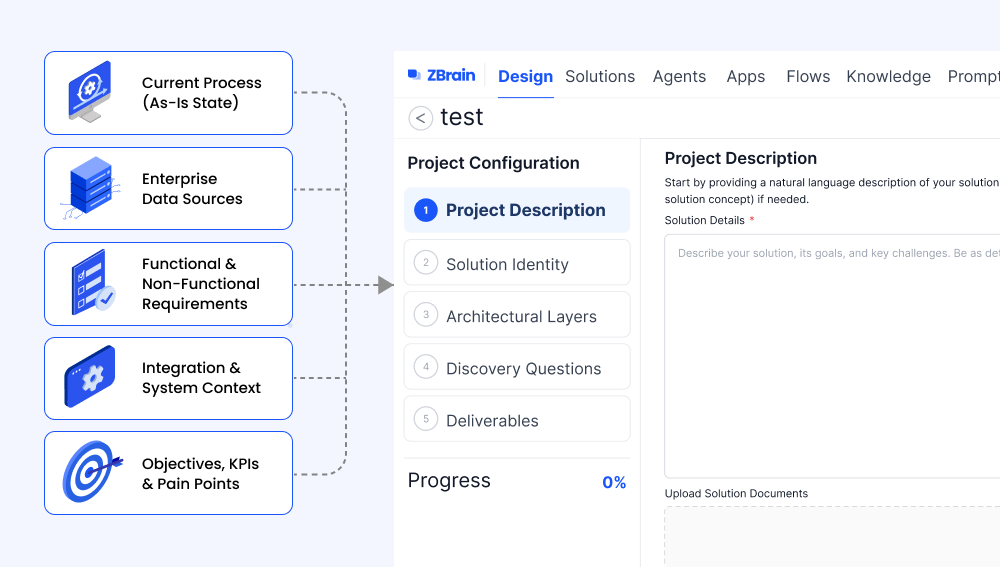
Every initiative inside the ZBrain Design follows a sequenced, AI-assisted workflow. Source documents — PRDs, Solution XPLR outputs and supporting context — are uploaded to a governed workspace, where the platform extracts and validates the solution identity, proposes the architectural layers required for the specific agentic solution and surfaces the technical assumptions that must be addressed before build. From there, ZBrain Design generates the full set of build-ready deliverables in a single pass: BRD, architecture diagrams, agentic design, schemas, integration logic, epics, user stories, and compliance documentation — each traceable to the source and consistent across the package.
An embedded AI assistant runs throughout the workflow, allowing architects to refine diagrams, agentic flows, and schemas via natural-language prompts, with every change captured in the design history. The validated package then flows directly into Solution Builder, where the design becomes a coordinated agent crew validated against synthetic or sample data — closing the loop from business intent to working agentic software.
How the ZBrain Design addresses each of these challenges
The table below shows how each of these challenges is addressed by a specific capability within ZBrain Design. The table below makes the connection explicit before moving into the framework section.
| Challenge | The ZBrain Design capability that addresses it |
|---|---|
| Fragmented and poorly defined requirements | AI-evaluated project intake extracts and validates the solution name, problem statement, success criteria, and constraints from source documents at the point of upload, with gap-flagging recommendations surfaced before the solution identity stage begins. |
| Weak traceability between business strategy and technical design | End-to-end traceability is preserved from source PRD through to Jira-ready epics and user stories, with every artifact mapped back to the validated solution requirements. |
| Legacy system constraints and vendor lock-in | Architecture layers and discovery questions are dynamic and grounded in source context, so designs reflect actual enterprise environments rather than greenfield assumptions. |
| Integration complexity and data silos | Generated deliverables include data flow diagrams, integration logic, ETL pipeline definitions, and schema specifications — making the integration architecture explicit. |
| Disconnected architecture design workflows | All requirements, solution identity, architecture, deliverables, and revisions live inside a single governed workspace; no cross-tool coordination required. |
| Static and outdated architectural artifacts | The embedded AI assistant lets architects modify any artifact through natural-language prompts, with each change captured in the design history rather than overwritten. |
| Difficulty quantifying architectural value and risk | Traceability from business intent through to engineering artifacts makes the connection between architectural decisions and business outcomes explicit and auditable rather than assumed. |
| Uncoordinated innovation and architectural drift | Every initiative is anchored to a validated solution identity within a governed workspace; design history preserves the rationale for every decision and modification. |
| Security and operability as afterthoughts | The contextual discovery questionnaire surfaces security, compliance, deployment, and observability concerns as primary inputs at the design stage rather than at review. |
| Organizational resistance and capability gaps | AI assistance accelerates structured design and reduces manual overhead, lowering the level of architectural expertise required to produce coherent, governed designs. |
| Architectural complexity unique to agentic systems | Purpose-built to support modern solution design, including agentic systems: architecture layers, discovery questions, and deliverables can adapt to agent orchestration, model selection, tool governance, and human-in-the-loop (HITL) design when needed. |
A practical framework to overcome solution architecture challenges
Addressing solution architecture design challenges requires more than isolated best practices. Organizations need a structured, repeatable approach that formalizes how inputs are captured, validated, and translated into executable technical blueprints.
When architecture is treated as a structured design workflow rather than a documentation exercise, ambiguity decreases and implementation readiness improves. The following framework outlines a design-layer approach aligned to modern enterprise complexity.
Align architecture with defined business intent
Solution architecture must begin with clarity on business objectives and initiative scope. Rather than designing around systems alone, architects should anchor technical design to a clearly defined solution intent.
This involves:
- Documenting the business objective driving the initiative
- Clarifying scope boundaries and expected outcomes
- Identifying stakeholder assumptions early
- Establishing traceability between requirements and architectural components
Clear intent reduces fragmented requirements and prevents architectural drift later in the lifecycle.
Capture functional and non-functional requirements as structured inputs
Functional requirements define what the solution must do. Non-functional requirements define how well it must perform.
Performance expectations, scalability constraints, resilience standards, security considerations, compliance obligations, and observability needs must be treated as structured inputs during design — not implied expectations.
Embedding these considerations early ensures:
- Explicit design trade-offs
- Defensible architectural decisions
- Reduced redesign during implementation
- Improved long-term sustainability
Structured requirement capture strengthens traceability between solution intent and technical execution.
Ground future-state design in current-state visibility
Future-state architecture must be grounded in existing enterprise realities.
A structured current-state assessment should identify:
- Existing application landscape
- Integration dependencies
- Data sources and ownership boundaries
- Legacy constraints and vendor dependencies
- Active initiatives that may introduce conflicts
Formalizing the current-state context prevents overly abstract designs and ensures that architecture reflects operational reality rather than idealized assumptions.
Validate assumptions and dependencies during design
Architectural risk often stems from untested assumptions — particularly around integration feasibility, data readiness, and system compatibility.
Instead of deferring validation until build, organizations should embed structured dependency validation into the design phase. This includes:
- Confirming integration paths between systems
- Verifying data availability and movement
- Reviewing environment and deployment assumptions
- Identifying unresolved design questions
Early validation transforms architecture from conceptual planning into controlled design, reducing downstream rework and escalation.
Design integration-aware, modular architectures
Modern enterprise initiatives rarely operate in isolation. Architecture must account for cross-system orchestration, data exchange, and component interdependencies.
Integration-aware design emphasizes:
- Clear system interaction boundaries
- Defined data movement pathways
- Structured interface definitions
- Modular components aligned to defined solution domains
A modular, integration-first approach reduces fragility and improves scalability while maintaining clarity across distributed systems.
Ensure architecture completeness before transition to build
Before development begins, architecture should undergo a structured completeness review.
This review confirms that:
- Functional and non-functional requirements are traceable
- Integration dependencies are identified
- Data flows are mapped
- Security and compliance implications are documented
- Assumptions are explicitly captured
Completeness validation ensures that architecture is implementation-ready rather than conceptually sufficient. It significantly reduces ambiguity between design and engineering teams.
Document architectural decisions in a structured manner
Architectural choices such as buy-versus-build, platform selection, integration patterns, and technology trade-offs significantly influence long-term system behavior. However, these decisions are often made informally and poorly documented.
A structured architecture approach requires that key decisions be explicitly captured during design, including:
- The context driving the decision
- Alternatives considered
- Constraints influencing the choice
- Implications and trade-offs
Documenting decisions within the design workflow strengthens traceability, improves stakeholder alignment, and preserves rationale for future iterations. This prevents repeated debates and reduces ambiguity during implementation.
Maintain controlled design evolution and traceability
Architecture is not static. As requirements evolve and new constraints emerge, design must adapt without losing context.
A structured design workflow should:
- Capture decision rationale
- Preserve version history
- Maintain linkage between requirements and architecture artifacts
- Document trade-offs across iterations
Controlled evolution prevents architectural drift and ensures continuity across teams and lifecycle phases.
How the ZBrain Design operationalizes each of these principles
The eight principles above map directly onto the ZBrain Design’s sequenced workflow. The table below shows where each principle is enforced inside the platform — providing a structural bridge from framework to product.
| Framework principle | The ZBrain Design workflow stage | How the ZBrain Design operationalizes it |
|---|---|---|
| Align architecture with defined business intent | Project intake → Solution identity | Source documents are uploaded into a governed workspace; the module extracts and validates the solution name, problem statement, success criteria, and target users — anchoring every downstream artifact to the business intent. |
| Capture functional and non-functional requirements as structured inputs | Solution identity → Discovery questions | A contextual discovery questionnaire captures non-functional concerns (hosting, performance, security, compliance) as structured answers. |
| Ground future-state design in current-state visibility | Project intake → Architecture layer | Source documents (PRDs, supporting context) are validated and chunked so that the proposed architecture is grounded in actual enterprise context rather than idealized assumptions. |
| Design integration-aware, modular architectures | Architecture layer → Deliverable generation | Architectural layers are identified dynamically from the solution identity; generated artifacts include data flow diagrams, integration logic, and end-to-end architecture views that make cross-system orchestration explicit. |
| Validate assumptions and dependencies during design | Discovery questions → Deliverable generation | The discovery questionnaire surfaces assumptions about integration, data, environment, and security for explicit answers. |
| Ensure architecture completeness before transition to build | Deliverable generation | All build-ready artifacts (BRD, architecture diagrams, schemas, integration specs, epics, user stories, compliance documentation) are generated in a single pass and traceable to source requirements. |
| Document architectural decisions in a structured manner | All stages → In-context refinement | Decisions captured at each stage are preserved in the design history. |
| Maintain controlled design evolution and traceability | In-context refinement → Export and handoff | The embedded AI assistant lets architects modify any deliverable using natural-language prompts within the workspace, with each change captured in the design history; exported packages preserve this history for downstream consumption by Solution Builder. |
Solution architecture failures rarely stem from technology alone. They arise from fragmented inputs, implicit assumptions, incomplete validation, and weak traceability between intent and execution.
By formalizing how requirements are structured, validated, and translated into executable blueprints, organizations move from reactive correction to proactive design control. Structured architecture practices reduce risk, strengthen implementation readiness, and enable more predictable delivery outcomes.
Operationalizing structured architecture with the ZBrain Design
Defining a practical architecture framework is one thing. Operationalizing it consistently across enterprise initiatives is another.
Many organizations understand the importance of aligning solution design with business objectives, defining non-functional requirements early, and maintaining governance traceability. However, these practices are often executed through disconnected tools, static documentation, and manual coordination. The result is inconsistent design rigor and avoidable implementation risk.
The ZBrain Design is an enterprise-grade AI solution that transforms solution requirements into structured, build-ready solution architecture blueprints. It operates at the critical translation layer between solution intent and technical execution — helping architects move from defined requirements to executable design artifacts with clarity, traceability, and structured control. It strengthens the architecture phase itself by ensuring that solution designs are coherent, integration-aware, and implementation-ready before development begins. And rather than ending at the design artifact, it hands the validated blueprint off to the downstream module of the ZBrain ecosystem, turning validated architecture designs into a coordinated crew of AI agents. It generates the agent crew, runs it against synthetic or sample test data, and produces a working iteration that teams can validate before scaling.
How the ZBrain Design works in practice
Every initiative inside the ZBrain Design follows a sequenced, AI-assisted workflow. Each stage produces validated artifacts, such as BRD, schemas, etc, and each artifact feeds the next — keeping designs aligned with source requirements and ensuring seamless handoffs to engineering or the Solution Builder.
Project intake: The architect creates a workspace for the initiative, uploads the source documents (PRDs and supporting context), and provides a brief description of the solution. The platform validates and chunks the source so every downstream artifact stays grounded in the original input.
Solution identity: The component proposes the solution name, business domain, problem statement, success criteria, target users, core data entities, known constraints, requirements, and compliance posture — all extracted from the uploaded source. An AI evaluation engine flags weak or missing inputs with specific recommendations, so gaps surface before the architecture stage rather than after the build begins.
Architecture layer: Based on the validated identity, the platform identifies the architectural layers required for the specific agentic solution and proposes a primary set. Layers are dynamic, grounded in the uploaded documents and the solution identity, not selected from a fixed template, so the architecture reflects what the initiative actually needs rather than a generic reference model.
Discovery questions: A contextual questionnaire engine generates technical questions specific to the initiative — such as hosting model, target cloud, integration patterns, model and data choices, deployment posture and governance framework — and provides a recommended answer for each, drawn from the source context. The architect accepts, overrides, or skips each question. Every answer is preserved as part of the design record.
Deliverables generation: The platform generates the full set of build-ready deliverables in a single pass: BRD, ETL pipeline, system and end-to-end architecture diagrams, agentic design, data flow diagrams, DB schema and ERDs, user journey, integration logic, epics and user stories ready for Jira, compliance and security documentation, and scope of work. Each deliverable is traceable to the source requirements and consistent with all other deliverables in the package.
In-context refinement.
An embedded AI assistant lets the architect modify any deliverable through natural-language prompts inside the same workspace. “Remove the compliance reporting service from the architecture.” “Add a vendor notification node to the agentic flow.” “Change the database from MongoDB to PostgreSQL.” Modifications are executed in place, and each change is captured in the design history rather than overwritten.
Export and handoff.
Deliverables can be exported individually as a complete zip package. The same package becomes the direct input to Solution Builder, which reads the design and assembles the agent crew to execute it.
AI assistance, in context, not in a separate window
Most architecture platforms treat AI as a side tool: open a chat, paste a question, copy the answer back. The ZBrain Design’s embedded AI assistant is built into the design workspace itself. It can read every artifact in the current initiative, modify diagrams and agentic workflows directly. Architectural judgment stays with the architect; the assistant absorbs the mechanical work of keeping artifacts consistent as the design evolves.
From design to working solution: handoff to Solution Builder
The ZBrain Design deliverables are not a documentation artifact to be filed away. They are an executable handoff. The same package that engineers receive — architecture diagrams, schemas, integration logic, agentic flows, epics, and user stories — flows directly into Solution Builder, where it becomes the input for agent generation and POC validation. Solution Builder reads the design, proposes a coordinated agent crew sized to the workflow, generates synthetic test data or accepts uploaded sample data, and runs the agents end-to-end to validate the design as a working POC before scaling.
This is what closes the loop the article opened with. Solution architecture is no longer a one-time documentation exercise; it becomes the operational substrate from which working solutions are built. The design does not stop at the diagram, and the handoff does not depend on interpretation.
Endnote
Solution architecture ultimately determines whether digital strategy translates into scalable capability or into accumulated technical debt. As enterprise ecosystems become more interconnected, distributed, and integration-dependent, disciplined architectural design is no longer optional — it is foundational.
Organizations that formalize how requirements are structured, validated, and translated into executable blueprints reduce ambiguity at the point where risk is highest. By embedding traceability, early validation, and integration awareness into the design phase, they strengthen implementation readiness and improve delivery predictability.
Operationalizing this discipline consistently across teams requires more than intent. Structured solution architecture design module, such as the ZBrain Design, reinforces these principles by providing a governed, AI-assisted environment that strengthens completeness and traceability before development begins — and by feeding validated designs directly into Solution Builder, where they become the foundation for working agentic solutions.
In a landscape defined by accelerating complexity, architecture is not overhead. It is structural integrity — and the difference between initiative and impact.
Is your solution architecture structured to turn strategy into executable solutions? Discover how the
ZBrain Design — an AI-assisted ZBrain module for designing solutions — converts validated requirements into build-ready technical blueprints within a governed workspace.
Listen to the article
Author’s Bio


CEO LeewayHertz
An early adopter of emerging technologies, Akash leads innovation in AI, driving transformative solutions that enhance business operations. With his entrepreneurial spirit, technical acumen and passion for AI, Akash continues to explore new horizons, empowering businesses with solutions that enable seamless automation, intelligent decision-making, and next-generation digital experiences.
Table of content
- What is solution architecture?
- Common solution architecture design challenges
- What is ZBrain Design?
- How the ZBrain Design addresses each of these challenges
- A practical framework to overcome solution architecture challenges
- Operationalizing structured architecture with the ZBrain Design
-

-
-
-
Share Article


Frequently Asked Questions
What is solution architecture in modern enterprises?
Why do digital transformation initiatives often fail at the architecture stage?
Digital transformation initiatives often fail at the architecture stage because the translation from business intent to technical design is poorly structured. Requirements are fragmented across sources, integration dependencies are underestimated, and key assumptions about systems, data, and scalability remain implicit. Without clear traceability between business objectives and architecture decisions, design gaps surface late—when changes are costly and difficult to implement.
What are the most common solution architecture challenges?
Common challenges include:
- Poorly defined or fragmented requirements
- Weak alignment between business strategy and technical design
- Legacy system constraints and vendor lock-in
- Integration bottlenecks and data silos
- Disconnected architecture workflows
- Static documentation practices
- Security and operability treated as afterthoughts
- Difficulty quantifying architectural ROI
These challenges often stem from unmanaged design complexity rather than isolated technical issues.
How can organizations reduce architectural risk before development begins?
Organizations can reduce risk by:
- Aligning architecture with clearly defined business capabilities
- Formalizing both functional and non-functional requirements early
- Conducting structured current-state assessments
- Validating key assumptions
- Performing architecture completeness reviews before build
Early validation and traceability significantly reduce downstream rework and implementation delays.
What is the ZBrain Design?
The ZBrain Design is ZBrain’s enterprise-grade AI solution for designing agentic solutions. It operates at the translation layer between solution requirements and technical execution, helping organizations convert validated business requirements into structured, build-ready technical blueprints within a governed design environment.
It generates the full set of artifacts required for engineering execution: architecture overviews and end-to-end system design blueprints, BRDs, functional specifications, schema definitions and data models, agentic design, data flow diagrams, integration and interface specifications, the user journey, epics and user stories ready for Jira, and compliance and security documentation. An embedded AI assistant supports architects throughout the design lifecycle by reading every artifact in the workspace and modifying diagrams, flows, and schemas via natural-language prompts.
The ZBrain Design is the upstream module of the ZBrain ecosystem. Its deliverables flow into Solution Builder, where they become the input for agent generation and POC validation — closing the loop from business intent to working agentic solution.
How does the ZBrain Design support solution architecture?
The ZBrain Design embeds structured architecture into the execution workflow itself, through a sequenced, AI-assisted pipeline. Each initiative begins with project intake — source documents uploaded to a governed workspace — and moves through solution identity, architecture-layer modeling (dynamic, grounded in the identity), and a contextual discovery questionnaire that surfaces technical assumptions before they become build-stage problems.
From there, the module generates the full set of build-ready deliverables in a single pass: BRD, architecture diagrams, agentic design, schemas, integration logic, epics, user stories, and compliance documentation — each traceable to the source. An embedded AI assistant supports in-context refinement, allowing architects to modify any deliverable with natural-language prompts, with every change captured in the design history.
The workflow closes with export and handoff: deliverables flow directly into Solution Builder for agent generation and POC validation. The result is a continuous, governed pipeline in which architecture is designed, validated, refined, and handed off — all within a single environment, with traceability preserved end-to-end.
What types of enterprise initiatives does the ZBrain Design support?
The ZBrain design supports a wide range of initiatives, such as…
-
Agentic AI systems and multi-agent solutions
-
AI and advanced analytics initiatives
-
Workflow automation programs
-
Enterprise application enhancements
-
Cross-system integrations
-
Data platform modernization
-
Cloud and infrastructure transformation
How does the ZBrain Design relate to Solution Builder?
The ZBrain Design and Solution Builder are two stages of the same ZBrain ecosystem. The ZBrain Design is the upstream module: it transforms validated requirements into a structured, build-ready architecture, complete with diagrams, schemas, agentic flows, integration logic, and engineering-ready epics and user stories. Solution Builder is the downstream module: it reads those deliverables once the user uploads them, proposes a coordinated agent crew sized to the solution, generates synthetic test data (or accepts uploaded samples), and runs the agents end-to-end to validate the POC before scaling.
Together, they form a continuous path from business intent to a working, testable agentic solution.
Who is the ZBrain Design designed for?
The ZBrain Design serves three primary audiences:
-
Solution architects and technical leads can use it to move from validated solution requirements to structured, executable architecture with traceability and AI-assisted completeness checks.
-
Engineering and delivery leaders benefit from receiving implementation-ready blueprints and structured artifacts that reduce ambiguity and minimize downstream rework.
-
CTOs and enterprise architecture leaders use ZBrain Design to establish a governed, repeatable approach to architecture design that improves alignment, shortens design cycles, and enhances visibility across initiatives.
How can my organization get started with TechBrain?
Organizations interested in exploring how the ZBrain Design can strengthen their solution architecture process can learn more about the module through this resource. For a detailed walkthrough tailored to your architecture and transformation initiatives, you can book a demo. For direct inquiries or discussions with the team, you may also reach out at hello@zbrain.ai.
Insights
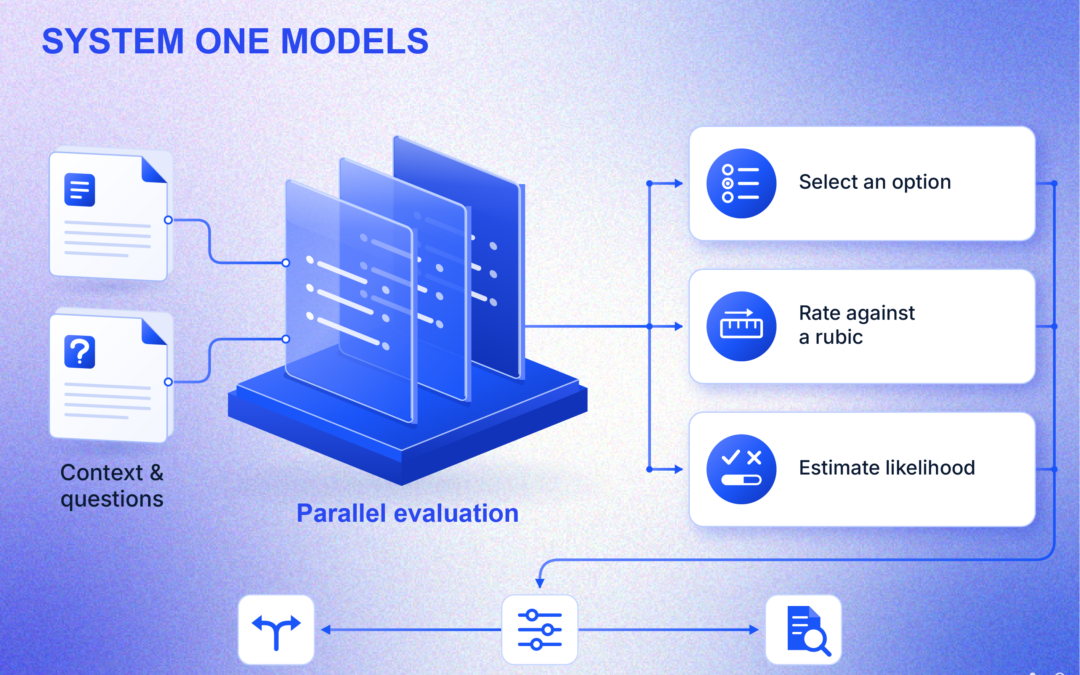
System One Models: A Technical and Enterprise Architecture Deep Dive
A System One model is a proposed class of AI model optimized for fast, bounded judgments that software can consume directly.
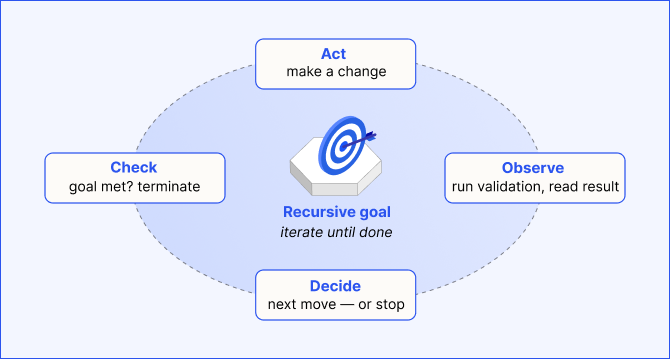
Loop engineering for AI agents: Building reliable autonomous systems
Loop engineering is the practice of designing, operating, and improving the feedback systems that let an AI agent plan, act, observe the results, and revise its approach until a goal is reached without a human driving every turn.
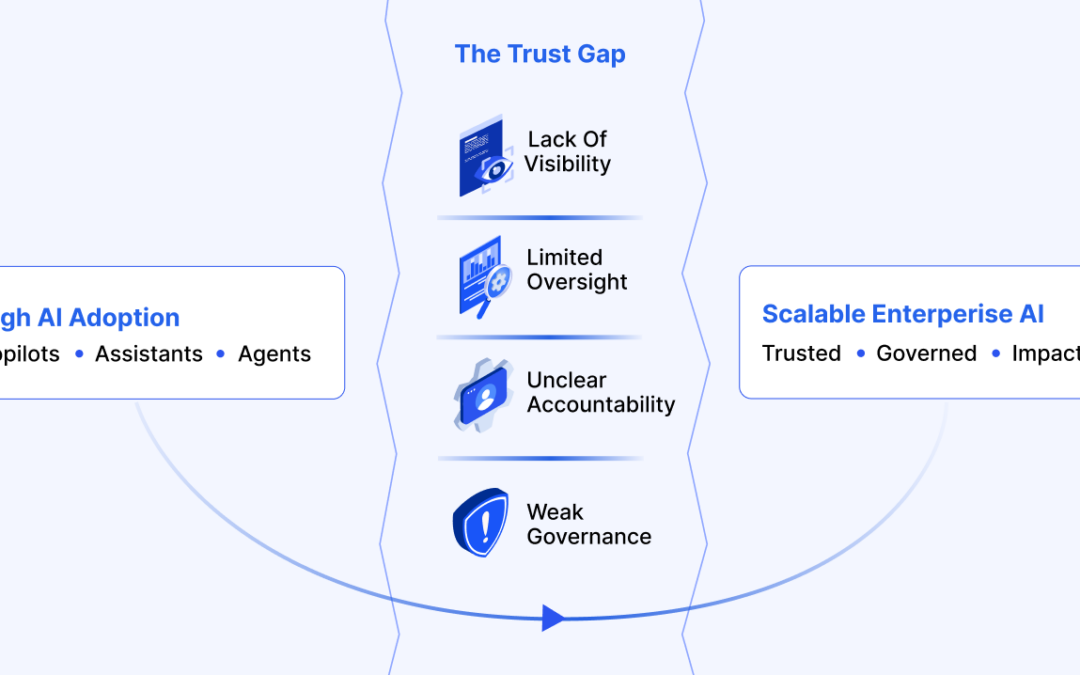
The AI trust gap: Why governance architecture determines enterprise value
The trust gap surrounding enterprise AI is fundamentally an architectural challenge, and its solution is increasingly well understood.
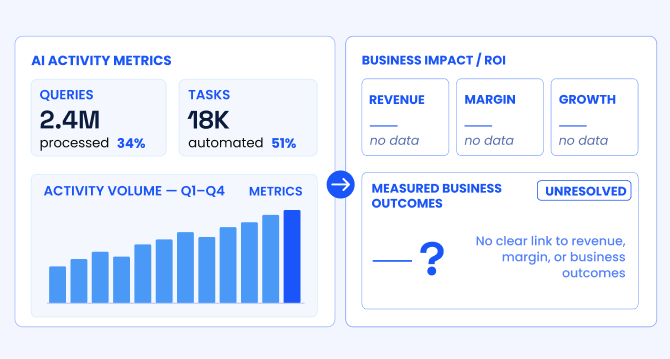
The AI ROI illusion: Why enterprises struggle to measure AI impact
Organizations with stronger measurement discipline are better positioned to link AI deployments to measurable business outcomes, prioritize high-impact use cases across the enterprise, allocate capital more effectively, and continuously refine models using real-world performance feedback.
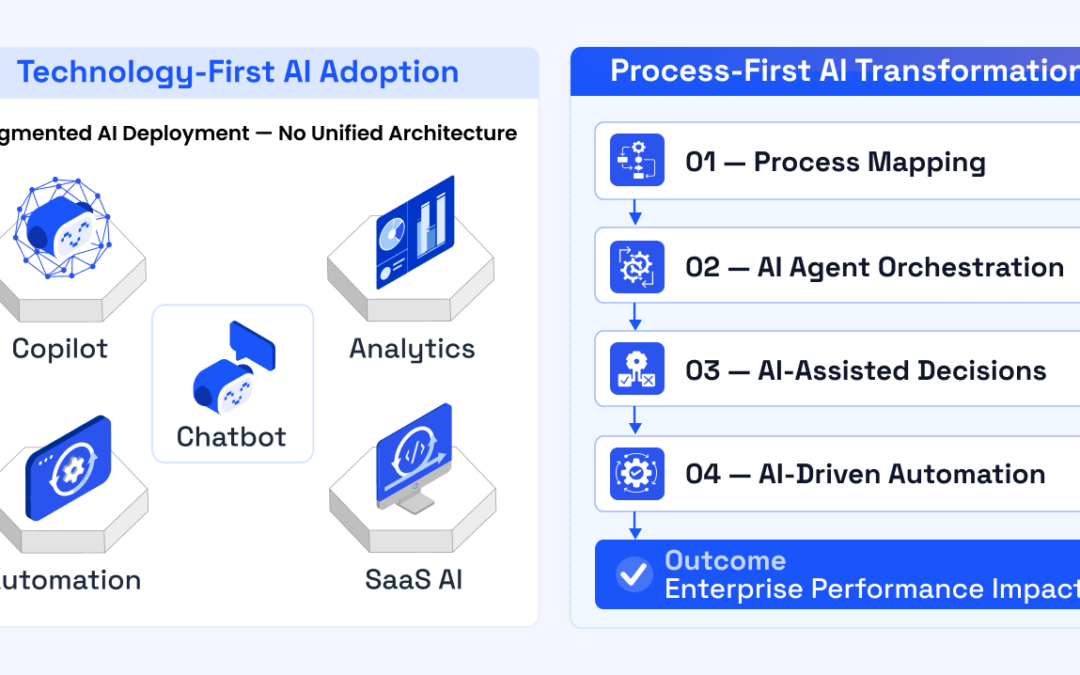
The agentic enterprise: Why AI success requires an operating model redesign
Organizations that redesign their operating models around agentic AI are beginning to outperform those that apply AI only incrementally.
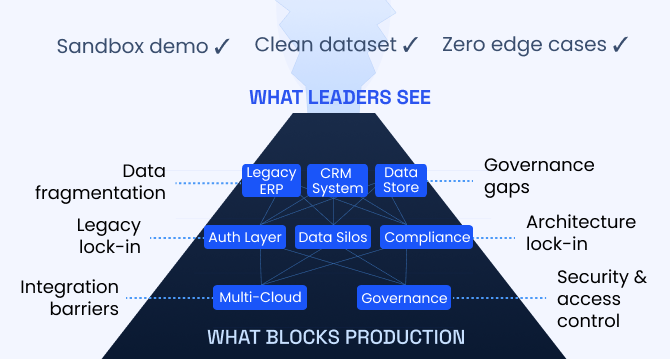
Enterprise AI pilot-to-production gap: Root causes & how to address them
The underlying cause is structural. In many enterprises, AI pilots are developed on infrastructure that was not designed to support production deployment.
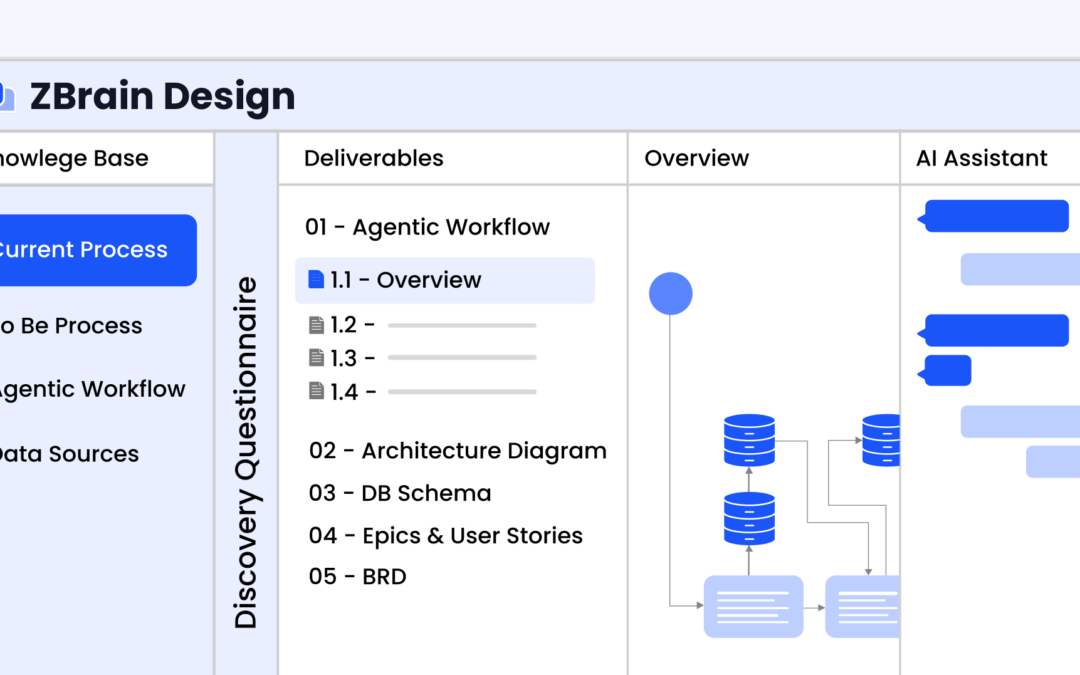
Solution architecture best practices: A guide for enterprise teams
The architecture design process culminates in a set of documented artifacts that communicate the solution to development, operations, and business teams.
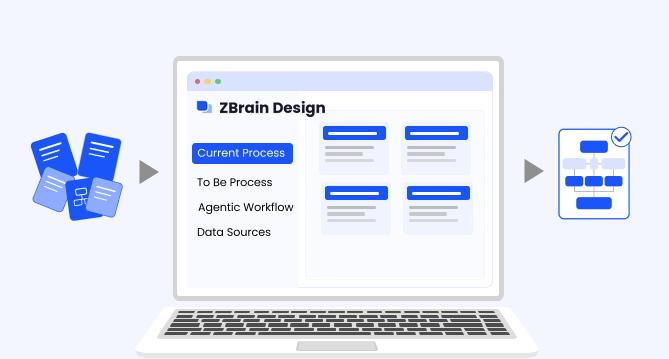
Why structured architecture design is the foundation of scalable enterprise systems
Structured architecture design guides enterprises from requirements to build-ready blueprints. Learn key principles, scalability gains, and TechBrain’s approach.
Intranet search engine guide: How it works, use cases, challenges, strategies and future trends
Effective intranet search is a cornerstone of the modern digital workplace, enabling employees to find trusted information quickly and work with greater confidence.