Manufacturing
 Logistics
 Real Estate
 Retail
 Finance
 Healthcare
 Hospitality
 Automotive
How multi-agent collaboration powers enterprise agentic AI systems

Listen to the article
Enterprise AI is entering a new phase. For years, organizations have focused on automating discrete tasks, generating reports, answering queries, extracting data, or triggering predefined workflows. While these capabilities delivered efficiency gains, they remained fundamentally reactive and narrow in scope. Today, however, enterprises are shifting from task automation to autonomous goal execution. The question is no longer how to automate a step in a workflow, but how to enable AI systems to pursue complex objectives end-to-end, planning, coordinating, adapting, and delivering outcomes within governed enterprise environments.
This shift has given rise to agentic AI: a new architectural paradigm in which intelligent agents operate with structured autonomy to achieve defined goals. Agentic systems do not merely respond to prompts; they decompose objectives into executable tasks, select and invoke appropriate tools, maintain contextual memory across interactions, and refine their outputs through feedback and evaluation. They combine reasoning, orchestration, tool use, and governance into a cohesive execution model. In essence, agentic AI represents the transition from isolated AI capabilities to coordinated digital workforces capable of operating at enterprise scale.
At the foundation of this paradigm lies multi-agent collaboration. True autonomy in complex enterprise environments cannot be achieved by a single, monolithic agent attempting to manage every responsibility. Enterprise workflows span data retrieval, analysis, validation, compliance enforcement, system integration, decision-making, and user communication—each requiring specialized capabilities and contextual awareness. Multi-agent architectures distribute these responsibilities across specialized agents that communicate, share state, delegate subtasks, and coordinate execution. This distributed intelligence model mirrors high-performing human teams: specialists working in concert toward a shared objective, guided by structured oversight and shared knowledge.
Multi-agent collaboration, therefore, serves as the execution backbone of agentic AI. It enables modular scalability, parallel reasoning, conditional execution, and resilient orchestration—capabilities that single-agent systems struggle to sustain as complexity increases. When combined with shared memory layers, secure tool access, and governance mechanisms, multi-agent systems evolve from simple collaboration frameworks into fully agentic enterprise infrastructures.
ZBrain Builder operationalizes this vision by providing an enterprise-grade agentic AI orchestration platform where teams of specialized AI agents can be designed, coordinated, and governed at scale. Rather than treating agents as isolated utilities, ZBrain enables them to function as structured, goal-oriented entities within a controlled ecosystem—planning tasks, securely invoking enterprise systems, exchanging contextual information, and operating within compliance boundaries. The result is not just multi-agent automation, but a scalable foundation for agentic AI—where enterprises can build autonomous, explainable, and secure digital workforces capable of solving complex, real-world challenges with speed and accountability.
This article explores how ZBrain Builder’s multi-agent collaboration framework embodies the principles of agentic AI and translates them into a practical, enterprise-ready architecture. It examines how distributed agents, structured orchestration, secure tool integration, and governance mechanisms come together to enable autonomous, goal-driven enterprise systems.
- Why enterprises need agentic AI (Beyond single-agent systems)
- Core principles of an agentic AI architecture
- ZBrain Builder as an agentic orchestration platform
- The Agent Store: Building a reusable enterprise agent ecosystem
- Scalability, reliability, and performance in ZBrain’s multi-agent ecosystem
- Security, compliance, and governance in ZBrain’s multi-agent collaboration
Why enterprises need agentic AI
As organizations move from experimental AI deployments to enterprise-wide transformation initiatives, architectural decisions become strategic imperatives. The evolution toward agentic AI is not simply a technological upgrade; it is a response to the structural limitations of single-agent systems in handling real-world enterprise complexity.
Limitations of single-agent architectures
Single-agent systems centralize reasoning, planning, tool use, and execution within one model instance. While effective for narrow, well-defined tasks, this architecture becomes strained as responsibilities expand. The agent must simultaneously retrieve data, interpret context, apply business logic, interact with external systems, validate outputs, and maintain compliance boundaries. As system responsibilities expand, orchestration logic becomes embedded in prompts, workflows grow brittle, observability diminishes, and performance predictability declines.
This concentration of cognitive load often results in context overload, inconsistent reasoning paths, and difficulty enforcing deterministic behavior, particularly in regulated environments where traceability and auditability are essential. Scaling single-agent systems frequently means adding more instructions rather than improving structural design, creating fragility rather than resilience.
In enterprise contexts, where processes span departments and require strict governance controls, single-agent architectures reach a functional ceiling. They are optimized for execution within a bounded scope—not for orchestrating layered, interdependent workflows across systems and stakeholders.
Complexity in enterprise workflows: Multi-step, multi-system, multi-stakeholder
Enterprise operations are inherently multidimensional. A typical business objective—such as regulatory compliance monitoring, financial auditing, supply chain optimization, or IT incident resolution—rarely unfolds in a linear sequence. Instead, it involves:
- Retrieving and synthesizing data from multiple systems
- Applying conditional logic and domain-specific reasoning
- Interacting securely with internal and third-party applications
- Validating outputs against policy or regulatory frameworks
- Routing decisions for approval or escalation
- Maintaining comprehensive audit trails
These workflows are multi-step, multi-system, and multi-stakeholder by design. They require parallel execution paths, structured coordination, and dynamic decision-making under policy constraints. Attempting to manage such complexity within a single reasoning entity introduces performance bottlenecks and governance risks.
Agentic AI emerges as a response to this operational reality. It recognizes that enterprise autonomy must be modular, orchestrated, and policy-aware, rather than monolithic and reactive.
Distributed cognition: The rise of collaborative AI agents
To address enterprise-scale complexity, organizations are increasingly embracing distributed cognition, an architectural model in which intelligence is distributed across multiple specialized agents rather than concentrated in a single entity.
In this model, each agent is optimized for a defined role: data retrieval, analytical reasoning, validation, orchestration, compliance enforcement, or user communication. These agents operate within a coordinated framework, share contextual state, dynamically delegate subtasks, and collaborate toward shared objectives.
This structure mirrors how high-performing organizations operate. Complex outcomes are not achieved by a single individual attempting to master every function, but by teams of specialists working in alignment under structured leadership and shared knowledge systems. By translating this organizational principle into AI architecture, enterprises gain modularity, scalability, and clarity in execution.
Distributed cognition enhances reliability by isolating responsibilities, improves scalability by enabling parallel task execution, and strengthens governance by introducing explicit checkpoints and role boundaries.
Multi-agent systems as the execution layer of agentic AI
Agentic AI defines the autonomous, goal-oriented intent of a system; multi-agent collaboration provides the operational mechanism through which that intent is realized.
Within an agentic framework, high-level objectives are decomposed into modular tasks. These tasks are distributed across specialized agents, coordinated through an orchestration layer that manages sequencing, conditional routing, parallel execution, and feedback integration. Shared memory ensures contextual continuity, while governance mechanisms enforce compliance boundaries and enable human oversight where required.
This architectural separation—between goal definition and task execution—creates structural resilience. It allows enterprises to scale agent networks incrementally, introduce new capabilities without destabilizing existing workflows, and maintain transparency into reasoning and execution paths.
In this paradigm, multi-agent systems are not merely collaborative constructs; they are the execution backbone of enterprise agentic AI. They transform AI from an advanced assistant into an orchestrated digital workforce capable of pursuing complex business objectives systematically, securely, and at scale.
Streamline your operational workflows with ZBrain AI agents designed to address enterprise challenges.
Core principles of an agentic AI architecture
Building an enterprise-grade agentic AI system requires more than assembling multiple agents. It demands a structured architectural foundation that governs how goals are interpreted, tasks are distributed, systems are accessed, decisions are validated, and outcomes are monitored. At its core, agentic AI is defined by a set of interlocking principles that enable autonomy without sacrificing control, scalability without introducing fragility, and adaptability without compromising compliance.
The following principles form the strategic blueprint of a robust agentic AI architecture.
Goal decomposition and autonomous planning
Agentic AI begins with intent. Unlike traditional automation systems that execute predefined sequences, agentic systems are designed to pursue defined objectives. This requires the ability to translate high-level goals—such as “conduct a compliance review” or “optimize inventory allocation”—into structured, executable subtasks.
Goal decomposition involves breaking complex objectives into modular components, identifyi state. Rather than embedding all logic in a single agent, the system routes subtasks to specialized agents operating within defined scopes. This modularity enhances performance consistency and reduces cognitive overload.
Role specialization also strengthens governance. By constraining each agent’s functional domain, enterprises maintain tighter control over data access, decision authority, and operational boundaries. Delegation becomes explicit, auditable—key requirements in enterprise environments.
Dynamic task delegation and role specialization
Once objectives are decomposed, effective execution depends on intelligent task distribution. Agentic architectures rely on role specialization—assigning clearly defined responsibilities to agents optimized for specific functions, such as data retrieval, analytical reasoning, compliance validation, or communication.
Dynamic task delegation ensures that responsibilities are allocated based on context, capability, and workflow state. Rather than embedding all logic in a single agent, the system routes subtasks to specialized agents operating within defined scopes. This modularity enhances performance consistency and reduces cognitive overload.
Role specialization also strengthens governance. By constraining each agent’s functional domain, enterprises maintain tighter control over data access, decision authority, and operational boundaries. Delegation becomes explicit, auditable—key requirements in enterprise environments.
Memory and context continuity
Enterprise workflows are rarely confined to a single interaction. They unfold over multiple steps, involve iterative refinement, and often span extended timeframes. Agentic AI systems, therefore, require structuredm memory layers to preserve contextual continuity.
Memory in agentic architectures operates at multiple levels: short-term state tracking across sequential tasks, shared contextual repositories accessible to collaborating agents, and longer-term knowledge bases that inform reasoning across sessions. This ensures that decisions are grounded in prior outputs, relevant enterprise data, and evolving workflow states.
Context continuity eliminates fragmentation. Agents do not operate in isolation; they inherit relevant information, contribute structured outputs, and maintain coherence across execution paths. This continuity is essential for reliable multi-step orchestration and accurate decision-making.
Tool use and secure system interaction
Autonomy in enterprise AI is meaningless without the ability to interact securely with external systems. Agentic architectures must integrate seamlessly with databases, APIs, enterprise applications, collaboration platforms, and legacy infrastructure.
Tool use in an agentic framework is structured, governed, and auditable. Agents invoke tools through standardized interfaces, access credentials are centrally managed, and permissions adhere to least-privilege principles. Rather than embedding credentials or logic within prompts, secure orchestration layers mediate all system interactions.
This structured tool integration transforms agents from conversational entities into operational actors. They can retrieve data, trigger workflows, update records, and validate compliance criteria—all within defined security parameters. Secure system interaction thus becomes a foundational pillar of an enterprise-grade agentic AI system.
Feedback loops and adaptive execution
True autonomy requires the capacity to learn, refine, and adapt. Agentic AI systems incorporate feedback mechanisms that evaluate outputs, detect anomalies, and optimize performance over time.
Feedback loops may include evaluator agents that validate reasoning paths, automated guardrails that enforce policy compliance, performance dashboards that monitor execution metrics, and reinforcement mechanisms informed by human feedback. These systems ensure that outputs are not merely generated but assessed against quality, compliance, and accuracy standards.
Adaptive execution does not imply uncontrolled evolution. Instead, it reflects structured refinement within governance constraints. Agentic systems improve reliability and effectiveness through controlled iteration—balancing innovation with predictability.
Human-in-the-loop governance
While agentic AI introduces structured autonomy, enterprise systems must retain mechanisms for oversight and escalation. Human-in-the-loop governance ensures that critical decisions, high-risk actions, or ambiguous scenarios can be reviewed, approved, or overridden by authorized stakeholders.
This governance layer may include approval checkpoints, escalation triggers, compliance validation agents, and configurable thresholds for autonomous action. By embedding human oversight into workflow design, organizations preserve accountability and ethical safeguards.
Importantly, human-in-the-loop governance does not undermine autonomy; it strengthens it. It establishes trust, clarifies operational boundaries, and enables the gradual expansion of autonomous capabilities as confidence grows.
Observability and deterministic behavior
For agentic AI to operate in enterprise environments, transparency and predictability are essential. Observability mechanisms provide visibility into reasoning paths, tool invocations, intermediate outputs, and decision outcomes.
Deterministic behavior—where the system produces consistent outputs under consistent conditions—further enhances reliability. Structured logging, thought trace inspection, performance monitoring, and audit trails enable enterprises to validate execution logic and investigate anomalies.
Observability transforms agentic AI from a “black box” into a governed, inspectable system. It ensures that autonomy remains explainable, accountable, and aligned with organizational policies.
Together, these principles form the architectural backbone of agentic AI. Goal decomposition defines intent, task delegation distributes responsibility, memory preserves context, secure tool use enables action, feedback loops refine performance, human oversight safeguards outcomes, and observability ensures accountability. When implemented cohesively, these elements enable enterprises to move beyond automation toward structured, scalable, and governed autonomy.
ZBrain Builder as an agentic orchestration platform
ZBrain Builder is designed not merely as a workflow automation tool, but as an enterprise-grade agentic AI orchestration platform. It enables organizations to build, deploy, and govern intelligent agents that operate with structured autonomy—pursuing defined business objectives through hierarchical planning, coordinated execution, and secure system interaction.
At its core, ZBrain Builder transforms isolated AI capabilities into goal-driven agentic systems. Enterprises can define high-level objectives, configure specialized agents, connect enterprise data sources, and orchestrate execution through a governed control layer. The platform’s architecture emphasizes structured task decomposition, distributed cognition, secure tool invocation, memory continuity, and full-lifecycle observability—ensuring autonomy remains explainable, deterministic, and compliant.
ZBrain Builder leverages agent crew, a coordinated network of specialized agents, and the Model Context Protocol (MCP), which ensures agents operate with shared context and governance, to bring agentic AI into production. This enables scalable, modular, and policy-compliant execution across complex enterprise workflows. ZBrain Builder operationalizes agentic AI in production environments, enabling scalable, modular, and policy-aware execution across complex enterprise workflows.
Agent Crew: Hierarchical goal-oriented agent teams
Agent Crew represents ZBrain’s implementation of hierarchical, goal-oriented agent teams. Rather than deploying standalone agents, Agent Crew structures agents into coordinated units that execute complex objectives collaboratively.
This architecture reflects a distributed cognition model: high-level goals are decomposed into specialized responsibilities, assigned across role-defined agents, and governed through structured orchestration. Each crew functions as a cohesive digital team aligned to a shared objective, with clear accountability and execution boundaries.
Supervisor agent as meta-controller
At the top of each agent crew is the supervisor agent, functioning as a meta-controller. The supervisor interprets the primary objective, decomposes tasks, determines execution order, and delegates responsibilities to appropriate child agents.
The supervisor governs sequencing, monitors intermediate outputs, and evaluates completion criteria. It ensures that subtasks are executed within defined logic paths—triggering conditional branches, managing parallel operations, or escalating for human review where required. This hierarchical planning layer enables controlled autonomy: agents operate independently within defined scopes while remaining aligned with overarching goals and governance policies.
Child agents as specialized cognitive modules
Child agents serve as specialized cognitive modules within the crew. Each is configured with scoped prompts, defined input sources, specific tools, and bounded responsibilities—such as data parsing, retrieval, validation, analytics, or compliance enforcement.
By isolating functions into modular agents, ZBrain Builder enhances reliability, scalability, and observability. Each agent operates within its defined domain, reducing cognitive overload while enabling deterministic execution. This role specialization enables adaptive orchestration, allowing agents to be added, replaced, or refined without destabilizing the broader system.
Together, the supervisor and child agents form a structured execution hierarchy that can pursue enterprise objectives with accountability and precision.
The agentic control plane: Orchestration engine
The orchestration engine in ZBrain Builder serves as the agentic control plane—the central coordination layer that translates intent into executable workflows. It governs how tasks are decomposed, routed, executed, and monitored across agents.
Task decomposition
The control plane enables a structured breakdown of complex objectives into modular subtasks. Through ZBrain’s flow configuration capabilities, enterprises define logic that maps high-level goals to agent responsibilities. Dependencies are evaluated, execution sequences determined, and accountability boundaries enforced.
This structured decomposition ensures clarity in execution paths and strengthens auditability across multi-step processes.
Sequential & parallel execution
Enterprise workflows often require both ordered progression and concurrent operations. The orchestration engine supports:
- Sequential execution for interdependent tasks
- Parallel execution for independent subtasks
By intelligently managing task scheduling, ZBrain Builder optimizes throughput while maintaining logical coherence. Parallelization reduces latency in large-scale operations, while sequencing ensures deterministic progression where dependencies exist.
Conditional routing
Conditional logic is embedded directly into orchestration flows. Execution paths can branch based on intermediate outputs, validation results, success/failure states, or policy triggers. This dynamic routing capability enables adaptive execution while preserving governance boundaries.
Conditional routing transforms workflows from static chains into context-aware execution graphs that respond to real-time inputs and evaluation criteria.
Stateful graph-based Flows (LangGraph, Semantic Kernel, ADK)
ZBrain Builder integrates advanced orchestration frameworks, including LangGraph, Microsoft Semantic Kernel, and Google ADK, to support stateful, graph-based execution models.
These frameworks enable:
- Persistent state tracking across workflow stages
- Complex branching logic
- Integration of AI reasoning with traditional code
- Adaptive planning across multi-step processes
Graph-based flows enable agents to maintain contextual continuity, revisit prior states as needed, and dynamically evolve execution paths. This moves the system beyond static automation toward feedback-driven, adaptive orchestration—hallmarks of agentic AI architecture.
MCP as the secure tool-use layer
Autonomy in enterprise AI requires secure and governed access to external systems. The Model Context Protocol (MCP) serves as ZBrain’s secure tool-use layer, enabling structured interaction with enterprise infrastructure.
Structured tool invocation
MCP standardizes how agents invoke external tools, APIs, databases, and enterprise systems. Rather than embedding credentials or direct integrations within prompts, agents interact through structured endpoints defined within MCP configurations.
This abstraction layer ensures consistent, deterministic tool invocation across agent workflows.
External system bridging
MCP acts as a secure bridge between agentic workflows and enterprise systems—including CRMs, ERPs, databases, SaaS platforms, and internal APIs. Once configured, MCP endpoints can be reused across agent crews, supporting scalable integration without redundant configuration.
By centralizing system connectivity, ZBrain Builder eliminates brittle custom integrations and reduces operational risk.
Credential isolation and governance
Security is enforced through credential isolation and centralized management. Credentials are never embedded within agent prompts or exposed directly to agents. Instead, authentication is governed through controlled MCP configurations aligned with enterprise access policies.
This design enhances auditability, enforces least-privilege access principles, and ensures compliance with enterprise governance frameworks. Tool use becomes controlled, observable, and policy-aware—critical for deploying agentic AI systems in regulated environments.
Shared memory and knowledge fabric
Effective agentic systems require more than orchestration—they require memory continuity and shared contextual intelligence. ZBrain Builder provides a shared memory and knowledge base that enables coordinated reasoning across agents.
Centralized knowledge base
Agents can access a semantically indexed, centralized knowledge base configured as a default tool. This shared repository ensures that agents operate with consistent, up-to-date contextual intelligence—grounding reasoning in enterprise data rather than isolated prompts.
The knowledge base strengthens alignment across agents, reduces inconsistency, and enhances contextual accuracy across workflows.
Context handoff between agents
Within agent crew workflows, outputs from one agent are automatically passed as structured inputs to subsequent agents. This orchestrated context handoff eliminates manual data piping and prevents fragmentation between execution stages.
By preserving structured state transitions, ZBrain Builder ensures that agents build upon one another’s outputs coherently, maintaining execution continuity.
Stateful memory across sessions
Beyond intra-workflow context, ZBrain Builder supports stateful memory across sessions. This enables long-running processes, iterative refinements, and progressive task execution without loss of historical state.
Stateful memory reinforces deterministic behavior, enhances auditability, and supports adaptive workflows that evolve over time while remaining governed.
ZBrain Builder’s architecture—combining hierarchical agent teams, an agentic control plane, secure tool integration via MCP, and a shared memory—establishes a comprehensive foundation for enterprise agentic AI. It enables organizations to move beyond isolated automation toward governed, scalable autonomy—where intelligent agents plan, act, collaborate, and refine outcomes within structured operational boundaries.
Through distributed cognition, secure orchestration, and full observability, ZBrain Builder positions agentic AI not as experimentation, but as enterprise infrastructure.
Streamline your operational workflows with ZBrain AI agents designed to address enterprise challenges.
The Agent Store: Building a reusable enterprise agent ecosystem
In an agentic AI architecture, scalability is achieved not by building larger agents but by building reusable cognitive modules that can be composed, governed, and orchestrated at scale. ZBrain’s Agent Store serves as foundational infrastructure for this model. Rather than functioning as a simple catalog of prebuilt agents, it establishes a structured ecosystem of reusable intelligence assets that support modular design, distributed cognition, and enterprise-wide knowledge reuse.
By standardizing how agents are defined, registered, and integrated within the orchestration framework, the Agent Store enables organizations to move beyond one-off automation projects toward a sustainable, composable agentic ecosystem.
Prebuilt agents as modular cognitive units
Within ZBrain’s architecture, prebuilt agents function as modular cognitive units—role-specialized components designed to execute clearly scoped responsibilities within larger goal-driven workflows. Each agent encapsulates domain-specific expertise, defined input sources, structured tools, and bounded execution logic aligned with platform orchestration standards.
This modular approach reinforces distributed cognition. Instead of centralizing all reasoning within a single generalized agent, enterprises deploy specialized agents for tasks such as regulatory analysis, CRM data retrieval, content evaluation, billing validation, or IT diagnostics. Each operates within defined governance parameters and interoperates seamlessly with other agents through standardized communication protocols.
Because these agents are built to conform to platform-level orchestration, communication, and security standards, interoperability is enforced by design. This ensures composability without integration friction and enables enterprises to assemble goal-oriented agent teams with confidence in their operational alignment.
In this context, prebuilt agents are not shortcuts—they are reusable building blocks within a structured cognitive architecture.
Rapid agent composition and assembly
Agentic AI requires the ability to assemble specialized intelligence into coordinated execution units quickly. ZBrain’s Agent Store accelerates this process by enabling enterprises to compose agents into structured workflows aligned with defined objectives.
Through ZBrain’s orchestration environment, agents can be combined into hierarchical crews, connected to enterprise data sources, and configured within conditional execution paths. This composition model enables scalable distributed cognition—where agents collaborate under governance rather than operating as isolated utilities.
The ability to rapidly assemble agents supports both experimentation and production deployment. Enterprises can prototype new agentic workflows by composing existing modules, evaluating performance through built-in monitoring tools, and refining execution logic without rebuilding core capabilities. As a result, innovation cycles shorten while architectural consistency is preserved.
Rapid composition is therefore not merely a convenience—it is a structural enabler of enterprise-scale agentic systems.
Custom agent development and reusability
While prebuilt agents provide immediate capability, sustainable agentic maturity requires proprietary intelligence. ZBrain Builder supports the creation of custom agents that integrate enterprise-specific logic, proprietary data sources, and domain knowledge into reusable assets.
Through configurable agent setup, defined input sources, and structured flow design, organizations can build agents tailored to unique operational needs—such as pricing optimization, contract analysis, compliance evaluation, or strategic forecasting. Once registered within the directory, these agents become reusable components that can be orchestrated across multiple workflows and departments.
Over time, this leads to the accumulation of institutional intelligence in modular form. Custom agents evolve into long-term intellectual assets—capturing business logic, policy frameworks, and operational best practices in structured, reusable units. Governance-aligned deployment ensures that these agents adhere to platform standards for communication, security, and observability, maintaining architectural integrity as the ecosystem grows.
This reusability transforms agent development from a project-specific effort into enterprise capability building.
Creating an enterprise AI workforce
As organizations expand their agent ecosystems, the Agent Store becomes the backbone of a structured AI workforce. Agents are no longer isolated automations tied to individual workflows; they are composable, governable entities that can be reused, recombined, and scaled across business functions.
This workforce model enables cross-functional deployment. A regulatory analysis agent built for compliance may later be incorporated into risk management workflows. A CRM data agent can serve marketing, sales, and customer support operations. Specialized agent modules become shared assets within a coordinated enterprise framework.
Importantly, autonomy operates within control. Agents are orchestrated through hierarchical planning, monitored via observability dashboards, and governed by credential isolation and policy enforcement. This balance of autonomy and oversight ensures scalability without sacrificing compliance or determinism.
By institutionalizing reusable agent modules within a governed ecosystem, ZBrain Builder enables enterprises to transition from isolated automation initiatives to a coherent, scalable agentic infrastructure. The Agent Store thus serves not only as a repository of capabilities, but as the structural foundation for building and sustaining an enterprise AI workforce—one that evolves alongside organizational objectives and drives long-term transformation.
Scalability, reliability, and performance in ZBrain’s multi-agent ecosystem
When deploying AI agents at enterprise scale, considerations of scalability, reliability, and performance are paramount. ZBrain’s multi-agent architecture is built with these considerations in mind, ensuring that an organization can start with a small agent deployment and seamlessly grow to a larger, mission-critical multi-agent system without compromising on speed or stability.
Scalable architecture:
ZBrain’s architecture allows each agent to be configured and operated independently, forming the foundation for scalable, modular automation. In practice, agents can be invoked multiple times within a workflow, with execution governed by ZBrain’s orchestration engine. This design ensures that increasing the workload of a specific agent does not impact the overall system. For example, if an “Analysis Agent” performs resource-intensive tasks and becomes a potential bottleneck, the workflow can be structured with parallel branches that invoke the agent concurrently. This enables simultaneous task execution and improves overall throughput. ZBrain’s approach aligns with cloud-native principles—scaling by replicating components through workflow logic rather than relying on centralized processing. As a result, new agents can be introduced or existing ones reused at scale, supporting agile expansion without disrupting live workflows.
Low-latency communication:
In multi-agent scenarios, performance bottlenecks can often result from inefficient communication overhead between agents. ZBrain addresses this issue by leveraging a standardized internal API layer that enables agents to interact directly within the platform’s infrastructure. By adhering to OpenAPI specifications, each agent’s interface is consistent and structured, allowing them to share data, status updates, and results with minimal friction. This internal network architecture minimizes latency by avoiding the delays associated with external calls. Furthermore, ZBrain supports concurrent execution of agents by orchestrating parallel task processing, which reduces overall wait times compared to sequential operations. Its model-agnostic design also enables intelligent routing of requests to various AI models or cloud services, ensuring that response times are optimized by matching task complexity with the appropriate processing resource.
Reliability and determinism:
In enterprise contexts, reliability isn’t just about uptime, but also about consistent results and predictable behavior. ZBrain emphasizes delivering deterministic results by letting agents learn and adapt within controlled enterprise environments. This suggests that ZBrain agents, once tuned on an enterprise’s data and feedback, will behave consistently given the same inputs – an important factor for trust in automation. Through reinforcement learning from human feedback (RLHF), agents improve over time while maintaining boundaries to prevent erratic outputs. Reliability is further enforced through monitoring: ZBrain’s APPOps (Application Operations) provides tools to monitor agent performance and catch anomalies. Having determinism means that multi-agent workflows can be audited and even formally tested.
To ensure smooth operation, ZBrain also supports regular performance optimization and tuning.
Smooth handoffs and workflow coherence:
Efficient task coordination is essential in multi-agent architectures. ZBrain’s orchestration engine evaluates task dependencies to schedule parallel execution when tasks are independent, while ensuring proper sequencing when tasks are interdependent. By automating data handoffs between agents, the platform guarantees that each agent’s output reliably becomes the subsequent agent’s input, eliminating errors, duplications, and delays.
A concrete measure of ZBrain’s performance orientation is its support for deploying on a robust infrastructure. The platform is cloud-agnostic and can be hosted on major cloud providers or on-premises, allowing enterprises to leverage high-performance computing environments for their agents.
In summary, ZBrain’s multi-agent platform is engineered for enterprise-grade scalability and reliability. It allows organizations to scale their AI solutions from small departmental assistants to large fleets of cooperating agents handling mission-critical processes. The combination of isolated, independent agent deployment with centralized orchestration means performance tuning and scaling can be done in a granular way. Enterprises get the confidence that as they rely on these multi-agent systems, they will behave consistently, run securely at scale, and deliver results in real time or near-real time, which is essential for maintaining business continuity and efficiency.
Streamline your operational workflows with ZBrain AI agents designed to address enterprise challenges.
Security, compliance, and governance in ZBrain’s multi-agent collaboration
Enterprises operate in environments with strict security and compliance requirements, and any AI solution – especially one that automates significant tasks – must adhere to these standards. ZBrain has been designed from the ground up with enterprise security and governance in mind, ensuring that multi-agent collaborations don’t become a weak link in the organization’s security posture or compliance chain. In fact, ZBrain explicitly automates many critical tasks like compliance enforcement and data security as part of its orchestration, so it both adheres to rules and actively helps enforce them.
Data security and access control:
All agent-to-agent communication and data sharing in ZBrain happens within a secure environment. ZBrain agents ensure data privacy and security by complying with industry-leading standards ISO 27001:2022 and SOC 2 Type II. This implies that the platform has strict controls on data handling. Inter-agent messages or any intermediate data stored in the knowledge base are protected. ZBrain also supports Single Sign-On (SSO) and role-based access control, meaning that human administrators or users interfacing with the system are authenticated through the enterprise’s identity provider. Only authorized personnel can deploy or trigger agents, and each agent’s access to data can be confined to what’s necessary for its function (principle of least privilege). For example, a marketing agent might only have access to marketing data and not HR records, if so configured. The platform’s user governance features manage these permissions centrally, ensuring that even though multiple agents are operating, each agent’s data access is governed and traceable.
Compliance and regulatory governance:
Enterprises in sectors like finance, healthcare, and others have to follow regulations. ZBrain’s orchestration engine can embed compliance checks into agent workflows. For instance, if an agent is about to send out an email or make a decision, a compliance agent (or a compliance rule) can be invoked to approve or adjust the content. For example, we can create an evaluator and reasoning agent that checks the output of the main agent. If aligned, it will send it; if not, it can adjust or reject. By automating compliance enforcement, ZBrain helps prevent violations in real-time. The platform likely keeps logs of all agent actions and decisions, creating an audit trail. This is crucial for governance – auditors can review what actions the AI agents took, what data they accessed, and how decisions were made. Because the orchestrator manages all these interactions, it can log each step in a structured format (which agent was invoked, what result it returned, etc.). Such logs are invaluable for demonstrating compliance after the fact, or for investigating any anomalies.
Moreover, ZBrain’s commitment to deterministic and monitored behavior aligns closely with compliance requirements. By ensuring consistent outputs and actively monitoring agent performance, the platform reduces the unpredictability that can lead to compliance issues. For instance, if an agent’s output is being evaluated against specific guidelines or rules, a dedicated guardrail or evaluation agent can be configured to either flag non-compliant responses or correct them in real time.
Governance policies for AI agents:
With autonomous agents, there’s an added need to ensure they act within ethical and policy boundaries. ZBrain provides governance features such as hallucination detection and content guardrails to ensure agents do not generate inappropriate or false information that could cause compliance or reputational issues. Enterprises can configure these guardrails to enforce their specific policies. For instance, a bank using ZBrain might configure an agent to never disclose certain sensitive financial information and have the system monitor for any attempt to do so.
Additionally, ZBrain allows organizations to set rules for when agents should defer to humans. Great autonomy comes with great responsibility – ensuring agents know when to stop and seek human input is critical. ZBrain can incorporate approval steps (like an “Approval” component in the flow design, which might require human sign-off for certain high-impact actions). By doing so, ZBrain implements a human-in-the-loop governance model where needed. The multi-agent system doesn’t operate in an unchecked manner; it is constrained by the governance rules set by the enterprise.
Secure collaboration:
When multiple agents collaborate, there’s also the question of how their interactions are secured. Since ZBrain is a closed platform environment, only agents launched within it (with proper credentials) can partake in the workflows. Communication between agents might be mediated by the orchestrator, which authenticates every request. Thus, an agent cannot directly call another agent unless it goes through the governed orchestrator API, which acts as a gatekeeper. This design ensures that even as agents freely exchange data, it’s under complete security oversight.
Endpoint and integration security:
When ZBrain agents integrate with external systems (databases, SaaS applications, etc.), the platform uses secure connectors. API keys or credentials for these integrations are stored securely (likely encrypted and not exposed to end users or even to the agents beyond the call). The API integration capabilities that ZBrain has – integrating with Slack, Teams, databases, etc. – all include secure handshakes and respect the permissions of those systems. For example, if an agent is integrating with an AWS service, it would use an IAM role or limited API key that only grants necessary access, ensuring that even if an agent misbehaved, it couldn’t go beyond its allowed scope.
Compliance management:
ZBrain addresses compliance challenges in regulated industries by offering flexible deployment options—either on-premises or in private cloud environments—to ensure data remains within controlled infrastructures. For example, enterprises can deploy ZBrain in their private clouds to meet internal data residency and governance requirements. This deployment flexibility supports robust data governance and segregation, ensuring that sensitive information is maintained according to enterprise security policies.
The platform’s security posture is reinforced by adherence to industry-standard certifications ISO 27001 and SOC2 Type II. These certifications affirm that ZBrain meets rigorous criteria in managing sensitive data, including robust access controls, comprehensive audit trails, and secure integration mechanisms. By embedding these standards into every layer of its architecture, ZBrain provides a structured compliance framework that facilitates:
- Systematic security management: Adhering to ISO 27001 ensures that risk management and security controls are consistently applied across the platform.
- Operational rigor: Compliance with SOC 2 Type II underlines the platform’s commitment to operational controls, change management, and ongoing security monitoring.
- Controlled access and traceability: Integrated access controls, Single Sign-On (SSO), and detailed audit trails guarantee that only authorized users and agents can interact with sensitive data, while every action is logged for accountability.
- Secure interoperability: The platform’s secure integration protocols facilitate safe interfacing between agents and external enterprise systems, preserving data integrity throughout the workflow.
By incorporating these compliance measures, ZBrain enables enterprises to deploy multi-agent systems with confidence, combining the benefits of automation and agent collaboration with the security and governance required for high-stakes, regulated environments.
Endnote
Enterprise AI is at an inflection point. The progression from isolated task automation to autonomous, goal-driven systems reflects a broader shift in how organizations approach digital transformation. Single-agent architectures, while effective for narrowly defined use cases, cannot sustainably manage the scale, interdependence, and governance requirements of modern enterprise workflows. Agentic AI addresses this gap by introducing structured autonomy—where objectives are decomposed, responsibilities are distributed, tools are invoked securely, and outcomes are evaluated within observable, controlled execution environments. This transition is not incremental; it represents a foundational architectural evolution toward systems capable of coordinated reasoning and execution across complex, multi-system enterprise landscapes.
ZBrain Builder embodies this evolution by delivering more than multi-agent collaboration—it provides the architectural infrastructure required for enterprise-grade agentic AI. Through hierarchical agent teams, a governed control plane, secure tool mediation, shared contextual intelligence, and a reusable agent ecosystem, ZBrain Builder enables distributed cognition at scale without sacrificing determinism or compliance. Its modular, composable design allows organizations to build enduring intelligence assets that extend beyond individual projects, forming the basis of a structured AI workforce aligned to enterprise objectives. As enterprises evaluate long-term AI strategy, the ability to operationalize autonomy within governance boundaries will define competitive resilience. Agentic AI, implemented through cohesive and observable architectures, is poised to become the core operating model for the next generation of enterprise systems.
Discover how ZBrain’s multi‑agent orchestration can transform your enterprise workflows!
Listen to the article
Author’s Bio


CEO LeewayHertz
An early adopter of emerging technologies, Akash leads innovation in AI, driving transformative solutions that enhance business operations. With his entrepreneurial spirit, technical acumen and passion for AI, Akash continues to explore new horizons, empowering businesses with solutions that enable seamless automation, intelligent decision-making, and next-generation digital experiences.
Table of content
- Why enterprises need agentic AI (Beyond single-agent systems)
- Core principles of an agentic AI architecture
- ZBrain Builder as an agentic orchestration platform
- The Agent Store: Building a reusable enterprise agent ecosystem
- Scalability, reliability, and performance in ZBrain’s multi-agent ecosystem
- Security, compliance, and governance in ZBrain’s multi-agent collaboration
Share Article


What makes ZBrain Builder an agentic AI platform?
How does ZBrain Builder enable autonomous goal execution in enterprise environments?
ZBrain Builder translates high-level business objectives into coordinated execution through hierarchical agent teams governed by a centralized control plane. Objectives are decomposed into modular tasks, assigned to specialized agents, and executed in a structured sequence or in parallel based on workflow logic. Context and intermediate outputs are preserved across execution stages, ensuring continuity and coherence. Secure system access enables agents to interact with enterprise tools and data without compromising governance. This approach allows autonomy to operate within defined constraints, balancing adaptability with predictability. The result is enterprise-ready autonomy that can manage complex, multi-system workflows without sacrificing oversight.
How does ZBrain Builder ensure governance and control in agentic workflows?
Governance in ZBrain Builder is embedded at the architectural level rather than layered on as an afterthought. The orchestration engine enforces execution logic, monitors task progression, and logs agent actions to maintain traceability. MCP centralizes credential management and enforces least-privilege access when agents interact with external systems. Human-in-the-loop controls can be integrated into workflows for review or escalation in high-impact scenarios. Observability dashboards provide transparency into reasoning paths, tool usage, and performance metrics. Together, these mechanisms create a controlled autonomy model—where agents operate independently within clearly defined operational boundaries.
What differentiates ZBrain Builder’s orchestration architecture from traditional workflow automation platforms?
Traditional automation platforms rely on predefined rule-based sequences that lack adaptive reasoning and contextual awareness. ZBrain Builder’s orchestration layer functions as an agentic control plane, coordinating intelligent agents capable of reasoning, delegation, and structured tool invocation. It supports stateful execution, conditional routing, and dynamic task allocation rather than rigid step-by-step chains. This enables workflows to adapt to context while remaining governed and auditable. The architecture combines AI-driven reasoning with deterministic execution logic, bridging the gap between static automation and scalable autonomy. For enterprises, this means moving beyond scripted workflows toward intelligent, policy-aware execution systems.
What role does the agent store play in long-term enterprise intelligence?
How does ZBrain Builder support scalability as agent ecosystems grow?
What role does secure tool use (MCP) play in enterprise-grade autonomy?
What security, compliance, and governance measures are built into the ZBrain platform?
How does ZBrain ensure performance, low latency, and fault tolerance?
How do we get started with ZBrain for AI development?
To begin your AI journey with ZBrain:
- Contact us at hello@zbrain.ai
- Or fill out the inquiry form on zbrain.ai
Our dedicated team will work with you to evaluate your current AI development environment, identify key opportunities for AI integration, and design a customized pilot plan tailored to your organization’s goals.
Insights
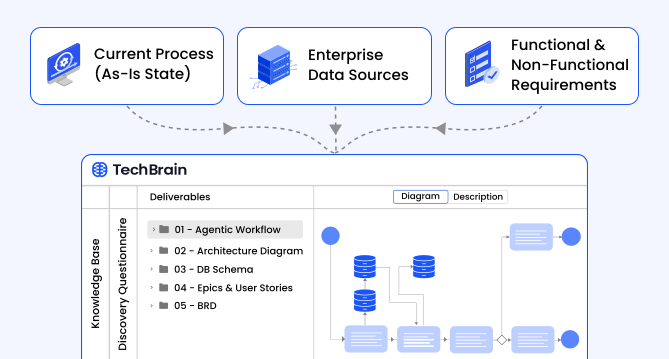
Common solution architecture design challenges — and how to overcome them
Solution architecture must evolve from fragmented documentation practices to a structured, collaborative, and continuously validated design capability.
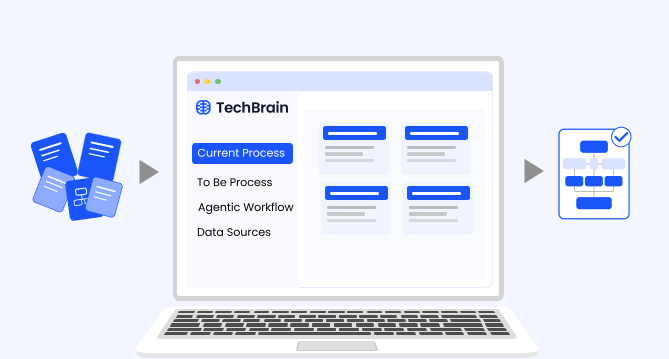
Why structured architecture design is the foundation of scalable enterprise systems
Structured architecture design guides enterprises from requirements to build-ready blueprints. Learn key principles, scalability gains, and TechBrain’s approach.
A guide to intranet search engine
Effective intranet search is a cornerstone of the modern digital workplace, enabling employees to find trusted information quickly and work with greater confidence.
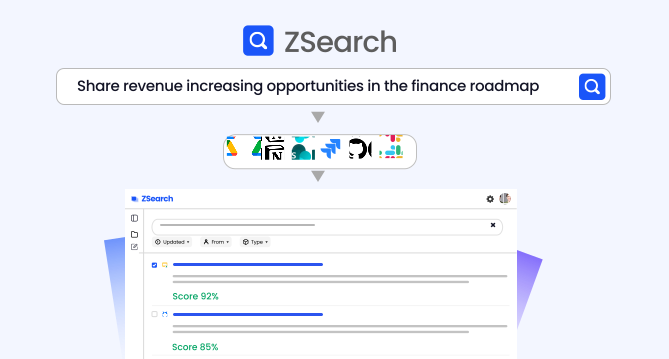
Enterprise knowledge management guide
Enterprise knowledge management enables organizations to capture, organize, and activate knowledge across systems, teams, and workflows—ensuring the right information reaches the right people at the right time.
Company knowledge base: Why it matters and how it is evolving
A centralized company knowledge base is no longer a “nice-to-have” – it’s essential infrastructure. A knowledge base serves as a single source of truth: a unified repository where documentation, FAQs, manuals, project notes, institutional knowledge, and expert insights can reside and be easily accessed.
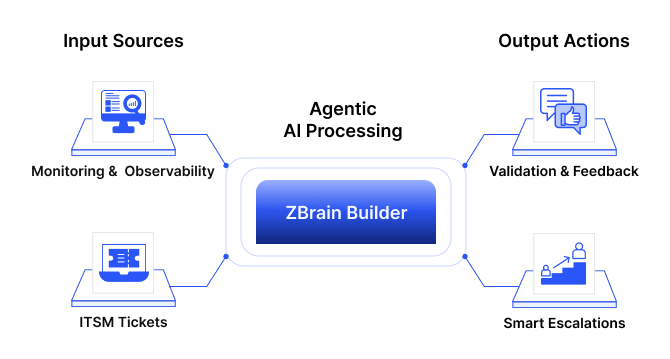
How agentic AI and intelligent ITSM are redefining IT operations management
Agentic AI marks the next major evolution in enterprise automation, moving beyond systems that merely respond to commands toward AI that can perceive, reason, act and improve autonomously.
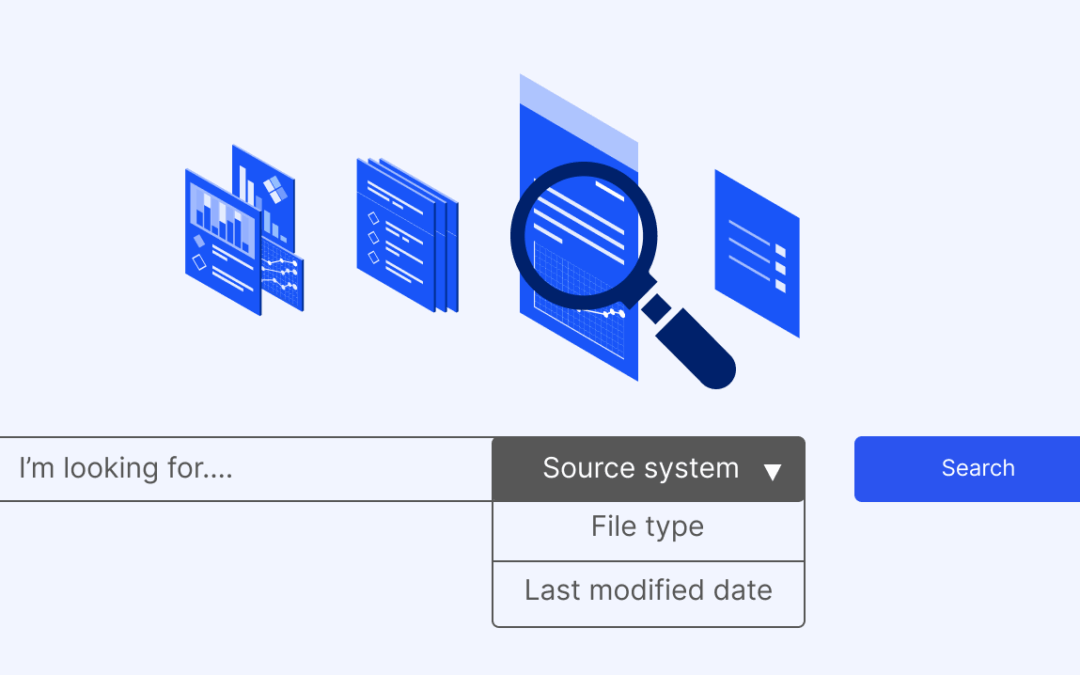
What is an enterprise search engine? A guide to AI-powered information access
An enterprise search engine is a specialized software that enables users to securely search and retrieve information from across an organization’s internal data sources and systems.
A comprehensive guide to AgentOps: Scope, core practices, key challenges, trends, and ZBrain implementation
AgentOps (agent operations) is the emerging discipline that defines how organizations build, observe and manage the lifecycle of autonomous AI agents.
Adaptive RAG in ZBrain: Architecting intelligent, context-aware retrieval for agentic AI
Adaptive Retrieval-Augmented Generation refers to a class of techniques and systems that dynamically decide whether or not to retrieve external information for a given query.