Manufacturing
 Logistics
 Real Estate
 Retail
 Finance
 Healthcare
 Hospitality
 Automotive
Why structured solution architecture design is critical for enterprise success
Listen to the article
In an era where digital capabilities determine market leadership, organizations no longer compete solely on products or services. They compete on the strength, agility, and intelligence of their technology ecosystems. Whether launching a customer platform, modernizing legacy systems, integrating AI capabilities, or migrating to the cloud, businesses are executing increasingly complex technology initiatives. Yet industry evidence consistently shows that many technology projects fail to deliver their intended value due to misalignment, architectural flaws, scalability issues, and unforeseen integration challenges.
Research consistently highlights the scale of this problem. Studies indicate that misaligned architecture leads to negative outcomes such as service disruptions, higher operational costs, and security risks in up to 93% of organizations. Sources reinforce the same concern, with multiple analyses showing that a majority of transformation initiatives fail to achieve their expected business outcomes due to a lack of alignment, unclear goals, and poorly defined architecture and processes.
The root cause in many of these failures is not inadequate coding or lack of effort. It is the absence of a structured architectural foundation. Structured solution architecture design provides that foundation. It serves as the strategic blueprint that translates business vision into executable technical reality. It defines how systems should be organized, how components interact, how data flows securely and efficiently, and how the entire solution evolves over time. More importantly, it ensures that every technical decision — from infrastructure selection to integration patterns — aligns with broader business objectives.
This article examines the principles of structured solution architecture design, why it is essential, the challenges organizations face without a formal architectural approach, and how platforms like TechBrain enable governed, enterprise context-driven, and implementation-ready architecture design for complex enterprise initiatives.
- Understanding solution architecture design
- The strategic role of structured solution architecture design
- Structured architecture as a governed design discipline
- Introducing TechBrain: Structuring solution architecture for execution
- What TechBrain solves and why it matters
- Core capabilities of TechBrain
Understanding solution architecture design
Solution architecture focuses on designing and describing how a specific system will solve a business problem while aligning with enterprise standards and constraints. Unlike enterprise architecture, which addresses the long-term strategic landscape, solution architecture operates within the scope of a project or initiative, ensuring that the selected technologies, integrations, and data flows collectively meet defined requirements.
A structured solution architecture design approach formalizes this process through defined steps, artifacts, and governance mechanisms, typically including:
- Requirements gathering and validation
- Scope definition and feasibility analysis
- High-level and detailed architecture modeling
- Risk, cost, and dependency assessment
- Iterative review and documentation
These steps form a repeatable design methodology that ensures consistency across initiatives and reduces ambiguity in implementation.
The need for structure in architecture design
A structured approach to solution architecture design ensures that complex systems are planned, evaluated, and implemented with clarity and consistency. Without a defined structure, architecture decisions tend to become fragmented, undocumented, and difficult to scale across teams and projects. The following points explain why structure is essential in architecture design:
- Ensures alignment between business goals, requirements, and technical implementation.
- Provides a clear blueprint that guides development and reduces ambiguity.
- Improves system quality by defining components, interactions, and constraints early.
- Enables consistent decision-making across teams and project phases.
- Helps identify risks, dependencies, and integration challenges before implementation.
- Supports scalability and maintainability through well-defined architectural patterns.
- Reduces rework by validating design assumptions before development begins.
- Facilitates stakeholder communication through standardized architectural artifacts.
- Enables traceability from requirements to architecture to delivered solution.
- Improves long-term system evolution by establishing structured governance and documentation.
Together, these factors show that structure is not a documentation formality but a core requirement for delivering reliable, scalable, and maintainable enterprise solutions.
Streamline your operational workflows with ZBrain AI agents designed to address enterprise challenges.
The strategic role of structured solution architecture design
1. Aligning technology with business objectives
A primary reason structured architecture design is critical lies in its ability to ensure strong alignment between business goals and technical implementation. Solution architecture ensures that the designed system supports strategic objectives and delivers measurable business value.
Without structured alignment mechanisms, organizations risk building technically sound solutions that fail to address actual business needs. Solution architecture design frameworks enforce continuous validation between requirements and design decisions, ensuring every component contributes to business outcomes.
Additionally, solution architects act as translators between business stakeholders and technical teams, bridging communication gaps and ensuring mutual understanding of objectives and constraints. This translation layer is essential for preventing requirement misinterpretation and ensuring that technical design remains grounded in business priorities.
2. Enabling scalability and future adaptability
Structured architectural design anticipates growth and change. By explicitly defining design decisions, architects can ensure that systems remain scalable, extensible, and adaptable as future requirements evolve.
Well-designed solution architectures enable systems to scale with increasing data volumes, users, and integration demands while maintaining performance and reliability. Structured approaches explicitly evaluate:
- Component modularity
- Integration flexibility
- Technology lifecycle sustainability
- Data architecture extensibility
This forward-looking design mindset reduces the need for expensive redesigns and allows organizations to respond to evolving market and operational needs efficiently.
3. Improving risk management and reliability
Unstructured designs often hide architectural risks until late implementation stages, leading to delays or costly remediation. Structured architecture design mitigates this by systematically identifying risks, dependencies, and performance concerns early.
Architectural planning enables proactive identification of potential bottlenecks, security vulnerabilities, and integration challenges, thereby minimizing project failures and delays. Through formal documentation and analysis, teams gain visibility into:
- Data flow dependencies
- Infrastructure capacity constraints
- Security and compliance requirements
- Operational resilience considerations
This structured risk assessment ensures that reliability is built into the solution rather than retrofitted after issues arise.
4. Ensuring consistency across complex systems
Large organizations often operate heterogeneous IT ecosystems comprising legacy systems, cloud services, third-party platforms, and internal applications. Structured solution architecture services enforce consistency across these components.
By defining integration patterns and architectural standards, solution architecture ensures seamless interoperability between new and existing systems.
- Consistency yields several benefits:
- Reduced integration complexity
- Improved maintainability
- Reusable architectural building blocks
- Faster onboarding of new solutions
This standardized approach transforms architecture from a one-off design exercise into an organizational capability that can be reused across initiatives.
5. Facilitating efficient resource planning and budgeting
Structured architecture design introduces clarity regarding required technologies, infrastructure, and skillsets, enabling accurate budgeting and resource allocation. Architectural planning helps leadership allocate staff, tools, and investments effectively, reducing unexpected costs during implementation.
Furthermore, realistic effort estimation and dependency mapping support reliable project timelines, ensuring smoother execution and reduced schedule slippage. This financial and operational predictability is essential for enterprise-scale initiatives where budget overruns can significantly impact organizational priorities.
6. Enhancing communication and collaboration
Architectural artifacts, such as diagrams, models, and documentation, serve as shared references for all stakeholders. Structured design ensures that these artifacts follow standardized formats and reflect validated decisions.
Clear documentation improves collaboration by providing a single source of truth for developers, analysts, and executives. This shared understanding reduces misalignment, supports cross-functional coordination, and accelerates decision-making throughout the project lifecycle.
7. Providing a blueprint for implementation
A structured solution architecture acts as the implementation blueprint that guides development, integration, and deployment phases. It specifies:
- System components and responsibilities
- Data flows and integration interfaces
- Infrastructure topology
- Non-functional requirements (security, performance, availability)
This blueprint ensures that development teams build solutions consistently with the intended design vision, reducing rework and ensuring quality outcomes.
Research in software engineering confirms that architectural design plays a critical role in achieving business goals and producing reusable, high-quality solutions.
The underlying challenges in operationalizing solution architecture
Despite widespread recognition of solution architecture’s importance, many organizations still struggle to translate solution requirements into executable architecture designs. Requirements are often scattered across documents and communication channels, integration assumptions remain implicit, and architecture diagrams are disconnected from technical specifications.
This disconnect creates ambiguity that surfaces during implementation, driving rework, misalignment, and delayed delivery. Even when organizations invest in architecture reviews and documentation, maintaining traceability from requirements to execution remains a persistent challenge.
The result is a structural execution gap: initiatives begin with strategic intent but lack a governed, repeatable framework to convert that intent into build-ready technical architecture.
Bridging this gap requires a design environment that unifies requirements, architecture decisions, and implementation artifacts within a structured workflow.
Streamline your operational workflows with ZBrain AI agents designed to address enterprise challenges.
Structured architecture as a governed design discipline
To consistently deliver successful solutions, organizations must evolve from ad-hoc architecture documentation to governed architecture design practices. This includes:
- Centralized capture of requirements and dependencies
- Structured validation of integration logic and system interactions
- Standardized architecture blueprints aligned with the enterprise context
- Version-controlled architectural artifacts with visible change history
- End-to-end traceability from requirements to technical documentation
Such a governed discipline ensures architectural decisions remain explicit, reviewable, and aligned with business objectives throughout the lifecycle.
This is where modern architecture design platforms play a critical role.
Introducing TechBrain: Structuring solution architecture for execution
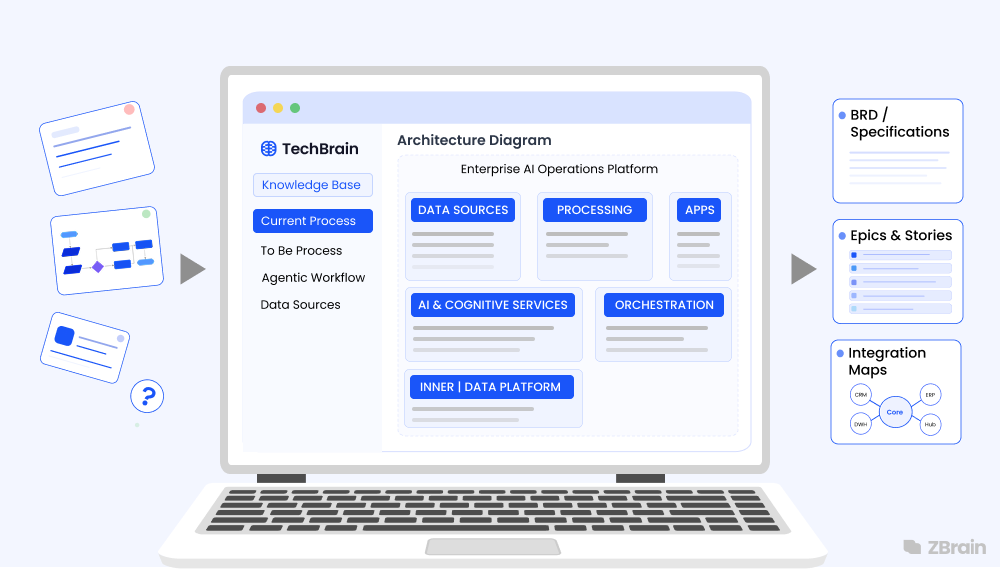
TechBrain is an AI-assisted enterprise solution architecture design platform built to address the structural execution gap between solution requirements and technical implementation. It transforms validated solution concepts into structured, build-ready architecture blueprints with clarity, traceability, and governance.
Instead of relying on fragmented documents, static diagrams, and dispersed discussions, TechBrain provides a consolidated architecture design environment that captures requirements, reconciles system dependencies, and formalizes execution logic within a governed workflow.
This approach directly addresses the most common causes of architecture breakdown: scattered requirements, undefined integration assumptions, and lack of traceability between business intent and technical execution.
What TechBrain solves and why it matters
TechBrain addresses key architectural challenges that frequently delay or derail enterprise initiatives:
- Requirements distributed across structured and unstructured sources
- Manual reconciliation of workflows and system dependencies
- Undefined technology assumptions during early design stages
- Static diagrams disconnected from executable specifications
- Limited traceability between objectives, architecture, and implementation
By resolving these issues early in the design lifecycle, TechBrain reduces downstream rework, improves alignment, and ensures that architecture decisions are implementation-ready rather than conceptual.
This is critical because architecture failures rarely stem from incorrect technology choices; they arise from incomplete definition of interactions, dependencies, and execution logic. A structured architecture platform ensures these factors are clarified before development begins.
Streamline your operational workflows with ZBrain AI agents designed to address enterprise challenges.
Core capabilities of TechBrain
1. Comprehensive context and requirement capture
TechBrain systematically captures the complete architectural context at the outset of each initiative, including business objectives, current-state processes, functional requirements, constraints, dependencies, assumptions, and non-functional requirements. This structured foundation ensures that all subsequent architectural decisions, validations, and design artifacts are grounded in a unified understanding of the solution scope, minimizing gaps that typically arise from fragmented or incomplete requirement documentation.
2. Governed architecture workspace
TechBrain provides a dedicated workspace for each initiative, centralizing requirements, technical dependencies, and design artifacts within a controlled workflow. This prevents fragmentation and maintains architectural continuity across iterations.
3. AI-assisted question-driven validation
The platform surfaces targeted architectural questions that require explicit answers regarding integrations, data flows, security, and performance expectations. This strengthens completeness and reduces implicit assumptions.
4. Enterprise-aligned architecture blueprints
TechBrain generates editable architecture blueprints and structured execution workflows that define system integrations, data flows, dependencies, and more aligned with enterprise context.
5. Implementation-ready design artifacts
The platform produces comprehensive technical artifacts, including specifications, epics, schemas, system integration definitions, and workflow logic grounded in the finalized architecture design.
As technology ecosystems grow more distributed and AI-driven, architecture design must move beyond static documentation toward structured, governed, and traceable design workflows. TechBrain enables this shift by:
- Shortening design cycles through consolidated requirement and architecture management
- Ensuring integrations, data flows, and execution paths are explicitly defined before development
- Reducing implementation rework by surfacing gaps early
- Preserving requirement-to-execution alignment across the lifecycle
- Enabling structured collaboration between architects, engineers, and business stakeholders
These capabilities transform solution architecture from a fragmented design activity into a disciplined, repeatable organizational capability.
Endnote
Structured solution architecture design is fundamental to delivering scalable, reliable, and strategically aligned technology solutions. It ensures clarity, reduces risk, improves collaboration, and provides the blueprint required for consistent implementation.
However, achieving this structure consistently across enterprise initiatives requires more than process discipline alone. It requires platforms that operationalize architecture design — connecting requirements, execution logic, and technical artifacts within a governed framework.
TechBrain represents this evolution. By transforming solution intent into structured, build-ready architecture blueprints with traceability and governance, it enables organizations to move from conceptual design to executable solutions with confidence and control.
In a technology landscape defined by complexity and rapid change, structured solution architecture design is the discipline that ensures initiatives succeed. Platforms like TechBrain make that discipline scalable, repeatable, and aligned with enterprise execution — turning architecture from a static design exercise into a strategic enabler of successful solutions.
Explore how TechBrain helps convert your solution requirements into structured, implementation-ready architecture designs with full traceability. Book a demo now.
Listen to the article
Author’s Bio


CEO LeewayHertz
An early adopter of emerging technologies, Akash leads innovation in AI, driving transformative solutions that enhance business operations. With his entrepreneurial spirit, technical acumen and passion for AI, Akash continues to explore new horizons, empowering businesses with solutions that enable seamless automation, intelligent decision-making, and next-generation digital experiences.
Table of content
- Understanding solution architecture design
- The strategic role of structured solution architecture design
- Structured architecture as a governed design discipline
- Introducing TechBrain: Structuring solution architecture for execution
- What TechBrain solves and why it matters
- Core capabilities of TechBrain
Share Article


Frequently Asked Questions
What is solution architecture?
It establishes how application services, data flows, integration mechanisms, and infrastructure resources interact to fulfill functional and non-functional requirements such as performance, security, scalability, and reliability. By aligning with enterprise standards, governance policies, and existing system landscapes, solution architecture ensures that new initiatives integrate seamlessly, remain maintainable over time, and support future enhancements without causing architectural fragmentation.
How is solution architecture different from enterprise architecture and technical architecture?
Enterprise architecture, solution architecture, and technical architecture operate at different scopes but remain closely connected.
- Enterprise architecture defines the long-term technology vision, principles, standards, and governance model for the entire organization. It ensures that all technology initiatives align with strategic business goals, approved platforms, and enterprise-wide policies.
- Solution architecture focuses on a specific initiative or project. It translates business requirements into an end-to-end technical design, defining system components, integrations, data flows, and deployment considerations while ensuring alignment with enterprise architecture standards and constraints.
- Technical architecture provides the deep, implementation-level design of individual components or technology stacks. It specifies detailed technology choices, configuration patterns, frameworks, infrastructure setups, and low-level design decisions required to build and operate the solution reliably.
In essence, enterprise architecture sets the strategic direction, solution architecture designs the project-level blueprint aligned with that direction, and technical architecture defines the detailed engineering design that enables implementation.
What is TechBrain?
TechBrain is an AI-assisted enterprise solution architecture design platform designed to convert validated solution requirements into structured, implementation-ready architecture blueprints with full traceability across the design lifecycle. It addresses a critical gap in enterprise technology initiatives: translating business intent and validated requirements into coherent, executable technical designs that guide development, integration, and deployment.
TechBrain functions as a governed design environment where solution architects and technical teams can consolidate business context, functional requirements, system dependencies, and architectural assumptions into a unified workspace. Instead of relying on scattered documents, static diagrams, and disconnected discussions, the platform centralizes all architectural inputs and aligns them with enterprise standards and constraints. This structured capture of context ensures that architecture decisions are grounded in actual business objectives, technology landscape realities, and operational requirements.
What problem does TechBrain solve?
TechBrain addresses this by systematically capturing complete solution context, validating architectural assumptions through targeted questioning, and converting the consolidated inputs into coherent, implementation-ready architecture blueprints and technical design artifacts. By doing so, it ensures that business intent, system dependencies, integration logic and data flows are explicitly defined and traceable before development begins, reducing rework, ambiguity, and execution risk across the solution lifecycle.
How does TechBrain support structured solution architecture design?
What makes TechBrain different from traditional architecture documentation tools?
This approach ensures that architecture blueprints are not just illustrative but executable, with explicit integration logic, data flows, and requirements defined upfront. By linking architecture decisions directly to technical specifications, workflows, and engineering artifacts, TechBrain enables continuous traceability from business intent through implementation—something conventional tools typically do not provide.
Can TechBrain support complex enterprise initiatives?
How does TechBrain improve collaboration across stakeholders?
How can organizations get started with TechBrain?
Organizations can get started by booking a demo with the TechBrain team. During the session, experts walk through the platform, understand the organization’s solution architecture needs, and demonstrate how TechBrain can translate solution requirements into structured, implementation-ready architecture blueprints. From there, teams can begin setting up architecture workspaces, defining scope and system context, and using the platform’s guided design framework to develop traceable architecture designs aligned with enterprise standards.
Insights
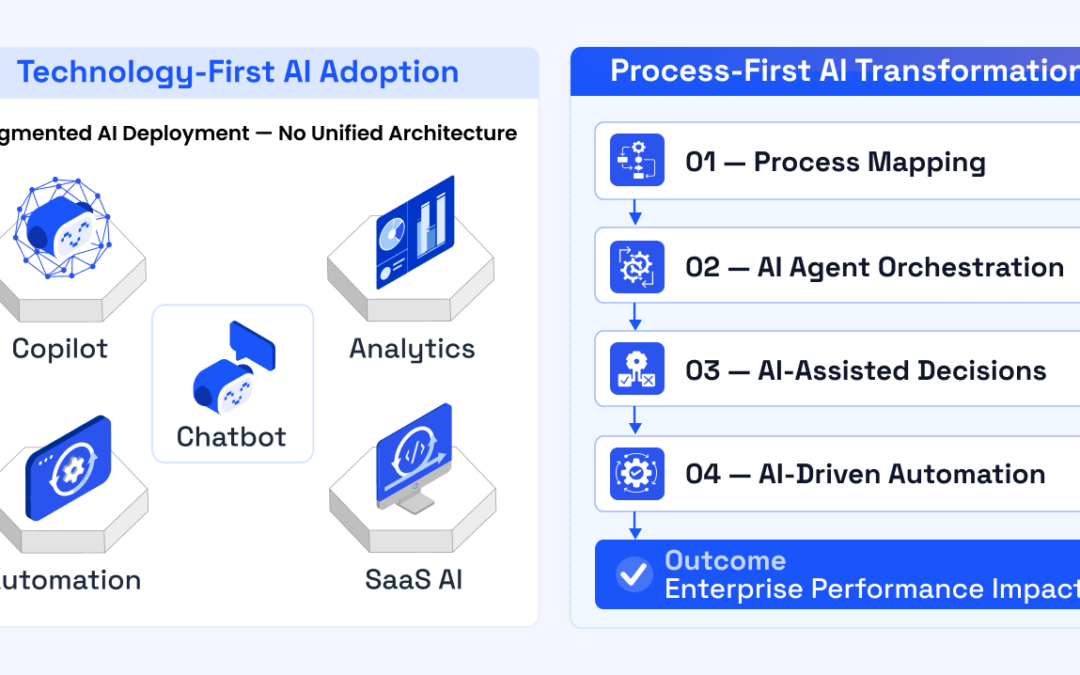
The agentic enterprise: Why AI success requires an operating model redesign
Organizations that redesign their operating models around agentic AI are beginning to outperform those that apply AI only incrementally.
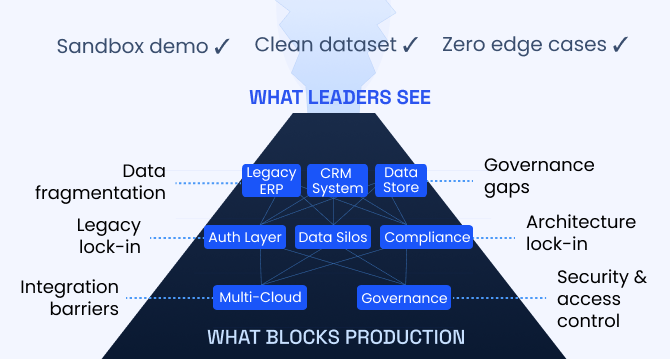
Enterprise AI Pilot-to-Production Gap: Root Causes & How to Address Them
The underlying cause is structural. In many enterprises, AI pilots are developed on infrastructure that was not designed to support production deployment.
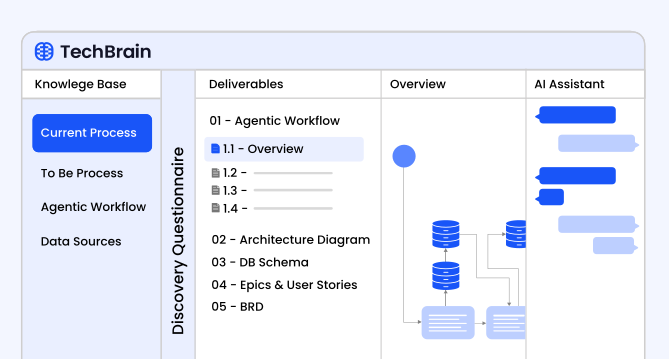
Solution architecture best practices: A guide for enterprise teams
The architecture design process culminates in a set of documented artifacts that communicate the solution to development, operations, and business teams.
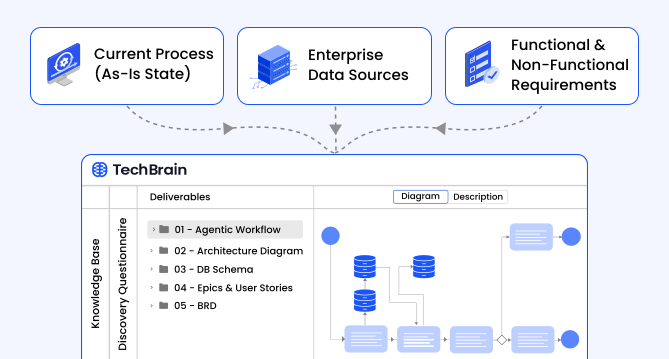
Common solution architecture design challenges — and how to overcome them
Solution architecture must evolve from fragmented documentation practices to a structured, collaborative, and continuously validated design capability.
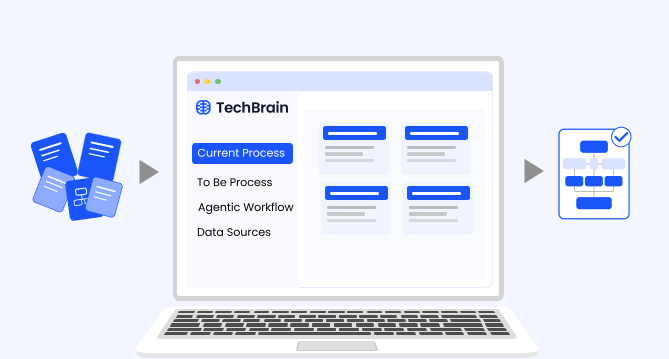
Why structured architecture design is the foundation of scalable enterprise systems
Structured architecture design guides enterprises from requirements to build-ready blueprints. Learn key principles, scalability gains, and TechBrain’s approach.
A guide to intranet search engine
Effective intranet search is a cornerstone of the modern digital workplace, enabling employees to find trusted information quickly and work with greater confidence.
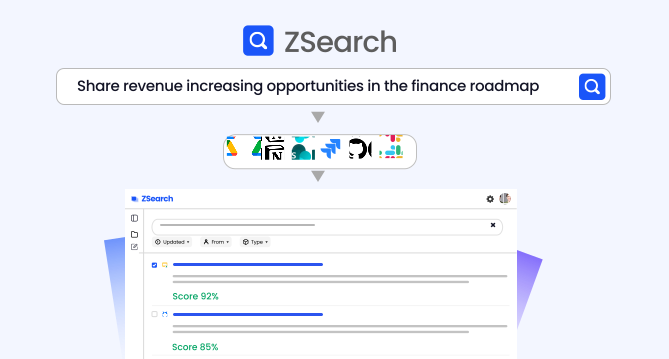
Enterprise knowledge management guide
Enterprise knowledge management enables organizations to capture, organize, and activate knowledge across systems, teams, and workflows—ensuring the right information reaches the right people at the right time.
Company knowledge base: Why it matters and how it is evolving
A centralized company knowledge base is no longer a “nice-to-have” – it’s essential infrastructure. A knowledge base serves as a single source of truth: a unified repository where documentation, FAQs, manuals, project notes, institutional knowledge, and expert insights can reside and be easily accessed.
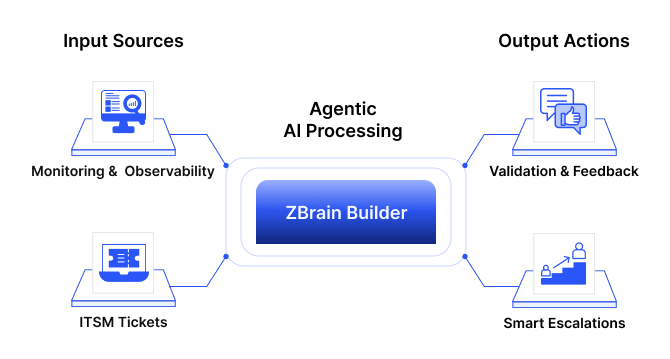
How agentic AI and intelligent ITSM are redefining IT operations management
Agentic AI marks the next major evolution in enterprise automation, moving beyond systems that merely respond to commands toward AI that can perceive, reason, act and improve autonomously.