Manufacturing
 Logistics
 Real Estate
 Retail
 Finance
 Healthcare
 Hospitality
 Automotive
AI in project and capital expenditure management (CapEx): Scope, integration, use cases, challenges and future outlook

Listen to the article
Most organizations treat capital expenditure (CapEx) as a financial exercise. They set budgets, submit requests, await sign-offs, and track spend against plans. Yet the data tells a different story about how well this works: only 35% of projects [1] meet their original goals, according to research on project management practices, with poor risk visibility, siloed communication, and inefficient resource allocation accounting for most failures. The problem is not a lack of effort. It is a structural one: CapEx processes built on periodic reviews and static spreadsheets cannot keep pace with the speed and complexity of modern capital programs.
Project and capital expenditure (CapEx) management is fundamental to an organization’s ability to achieve its strategic objectives and maintain a competitive edge. Projects drive innovation, deliver new products and services, and facilitate operational improvements, while capital expenditures ensure the acquisition, maintenance, and enhancement of long-term assets necessary for sustained growth. Cost and schedule overruns are not random events: they follow predictable patterns rooted in poor early-stage estimation, inadequate risk modelling, and insufficient execution controls.
The stakes are rising. A recent survey [2] found that 70% of companies plan to increase CapEx spend by 10 to 30% over the next three years, driven by infrastructure modernization, digital transformation, and supply chain resilience. At the same time, companies with mature CapEx processes [3] outperform peers by reducing capital spend up to 25% and improving return on invested capital (ROIC) by 2 to 4 percentage points. The gap between well-managed and poorly managed CapEx programs is not marginal. It is strategically decisive.
Artificial Intelligence is closing that gap. By bringing predictive analytics, agentic workflow automation, and natural language processing into the CapEx lifecycle, AI transforms how finance controllers, project managers, procurement teams, and compliance officers plan, approve, execute, and review capital investments. According to a 2024 global survey by Business Wire [4], 90% of project managers report a positive ROI on AI tools, with 63% citing productivity and efficiency as the top benefit.
Platforms like ZBrain Builder, a low-code, model-agnostic agentic AI orchestration platform, give enterprise teams the tools to embed AI across every stage of the CapEx lifecycle without rebuilding their existing systems. From automated business case analysis during planning to variance-driven post-completion reviews, ZBrain’s agent ecosystem connects to the ERP, project management, and financial systems organizations already rely on.
This article maps the full CapEx lifecycle across planning, budgeting, approval, execution, and monitoring; examines the AI applications and agent workflows that produce measurable improvement at each stage; and shows how ZBrain Builder, a low-code, model-agnostic agentic AI orchestration platform, gives finance and project teams the tools to close the gap between planned and actual capital performance.
- What are project and capital expenditure management, and why are they important?
- Understanding the stages of the project and capital expenditure management
- Transforming project and capital expenditure management: How AI solves traditional challenges
- Approaches to integrating AI into project and capital expenditure management
- What is ZBrain?
- AI applications transforming project and capital expenditure management
- The ZBrain advantage in project and capital expenditure management
- Benefits of implementing AI in project and capital expenditure management operations
- Measuring the ROI of AI in project and capital expenditure management
- SMB quick wins in CapEx management
- Challenges and considerations in adopting AI for project and capital expenditure management operations
- Ethical considerations in AI-driven CapEx management
- Best practices for implementing AI in project and capital expenditure management
- Future outlook: AI innovations shaping the future of CapEx management
What are project and capital expenditure management, and why are they important?
Defining project expenditure
The term “project expenditure” encompasses the total financial resources consumed during the lifecycle of a specific project. Definitions vary depending on context, whether legal, operational, or financial. From a legal standpoint, project expenditure is commonly defined as the sum of capital expenditure and other project-related non-capitalized expenditure incurred or to be incurred, explicitly excluding internal costs, resources, or salaries. This definition establishes a clear contractual boundary for what constitutes a project expense.
Operationally, project expenses include all costs that must be covered while a team works on a project, whether directly tied to the deliverable or occurring in the background. Direct costs are straightforwardly linked to the project, such as specialized software, contractor hours, and travel. Indirect costs are necessary for the business but not tied to a specific project, such as rent, support staff salaries, and utilities. Both can be further classified as fixed (constant regardless of project scope) or variable (fluctuating with scope or duration). Tracking actual expenditure throughout the project lifecycle is essential: it is the mechanism by which project managers detect deviations from budget and implement corrective actions before they compound.
In a broader financial context, project expenditure includes all costs and charges, whether capital or operating in nature, incurred in relation to specific operations. The discipline of cost engineering, codified by AACE International [5] in its Total Cost Management Framework, treats accurate expenditure tracking as the foundation of project control: without it, scope changes go unpriced, risks go unquantified, and portfolio-level decisions rest on incomplete information.
Defining capital expenditure
Capital expenditures (CapEx) represent funds companies allocate to acquire, enhance, or maintain long-term assets such as property, buildings, equipment, or technology. These investments support business operations over multiple years and are capitalized on the balance sheet, with their costs amortized or depreciated over the asset’s useful lives. CapEx is distinct from operating expenses (OpEx), which are ongoing expenses inherent to the operation of an asset, such as electricity or maintenance consumables. The decisive criterion is that the financial benefit of a capital expenditure extends beyond the current fiscal year.
Three types of capital expenditure define most corporate portfolios.
- Maintenance CapEx sustains existing assets at current performance levels and preserves productive capacity.
- Growth CapEx acquires new assets or substantially improves existing ones to enable expansion into new markets, product lines, or geographies.
- Strategic CapEx delivers transformation: investments in digital infrastructure, manufacturing line redesign, or technology platforms that shift the organization’s competitive position.
Each type carries different risk profiles, return expectations, and governance requirements, and an effective CapEx program manages all three simultaneously.
In accounting terms, capital expenditure is added to an asset account on the balance sheet and is not directly tax-deductible in the year incurred. Instead, its cost is depreciated or amortized over the asset’s useful life. Capital expenditures are reported under “investing activities” in the cash flow statement, making them a direct signal to investors and analysts about management’s confidence in future growth.
The strategic importance of project and capital expenditure management
CapEx decisions are irreversible in a way that operating decisions are not. Committing capital to a new facility, a production line upgrade, or an enterprise technology deployment locks in cost structures, operational dependencies, and strategic direction for years. Done well, CapEx builds lasting competitive advantage. Done poorly, it erodes it: budget overruns constrain future investment, delayed projects miss market windows, and write-offs signal governance failures to shareholders.
High-performing CapEx programs share three operational characteristics: disciplined portfolio prioritization, execution control that surfaces variances before they compound, and systematic post-completion review that feeds learning back into future planning. The financial impact of this maturity is substantial. Companies with mature CapEx processes can reduce capital spend by up to 25% and improve ROIC by 2 to 4 percentage points [6] compared with peers who manage CapEx reactively.
In today’s capital-constrained environment, with interest rates elevated, supply chains still reconfiguring, and digital transformation spending accelerating, strong CapEx management is not a back-office discipline. It is a core strategic competency. The growing complexity of projects, rising stakeholder expectations around ESG and governance, and the need for faster, more transparent investment decisions make optimizing every stage of the CapEx lifecycle a top priority for boards, CFOs, and capital program leaders alike.
Understanding the stages of the project and capital expenditure management
A CapEx program is not a single decision. It is a sequence of decisions, each of which can succeed or fail independently, and each of which creates the conditions for the next. The PMI’s PMBOK framework identifies project initiation, planning, execution, monitoring, and closure as the fundamental phases of any capital project. In a CapEx context, these translate into five operating stages: planning, budgeting, approval, execution, and monitoring and post-completion review. Understanding the specific failure modes at each stage is the first step toward knowing where AI delivers the most value.
-
Planning
-
Budgeting
-
Approval
-
Execution
-
Monitoring

Planning (Ideation and business case development)
In the planning stage, business units generate project ideas and develop them into formal proposals. Proposals typically include a project outline, expected benefits, cost estimate, and strategic rationale. The goal is to evaluate which ideas are worth pursuing and to build business cases rigorous enough to withstand scrutiny from finance controllers and investment committees.
Associated processes:
-
Idea generation: Identify potential projects aligned with strategic goals.
-
Feasibility analysis: Assess technical and financial viability.
-
Business case development: Document objectives, benefits, costs, risks, and strategic alignment.
Challenges:
-
Incomplete information: Proposals built on insufficient data produce unrealistic assumptions and optimistic forecasts.
-
Optimistic bias: Project sponsors systematically underestimate costs and timelines, a pattern documented across infrastructure, technology, and construction sectors.
-
Subjectivity: Without objective scoring frameworks, funding decisions reflect internal politics rather than strategic merit.
Budgeting (Capital budgeting and portfolio prioritization)
The budgeting stage consolidates all project requests and allocates capital across the portfolio based on financial capacity and strategic priorities. The output is an approved capital plan, typically covering a fiscal year, including the list of funded projects, their budgets, and target timelines. This stage requires simultaneously managing resource constraints, data quality problems, and the competing priorities of different business units.
Associated processes:
-
Capital allocation: Distribute funds across the portfolio based on strategic priorities.
-
Project evaluation: Apply financial metrics including NPV, IRR, and payback period.
-
Portfolio optimization: Balance risk, return, and strategic alignment across all funded projects.
Challenges:
-
Resource constraints: Demand for capital routinely exceeds available supply, requiring difficult trade-offs.
-
Data silos: Project data fragmented across ERPs, spreadsheets, and project management tools makes portfolio-level analysis unreliable.
-
Lack of standardization: Inconsistent evaluation methods applied across business units produce portfolios that are misaligned with stated priorities.
Approval (Governance and authorization)
The approval stage applies governance controls to each CapEx request, verifying that proposals are justified, compliant, and authorized at the appropriate level. A typical CapEx approval workflow requires sign-off from department heads, finance controllers, the CFO, and potentially the investment committee or board, depending on project size and risk. Capital Expenditure Request (CER) forms or equivalent documentation capture the justification, cost estimate, and expected benefits for each approver to review.
Processes:
-
Review: Assess proposals for strategic alignment, financial rigor, and regulatory compliance.
-
Authorization: Obtain sequential sign-offs from required approvers.
-
Documentation: Maintain a complete audit trail of decisions, conditions, and justifications.
Challenges:
-
Bureaucratic delays: Manual routing of approval documents creates bottlenecks that delay project starts by weeks or months.
-
Transparency gaps: Approvers lack visibility into where a request sits in the queue and what conditions remain outstanding.
-
Insufficient evaluation: Time pressure on reviewers leads to approvals that overlook compliance issues or risk factors.
Execution (Project implementation and spending)
Execution is where capital is actually deployed. It encompasses procurement of materials or contractors, construction or development work, expenditure tracking, and schedule and scope management. This stage is where planning assumptions meet operational reality, and where most CapEx value is either preserved or destroyed. Upon completion, project costs are capitalized into a fixed asset on the balance sheet.
Processes:
-
Procurement: Acquire necessary resources, materials, and services.
-
Construction and development: Execute project tasks against the approved schedule and scope.
-
Progress tracking: Monitor adherence to schedules, budgets, and quality standards.
Challenges:
-
Poor tracking: Absence of real-time spend data means variances are discovered after they have compounded.
-
Scope creep: Uncontrolled scope additions inflate costs and timelines without formal re-approval.
-
Coordination failures: Misalignment between procurement, project management, and finance teams creates gaps in oversight.
Monitoring and post-completion review (Control, Reporting, and Optimization)
Monitoring is continuous, beginning during execution and extending through completion into the operational life of the asset. During execution, monitoring focuses on spend vs. budget, schedule progress, and risk indicators. After delivery, a post-implementation review evaluates whether the project achieved its stated objectives and documents lessons learned. Ongoing asset performance monitoring feeds back into future CapEx planning, closing the loop between past investment outcomes and future capital allocation decisions.
Processes:
-
Performance monitoring: Track KPIs throughout execution and into the operational phase.
-
Reporting: Communicate progress and outcomes to project sponsors and financial controllers.
-
Post-implementation review: Evaluate investment outcomes against the original business case and capture learnings.
Challenges:
-
Data fragmentation: Operational data dispersed across project management tools, ERPs, and financial systems makes comprehensive monitoring difficult.
-
Delayed reporting: Manual data consolidation means reports lag behind actual events, limiting their usefulness for course correction.
-
Absence of follow-up: Post-completion reviews are routinely deprioritized, meaning failures repeat and improvements are not systematically captured.
Summary of challenges across stages: Each CapEx stage has well-documented failure modes: optimism bias and incomplete information in planning; data silos and prioritization conflicts in budgeting; slow workflows and compliance gaps in approval; execution drift and poor tracking during delivery; and fragmented, delayed reporting in monitoring. These are not isolated problems. They compound across the lifecycle: a poorly scoped proposal leads to an underestimated budget, which leads to overruns during execution, which the post-completion review fails to capture. The next section examines how AI technologies address each of these failure modes directly.
Transforming project and capital expenditure management: How AI solves traditional challenges
The failure modes in CapEx management are well understood. What has changed is the availability of AI technologies capable of addressing them at scale. Machine learning predictive analytics, large language model-based document agents, and agentic workflow automation each map directly to specific CapEx process failures. The following table shows the correspondence between the most persistent challenges and the AI mechanisms that address them.

|
Challenge |
Description |
AI solution |
|---|---|---|
|
Poor forecasting and planning |
Optimistic, data-poor estimates produce unrealistic budgets and timelines. |
Predictive analytics agents analyze historical project actuals, market price indices, and risk registers to generate probabilistic cost and schedule ranges, replacing single-point estimates with confidence intervals. |
|
Cost overruns and schedule delays |
Manual monitoring discovers variances too late, after significant financial damage has occurred. |
Continuous earned-value monitoring agents ingest daily spend feeds and milestone data, calculate cost and schedule performance indices, and flag projects trending toward overrun before the threshold is breached. |
|
Data silos and visibility gaps |
Fragmented data across ERPs, spreadsheets, and project tools prevents portfolio-level visibility. |
AI integration layers normalize and consolidate data from disparate systems, providing a unified real-time view of CapEx commitments, actuals, and forecasts across the full portfolio. |
|
Inefficient resource allocation |
Subjective scoring and internal politics drive portfolio decisions rather than objective financial and strategic analysis. |
Multi-criteria optimization agents evaluate projects across NPV, IRR, strategic alignment, risk, and liquidity requirements simultaneously, producing ranked portfolios with sensitivity analysis. |
|
Manual processes and slow workflows |
Paper-based or email-driven approval, reporting, and compliance checking consumes time and introduces error. |
Agentic workflow automation handles routing, reminders, compliance verification, and report generation without human intervention, compressing cycle times and eliminating manual error. |
The shift AI makes is not incremental. It is architectural. Rather than improving individual steps in a manual process, AI agents monitor the full lifecycle continuously, surface signals that would otherwise be buried in raw data, and execute routine tasks without waiting for human initiation. The result is a CapEx program that is self-aware: one that knows where it stands against plan at any moment and can direct human attention to the decisions that actually require it.
Streamline your operational workflows with ZBrain AI agents designed to address enterprise challenges.
Approaches to integrating AI into project and capital expenditure management
Organizations typically pursue one of three paths to AI in CapEx, each reflecting a different balance between speed, control, and capability. The right choice depends on the maturity of existing data infrastructure, the availability of internal technical resources, and the urgency of the improvement agenda.
-
Developing custom AI solutions in-house
-
Adopting third-party AI point solutions
-
Leveraging a comprehensive AI platform
Custom in-house AI development
Building AI solutions internally allows organizations to tailor models precisely to their proprietary CapEx workflows, data structures, and governance requirements. Finance and project teams can design forecasting models trained on their own historical project actuals, approval agents configured to their specific policy rules, and reporting agents that match their internal governance cadence.
Key advantages:
-
Strategic customization: Models are designed around the organization’s specific CapEx categories, project types, approval thresholds, and risk frameworks, producing output that maps directly to internal decision criteria.
-
Full data control: Sensitive capital planning and financial performance data remains within the organization’s own infrastructure, addressing confidentiality and regulatory requirements.
-
Scalability on proprietary foundations: Custom solutions can evolve alongside the organization’s CapEx program, incorporating new asset categories, business units, or geographic markets without dependence on an external vendor’s development roadmap.
The constraint is time and cost. Custom AI development requires data engineering, model training infrastructure, and ongoing maintenance. For most organizations, it is not the fastest path to value and carries significant execution risk.
AI point solutions (Third-party tools)
Integrating specialized third-party AI tools into specific CapEx functions, such as a dedicated budget forecasting tool or a document extraction platform for contract analysis, offers faster deployment than in-house development. These solutions embed domain expertise and require minimal configuration.
Advantages:
-
Speed to deployment: Solutions with pre-built connectors to major ERP platforms and pre-trained models for financial document types can be operational within weeks.
-
Domain expertise: Purpose-built tools incorporate industry best practices and have been trained on large corpora of financial and project management data.
-
Lower initial investment: Subscription licensing is typically more economical than funding an internal AI development program.
The limitation is fragmentation. Point solutions address specific steps in the CapEx process but do not provide end-to-end visibility or coordinated agent scaffolding across the full lifecycle. Integrating multiple point solutions can recreate the data silo problem they were meant to solve.
Comprehensive AI platforms
An end-to-end AI platform, such as ZBrain Builder, provides a unified environment for composing, deploying, and orchestrating AI agents across the full CapEx lifecycle. Finance and project teams work within a single platform that manages data integration, model selection, agent deployment, and workflow orchestration, connecting to the ERP, project management, and financial systems already in use.
-
End-to-end coverage: A single platform spans planning, budgeting, approval, execution, and monitoring, ensuring that agents at each stage have access to consistent, unified data.
-
Model-agnostic flexibility: Teams select the frontier model (Claude 4.6, Gemini 3.1, GPT-5.4) best suited to each task, rather than being locked to a single model provider.
-
Low-code agent development: Finance controllers and project managers build and adapt agents without engineering support, reducing time-to-deployment and enabling continuous iteration.
The choice between these three approaches is not permanent. Most enterprise CapEx programs begin with a platform or point solution to accelerate time-to-value, then build proprietary models on top as data assets mature. The platform approach minimises the risk of recreating silos while preserving the flexibility to customise as requirements evolve.
What is ZBrain?
ZBrain™ is an enterprise AI enablement platform that helps organizations assess AI opportunities, build AI agents and applications, and operate them in production. It is structured around three core products.
-
ZBrain AI XPLR: An AI opportunity and readiness assessment environment that helps teams identify where AI creates value across complaint workflows and evaluates readiness to build.
-
ZBrain Builder: A low-code, model-agnostic agentic AI orchestration platform for building, deploying, and operating AI agents, apps, and workflows. This is the execution layer.
-
ZBrain Agent Store: A library of prebuilt agent templates organized by department and workflow, with a dedicated Customer Service category covering complaint intake, case management, resolution alerts, feedback analysis, and related workflows.
ZBrain Builder at a glance
ZBrain Builder is the part of ZBrain™ most directly relevant to complaint management. It provides a visual environment where teams compose agents, connect knowledge sources, define tool calls, and chain multi-step workflows. Its defining characteristics:
-
Low-code workflow design: Flows are built visually, so a customer service lead, a CX designer, and an engineer can work on the same canvas without the lead needing to write code.
-
Model-agnostic: Teams choose the LLM per workflow from current frontier models, including Claude 4.6, Gemini 3.1, and GPT-5.4, plus open-source and private models. The choice can change per workflow without rewriting the workflow.
-
Agentic AI orchestration: Agents can plan, reason, retrieve, and act. Agent Crew lets multiple specialized agents collaborate on complex tasks, for example, a complaint intake agent, a case priority agent, and a resolution routing agent working in coordination on a single complaint.
-
Knowledge base management: Policies, past resolutions, product documentation, and SLA rules are indexed, enabling agents to respond with grounded, organization-specific output rather than generic model text.
-
Tool and API integration: Connects to CRM (Salesforce, HubSpot, Zoho), ticketing (Zendesk, Freshdesk, ServiceNow), communication (Slack, Teams, email, WhatsApp), and custom systems via API, enabling agents to both read and write to enterprise systems.
-
Governance, observability, and compliance: Role-based access, audit trails, PII redaction, model usage logging, and alignment with SOC 2 Type II, ISO/IEC 27001:2022, GDPR, and HIPAA.
-
MCP support: Native support for the Model Context Protocol, which standardizes how agents talk to enterprise tools and data sources without per-integration custom code.
In a CapEx context, ZBrain’s capabilities span ideation through post-completion review. Document intelligence agents extract structured data from business case documents, CER forms, and vendor contracts. Predictive analytics agents surface budget variance signals before they cross threshold. Compliance agents verify that every CapEx request satisfies internal policy criteria before it reaches an approver, enforcing consistency that manual review cannot match. Reporting agents synthesize project performance data across the portfolio into standardized summaries for finance controllers and investment committee members. As ZBrain Builder connects to the tools teams already use, it augments existing systems rather than displacing them, protecting previous technology investments while extending what those systems can do.
AI applications transforming project and capital expenditure management
AI does not improve CapEx management generically. It addresses specific failure modes at specific points in the lifecycle. The following section maps AI applications and agentic AI workflows to each of the five CapEx stages, describing the mechanism of each application at the sub-process level, the functional teams that benefit, and the verified ZBrain agents that operationalize each capability.

Stage 1: Planning (Ideation and business case development)
The planning stage is where CapEx programs most frequently go wrong. Optimism bias in cost estimation, reliance on anecdotal benchmarks rather than structured data analysis, and the absence of systematic risk modelling at the proposal stage all contribute to business cases that look compelling in isolation but fail when tested against execution reality.
AI addresses this not by removing human judgement from ideation, but by giving finance and project teams far richer information to apply that judgement to. Generative AI agents can interrogate the full archive of completed projects, identify analogous historical cases, and surface the patterns that predicted success or failure. Predictive models can generate probabilistic cost ranges based on project type, scope, and market conditions rather than single-point estimates. NLP agents can accelerate the research and drafting work that turns a project concept into a fundable business case.
AI applications in planning include:
-
Intelligent ideation support: An AI agent scans the internal project archive, clustering completed projects by type, sector, and outcome. When a new project idea is submitted, the agent retrieves the closest analogues, highlights the factors that drove budget and schedule performance in comparable cases, and flags scope elements that have historically been underestimated. Finance and project planning teams receive a data-backed starting point rather than a blank page.
-
Automated market and feasibility research: NLP agents retrieve and synthesize industry benchmarks, regulatory filings, supplier pricing data, and competitor announcements relevant to the proposed project. Procurement teams receive a structured research brief within hours rather than commissioning weeks of manual desk research.
-
Probabilistic financial modelling: Rather than producing a single cost estimate, AI models generate a probability distribution of outcomes, based on historical variance patterns for similar project types, current commodity and labor cost indices, and project-specific risk factors. Finance controllers can present investment committees with P50 and P90 cost estimates, making uncertainty explicit and enabling better contingency provisioning.
-
Business case drafting and structuring: Generative AI drafts the business case document, populates financial models with forecast data, and generates executive summaries calibrated to the specific concerns of the approval audience. Project sponsors review and refine a structured draft rather than building from scratch, compressing the time from concept to submission.
How ZBrain enhances the planning for project and capital expenditure management
| Use case | AI functions in CapEx planning | ZBrain GenAI agent & key function |
|---|---|---|
| Ideation and research |
An ideation agent retrieves completed internal projects analogous to the proposed initiative, benchmarks scope and cost assumptions against historical actuals, and flags high-risk scope elements based on pattern analysis. Finance and project planning teams receive a structured comparables brief as the starting point for proposal development. |
ZBrain AI agents aggregate and analyze internal project data and external market signals to enhance due diligence assessments, giving teams data-backed evidence for each business case assumption. |
| Regulatory insight integration |
A compliance monitoring agent continuously tracks regulatory changes, planning law updates, environmental standards, and permit requirements relevant to the proposed project type and geography. When a new proposal is submitted, the agent automatically checks it against current regulatory conditions and flags any compliance dependencies that must be addressed in the business case. |
ZBrain’s Regulatory Compliance Monitoring Agent delivers real-time insights into regulatory changes, ensuring compliance risks are surfaced at the planning stage rather than discovered during execution. |
| Business case summarization |
A document intelligence agent ingests the research brief, financial model outputs, and risk register, then generates a structured business case document with an executive summary, financial highlights, risk flags, and strategic alignment statement. Approval committees receive a standardized, searchable document rather than inconsistently formatted submissions. |
ZBrain’s Financial Insights AI Agent analyses complex financial data and generates structured summaries with key metrics, enabling faster and more consistent evaluation of CapEx proposals by finance teams. |
By strengthening the planning stage, AI shifts the center of gravity in CapEx governance. Investment committees spend less time correcting poorly constructed proposals and more time making strategic portfolio decisions. Finance teams build credibility with project sponsors by returning structured, evidence-based feedback rather than subjective challenges. The entire downstream approval and execution process benefits from proposals that enter the pipeline with realistic assumptions already built in.
Stage 2: Budgeting (Capital budgeting and portfolio prioritization)
Budgeting is the stage at which individual project proposals compete for finite capital. The challenge is not just choosing which projects to fund, but constructing a portfolio that optimizes across NPV, strategic alignment, risk balance, cash flow timing, and liquidity constraints simultaneously. Manual approaches, typically ranking spreadsheets reviewed in committee, cannot evaluate all these dimensions across dozens or hundreds of competing projects with the rigor the decision demands. The result is portfolios driven more by organizational politics and historical inertia than by objective analysis.
AI-driven capital budgeting replaces this with multi-criteria optimization. Portfolio analytics agents evaluate all proposed projects across the full set of financial and strategic criteria, run sensitivity analysis to show how portfolio composition changes under different assumptions, and surface the funding allocation that maximizes overall portfolio value within defined risk and liquidity constraints. Finance teams and investment committees move from adjudicating between competing proposals to reviewing and validating an analytically rigorous recommendation.
AI applications in budgeting include:
-
Multi-criteria project prioritization: An optimization agent ingests each proposal’s NPV, IRR, payback period, strategic alignment score, risk rating, and cash flow profile. It applies a weighted scoring model configured to the organization’s current capital allocation priorities, producing a ranked portfolio with a documented rationale for each project’s position. Finance controllers and capital planning teams receive a recommendation they can interrogate and stress-test, rather than a ranking that cannot be explained.
-
Scenario planning and what-if simulation: A scenario agent runs Monte Carlo simulations across the CapEx portfolio under different budget levels, interest rate environments, project sequencing options, and risk event probabilities. Finance teams see the distribution of portfolio outcomes under each scenario, enabling contingency planning and the identification of robust capital allocation strategies that perform well across a range of conditions.
-
Optimal capital allocation and cash flow alignment: An allocation agent matches capital commitment schedules to the organization’s liquidity position, cash generation forecast, and financing plan. It identifies sequencing options that avoid cash crunches, flags projects where the timing of expenditure creates funding risk, and recommends phased commitment structures that preserve financial flexibility.
-
Portfolio risk balancing: A risk analysis agent evaluates the aggregate risk profile of the funded portfolio, identifying concentrations of execution risk, technology risk, or market risk. It recommends portfolio adjustments, such as deferring high-risk projects or accelerating lower-risk ones, to keep aggregate portfolio risk within the investment committee’s defined appetite.
How ZBrain enhances the budgeting for project and capital expenditure management
| Use case | AI functions in CapEx budgeting | ZBrain GenAI agent & key function |
|---|---|---|
| Project Portfolio Optimization |
A portfolio optimization agent evaluates all proposed projects across NPV, IRR, strategic alignment scores, risk ratings, and cash flow profiles. It applies the organization’s capital allocation criteria to produce a ranked portfolio with documented rationale, and runs sensitivity analysis to show how the ranking changes under different budget assumptions. Finance controllers and capital program leaders review a defensible analytical recommendation. |
ZBrain AI agents provide data-driven recommendations for long-term investment strategies based on market trends, company cash flow, and risk tolerance, helping investment committees identify which project combinations offer the highest portfolio-level value. |
| Intelligent budget allocation |
A budget allocation agent distributes approved capital across funded projects based on project-level cash flow requirements, procurement lead times, and contractor availability. It identifies projects that can absorb capital acceleration if underspend emerges elsewhere in the portfolio, and flags projects at risk of underfunding relative to their execution timeline. |
ZBrain’s Procurement Budget Allocation Agent automates budget allocation across project requirements, ensuring capital is distributed to where it is needed based on procurement schedules and execution plans rather than static annual allocations. |
| Cash flow alignment |
A liquidity planning agent maps the aggregate CapEx commitment schedule across the portfolio against the organization’s cash generation forecast, available credit facilities, and financing plan. It identifies periods where planned expenditure exceeds available liquidity, recommends project sequencing adjustments to smooth cash demand, and provides finance teams with a rolling 12-month CapEx cash flow forecast. |
ZBrain’s Liquidity Planning Optimization Agent optimizes cash flow planning by analyzing cash reserves, obligations, and committed CapEx schedules, ensuring sufficient liquidity for investments without compromising operational flexibility. |
The transformation AI delivers in capital budgeting is one of speed and rigor simultaneously. Portfolio decisions that previously required weeks of committee deliberation can be reduced to days of structured review, because the analytical work has already been done. Finance teams can defend their capital allocation recommendations with multi-dimensional analysis rather than a ranked list. And because the analysis is continuously available, the portfolio can be reoptimized as conditions change, rather than remaining locked to an annual planning cycle.
Stage 3: Approval (Governance and authorization)
Approval bottlenecks are one of the most consistently cited sources of CapEx program delay. A proposal that took three months to develop can sit in an approval queue for six weeks because reviewers lack a clear view of what they need to sign off on, compliance checks are done manually and inconsistently, and the routing logic for escalation is poorly defined. Meanwhile, the project loses schedule float and procurement windows close.
AI does not remove governance from the approval process. It makes governance faster and more thorough. Compliance verification agents check every proposal against the full set of policy criteria before it reaches a human reviewer, ensuring that reviewers’ time is spent on genuine judgement decisions rather than administrative completeness checks. Workflow orchestration agents track approval status in real time, send tiered reminders, and escalate automatically when approvals stall. Document intelligence agents give reviewers a structured brief on each proposal rather than requiring them to read hundreds of pages of supporting documentation.
AI applications in approval include:
-
Automated policy and compliance verification: Before a CER is routed to any human reviewer, a compliance agent reads the submission and checks it against the organization’s full CapEx policy: ROI above threshold, risk rating within limits, all mandatory fields completed, environmental and regulatory requirements addressed, and correct budget category applied. The agent flags specific gaps with reference to the relevant policy clause, enabling the project sponsor to rectify issues before the proposal enters the formal approval queue. Compliance and finance teams see every submission that passes or fails the pre-screening step, with a complete record.
-
Intelligent document analysis and summary generation: For proposals that pass compliance pre-screening, a document intelligence agent reads the full submission and produces a structured brief for each level of approver: key financial metrics, strategic alignment evidence, risk summary, and outstanding conditions. Finance controllers and investment committee members can review a structured two-page brief rather than a 40-page submission, reducing review time while increasing comprehension.
-
Approval workflow orchestration: A workflow agent routes each approved proposal through the correct approval chain based on project size, risk rating, business unit, and asset type. It sends calibrated reminders at 48-hour and five-day intervals, escalates to the next level after ten business days without response, and maintains a timestamped audit trail of every approval action. The current status of every active CapEx request is visible to finance controllers in real time, eliminating the need for manual status chasing.
-
Decision support and natural language Q&A: Approval committee members can query any active CapEx proposal in natural language: “What is the IRR sensitivity to a 10% cost overrun?” or “Have comparable projects delivered the projected cost savings?” A conversational agent retrieves the answer from the submission documents, financial models, and internal project archive, enabling informed questions without requiring committee members to conduct their own research.
How ZBrain enhances the approval for project and capital expenditure management
| Use case | AI functions in the approval stage | ZBrain GenAI agent & key function |
|---|---|---|
| Policy and compliance verification |
A compliance agent reads each CER submission and checks it against the full CapEx policy library: ROI threshold compliance, risk rating limits, mandatory field completion, required supporting documentation, and regulatory references. It produces a compliance report with a pass/fail verdict and specific guidance on any gaps, allowing project sponsors to resolve issues before the proposal enters the approval queue. Finance and compliance teams receive a consistent, documented record of every pre-screening result. |
ZBrain’s Compliance Risk Assessment Agent automates assessment of compliance risks by reviewing financial operations and contracts against policy requirements, flagging issues with specific policy references for action before approval routing begins. |
| Executive summary generation |
A document intelligence agent reads the full proposal submission, extracts the key financial metrics, strategic rationale, risk factors, and outstanding conditions, and produces a structured brief formatted for each approval level. Investment committee members and finance controllers receive a standardized two-page summary with flagged items, enabling faster and more consistent review. |
ZBrain’s Contract Review Summary Agent generates concise summaries of lengthy documents, highlighting key points, obligations, financial commitments, and potential issues for reviewer attention. |
| Approval workflow automation |
A workflow orchestration agent routes each pre-screened proposal through the correct approval chain based on project size, risk category, and business unit. It sends automated reminders at defined intervals, escalates stalled approvals, and maintains a full timestamped audit trail. Finance controllers have real-time visibility into where every active CapEx request stands, without manual status tracking. |
ZBrain Builder’s low-code workflow orchestration enables project and finance teams to configure multi-step approval routes, automated reminder schedules, and escalation logic without engineering support. Agent Crew coordinates compliance, summary, and routing agents in sequence, executing the full approval preparation workflow as a governed, auditable process. |
The outcome of AI-enabled approval is not simply faster. It is more thorough. Because every proposal is pre-screened before reaching a human reviewer, compliance gaps that would previously have been discovered mid-review, causing recycling and further delays, are caught and resolved upstream. Reviewers spend their time on the decisions that genuinely require their judgement, not on administrative completeness checks. And the audit trail maintained by the workflow agent provides a complete governance record for each approved project, supporting both internal audit and regulatory reporting.
Stage 4: Execution (Project implementation and spending)
Execution is where value is either delivered or destroyed. The structural challenge is information latency: by the time traditional monthly reporting cycles surface a cost overrun or schedule deviation, the deviation has had weeks to compound. A project that is 10% over budget in month three may be recoverable. A project that is 10% over budget in month eight, discovered in month nine, is not. Early warning is the decisive capability in execution management, and AI provides it.
Earned value analysis, a discipline codified in the PMI’s PMBOK and the AACE International [7] Total Cost Management Framework, provides the analytical foundation: comparing planned value with earned value and actual cost to calculate cost and schedule performance indices (CPI and SPI). Applied manually, earned value analysis requires significant data consolidation effort and typically runs monthly. Applied by AI agents with daily ERP feeds, it runs continuously and alerts project controllers the moment performance indices cross defined thresholds.
AI applications in execution include:
-
Continuous earned-value and budget monitoring: A budget monitoring agent ingests daily spend feeds from the ERP, maps actual expenditures to the WBS cost structure, and calculates CPI and SPI for each project and cost element. When CPI falls below 0.90 or SPI drops below 0.85, the agent generates an alert to the project controller and finance team with the specific cost element driving the variance, the estimated cost at completion based on current performance, and the budget variance by category. Finance controllers and project managers see the signal the day it emerges, not at the end of the month.
-
Predictive schedule and risk analytics: A schedule analytics agent monitors milestone completion rates, contractor delivery patterns, procurement lead times, and external risk factors such as commodity price movements and weather patterns. It applies predictive models trained on historical project data to generate a probability-weighted forecast of project completion date and final cost, updated daily. Project managers and finance controllers can see, at any point, the probability that a project will complete on time and on budget, based on current performance trajectory.
-
Intelligent anomaly detection and alerts: An anomaly detection agent monitors all project spend for patterns that deviate from the approved budget structure: unexpected cost categories, invoices that exceed approved rates, procurement orders placed outside the approved supplier list, or individual transactions above delegation limits. Compliance and procurement teams receive targeted alerts on specific anomalies rather than reviewing transaction logs manually.
-
Automated progress reporting: A reporting agent collates daily project data, including spend vs. budget by cost element, milestone completion status, open risk items, and forecast to completion, and generates a standardized weekly project status report for each active CapEx project. Project sponsors and investment committee members receive a consistent, comparable update without project managers investing time in report preparation.
How ZBrain enhances the execution for project and capital expenditure management
| Use case | AI functions in project execution | ZBrain GenAI agent & key function |
|---|---|---|
| Real-time budget and schedule tracking |
A budget monitoring agent ingests daily ERP spend feeds, maps actuals to the approved budget structure, and calculates earned value metrics. When CPI or SPI breaches a defined threshold, it generates an alert to the project controller and finance team with the specific cost element, variance amount, and projected cost at completion. Finance controllers and project managers see variances the day they emerge. |
ZBrain’s CAPEX Compliance Monitoring Agent monitors capital expenditure against approved budgets and schedules in real time, flagging deviations with specific cost and schedule references for project controller action. |
| Automated progress reporting |
A reporting agent aggregates daily project data across all active CapEx projects, applies standardized templates, and generates weekly status reports covering spend vs. budget by cost element, milestone completion, open risk items, and forecast to completion. Project sponsors and finance teams receive consistent, comparable reports without manual preparation effort from project managers. |
ZBrain’s Financial Insights AI Agent automates the analysis of complex performance data across project portfolios and generates standardized reports with KPI highlights, trend analysis, and exception flags for finance and project management teams. |
The transformation AI delivers in execution is one of continuous versus periodic oversight. Traditional project controls operate on weekly or monthly review cycles. AI-driven execution management operates daily, surfacing variances when there is still time to intervene. The project controller’s role shifts from manually assembling status reports to acting on AI-surfaced alerts: from reporter to decision-maker. And because the monitoring is automated and consistent, the governance record of every project is complete and audit-ready without additional effort.
Stage 5: Monitoring and post-completion review
Post-completion review is the most neglected stage in the CapEx lifecycle. Organizations that are diligent about planning and execution frequently fail to close the loop: once an asset is operational, the project is considered finished, and the lessons it contains are never systematically extracted. The result is that the same failure modes, underestimated procurement risk, scope creep from late stakeholder requirements, contractor delay patterns, repeat across successive projects because there is no organized mechanism to learn from them.
AI makes systematic learning from CapEx projects operationally practical. NLP agents can extract structured insights from unstructured post-project documentation in hours, not months. Variance analysis agents can automatically decompose cost and schedule deviations into root cause categories. Asset performance monitoring agents can track whether operational outcomes are matching the business case projections that justified the original investment. Together, these capabilities transform the CapEx program from one that manages individual projects reactively to one that learns and improves across successive investment cycles.
AI applications in monitoring and review include:
-
Automated variance analysis: A variance analysis agent compares final project actuals against the original business case and approved budget across every cost element and milestone. It categorizes variances by root cause (procurement cost movement, scope change, schedule delay, estimation error, or risk event), generates a structured variance explanation, and produces a ranked list of the factors that drove the gap between plan and outcome. Finance controllers and capital program leaders receive a complete, evidence-based post-mortem without manual analysis.
-
Benefits realization and ROI tracking: An outcome tracking agent monitors the operational performance of completed assets against the KPIs stated in the original business case: production capacity, cost savings, revenue contribution, or service levels, depending on asset type. When actual performance diverges from forecast, the agent alerts the asset owner and finance team, quantifies the ROI shortfall, and generates a revised return projection based on actual operational data. Investment committees can see, at any point, whether approved CapEx investments are delivering the returns they were authorized on.
-
Lessons learned extraction and knowledge management: An NLP agent reads the full body of post-project documentation for each completed project, including project close-out reports, change logs, risk event records, contractor performance reviews, and retrospective meeting notes. It clusters issues by root cause category, identifies patterns across the project portfolio, and generates a structured knowledge article covering the key lessons, the project types they apply to, and the recommended mitigations. Project planning teams can search this knowledge base when developing new proposals, applying institutional knowledge systematically rather than relying on individual memory.
-
Continual compliance and audit support: An audit preparation agent organizes all project spending records, approval documents, change order authorizations, and compliance checks into a structured, searchable audit package for each completed project. Internal audit and compliance teams can access a complete, timestamped governance record without manual document retrieval, reducing audit preparation time and improving the quality of audit findings.
How ZBrain enhances the monitoring and post-completion review
| Use case | AI functions in post-completion | ZBrain GenAI agent & key function |
|---|---|---|
| Outcome variance analysis |
A variance analysis agent compares final project actuals against the original business case across all cost elements and milestones. It categorizes each variance by root cause, generates a structured explanation of the gap between plan and outcome, and produces a ranked analysis of the factors that drove divergence. Finance controllers and capital program leaders receive a complete post-mortem without manual analysis effort. |
ZBrain’s Variance Analysis Agent automates comparison of budgeted vs. actual financial performance, identifies significant discrepancies, categorizes variances by root cause, and provides structured explanations for finance teams and project controllers. |
| Benefits realization and ROI tracking |
An outcome tracking agent monitors the operational KPIs of completed assets against the projections in the original business case: capacity utilization, cost savings, revenue contribution, or service level performance. It generates a rolling ROI calculation based on actual performance data, alerts asset owners and finance teams when outcomes diverge from forecast, and provides a revised return projection for investment committee review. |
ZBrain AI agents synthesize post-project operational performance data and generate structured ROI reports that compare actual outcomes against the business case projections, supporting investment committee governance and informing future CapEx planning decisions. |
| Asset lifecycle management |
A lifecycle monitoring agent tracks physical assets delivered by CapEx projects throughout their operational life, monitoring depreciation schedules, maintenance requirements, utilization rates, and end-of-life indicators. It alerts finance teams and asset managers when assets approach replacement thresholds, generates depreciation forecasts for financial planning, and provides the asset performance history needed to inform replacement CapEx proposals. |
ZBrain’s Asset Lifecycle Management Agent automates asset tracking, depreciation scheduling, and maintenance alerting throughout the asset’s useful life, protecting the value created by the CapEx investment and informing future reinvestment decisions. |
The monitoring stage closes the CapEx lifecycle loop. Data from completed projects, processed by AI agents, becomes structured knowledge that improves planning estimates, budget models, and risk assessments for future investments. Organizations that systematically capture and apply this learning compound their CapEx program effectiveness over time, building an institutional knowledge base that becomes a structural competitive advantage. Those that do not repeat the same estimation errors and execution failures across successive capital program.
The ZBrain advantage in project and capital expenditure management
ZBrain provides a unified platform for AI-enabled CapEx management: from readiness assessment through agent deployment, portfolio analytics, execution monitoring, and post-completion review. Rather than addressing individual pain points in isolation, ZBrain’s ecosystem of agents and orchestration capabilities supports a coherent, integrated approach to capital program management.
CapEx readiness assessment with ZBrain XPLR
ZBrain’s AI readiness module, ZBrain XPLR, evaluates an organization’s current CapEx process maturity and data infrastructure readiness before deployment. It identifies which stages of the CapEx lifecycle are most ready for AI augmentation, which carry the highest value opportunity, and which require data quality or process improvements before AI can be applied effectively. This structured readiness assessment enables CapEx leaders to sequence AI deployment for maximum early value and avoids the common failure mode of deploying AI on top of poorly structured processes.
Low-code agent development for CapEx workflows
Through ZBrain Builder, finance controllers and project managers design, configure, and deploy AI agents without engineering support. A procurement team can build a budget allocation agent configured to their specific approval thresholds and supplier categorization in days rather than months. A compliance team can create a policy verification agent trained on their specific CER requirements without writing code. Low-code development means that the teams closest to the CapEx process own the agents that serve them, enabling rapid iteration and continuous improvement.
Multi-agent orchestration for complex CapEx workflows
Agent Crew enables multi-agent coordination for long-horizon CapEx tasks that require sequential specialist capabilities. A full approval preparation workflow, for example, might involve a compliance verification agent, a document intelligence agent that generates the executive summary, and a workflow routing agent that sequences the approval chain and maintains the audit trail, all executing in coordinated sequence without manual handoffs. This agent scaffolding approach allows complex, multi-step CapEx processes to be automated end to end, maintaining governance and traceability at every step.
Enterprise-ready integration with CapEx systems
ZBrain Builder connects to SAP, Oracle, Microsoft Dynamics, Primavera, MS Project, and major financial data warehouse platforms through native connectors and the MCP protocol. CapEx requests, financial ledger data, project performance records, and procurement information flow into a unified AI layer without requiring organizations to replace or reconfigure existing systems. The integration layer normalizes data from disparate sources, enabling agents to operate across the full data estate without manual consolidation.
Real-time monitoring and compliance automation
ZBrain’s CAPEX Compliance Monitoring Agent provides continuous visibility into capital project spending against approved budgets and timelines. Feeding from daily ERP transaction data and project management tool updates, the agent detects cost and schedule anomalies the day they emerge, applies earned value analysis to project final outcomes, and flags policy compliance issues for finance controller review. The result is a CapEx program that is always governance-ready rather than one that prepares for governance review after the fact.
Continuous performance tracking and post-completion review
The Variance Analysis Agent and Financial Insights Agent extend the governance cycle beyond project completion, tracking whether delivered assets are producing the returns that justified the investment. Finance controllers and investment committees see rolling ROI realisations across the CapEx portfolio, not just final project cost vs. budget. This post-completion visibility closes the accountability loop and creates the data foundation for continuous improvement in future planning and estimation.
Flexible data ingestion and portfolio reporting
ZBrain Builder supports real-time ingestion of structured and unstructured data from multiple enterprise systems. Finance controllers and capital program managers access current portfolio dashboards, automated project status reports, and natural language summaries of budget health and performance trends through a conversational AI interface.
Streamline your operational workflows with ZBrain AI agents designed to address enterprise challenges.
Benefits of implementing AI in project and capital expenditure management operations
AI’s impact on CapEx management is not confined to a single process improvement. Applied across the lifecycle, it produces compounding benefits that affect forecast reliability, execution control, governance quality, and the organization’s capacity to learn from past investments. The following describes the primary benefit areas and the mechanisms through which AI delivers them.

-
Improved forecast accuracy: Probabilistic forecasting models trained on historical project actuals and current market data replace single-point estimates with confidence intervals. Finance and project planning teams present P50 and P90 cost estimates to investment committees, making uncertainty explicit and enabling better contingency provisioning. Repeated exposure to probabilistic forecasting also calibrates project sponsors’ intuitions over time, reducing the systematic optimism bias that inflates initial estimates.
-
Earlier detection and control of cost overruns: Continuous earned-value monitoring surfaces cost and schedule performance deviations the day they emerge rather than at the end of the month. Finance controllers and project managers receive actionable alerts with specific cost element analysis, enabling intervention while recovery is still feasible. Project management research consistently finds that organizations with mature project controls complete more projects within budget tolerance than those relying on periodic manual review.
-
Reduced project delays: Predictive schedule analytics give project managers advance warning of delay risks, based on milestone completion rates, contractor performance patterns, and procurement lead time trends, in time to implement mitigations. Earlier delivery of revenue-generating assets accelerates benefit realization. And avoided delays prevent the cascade of secondary costs that accompany project extensions: supervision overhead, inflation exposure, and opportunity cost from delayed asset commissioning.
-
Enhanced resource efficiency across procurement and finance: Automation of data consolidation, report generation, compliance checking, and approval routing frees procurement teams, finance controllers, and project managers from administrative work that does not require their expertise. The productivity multiplier allows the same team to manage a larger, more complex CapEx portfolio without proportional headcount growth.
-
Portfolio-level capital visibility for finance controllers: Real-time portfolio dashboards give finance controllers and capital program managers a current view of committed vs. available capital, forecast spend vs. approved budget, and delivery status across all active projects. Capital reallocation decisions, previously made annually based on stale data, can be made monthly or quarterly based on current information. Organizations that identify underspend early can accelerate other projects or return capital, improving overall portfolio efficiency.
-
Strengthened compliance and governance: Pre-screening agents apply the full CapEx policy consistently to every submission, without the variation that comes from manual review by different individuals with different interpretations. The audit trail maintained by workflow agents provides a complete governance record for internal audit and regulatory reporting. Compliance and governance teams can demonstrate that every approved CapEx project met all policy requirements at approval, without manual evidence assembly.
-
Systematic learning from past investments: NLP-powered lessons learned extraction and structured post-completion review turns historical project data into reusable institutional knowledge. Planning teams consult the knowledge base when developing new proposals, applying hard-won experience systematically rather than relying on the recollections of individuals who may have moved on. Over successive investment cycles, the CapEx program becomes measurably more accurate in its estimates and more effective in its execution.
-
Data-driven culture and strategic alignment: When capital allocation decisions are supported by multi-criteria portfolio analytics rather than committee consensus, the organization’s capital increasingly flows to the projects that are most strategically aligned and most likely to deliver their projected returns. Finance teams and investment committees build shared confidence in the analytical rigor of the capital planning process, reducing the friction that accompanies contested allocation decisions.
Collectively, these benefits compound across the CapEx lifecycle. Better planning inputs produce more accurate budgets. More accurate budgets produce fewer execution surprises. Fewer execution surprises produce better post-completion outcomes. Better post-completion learning produces better planning inputs for the next cycle. AI does not just improve individual CapEx decisions. It improves the quality of every subsequent decision the program makes.
Measuring the ROI of AI in project and capital expenditure management
AI investment in CapEx management is itself a capital allocation decision, and it should be evaluated as one. The measurable returns come from four primary sources: reduced rework and waste from better early-stage decisions, earlier detection and control of execution variances, compression of approval and reporting cycle times, and improved post-completion learning that raises the baseline quality of future investments. The following maps each return category to the ZBrain capabilities that drive it.
Key ROI indicators for ZBrain implementation in CapEx processes
Automated CapEx compliance monitoring
Use case: Continuous tracking of project spending and schedule adherence against approved budgets and policy requirements.
ROI metrics:
-
Reduction in cost overruns through early deviation detection and proactive intervention
-
Lower incidence of unapproved scope changes and budget breaches
-
Fewer audit findings and compliance violations, reducing regulatory exposure
Example: ZBrain’s CAPEX Compliance Monitoring Agent flags overspend trends at the cost element level the day they emerge, enabling project controllers and finance teams to intervene before variances become unrecoverable overruns.
Intelligent budget forecasting and capital allocation
Use case: Probabilistic forecasting and multi-criteria portfolio optimization to guide project prioritization and capital allocation.
ROI metrics:
-
Improved budget estimation accuracy through data-driven probabilistic modelling rather than single-point expert estimates
-
Higher portfolio-level capital efficiency from multi-criteria optimization across NPV, risk, and strategic alignment
-
Reduction in projects funded that subsequently fail to deliver projected returns, reducing write-off exposure
Example: ZBrain portfolio analytics agents evaluate funding scenarios across the full project set, identifying the portfolio composition that maximizes value within available capital and risk appetite, giving finance leaders a defensible analytical foundation for capital allocation decisions.
Accelerated approval workflows
Use case: Automated compliance pre-screening, structured brief generation, and workflow orchestration to compress approval cycle times.
ROI metrics:
-
Shorter approval cycle times, preserving project schedule float and procurement windows
-
Higher throughput of CapEx requests per approval cycle period without additional reviewer capacity
-
Reduction in recycled submissions caused by compliance gaps discovered mid-review
Example: ZBrain’s compliance pre-screening agent resolves policy compliance issues before submissions reach human reviewers, eliminating the most common cause of approval delays and reducing the administrative burden on compliance and finance teams.
Post-project performance analysis and lessons learned
Use case: Automated variance decomposition, benefits realization tracking, and structured lessons learned extraction to support continuous improvement.
ROI metrics:
-
Improved ROI realization tracking across the active CapEx portfolio, enabling early intervention when assets underperform their business case projections
-
Reduction in repeated estimation errors across successive projects as lessons learned are systematically captured and applied
-
Improved audit readiness and governance record quality, reducing audit preparation time and findings
Example: ZBrain’s Variance Analysis Agent automatically decomposes final project variance into root cause categories, producing structured post-mortem reports that planning teams use to calibrate future estimates for similar project types.
Taken together, these return streams compound over multiple investment cycles. The CapEx program that applies AI consistently across all five lifecycle stages builds a compounding advantage: each cycle’s improved outcomes inform the next cycle’s planning, producing progressively better estimates, fewer overruns, and higher returns on invested capital.
SMB quick wins in CapEx management
Small and mid-sized businesses face the same capital allocation problems as large enterprises: limited budget for capital projects, pressure to prioritize the right investments, and finance teams stretched too thin to monitor execution closely. The good news is that the AI applications with the highest ROI in CapEx are also the ones SMBs can deploy without enterprise-scale data engineering, large project teams, or extensive internal IT support.
Three workflows deliver immediate, measurable returns for SMB finance and operations teams.
-
CapEx document processing: A document intelligence agent reads supplier invoices, CapEx request forms, and approval documents, extracts structured data, and routes them into the company’s existing accounting or project tracking system. Finance staff who previously spent five to eight hours a week on document handling and data entry recover that capacity for supplier negotiation, cash flow planning, and variance analysis, the work that actually moves the business forward.
-
Budget variance monitoring: A monitoring agent connects to the SMB’s existing accounting platform and tracks project spend against approved budgets continuously. When variances cross defined thresholds, the agent alerts the finance lead or owner-operator the day the deviation emerges. Catching a small overrun in week three is recoverable. Discovering it at month-end close, after it has compounded, is not.
-
Knowledge search across project records: A search agent indexes historical project records, supplier contracts, vendor quotes, and post-project notes, making the institutional memory searchable through natural language queries. When a new CapEx decision arises, the team retrieves lessons from comparable past projects in seconds rather than relying on whoever happens to remember. Hours that would have gone to digging through email threads and shared drives are redirected to making the actual decision.
The deployment path is intentionally short: a proof of concept on one workflow, an MVP rollout that proves the time savings against a measurable baseline, then expansion to the next workflow once the first is operational. The agents are designed to connect with the tools the team already uses, the accounting platform, the cloud storage where project documents live, the email system where supplier correspondence accumulates. There is no need to rebuild the technology stack to capture the value, and the low-code approach means the finance lead or operations manager can configure and adjust agents directly, without needing a software engineer in the loop.
Challenges and considerations in adopting AI for project and capital expenditure management operations
AI adoption in CapEx management follows the same implementation arc as other enterprise technology program: the technical capability is available, but realizing its value requires overcoming organizational, data, and governance barriers. The following maps the most common adoption challenges to the specific mitigations ZBrain’s platform provides.
|
Aspect |
Challenge |
How ZBrain addresses this challenge |
|---|---|---|
|
Data integration |
CapEx data fragmented across ERPs, spreadsheets, and project management tools prevents unified portfolio analysis. |
ZBrain Builder integrates data from multiple enterprise systems through native connectors and the MCP protocol, creating a unified real-time data layer without replacing existing systems. |
|
Data quality and governance |
Inconsistent data naming, missing fields, and outdated records degrade AI model accuracy and erode stakeholder trust in AI-generated insights. |
ZBrain supports structured data ingestion pipelines with standardisation, cleansing, and validation steps before data reaches AI agents, ensuring model inputs meet quality thresholds. |
|
Legacy system compatibility |
Legacy CapEx and financial systems frequently lack modern APIs, creating barriers to AI connectivity and data access. |
ZBrain uses middleware, ETL connectors, and the zMCP protocol to integrate with legacy systems securely, without requiring system replacement or major reconfiguration. |
|
Workforce resistance |
Finance controllers, project managers, and procurement teams may resist AI tools due to concerns about job displacement or distrust of automated outputs. |
ZBrain’s low-code interface and conversational AI tools are designed to assist rather than replace users, presenting AI outputs as inputs to human decisions rather than replacements for them. Transparency in AI reasoning builds trust over time. |
|
Capability and upskilling |
Teams may lack the data literacy and AI tool experience needed to configure agents, interpret probabilistic outputs, and act on AI-generated recommendations effectively. |
ZBrain’s low-code development environment reduces the technical barrier to agent configuration. Role-specific onboarding materials support capability development for finance, project management, and compliance teams. |
|
Initial investment and ROI uncertainty |
Finance leadership may be reluctant to commit capital to AI without a clear, near-term return, particularly for early-stage programmes with limited track record. |
ZBrain supports phased deployment: initial pilots on high-value, well-defined use cases such as compliance pre-screening or variance monitoring generate measurable early results that justify broader rollout. |
|
Human oversight and calibration |
Over-reliance on AI recommendations without appropriate human review can propagate errors in AI outputs into consequential capital allocation decisions. |
ZBrain supports human-in-the-loop configurations for consequential decisions, with confidence scoring on AI outputs, full reasoning transparency, and clear escalation paths to human review where required. |
|
Model quality and bias |
AI models trained on incomplete or unrepresentative project data may produce inaccurate forecasts or systematically biased recommendations for certain project types. |
ZBrain supports continuous model retraining as new project data accumulates, with model performance monitoring and bias audit capabilities. Finance teams can validate AI outputs against known benchmarks before relying on them for portfolio decisions. |
|
Ethical and compliance requirements |
AI applied to capital allocation must comply with financial policy, data privacy regulation, and ethical standards around algorithmic decision-making. |
ZBrain enforces role-based access controls, data encryption, and full transparency in AI recommendation logic, supporting compliance with accounting standards and internal governance policies. |
|
Sustained adoption and change management |
Initial AI deployment enthusiasm can fade as teams revert to familiar manual processes, particularly when staff turnover removes early adopters. |
ZBrain integrates with existing daily workflows, including ERP systems, email, and collaboration platforms, embedding AI assistance into the processes teams already use rather than requiring them to adopt separate tools. |
The organizations that successfully adopt AI in CapEx management share a common pattern: they start with a well-defined use case where data is available and the benefit is clearly measurable, generate early evidence of impact, and use that evidence to build organizational confidence for broader deployment. The technology is the smaller challenge. The larger one is sequencing the adoption to build momentum and sustain it across successive implementation phases.
Ethical considerations in AI-driven CapEx management
Capital allocation is a high-stakes, consequential domain. Decisions about which projects receive funding, which are deferred, and which assets are retired affect jobs, communities, and long-term organizational direction. Applying AI to these decisions creates governance obligations that go beyond technical performance.
Governance and accountability: AI agents can make recommendations, but accountability for capital allocation decisions must remain with qualified human decision-makers. Every AI-generated recommendation in the CapEx process should carry a documented rationale, a confidence indicator, and a clear escalation path to human review. Investment committees and finance controllers should be able to override AI recommendations without technical barriers, and the decision audit trail must capture both the AI recommendation and the human decision alongside it.
Bias detection and model fairness: Portfolio optimization agents trained on historical project data may systematically disadvantage project types, business units, or geographies that were underrepresented in the training data. CapEx program managers should establish baseline model performance across different project categories and monitor for systematic scoring biases, particularly for newer business units or novel project types where historical data is limited. Periodic bias audits, comparing AI-recommended portfolios against expert-assessed alternatives, are a necessary part of responsible AI governance in capital management.
Transparency in AI reasoning: Finance and project teams should understand why an AI agent has produced a particular recommendation, not just what it recommends. Agents that operate as black boxes, generating outputs without explanation, undermine the human judgement they are meant to support and make it impossible to identify and correct systematic errors. ZBrain’s architecture supports reasoning transparency, with agents that surface the data, criteria, and logic behind each recommendation.
Sound governance of AI in CapEx management is not a constraint on the technology’s value. It is the foundation on which stakeholder trust is built, and trust is what enables the deeper integration of AI into capital allocation decisions over time.
Best practices for implementing AI in project and capital expenditure management
AI implementation in CapEx management is an organizational change program that happens to involve technology, not a technology installation that requires some change management. The organizations that realize the most value are those that treat the people, process, and data dimensions with the same rigor they apply to the technology selection.
Assess CapEx process readiness for AI integration
-
Map existing CapEx workflows with honesty: Document current processes for project proposal development, budget consolidation, approval routing, execution monitoring, and post-completion review. Identify where the most significant delays, errors, and compliance gaps occur. AI delivers the most value when deployed on processes where the failure mode is well understood and the data to address it exists.
-
Evaluate data quality before model deployment: CapEx-related data, including historical project actuals, approved budgets, milestone records, and post-completion outcomes, must be clean, consistently structured, and accessible before AI models can be trained on it. Data quality assessment and remediation is typically the longest lead-time item in any AI deployment and should be started early.
-
Engage stakeholders across functions: Finance controllers, project managers, procurement leads, compliance officers, and IT teams all have legitimate interests in how AI is applied to CapEx management and legitimate expertise to contribute to its design. Early engagement reduces resistance, surfaces domain knowledge that improves agent design, and builds the coalition of support that sustains adoption.
Deploy AI on the highest-value, best-data use cases first
-
Start with monitoring and compliance: Continuous budget monitoring and compliance pre-screening are high-value use cases with well-structured data requirements. Both generate visible, measurable results quickly and affect every project in the portfolio, making them effective vehicles for demonstrating AI value to program leadership.
-
Build forecasting capability incrementally: Probabilistic forecasting models improve as historical data accumulates. Start with the project types where historical actuals are most complete, validate model performance against recent projects before deploying in live portfolio decisions, and expand coverage as model accuracy is established.
-
Apply NLP agents to document-heavy processes: Business case summarization, contract review, and lessons learned extraction are high-effort manual processes where NLP agents deliver immediate productivity benefits. These are low-risk starting points because the agent’s output is reviewed by a human before any decision is made, limiting the consequence of any individual error.
Manage change across the full adoption lifecycle
-
Communicate clearly what AI does and does not do: Finance controllers and project managers must understand that AI agents surface data and recommendations, not decisions. The decision authority remains with qualified humans. Clear communication about the role of AI in the process, and the role of human oversight, is essential for both adoption and governance.
-
Upskill teams on probabilistic thinking: AI-generated forecasts express uncertainty as probability distributions. Finance and project teams need to be comfortable interpreting P50 and P90 estimates, confidence intervals, and scenario ranges in order to use AI output effectively in capital allocation decisions.
-
Treat adoption as a continuous process: AI capability in CapEx management improves as models are retrained on new data and as teams develop skill in working with AI-generated insights. Treat the initial deployment as the beginning of an ongoing improvement program, not a one-time implementation.
Ensure scalability, governance, and long-term integration
-
Build for the full lifecycle: AI deployment that addresses only one or two stages of the CapEx lifecycle leaves value on the table and can create new handoff problems at the boundary between AI-supported and manual stages. Platform-based deployment, using ZBrain across all five lifecycle stages, ensures consistent data flow and governance from planning through post-completion review.
-
Embed governance from the start: Define the decision types where AI recommendations go directly to human review versus those where agents can act automatically. Document the escalation criteria for each agent. Ensure the audit trail captures AI recommendations and human decisions. Governance structures that are added after deployment are harder to embed than those designed in from the beginning.
-
Integrate with core enterprise systems: AI agents that cannot access current ERP data, project management records, and financial information produce stale or incomplete recommendations. System integration is not an optional add-on. It is the technical foundation on which agent quality depends.
The CapEx programs that consistently deliver on their investment promises are those that combine disciplined process design, rigorous governance, and data-driven decision support. AI provides the data-driven decision support at scale and speed that human-driven processes cannot match. The best practices above ensure that AI augments rather than displaces the human judgement and institutional discipline that remain essential to CapEx program success.
Future outlook: AI innovations shaping the future of CapEx management
The AI capabilities available to CapEx programs today represent the first generation of what will become a substantially more capable technology environment over the next three to five years. The trajectory is toward greater autonomy, broader data integration, and deeper embedding of AI into the core decision-making processes of capital management.
-
Generative AI and advanced analytics: Current frontier models, including Claude 4.6, Gemini 3.1, and GPT-5.4, already support automated report writing, conversational portfolio query, and scenario generation. As model capabilities advance, generative AI will move further into analytical reasoning: synthesizing information across multiple data sources, identifying non-obvious risk correlations, and generating structured recommendations with multi-step reasoning. McKinsey’s 2024 State of AI report [8] documents that finance and operations functions are among the highest-value early adopters of generative AI, with planning and reporting workflows showing the fastest productivity improvements.
-
Autonomous agent workflows and multi-agent orchestration: Agent-to-agent (A2A) coordination protocols, combined with agent scaffolding frameworks, enable increasingly complex workflows to be executed without human handoffs. In a CapEx context, this means end-to-end processes, from proposal submission through compliance verification, approval routing, execution monitoring, and variance analysis, could be orchestrated by coordinated agent networks with human oversight at defined checkpoint decisions rather than continuous manual involvement. Deloitte’s 2025 Technology Trends report [9] identifies autonomous AI workflows as a primary driver of enterprise productivity improvement over the next three years.
-
Real-time enterprise integration: As AI platforms deepen their integration with operational systems, CapEx management will become increasingly responsive to real-time conditions. An AI agent monitoring asset performance could automatically generate a replacement CapEx proposal when maintenance costs exceed the threshold at which replacement becomes economically superior to continued upkeep, initiating the planning process months before the asset would have been reviewed under a conventional schedule. ZBrain’s MCP protocol is already enabling this kind of cross-system connectivity, and the protocol’s adoption will accelerate as the enterprise AI ecosystem matures.
-
Generative design and scenario planning: In infrastructure and engineering-intensive industries, generative design algorithms are beginning to produce project execution alternatives that optimize cost, schedule, and risk simultaneously, presenting project teams with a structured choice set rather than a single plan to evaluate. This capability, combined with AI-driven scenario planning for portfolio management, will fundamentally change the front end of the CapEx lifecycle from a process of building and evaluating individual proposals to one of selecting from AI-generated alternatives.
-
Evolving roles and capabilities: As AI handles more of the data consolidation, monitoring, compliance checking, and report generation work that currently consumes finance controller and project manager time, these roles will evolve toward higher-value activities: interpreting AI-generated signals, making judgement calls in complex situations, managing stakeholder relationships, and continuously improving the AI systems that support them. The project management office of the future will include capabilities that do not exist today, including AI operations and model governance alongside traditional project controls.
-
Governance and regulatory evolution: AI-driven capital allocation decisions will attract regulatory attention as their prevalence increases. Organizations should anticipate requirements for documented AI decision rationale, model performance audits, and human oversight protocols for consequential capital decisions. Building these governance structures now, before regulatory requirements are formalized, positions CapEx programs as governance leaders rather than compliance laggards.
-
Long-term vision: The destination is a CapEx program that is continuously optimized rather than periodically planned, one where capital flows toward highest-value uses in near real time, deviations are detected and corrected before they compound, and the institutional knowledge embedded in decades of project experience is systematically applied to every new investment decision. The technical foundations for this are being built now. The organizations that invest in them today will have a compounding structural advantage in capital productivity over those that wait.
The progression toward this future will be incremental, and the path will require sustained investment in data infrastructure, model governance, and organizational capability alongside the technology. But the direction is clear: CapEx management will become one of the enterprise domains most thoroughly transformed by AI over the next decade, and the performance gap between organizations that embrace this transformation and those that do not will widen materially.
Endnote
Capital expenditure programs fail at a predictable rate, and the reasons are well understood. Poor early-stage forecasting sets unrealistic baselines. Approval bottlenecks erode schedule float before projects start. Execution variances compound undetected until they are unrecoverable. And post-completion learning is systematically neglected, so the same failures repeat. AI addresses each of these failure modes directly, at scale, and without requiring the replacement of existing systems or processes.
The question for capital program leaders is not whether AI will transform CapEx management. It is whether to lead that transformation or follow it. Platforms like ZBrain Builder provide the infrastructure to lead: a low-code, model-agnostic agentic AI orchestration environment that connects to existing enterprise systems, operationalizes AI agents across the full CapEx lifecycle, and builds the institutional data assets that compound in value over successive investment cycles.
The organisations that build this foundation now will execute capital programmes with materially better forecast accuracy, tighter execution control, and stronger post-completion governance than those that do not. Over a portfolio of projects and multiple planning cycles, that difference translates into billions in capital deployed more efficiently and returns realised more reliably.
Ready to streamline your CapEx management with AI? Leverage ZBrain’s powerful automation to refine investment strategies, boost resource allocation, and enhance operational visibility, securing superior ROI and a competitive edge.
Listen to the article
Author’s Bio


CEO LeewayHertz
An early adopter of emerging technologies, Akash leads innovation in AI, driving transformative solutions that enhance business operations. With his entrepreneurial spirit, technical acumen and passion for AI, Akash continues to explore new horizons, empowering businesses with solutions that enable seamless automation, intelligent decision-making, and next-generation digital experiences.
- What are project and capital expenditure management, and why are they important?
- Understanding the stages of the project and capital expenditure management
- Transforming project and capital expenditure management: How AI solves traditional challenges
- Approaches to integrating AI into project and capital expenditure management
- What is ZBrain?
- AI applications transforming project and capital expenditure management
- The ZBrain advantage in project and capital expenditure management
- Benefits of implementing AI in project and capital expenditure management operations
- Measuring the ROI of AI in project and capital expenditure management
- SMB quick wins in CapEx management
- Challenges and considerations in adopting AI for project and capital expenditure management operations
- Ethical considerations in AI-driven CapEx management
- Best practices for implementing AI in project and capital expenditure management
- Future outlook: AI innovations shaping the future of CapEx management
Share Article


How does AI in CapEx management differ from traditional methods?
Traditional CapEx management operates on periodic review cycles: monthly budget reports, annual portfolio planning, and post-completion reviews that happen months after project close. The information available to each decision is historical, consolidated manually, and often incomplete. AI shifts this to continuous, data-driven analysis operating at daily or near-real-time frequency. Predictive models surface cost and schedule variance signals before they cross reporting thresholds. NLP agents extract structured information from proposal documents and contracts in seconds rather than hours. Workflow automation executes compliance checking and approval routing without manual handoffs. The fundamental shift is from a process that manages CapEx programs reactively, correcting problems after they become visible, to one that manages them proactively, surfacing and addressing signals before they compound.
How do finance teams use AI to improve capital budgeting accuracy?
Finance teams apply AI to capital budgeting primarily through probabilistic forecasting and multi-criteria portfolio optimization. On the forecasting side, machine learning models trained on historical project actuals and current market data, including commodity prices, labor cost indices, and supplier pricing trends, generate probability distributions of project cost and schedule outcomes rather than single-point estimates. Finance controllers present P50 and P90 estimates to investment committees, making uncertainty explicit and enabling better contingency provisioning. On the portfolio side, optimization agents evaluate all proposed projects simultaneously across NPV, IRR, strategic alignment, risk rating, and cash flow profile, identifying the capital allocation that maximizes portfolio value under available budget and risk constraints. Scenario simulation then tests portfolio performance under different budget levels, interest rate environments, and risk event probabilities, giving finance teams and investment committees the analytical foundation for contingency planning.
What is ZBrain, and how can it optimize project and capital expenditure (CapEx) management with AI?
ZBrain is a low-code, model-agnostic agentic AI orchestration platform that enables enterprise teams to build, deploy, and operate AI agents and agentic workflows across the full CapEx lifecycle. It connects to ERP, project management, and financial systems through ZBrain Builder and the MCP integration protocol, and draws on a growing Agent Store of pre-built agents covering compliance monitoring, variance analysis, liquidity planning, budget allocation, and document intelligence.
Key capabilities for CapEx management:
-
AI readiness assessment: ZBrain XPLR evaluates CapEx process maturity, data infrastructure readiness, and deployment sequencing to maximize early value from AI adoption.
-
Low-code agent development: Finance controllers and project managers build and configure agents for specific CapEx workflows without engineering support.
-
Multi-agent orchestration: Agent Crew coordinates specialist agents across complex, multi-step CapEx processes, including end-to-end approval workflows and portfolio reporting cycles.
-
Enterprise system integration: Native connectors and the MCP protocol link ZBrain to SAP, Oracle, Microsoft Dynamics, Primavera, MS Project, and major financial data platforms.
-
Governance and auditability: Full traceability of agent actions, reasoning transparency on recommendations, and role-based access controls support responsible AI governance in capital management.
By providing a unified AI layer across planning, budgeting, approval, execution, and monitoring, ZBrain enables organizations to execute capital programs with greater precision, speed, and governance quality than manual and point-solution approaches allow.
How does ZBrain ensure the security and privacy of sensitive CapEx data?
ZBrain protects capital planning and financial performance data through an enterprise-grade security architecture:
-
Private cloud deployment: ZBrain agents can be hosted within the organization’s own secure infrastructure, keeping sensitive project and financial data within its IT boundary.
-
Role-based access control: Granular permission structures ensure that agents, outputs, and underlying data are accessible only to users with appropriate authorization for each CapEx function and project.
-
Compliance certifications: ZBrain operates under ISO 27001:2022 and SOC 2 Type II standards, ensuring that all data handling meets established global security and audit requirements.
This security architecture ensures that capital allocation data, project performance records, and financial forecasts are protected across the full CapEx lifecycle.
Can ZBrain AI agents integrate with our existing CapEx systems?
Yes. ZBrain is designed to integrate with existing CapEx infrastructure without requiring system replacement. Supported integrations include:
-
ERP platforms: SAP, Oracle, Microsoft Dynamics
-
Project management tools: Primavera, MS Project, and major cloud-based project portfolio management platforms
-
Financial reporting and data warehouse systems: Major cloud data platforms and enterprise financial reporting tools
The MCP protocol extends connectivity to additional systems outside the core integration library. This means organizations can apply AI agents to their specific CapEx data environment without reconfiguring or replacing the systems their teams already use.
What kind of AI agents can be built with ZBrain for CapEx operations?
ZBrain Builder enables teams to create agents tailored to any stage of the CapEx lifecycle. Examples from the Agent Store include:
-
Budget forecasting agents: Generate probabilistic cost and schedule forecasts based on historical project data and current market inputs
-
Variance analysis agents: Monitor actual vs. planned performance daily and surface cost element-level alerts when performance indices breach defined thresholds
-
Compliance pre-screening agents: Check CER submissions against the full policy library before approval routing, flagging gaps with specific policy references
-
Portfolio optimization agents: Evaluate proposed projects across multi-criteria frameworks and generate ranked portfolio recommendations with scenario analysis
-
Lessons learned agents: Extract structured institutional knowledge from post-project documentation and make it searchable for planning teams
Custom agents can be built for organization-specific workflows using ZBrain Builder’s low-code development environment.
How does ZBrain support CapEx management across different industries and project types?
ZBrain’s modular, model-agnostic architecture means that the same platform supports CapEx management across industries with very different project profiles: manufacturing capacity expansion, infrastructure and utilities development, technology and digital transformation, commercial real estate, and asset replacement programs. The platform can be configured to:
-
Apply industry-specific cost indexing and benchmarking data in forecasting models
-
Enforce sector-specific compliance requirements in pre-screening agents
-
Track asset types and depreciation schedules appropriate to different capital categories
-
Support the governance cadence and approval authority structures of different organizational models
This configurability ensures ZBrain delivers relevant, accurate outputs for the organization’s specific CapEx environment, rather than generic recommendations that require extensive human interpretation.
How can we measure the ROI of ZBrain in our CapEx operations?
ROI from ZBrain in CapEx management is measurable across four primary return categories:
-
Variance reduction: Compare cost and schedule performance indices before and after deployment of continuous monitoring agents. Improvement in CPI and SPI, and reduction in the frequency and magnitude of overruns, is directly attributable to earlier detection and intervention enabled by AI monitoring.
-
Approval cycle compression: Track approval cycle times before and after deployment of compliance pre-screening and workflow orchestration agents. Reduction in average days from submission to approval, and reduction in recycled submissions, measures the agent’s direct contribution.
-
Portfolio quality improvement: Track the proportion of funded projects that deliver within 10% of original cost and schedule estimates, and compare against the baseline before AI-assisted portfolio analysis. Improvement reflects better planning inputs and more rigorous portfolio selection.
-
Productivity recapture: Measure the hours finance controllers, project managers, and compliance officers spend on report preparation, data consolidation, and manual compliance checking before and after agent deployment. The freed capacity represents a measurable productivity return.
How do we get started with ZBrain for CapEx?
To begin your AI journey in CapEx with ZBrain:
-
Contact us at hello@zbrain.ai
-
Or fill out the inquiry form on zbrain.ai
Our team will work with you to assess your current CapEx environment, identify key opportunities for AI integration, and develop a pilot plan tailored to your organization’s goals.
Insights
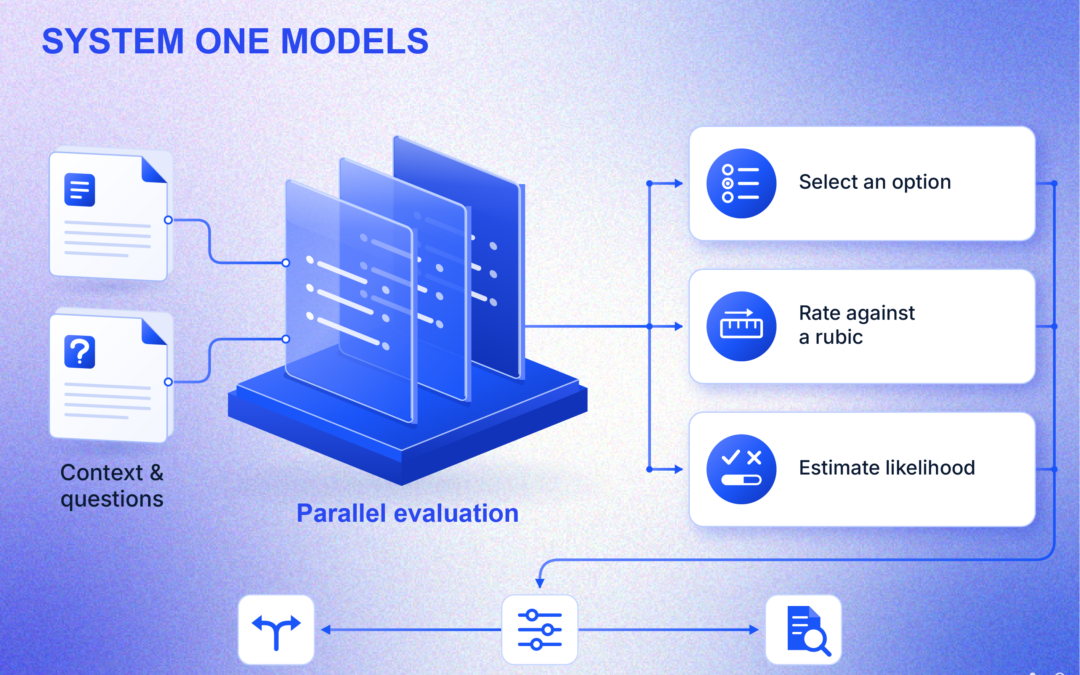
System One Models: A Technical and Enterprise Architecture Deep Dive
A System One model is a proposed class of AI model optimized for fast, bounded judgments that software can consume directly.
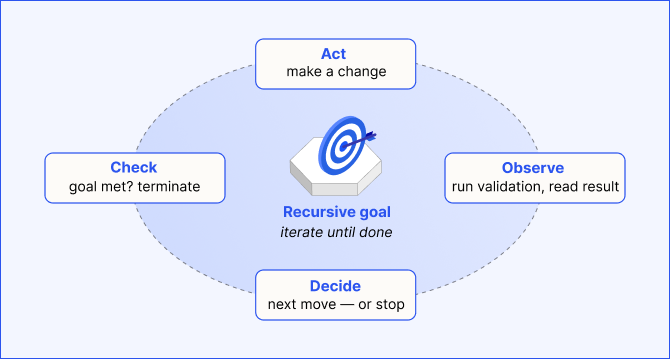
Loop engineering for AI agents: Building reliable autonomous systems
Loop engineering is the practice of designing, operating, and improving the feedback systems that let an AI agent plan, act, observe the results, and revise its approach until a goal is reached without a human driving every turn.
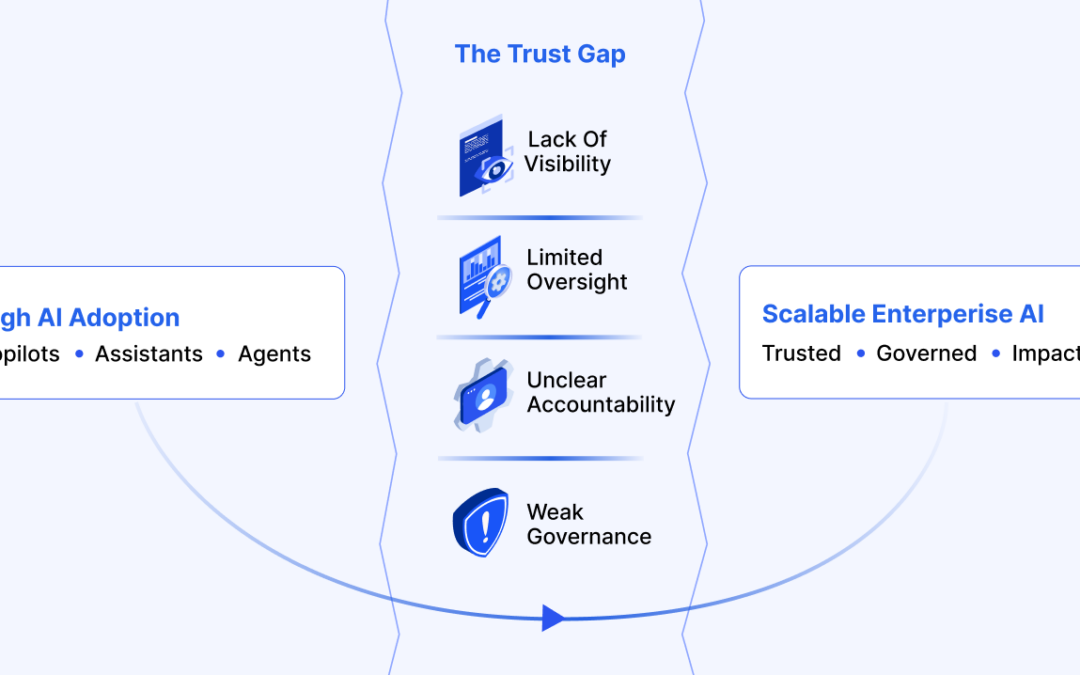
The AI trust gap: Why governance architecture determines enterprise value
The trust gap surrounding enterprise AI is fundamentally an architectural challenge, and its solution is increasingly well understood.
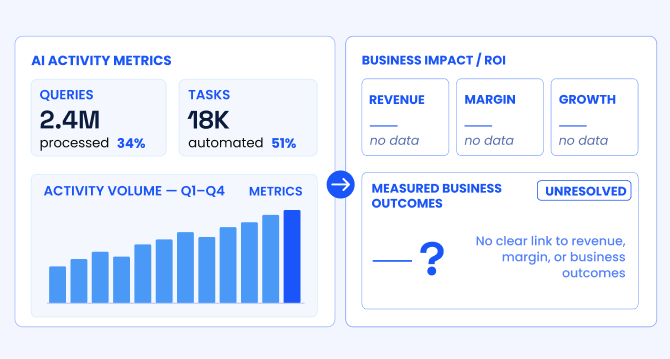
The AI ROI illusion: Why enterprises struggle to measure AI impact
Organizations with stronger measurement discipline are better positioned to link AI deployments to measurable business outcomes, prioritize high-impact use cases across the enterprise, allocate capital more effectively, and continuously refine models using real-world performance feedback.
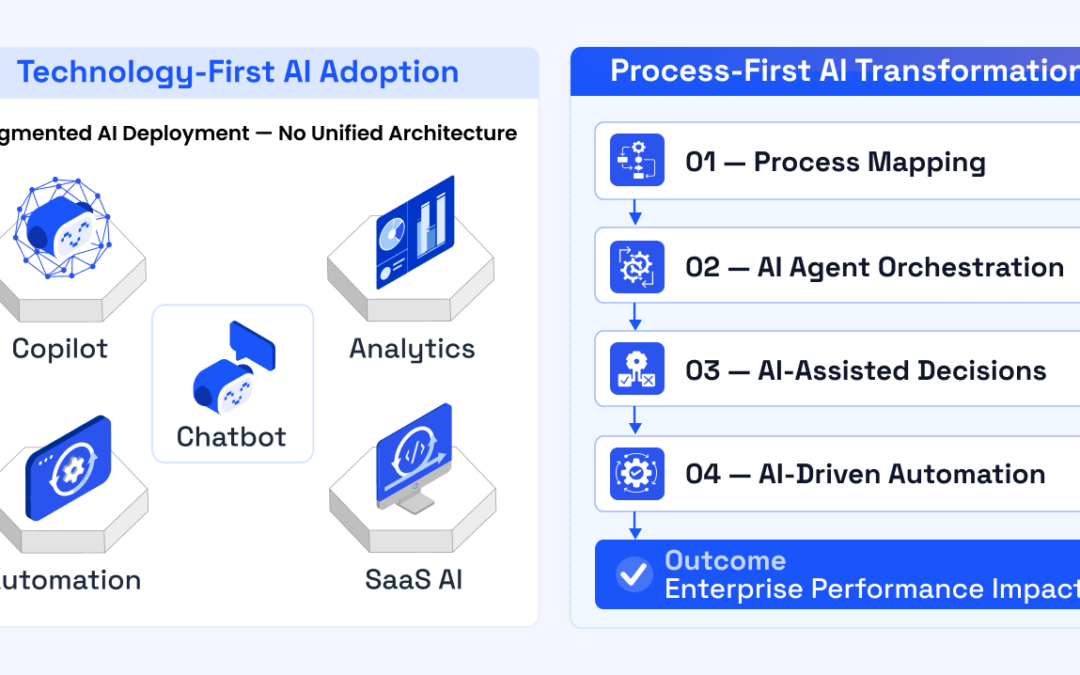
The agentic enterprise: Why AI success requires an operating model redesign
Organizations that redesign their operating models around agentic AI are beginning to outperform those that apply AI only incrementally.
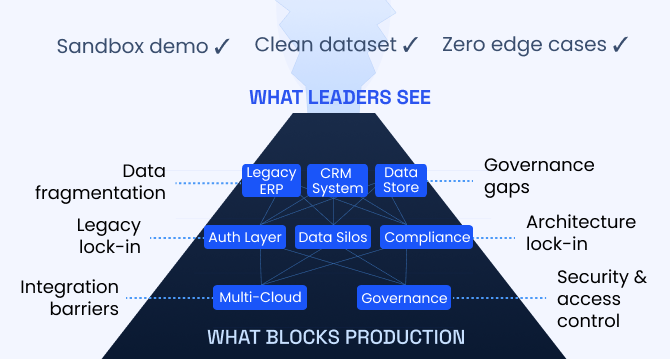
Enterprise AI pilot-to-production gap: Root causes & how to address them
The underlying cause is structural. In many enterprises, AI pilots are developed on infrastructure that was not designed to support production deployment.
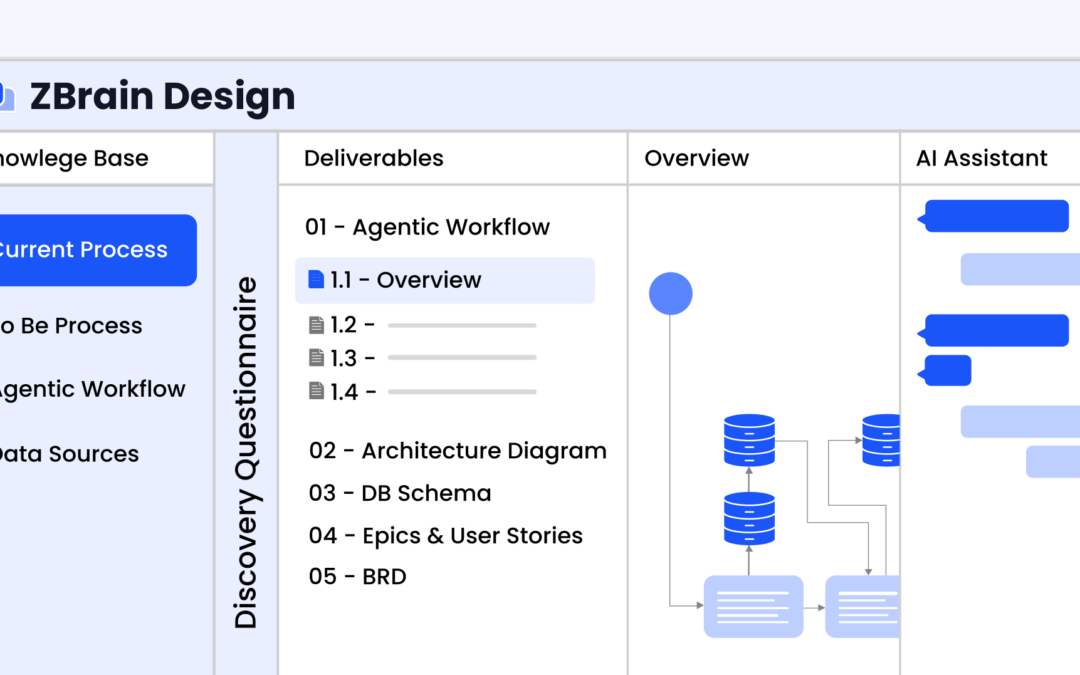
Solution architecture best practices: A guide for enterprise teams
The architecture design process culminates in a set of documented artifacts that communicate the solution to development, operations, and business teams.
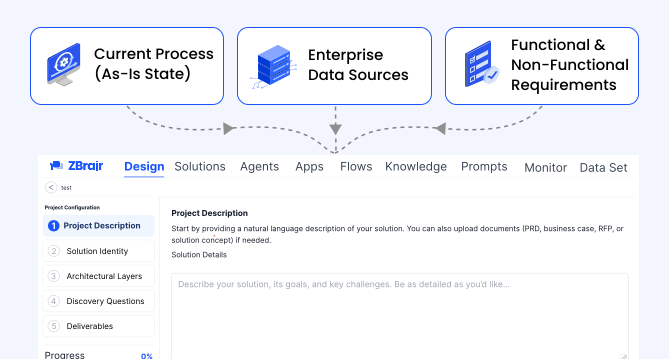
Common solution architecture design challenges and solutions
Solution architecture must evolve from fragmented documentation practices to a structured, collaborative, and continuously validated design capability.
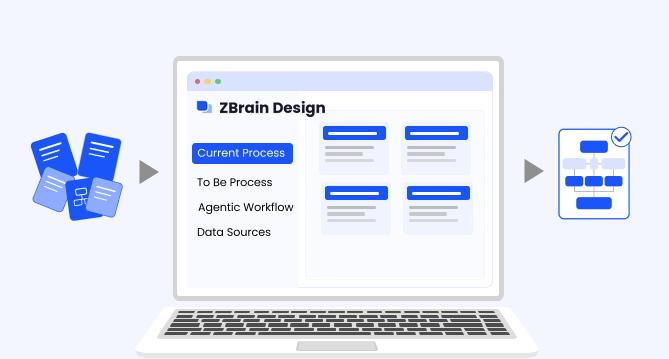
Why structured architecture design is the foundation of scalable enterprise systems
Structured architecture design guides enterprises from requirements to build-ready blueprints. Learn key principles, scalability gains, and TechBrain’s approach.