Manufacturing
 Logistics
 Real Estate
 Retail
 Finance
 Healthcare
 Hospitality
 Automotive
AI in account-to-report: Scope, integration, use cases, challenges and future outlook

Listen to the article
The account-to-report (A2R) cycle has quietly become one of the busiest fronts in enterprise AI adoption. Journal entries, general ledger maintenance, reconciliations, intercompany eliminations, period close, and regulatory reporting sit on data that is fragmented across ERPs, subledgers, bank feeds, and spreadsheets, and on processes that still depend heavily on manual preparation, review, and approval. The pain points are familiar: long close cycles, late exceptions, under-scoped reconciliations, disclosure rework, and audit teams asking for evidence that is scattered across systems.
Generative AI and, more recently, agentic AI are changing the operating model for A2R. KPMG’s US AI in Finance research found 76 percent of companies piloting or using AI in accounting, 78 percent in financial planning, 64 percent in treasury, and 52 percent specifically in financial reporting, with 92 percent of finance functions saying their AI initiatives are meeting or exceeding ROI expectations (KPMG, Dec 2024). Wolters Kluwer’s CFO research, cited widely in 2026 coverage, projects 44 percent of finance teams will use agentic AI in 2026, representing an increase of more than 600 percent year over year (Wolters Kluwer via Neurons Lab, 2026). Deloitte’s State of AI in the Enterprise 2026 survey, which surveyed 3,235 leaders, places twice as many leaders as last year reporting transformative impact, though only 34 percent say they are truly reimagining the business (Deloitte State of AI 2026).
McKinsey is more specific about A2R itself: agentic AI can orchestrate time-consuming finance workflows such as the accounting close and report drafting, turning month-end into a managed, near-real-time process. The question for finance leaders is no longer whether to deploy AI in A2R; it is how to deploy it without breaking the controls the function is accountable for. This article covers that question end-to-end: what A2R is, how AI solves the persistent problems in each stage, the three main approaches to integration, detailed use cases mapped to verified ZBrain agents, realistic ROI framing, adoption challenges, and the 2026 to 2030 trajectory.
This article covers the current state of A2R, three adoption approaches, verified agents from the ZBrain Account-to-Report category, ROI framing for finance leaders, challenges with practical mitigations, and the path from first workflow to scaled deployment.
- What is account-to-report (A2R), and why does it matter
- The A2R process flow
- How AI addresses traditional A2R challenges
- Three approaches to integrating AI into the account-to-report
- What is ZBrain: an introduction to the platform
- AI use cases in account-to-report, mapped to verified ZBrain agents
- AI in A2R for small and mid-size finance teams
- Measuring ROI from AI in A2R
- Challenges and considerations in adopting AI for A2R
- Best practices for implementation
- The future of AI in A2R: 2026 to 2030
- How ZBrain Builder supports A2R operations
What is account-to-report (A2R), and why does it matter
Account-to-report is the end-to-end financial process that takes accounting data from the point of transaction capture through to published financial statements. It covers journal entry creation, general ledger maintenance, subledger integration, intercompany reconciliation, period-end close, consolidation, trial balance preparation, financial reporting, and regulatory filing. A2R is the backbone of external reporting and the primary source of the numbers management teams use to run the business.
A2R is often confused with record-to-report (R2R). The two are closely related: R2R typically refers to the same broad cycle, while A2R tends to emphasize the account-centric view (account management, chart of accounts integrity, account-level reconciliations, account-level risk classification). Most finance organizations use the terms interchangeably, and the AI opportunities apply equally to both.
A2R matters because it is the control layer over everything else the finance function reports. If A2R is slow, management reporting is stale. If it is error-prone, external reporting is rework-heavy. If it lacks traceable evidence, audit costs escalate. When A2R works well, finance can shift time from production to analysis, from preparing the close to improving the decisions the close supports.
The A2R process flow

The A2R cycle is usually organized into four functional areas. Each is a candidate for AI acceleration, though the depth of automation possible varies by sub-process.
Accounting (financial and managerial)
Covers the capture of transactions and their posting to accounts: journal entry creation and validation, general ledger maintenance, customer invoice clearing, credit note issuance, vendor invoice clearing (PO-based and FI-based), intercompany invoice clearing, fixed asset acquisition and retirement, and accrual and provision recording. This is where most of the transactional volume lives.
Costing
Covers the allocation of costs across products, production processes, and cost centers. Sub-processes include product cost controlling, production cost controlling, and cost center planning and allocation. Cost integrity feeds directly into margin reporting and profitability analysis.
Period closing
Covers the month-end, quarter-end, and year-end close. Sub-processes include period-end closing, trial balance preparation, account reconciliation, intercompany elimination, financial consolidation, and closing period management. This is the bottleneck that determines how fast the business can see its numbers.
Reporting and support
Covers the outputs: financial and management accounting reporting, consolidated financial reporting, regulatory compliance reporting, financial statement analysis, IDOC monitoring for integrated systems, and audit trail maintenance. The output quality of this stage is what regulators, auditors, and boards actually see.
Accelerate AI Solutions Development for Account-to-Report
Build a working A2R solution from your highest-value use case — grounded in your ledger data, close-cycle workflows, and reporting controls.
How AI addresses traditional A2R challenges
Traditional A2R processes share a consistent set of pain points. Generative AI and agentic AI each solve a specific piece of the problem, and together they change A2R’s operating model from periodic to continuous.
| Challenge | How teams address it |
|---|---|
| Manual journal entries | AI generates entries from raw transaction data using predefined rules, applies real-time validations for data integrity, duplicates, and anomalies, and routes exceptions for human review. Finance teams move from drafting to approving. |
| Reconciliation inefficiencies | AI cross-checks trial balances against the general ledger, flags anomalies, and generates structured reconciliation reports. A human-in-the-loop review step refines the agent over time. |
| Lack of real-time visibility | AI agents monitor the ledger and key accounts daily rather than at period end, providing continuously updated dashboards and exception alerts to controllers and FP&A. |
| Error-prone consolidation | AI integrates financial data across subsidiaries, applies elimination rules, validates currency and ownership treatments, and proposes eliminations with supporting evidence. |
| Approval bottlenecks | Approval workflows are routed based on materiality, risk, and policy. Low-risk entries auto-approve within tolerance; material or unusual entries route to the right reviewer with context attached. |
| Compliance risk | Agents check transactions and reports against accounting standards and internal policies, flag deviations, and generate audit-ready documentation in line with IFRS, US GAAP, and regional regulations. |
| Fraud and anomaly detection | Agents monitor ledger postings continuously, flag duplicates, unusual counterparty patterns, out-of-policy approvals, and entries that fall outside learned baselines. |
| Period closing delays | Close tasks are orchestrated by agents against the close calendar. Reconciliations, validations, and reviews shift from compressed period-end work to continuous daily activity. |
| Limited financial insights | AI agents produce analytical narratives that tie numeric drivers to business context: COGS variance to commodity moves and mix, opex variance to hiring ramps, revenue variance to channel and product effects. |
| Audit trail gaps | AI agents log every action (inputs, retrieved sources, model outputs, approvals), creating a tamper-resistant audit trail that collapses audit preparation time. |
Three approaches to integrating AI into the account-to-report
When a finance leader moves from pilot to production, the first architectural choice is how to build. Three strategies dominate, each with a clear profile of control, speed, and total cost of ownership.
1. Build a custom, in-house AI stack
The finance team works with engineering to assemble its own stack: foundation model access via API, a retrieval layer over the ERP and close tools, agent orchestration, evaluation, and monitoring. The business owns the architecture, the data path, and the release cadence.
This approach offers the deepest customization and the tightest control over sensitive financial data, which matters for heavily regulated financial services firms. The trade-off is engineering cost. Building to production parity with mature vendor platforms typically requires a standing team of ML engineers, data engineers, and MLOps specialists, and the first production release on a non-trivial A2R workflow usually takes two to four quarters.
2. Use AI point solutions
The team adopts focused products: one tool for invoice data extraction, another for reconciliation matching, another for close task tracking, and another for disclosure drafting. Each product solves one problem well and deploys quickly, often in weeks.
The trade-off is fragmentation. Point solutions rarely share context. A reconciliation tool that cannot see what the journal validation tool has already flagged creates duplicated work and inconsistent narratives. For finance teams with one focused need, point solutions are a fast entry. For enterprise A2R programs with several workflows in flight, the integration and governance debt accumulates quickly.
3. Adopt an agentic AI orchestration platform
A platform like ZBrain Builder sits between foundation models and enterprise systems. It provides a visual environment for designing agents and workflows, a knowledge layer grounded in the finance team’s own policies and data, a tool and API integration layer for ERP and close systems, multi-agent coordination, governance, and observability. The team still chooses which LLMs to use and which systems to connect. The platform handles the orchestration and compliance scaffolding so finance can move directly to workflow design.
This approach typically offers faster time-to-production than an in-house build and stronger coherence than point solutions. The single operating layer means one set of controls, one audit trail, one governance model. That coherence is what makes enterprise-scale A2R adoption feasible without tripling the audit workload.
Choosing an approach
The right choice depends on the team’s regulatory constraints, engineering capacity, speed requirements, and the number of A2R workflows on the horizon. Most mid-market and enterprise finance organizations land on the platform approach, reserving custom builds for the narrow set of workflows where full-stack control is a regulatory or competitive requirement.
What is ZBrain: an introduction to the platform
Before going into specific A2R use cases and how ZBrain agents map to them, it helps to describe what ZBrain is and how it is structured.
ZBrain is an enterprise AI enablement platform that helps organizations assess AI opportunities, build AI agents and applications, and operate them in production. It is structured around three core products.
-
ZBrain AI XPLR: An AI opportunity and readiness assessment environment that helps finance teams identify where AI creates value across the A2R cycle and evaluates readiness to build.
-
ZBrain Builder: A low-code, model-agnostic agentic AI orchestration platform for building, deploying, and operating AI agents, apps, and workflows. This is the execution layer.
-
ZBrain Agent Store: A library of prebuilt agent templates organized by department and workflow, with a dedicated Finance category that includes an Account-to-Report sub-store covering journal entry, trial balance reconciliation, account reconciliation and mapping, risk classification, exchange rate management, and revenue recognition.
ZBrain Builder at a glance
ZBrain Builder is the part of ZBrain most directly relevant to A2R. It provides a visual environment where finance teams compose agents, connect knowledge sources, define tool calls, and chain multi-step workflows. Its defining characteristics:
-
Low-code workflow design: Flows are built visually, so a controller, an FP&A lead, and an engineer can work on the same canvas without the controller needing to write code.
-
Model-agnostic: Teams choose the LLM per workflow from current frontier models including Claude 4.6, Gemini 3.1, and GPT-5.4, plus open-source and private models. The choice can change per workflow without rewriting the workflow.
-
Agentic AI orchestration: Agents can plan, reason, retrieve, and act. Agent Crew lets multiple specialized agents collaborate on A2R tasks, for example, a retrieval agent, a validation agent, and a reconciliation agent working in coordination on the month-end close.
-
Knowledge base management: Chart of accounts, accounting policies, intercompany rules, past filings, and ledger data are indexed so agents respond with grounded, organization-specific output rather than generic model text.
-
Tool and API integration: Connects to ERP (SAP, Oracle, NetSuite, Workday), close and consolidation tools (BlackLine, OneStream, Trintech), banking platforms, audit tools, and communication systems, so agents can both read and write enterprise systems.
-
Governance, observability, and compliance: Role-based access, audit trails, PII redaction, model usage logging, and alignment with ISO/IEC 27001:2022 and SOC 2 Type II.
-
MCP support: Native support for the Model Context Protocol, which standardizes how agents talk to enterprise tools and data sources without per-integration custom code.
What this means for account-to-report specifically
Finance teams working on A2R tend to lean on four ZBrain Builder capabilities most heavily. First, the knowledge layer, which lets agents answer from current accounting policies, the chart of accounts, and prior-period treatments rather than produce ungrounded output. Second, Agent Crew, because real A2R workflows (journal validation with GL check and audit trail generation; trial balance reconciliation with intercompany elimination; period close with account risk classification) genuinely need several agents coordinating. Third, the Account-to-Report sub-store in the Agent Store, which provides tested agents for the specific sub-processes of A2R. Fourth, governance and observability, which give auditors and compliance teams the evidence they need to trust the outputs.
With that foundation in place, the next section walks through AI use cases across A2R and maps each to a verified ZBrain agent.
Streamline your operational workflows with ZBrain AI agents designed to address enterprise challenges.
AI use cases in account-to-report, mapped to verified ZBrain agents
AI touches every stage of A2R. The sections below walk through the workflows that matter most, describe concrete sub-processes, and map each to an agent verified on the live ZBrain Agent Store.
Journal entry automation
Journal entry is the highest-volume control point in A2R. AI agents generate entries from raw transaction data using predefined rules, run real-time validations for data integrity and anomalies, recommend corrections where needed, and integrate with the ERP. A continuous feedback loop lets finance teams refine the rules and validations over time. The control benefit is earlier detection of duplicates, misclassifications, and out-of-policy entries, before they reach the ledger.
General ledger maintenance and validation
AI agents keep the GL continuously reconciled by matching subledger activity against the GL, flagging posting anomalies in real time, and producing audit-ready validation reports. Intelligent classification handles transaction coding where the pattern is clear and escalates only the ambiguous cases.
Trial balance reconciliation
AI agents extract trial balance data from multiple systems, cross-check against the GL, flag anomalies, and generate structured reconciliation reports. This work, previously compressed into the last five days of the close, is redistributed across the month.
Account validation and mapping
AI agents automate account detection, validation, and mapping to the chart of accounts and GL. Mapping drift (accounts that have shifted out of alignment with the CoA) is caught early rather than at period end.
Account risk classification
AI agents assess and classify account risk using patterns, anomalies, and historical behavior, then generate detailed, data-driven reports for reviewer decisioning. This standardizes what used to be a heuristic-driven review.
Customer and vendor invoice management
AI agents match invoices against purchase orders and financial records, reconcile customer payments, and validate vendor invoices. PwC research notes AI agents can reduce cycle times by up to 80 percent in PO transaction processing and matching.
Intercompany reconciliation
AI agents handle the reconciliation of intercompany transactions across subsidiaries, automating the matching, highlighting imbalances, and supporting the settlement process. Cross-border transactions carry currency conversion and tax treatment requirements, which AI agents encode as rules.
Exchange rate management
Foreign exchange rate retrieval, validation, and integration into accounting systems is traditionally manual and error-prone. AI agents automate retrieval from approved sources, validate rates against tolerance rules, and post translations into the ERP consistently.
Cost center allocation and product costing
AI agents automate cost allocations across departments and business units based on allocation rules, and track product cost data to flag potential overruns. Human reviewers adjust rules and approve the allocations that fall outside tolerance.
Period-end closing and consolidation
AI agents orchestrate the close against the calendar: they run reconciliations, validate data, generate closing reports, and consolidate financial data across entities. Intercompany mismatches, ownership treatments, and currency translations are flagged early rather than discovered at the end.
Revenue recognition
AI agents track contract terms and delivery progress to determine when revenue is recognized, integrating CRM and operational data into the A2R cycle. This is especially valuable in subscription services and multi-element arrangements.
Regulatory compliance reporting
AI agents validate financial reports against local and international standards, flag potential compliance gaps, and ensure timely filing. They encode the rules and tests, rather than relying on checklist-based manual review.
Audit trail and compliance documentation
AI agents generate end-to-end, tamper-resistant activity logs covering every transaction, retrieval, and approval. Audit preparation collapses from a discovery exercise to a report-pulling exercise.
Tax filing review and compliance
AI agents review corporate tax filings for compliance, flag discrepancies before submission, and automate routine validation. Human tax specialists remain in the loop for interpretation and judgment.
Verified ZBrain A2R agents
The table below maps each use case to agents verified on the live ZBrain Finance Agent Store. ZBrain organizes A2R agents under the Account-to-Report sub-store, with related workflows across Accounts Payable, Procurement, and Tax Management sub-stores. Finance teams are encouraged to check the live store for additions.
| A2R use case | Description | How ZBrain helps |
|---|---|---|
| Journal entry generation and validation | Generating journal entries from raw transaction data using predefined rules, validating for data integrity, duplicates, and anomalies. | The Journal Entry Processing Agent automates creation and validation, with a human feedback loop for continuous rule refinement. |
| GL validation and compliance | Ensuring journal entries are compliant and anomaly-free through real-time validation and audit-ready financial checks. | The Automated GL Validation Agent validates entries against GL rules and policy, flagging out-of-policy items before they post. |
| Trial balance reconciliation | Extracting trial balance data, verifying accounts, detecting discrepancies, and generating structured reconciliation reports. | The A2R Trial Balance Reconciliation Agent automates extraction, verification, and structured reporting with human-in-the-loop review. |
| Account validation and mapping | Detecting, validating, and mapping accounts to the chart of accounts and general ledger standards. | The A2R Account Validation and Mapping Agent automates detection and validation, catching mapping drift early. |
| Account risk classification | Assessing and classifying financial account risk based on patterns, anomalies, and historical data. | The A2R Account Risk Classification Agent automates reviews and generates detailed risk classification outputs for reviewer decisions. |
| Exchange rate automation | Retrieving, validating, and integrating foreign exchange rates into accounting systems. | The A2R Exchange Rate Automation Agent automates retrieval from approved sources, validates against tolerance rules, and posts translations consistently. |
| Revenue recognition | Recognizing revenue against contract terms and delivery progress, aligned with ASC 606 and IFRS 15. | The Revenue Recognition Agent tracks contract terms and delivery progress, posting earned revenue with minimal manual effort. |
| Invoice matching (PO-based) | Matching purchase orders to invoices for accuracy in quantities, prices, and delivery terms. | The Purchase Order-Invoice Matching Agent automates matching, supporting timely and accurate payment approvals. |
| Duplicate invoice detection | Scanning and analyzing invoices for potential duplicates against existing records. | The Duplicate Invoice Detection Agent cross-checks invoices against records and flags duplicates for review. |
| Period-end data validation | Validating, normalizing, and consolidating financial data for period-end close reporting. | The Period End Data Validation Agent ensures accurate and reliable close reporting across the validation and consolidation steps. |
| Regulatory compliance reporting | Generating reports that adhere to local and international standards. | Regulatory compliance agents like Regulatory Compliance Monitoring Agent automate validation of reports against standards, support timely submission, and flag anomalies for human review. |
| Corporate tax filing review | Reviewing corporate tax filings for compliance and identifying discrepancies. | The Corporate Tax Review Agent automates corporate tax reviews, supporting accurate calculations and filings with human specialist oversight. |
| Audit trail generation | Creating tamper-resistant activity logs for every transaction, retrieval, and approval. | The Document Audit Trail Creation Agent generates end-to-end activity logs that support audit readiness and regulatory adherence. |
| Financial modeling and analytics | Summarizing complex financial modeling outputs and delivering insights through a conversational interface. | The Financial Analysis Agent produces a digestible narrative from detailed reports, speeding reviewer sign-off. |
ZBrain’s AI-powered solutions are designed to help organizations automate complex A2R workflows, improve data integrity, and provide actionable insights, potentially driving better financial performance and strategic decision-making.
AI in A2R for small and mid-size finance teams
Small and mid-size finance teams do not need a transformation program to benefit from AI in A2R. They need focused wins that pay back inside a quarter, connect to the tools already in use, and do not require hiring an ML team.
Three candidate workflows work well as starting points: journal entry validation against a simple rule set, bank reconciliation with anomaly flagging, and invoice matching between AP and POs. Each can be stood up as a focused agent on top of existing accounting software, spreadsheets, and document repositories. The goal is not to replace the controller; it is to free the team already in place from the routine validation and matching work so they can spend more time on the analysis and business-partnering work that changes decisions.
Teams running these workflows typically recover several hours per person per week from automated validation and matching. That time goes back into higher-value work: improving the forecast, investigating material variances, and tightening the close. The POC-to-MVP-to-scale rhythm works well: prove the workflow on one entity or one sub-ledger for two weeks, move it to production for one close cycle, then expand.
Measuring ROI from AI in A2R
ROI measurement for AI in A2R works best when it combines operational metrics tied directly to reporting outcomes and qualitative measures on quality and control. The KPIs that matter most:
-
Close cycle time: Days from period-end to trial balance and to external filing. HPE’s deployment of an agentic finance platform with Deloitte and NVIDIA cut financial reporting cycle time by approximately 40 percent.
-
Journal entry exception rate: Percentage of entries flagged by validation agents that require human correction. Healthy programs see this drop over time as rules mature.
-
Reconciliation coverage and timeliness: Percentage of accounts reconciled on time, and the age of open reconciling items. Continuous reconciliation drives both numbers in the right direction.
-
First-pass consolidation accuracy: Percentage of consolidation runs that complete without manual intervention. Higher first-pass accuracy means less late-night rework.
-
Audit preparation lead time: Days from audit request to evidence package delivered. Continuous audit trail generation collapses this.
-
Exception resolution time: Time from agent flag to human resolution. Lower resolution time reflects better routing and context delivery.
-
Disclosure quality and consistency: Rework cycles with external counsel and audit, and material footnote changes between draft and final. AI-drafted disclosures tied to a consistent knowledge base tend to show fewer revision cycles.
Two reality checks on the ROI model. First, KPMG reports that 92 percent of finance functions say their AI initiatives are meeting or exceeding ROI expectations (KPMG), a strong signal that narrowly scoped finance deployments pay back. Second, at the enterprise level, PwC’s 2026 CEO research finds that only 12 percent of CEOs say AI has delivered both cost and revenue benefits (PwC via CFO Dive). The implication for A2R ROI modeling: measure close and reconciliation metrics directly, do not bury them inside a broad enterprise business case, and do not promise revenue impact from what is fundamentally a control and efficiency program.
Challenges and considerations in adopting AI for A2R
The failure modes in A2R AI are well understood. The leaders who succeed plan for them explicitly rather than discover them in production.
Data and integration
-
Data quality: Agents are only as good as the data they retrieve against. Inaccurate or incomplete ledger data produces misleading validation and misdirected exception flagging.
-
Legacy system compatibility: A2R runs on top of ERP, subledger, close, and consolidation systems of varying vintage. Integration is a first-order design concern, not a plugin decision.
-
Data security and privacy: Financial data is sensitive. Private cloud or controlled-region deployment, role-based access, and encryption in transit and at rest are the baseline.
Controls and explainability
-
Hallucinations: Ungrounded model responses can produce plausible but false analyses. Retrieval-augmented generation tied to the chart of accounts, policies, and approved guidance is the mitigation.
-
Explainability and audit trail: Auditors and regulators need to understand how an output was produced. Agent-level logging of inputs, prompts, retrieved sources, and model versions is the mechanism.
-
Determinism: A2R outputs cannot vary by question phrasing. Engineered determinism for controlled questions is now a practical requirement, as demonstrated by enterprise deployments like HPE’s.
People and change
-
Skill gap: Finance professionals need to understand how prompts, retrieval, and guardrails shape outputs. Training is a near-term investment, not optional.
-
Adoption resistance: Teams resist tools that feel like they bypass the controls the team is accountable for. Tight integration with existing review and approval workflows matters.
-
Role evolution: Controllers move from preparing to reviewing. This is a net positive for most teams but requires deliberate role redesign rather than passive drift.
Cost and scale
-
Cost per agent call: Token costs for reasoning-heavy agentic workflows add up. Model per close cycle or per reconciliation run, not per query.
-
Ongoing maintenance: Agents degrade as data, policies, and regulations change. Scheduled rule and prompt maintenance are part of the operating model.
-
Scalability: Expanding from one workflow to a portfolio should be straightforward. Platforms that handle this at the architecture level outperform those that require reimplementation for each new use case.
Best practices for implementation

1. Assess workflow readiness before building
Map existing A2R workflows end-to-end and identify the specific bottlenecks: reconciliation pain, journal volume with high exception rate, intercompany complexity and disclosure rework. Pick the highest-pain, most contained workflow first. Verify that data quality and infrastructure support AI before committing to a build.
2. Match the AI approach to the workflow
Document-heavy workflows (disclosure drafting, regulatory filing review) benefit from generative AI with RAG. High-volume validation workflows (journal entries, invoice matching) benefit from agentic AI with tight rule sets. Analytical workflows (variance analysis, risk classification) benefit from combined approaches. Do not force one pattern across all use cases.
3. Engage stakeholders early
Accounting, FP&A, controllership, tax, audit, compliance, and IT all have stakes in A2R AI. Involve them at design, not at rollout. Communicate how the work shifts rather than whose role is threatened. Start with a small, visible pilot that produces a result the team can see.
4. Design for continuous operation
A2R workflows benefit most when the work is distributed across the period rather than compressed into a close week. Build agents that run daily, flag exceptions daily, and feed resolution reviews daily. Period-end becomes a checkpoint rather than a scramble.
5. Instrument for audit from day one
Every agent action should be loggable. Every retrieval should be traceable. Every human approval should be recorded. This is not optional in a regulated function; designing for it later is an order of magnitude more expensive than designing for it at the start.
6. Plan the model lifecycle
Choose a platform that supports model-agnostic workflows so the LLM choice can change as frontier models advance without rewriting the workflow. Plan the upgrade cadence: quarterly review of model performance, semi-annual evaluation of new frontier models, annual review of retrieval and rule sets.
Streamline your operational workflows with ZBrain AI agents designed to address enterprise challenges.
The future of AI in A2R: 2026 to 2030
A2R between now and 2030 will be shaped by six trajectories. Each is already visible in 2026.
-
Continuous close becomes the baseline: Real-time or near-real-time reporting becomes the default for mature finance functions. AI agents monitor the ledger, reconcile accounts, and validate entries continuously, so period-end is a checkpoint rather than a scramble. McKinsey explicitly highlights agentic AI as the enabler: it orchestrates multi-step close and report drafting workflows so that near-real-time visibility is practical.
-
Agentic AI becomes the default A2R architecture: Wolters Kluwer projects 44 percent of finance teams will use agentic AI in 2026, a 600+ percent increase year over year. Multi-agent systems that plan, reason, retrieve, and act are the production pattern, not the experiment. Humans remain in the loop for judgment calls, exceptions, and sign-offs.
-
Explainable and auditable AI becomes regulatory baseline: The EU AI Act and related regimes push explainability, determinism, and audit trails from best practice to compliance requirement. Platforms that design this in from day one have an advantage.
-
Advanced consolidation at enterprise scale: AI handles multi-entity, multi-currency, multi-standard consolidation as a continuous process, flagging intercompany imbalances, proposing eliminations, and validating ownership and currency treatments without compressed end-of-period work.
-
Narrative reporting gets real lift from generative AI: MD&A drafting, variance commentary, and disclosure notes move from blank-page writing to edit-and-approve. The first pass is generated, grounded in the numbers and prior narratives, and the controller or FP&A lead focuses on tone, materiality, and final language.
-
Auditor AI and reporting AI meet in the middle: KPMG’s research shows finance leaders increasingly expect their external auditors to use AI. The relationship between A2R AI (on the prepare side) and audit AI (on the review side) becomes a two-way technology conversation, with structured data exchange replacing PDF evidence packages for some material areas.
How ZBrain Builder supports A2R operations
Returning to ZBrain Builder after the use cases, it is worth covering how the platform fits inside a finance operation, day to day. Four capabilities carry most of the weight.
1. Workflow integration
ZBrain Builder connects to the tools finance teams already use: ERP (SAP, Oracle, NetSuite, Workday), close and consolidation tools, banking platforms, audit tools, contract repositories, and communication tools. AI agents read from and write to these systems, so an approved reconciliation in ZBrain is the reconciliation posted in the close tool, not a separate artifact.
2. Low-code agent and workflow design
Controllers, FP&A leads, and A2R analysts build workflows visually using Flows. Agent Crew handles the multi-agent coordination needed for real-world A2R tasks. A retrieval agent pulls ledger and contract data, a validation agent checks against policy, a reconciliation agent proposes matches, and a human controller reviews and approves.
3. Grounded outputs and continuous improvement
Retrieval-augmented generation ties agent outputs to the finance team’s chart of accounts, accounting policies, and prior period treatments, so answers are grounded rather than hallucinated. Feedback from controller corrections and reviewer edits flows back into prompt and rule updates, improving quality over time.
4. Governance and compliance
Role-based access, audit trails, PII redaction, session-level traceability, and alignment with ISO/IEC 27001:2022 and SOC 2 Type II are built into the platform. Deployments can run in the cloud, private cloud, hybrid, or on-premises, depending on data residency and regulatory requirements. Every agent action is logged with enough detail for an auditor to reconstruct the workflow.
What finance teams typically see
-
Faster, more consistent A2R workflows: across journal processing, reconciliation, close, and reporting, because one knowledge layer and one agent architecture drive every step.
-
Faster idea-to-production: because the Account-to-Report sub-store in the Agent Store provides tested starting points rather than blank canvases.
-
Coordinated multi-agent workflows: that handle close orchestration, consolidation, and audit preparation as integrated flows rather than stitched point tools.
-
Auditable, observable operations: so controllers and auditors can see how AI is performing at the workflow level rather than guessing at dashboard aggregates.
-
Flexibility as models evolve: because model choice per workflow can change as frontier models advance, without rewriting the workflow.
Endnote
A2R is no longer a domain where AI is experimental. It is operational, measurable, and increasingly agentic. The teams pulling ahead share a common pattern: they measure on A2R-specific outcomes like close cycle time and reconciliation coverage rather than broad productivity claims, they ground every output in a defensible knowledge base including the chart of accounts and accounting policies, they design human oversight into every risk tier, and they pick architectures that scale with the portfolio of workflows rather than locking in around a single point tool.
What would have taken a decade of finance operating model change is unfolding at a fraction of the pace. Continuous close, agentic workflows, auditable AI, and grounded narrative reporting move from leading edge to industry baseline. The work for finance teams is not to chase every new capability; it is to build a foundation, including knowledge, integration, governance, and talent, that can absorb each wave and convert it into faster, cleaner, more insightful reporting.
For finance teams ready to move from planning to deployment, the next step is a scoped pilot on a single high-volume A2R workflow. Book a demo with ZBrain or explore the Account-to-Report sub-store in the ZBrain Agent Store to see prebuilt agents that shorten the path from idea to production.
Listen to the article
Author’s Bio


CEO LeewayHertz
An early adopter of emerging technologies, Akash leads innovation in AI, driving transformative solutions that enhance business operations. With his entrepreneurial spirit, technical acumen and passion for AI, Akash continues to explore new horizons, empowering businesses with solutions that enable seamless automation, intelligent decision-making, and next-generation digital experiences.
Table of content
- What is account-to-report (A2R), and why does it matter
- The A2R process flow
- How AI addresses traditional A2R challenges
- Three approaches to integrating AI into the account-to-report
- What is ZBrain: an introduction to the platform
- AI use cases in account-to-report, mapped to verified ZBrain agents
- AI in A2R for small and mid-size finance teams
- Measuring ROI from AI in A2R
- Challenges and considerations in adopting AI for A2R
- Best practices for implementation
- The future of AI in A2R: 2026 to 2030
- How ZBrain Builder supports A2R operations
Share Article


Frequently Asked Questions
What is account-to-report (A2R) and how does it differ from record-to-report (R2R)?
Account-to-report is the end-to-end financial process covering journal entry capture, general ledger maintenance, subledger integration, intercompany reconciliation, period close, consolidation, and financial reporting. Record-to-report is typically the same broader cycle; A2R emphasizes the account-centric view (chart-of-accounts integrity, account-level reconciliations, account-level risk classification). Most finance teams use the terms interchangeably, and the AI opportunities apply equally to both.
What is the difference between generative AI and agentic AI in an A2R context?
Generative AI produces content (journal narratives, variance commentary, disclosure drafts) when prompted by a human. Agentic AI plans and executes multi-step work autonomously: it monitors the ledger, detects the journal anomaly, retrieves the supporting contract, proposes the correction, and routes the exception to the right reviewer, all inside a defined policy. Wolters Kluwer projects that 44 percent of finance teams will use agentic AI in 2026 (Wolters Kluwer via Neurons Lab), which is why most A2R conversations in 2026 will focus on agentic architecture rather than just generative models.
How should a finance team choose between built-in-house, using point solutions, or adopting an orchestration platform?
Use a built-in-house solution when regulatory or competitive requirements demand full-stack control and the team has standing ML and platform engineering capacity. Use point solutions when a focused problem needs a fast answer and the integration burden is acceptable. Adopt an orchestration platform when more than two A2R workflows are on the roadmap, governance and audit coherence matter, and the team wants to move from experimentation to a portfolio of AI workflows without rebuilding infrastructure for each.
What is a continuous close, and how does agentic AI enable it?
A continuous close is an operating model in which reconciliations, validations, and reviews occur daily rather than being compressed into the last few days of the period. Agentic AI enables this by continuously monitoring the ledger, flagging anomalies as they arise, proposing reconciliations and journal adjustments with supporting evidence, and routing exceptions for human resolution. Material items get earlier attention, immaterial noise does not dominate the period-end agenda, and the finance team spends less time producing the close and more time analyzing what it says.
What are the main risks and challenges of AI in A2R, and how do teams address them?
The recurring challenges are hallucinations, explainability, determinism, data privacy, and legacy system integration. Teams address them with retrieval-augmented generation tied to the chart of accounts and approved policies, guardrail agents that validate outputs against accounting rules, engineered determinism for controlled questions, private or controlled cloud deployment for sensitive data, and session-level audit trails so every agent action is traceable. Together, these controls provide auditors and regulators with sufficient evidence to trust the outputs.
How should ROI for AI in A2R be measured?
Measure on A2R-specific metrics: close cycle time, journal exception rate, reconciliation coverage and timeliness, first-pass consolidation accuracy, audit preparation lead time, and disclosure consistency. Do not bury these inside broad enterprise productivity claims. KPMG finds 92 percent of finance AI initiatives meet or exceed ROI expectations (KPMG), while PwC reports only 12 percent of CEOs say AI has delivered both cost and revenue benefits at the enterprise level (PwC via CFO Dive). Narrow, well-measured A2R deployments pay back reliably; broad, poorly-measured enterprise programs often do not.
How does AI handle audit and compliance requirements in A2R?
Agentic platforms log every agent action, including inputs, prompts, retrieved sources, model version, output, and the human reviewer who approved it. Retrieval-augmented generation ties every factual claim to a source document (such as the chart of accounts, a policy or a contract). Guardrail agents validate outputs against accounting rules before submission. The combination produces a reconstructable audit trail that auditors can inspect at the session level, which strengthens the control environment rather than weakening it.
How can small and mid-size finance teams get started with AI in A2R?
Start with a single high-volume, low-risk workflow: journal entry validation against a simple rule set, bank reconciliation with anomaly flagging, or PO-to-invoice matching. Connect to the accounting software and spreadsheets already in use rather than adopting new systems. Run a two-week POC, promote to production over one close cycle, then expand to adjacent workflows. Track hours freed and exception catch rate, not only output volume.
What specific agents does ZBrain Builder support for A2R?
The ZBrain Finance category includes a dedicated Account-to-Report sub-store with verified agents, including the Journal Entry Processing Agent, Automated GL Validation Agent, A2R Trial Balance Reconciliation Agent, A2R Account Validation and Mapping Agent, A2R Account Risk Classification Agent, A2R Exchange Rate Automation Agent, and Revenue Recognition Agent. Related A2R workflows are supported by agents in Accounts Payable (Period End Data Validation Agent, Document Audit Trail Creation Agent, Duplicate Invoice Detection Agent), Tax Management (Corporate Tax Review Agent), and Procurement (Purchase Order Invoice Matching Agent). The list is maintained as new agents are released.
How does ZBrain Builder handle data security and compliance for A2R data?
ZBrain Builder supports cloud, private cloud, hybrid, and on-premises deployment so teams can align with data residency and regulatory requirements. Security features include role-based access control, end-to-end encryption, PII redaction, continuous vulnerability management, and alignment with ISO/IEC 27001:2022 and SOC 2 Type II. Session-level audit trails and observability support compliance reviews without requiring a separate audit tool.
Can ZBrain Builder integrate with existing ERP and close systems?
Yes. ZBrain Builder connects to ERP, close and consolidation tools, banking platforms, tax tools, contract repositories, and communication platforms. It supports MCP, which lets agents standardize connections to tools and data sources without per-integration custom code. This matters for finance teams that want to layer AI on top of existing systems rather than replace them.
How can I get started with ZBrain for my account-to-report (A2R) processes?
To begin using ZBrain for optimizing your A2R processes, simply reach out to us at hello@zbrain.ai or fill out the inquiry form on our website. Once we connect, our team will evaluate your current A2R workflows, assess your AI readiness, and design a tailored pilot. Based on the findings, we will move forward with building and deploying customized AI solutions that align with your account-to-report objectives.
Insights
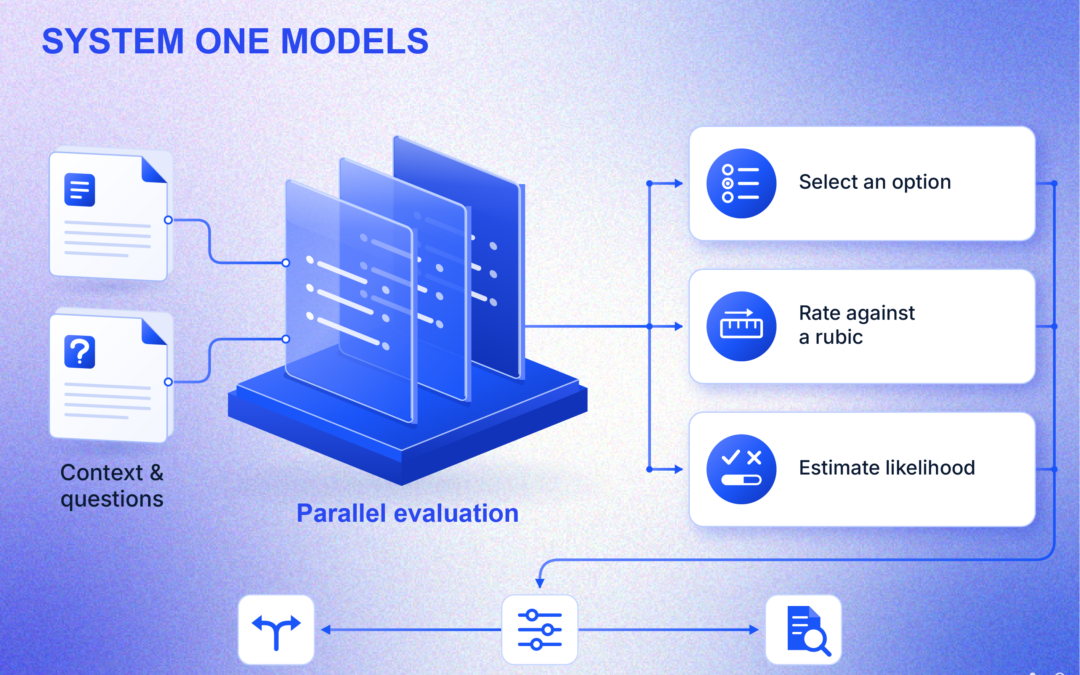
System One Models: A Technical and Enterprise Architecture Deep Dive
A System One model is a proposed class of AI model optimized for fast, bounded judgments that software can consume directly.
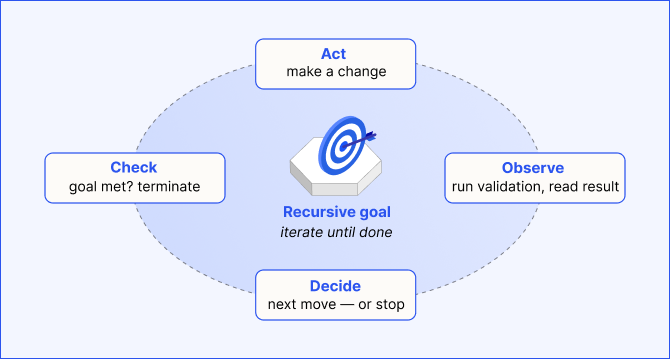
Loop engineering for AI agents: Building reliable autonomous systems
Loop engineering is the practice of designing, operating, and improving the feedback systems that let an AI agent plan, act, observe the results, and revise its approach until a goal is reached without a human driving every turn.
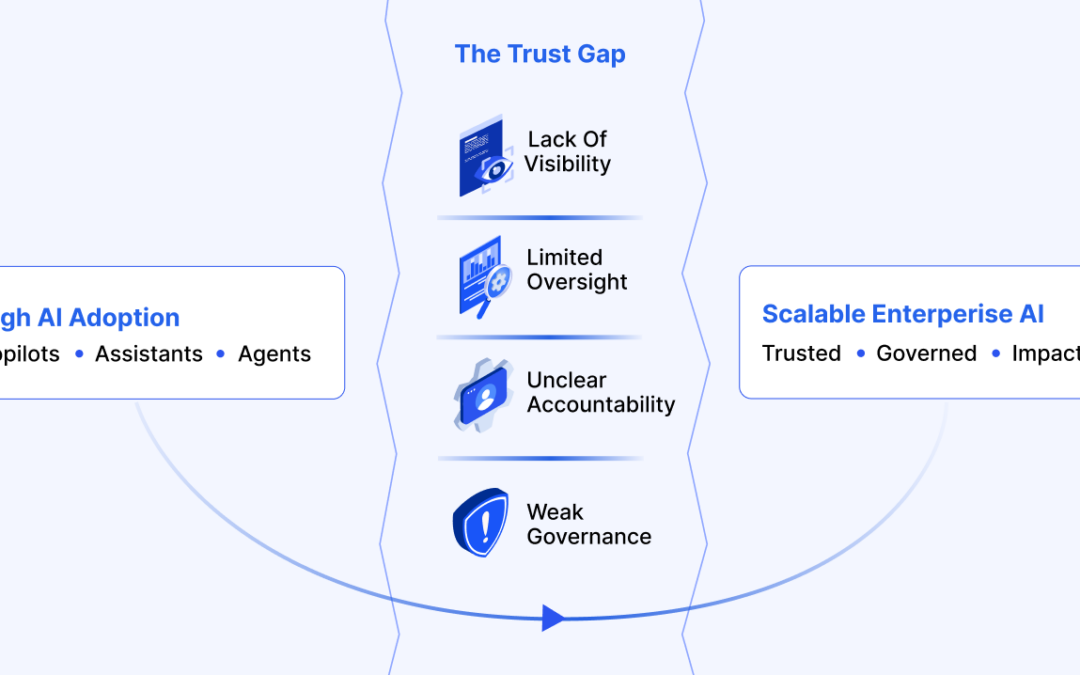
The AI trust gap: Why governance architecture determines enterprise value
The trust gap surrounding enterprise AI is fundamentally an architectural challenge, and its solution is increasingly well understood.
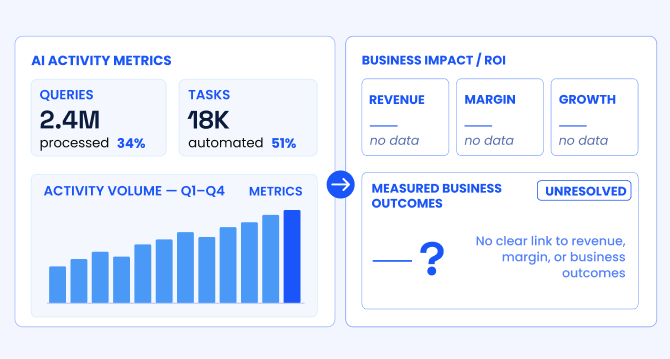
The AI ROI illusion: Why enterprises struggle to measure AI impact
Organizations with stronger measurement discipline are better positioned to link AI deployments to measurable business outcomes, prioritize high-impact use cases across the enterprise, allocate capital more effectively, and continuously refine models using real-world performance feedback.
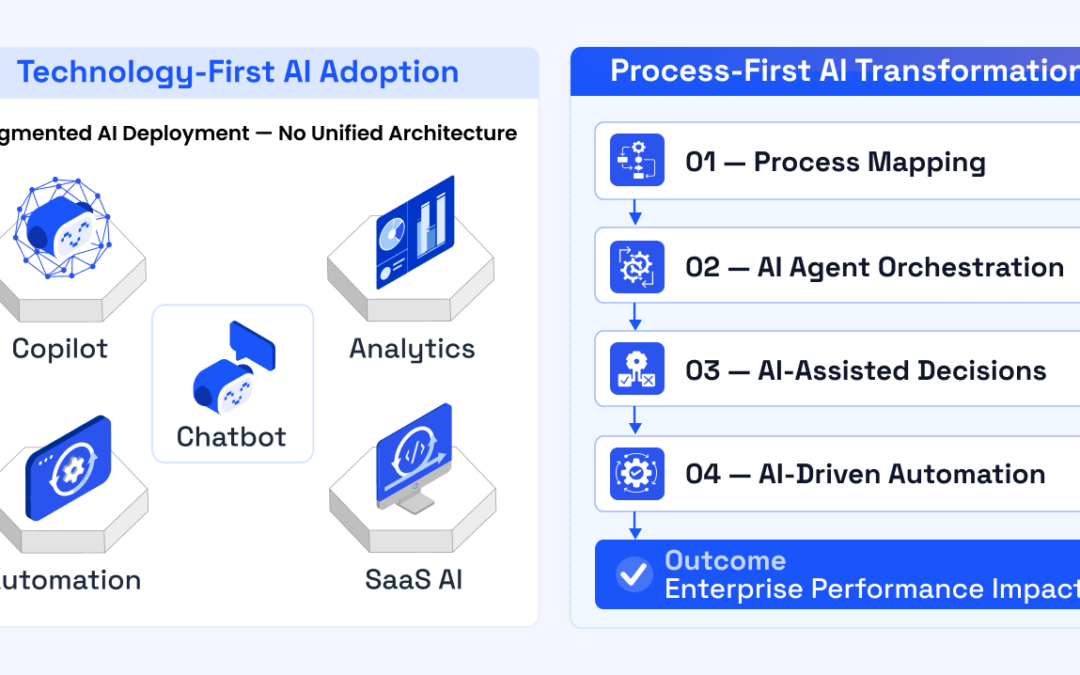
The agentic enterprise: Why AI success requires an operating model redesign
Organizations that redesign their operating models around agentic AI are beginning to outperform those that apply AI only incrementally.
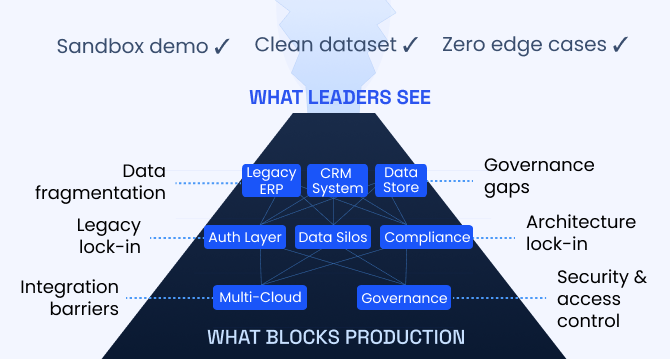
Enterprise AI pilot-to-production gap: Root causes & how to address them
The underlying cause is structural. In many enterprises, AI pilots are developed on infrastructure that was not designed to support production deployment.
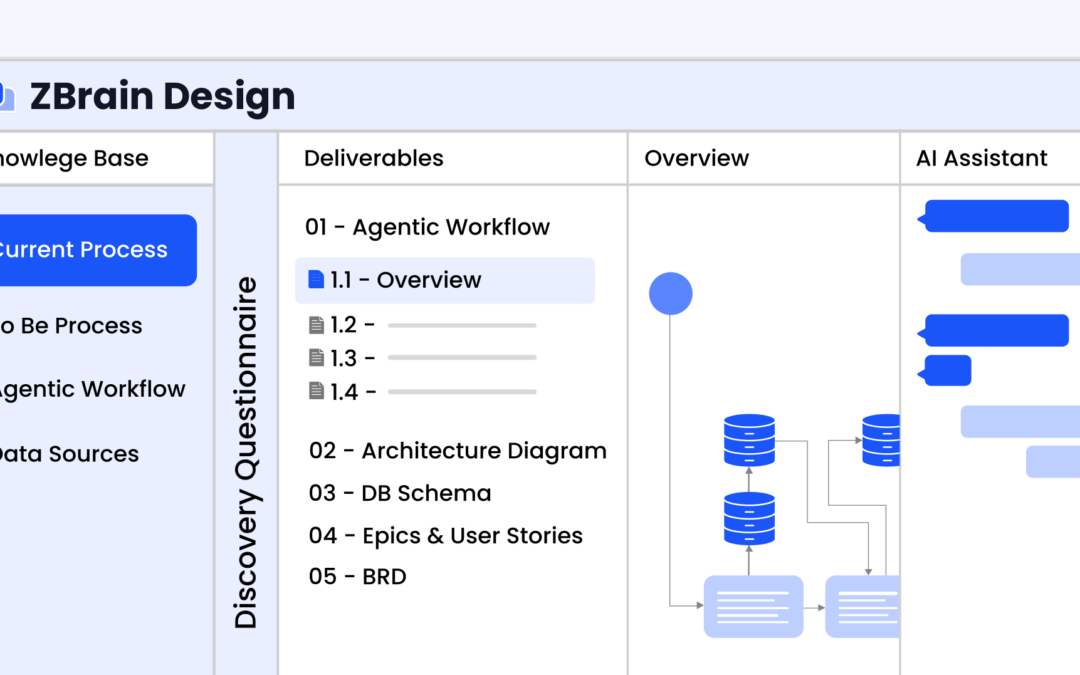
Solution architecture best practices: A guide for enterprise teams
The architecture design process culminates in a set of documented artifacts that communicate the solution to development, operations, and business teams.
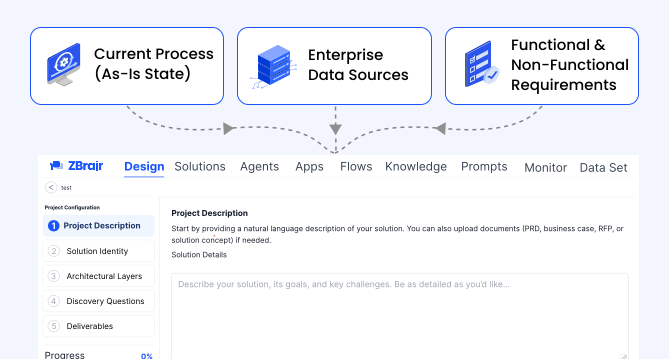
Common solution architecture design challenges and solutions
Solution architecture must evolve from fragmented documentation practices to a structured, collaborative, and continuously validated design capability.
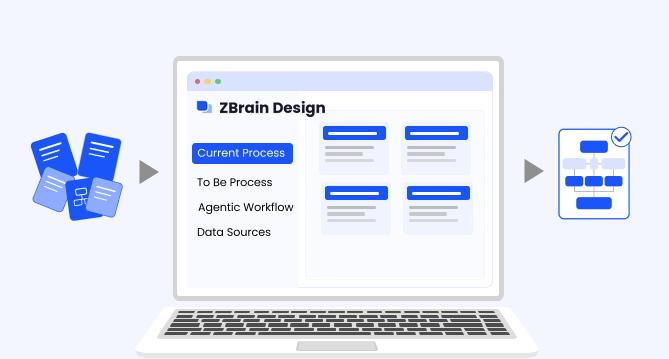
Why structured architecture design is the foundation of scalable enterprise systems
Structured architecture design guides enterprises from requirements to build-ready blueprints. Learn key principles, scalability gains, and TechBrain’s approach.