Manufacturing
 Logistics
 Real Estate
 Retail
 Finance
 Healthcare
 Hospitality
 Automotive
Generative AI for billing: Scope, adoption strategies, use cases, challenges and best practices

Billing is no longer a back-office function that finance quietly closes out at month-end. It is the control plane for revenue integrity, working capital velocity, and customer trust. What began as rule-based invoice OCR and early workflow automation has matured into a domain where generative AI interprets complex invoice data, and where agentic AI reasons, plans, and acts across enterprise systems to execute full invoice-to-cash and procure-to-pay cycles. The shift is no longer about shaving minutes off a single step; it is about redesigning how billing operates end-to-end.
The pressure on billing has intensified. The Hackett Group’s 2026 Finance Key Issues Study reports that finance workloads will rise 3.2 percent in 2026, even as headcount contracts by 2.1 percent and budgets tighten by 1.7 percent, opening a 5.3 percent productivity gap. In response, AI implementation has climbed from the 16th-ranked finance priority in 2025 to the 4th-ranked priority in 2026, with finance leaders looking to agentic AI to close the gap. Cash disbursements and revenue cycle have emerged as the leading candidates for scaled AI deployment.
The operational reality is stark. According to Quadient’s 2025 AP automation benchmarks, the average accounts payable department still takes roughly 9.2 days to process a single invoice from receipt to payment, at a manual cost of about USD 9.40 per invoice. Only 32.6 percent of invoices clear without human intervention. Best-in-Class teams, by contrast, process invoices at USD 2.78 per invoice and reach 49.2 percent touchless processing. The gap is not a matter of effort. It is a matter of architecture.
The market reflects that shift. Grand View Research values the global accounts payable automation market at USD 3.41 billion in 2024, growing at a 12.8 percent CAGR to USD 7.01 billion by 2030. Gartner’s October 2025 research finds that 57 percent of finance teams are already implementing or planning to implement agentic AI, and projects that by 2030, more than 80 percent of finance functions will embed AI-driven autonomy in core processes. Ardent Partners’ State of ePayables 2025, the twentieth annual edition based on 204 AP professionals, finds Best-in-Class AP teams now process invoices in 3.1 days against an industry average of 17.4 days, and operate at 79 percent lower processing cost per invoice.
The direction of travel is unambiguous. Deloitte’s Q4 2025 CFO Signals survey of 200 CFOs at North American companies with USD 1 billion or more in annual revenue found that 87 percent expect AI to be extremely or very important to their finance department’s operations in 2026, and 54 percent identify integrating AI agents into finance as a top transformation priority, the single highest-ranked response. A Wolters Kluwer survey of 392 finance leaders projects that 44 percent of finance teams will use agentic AI in 2026, a more than sixfold increase over the prior year. Billing operations are shifting from task-based automation to orchestrated agent workflows, and the leaders, not the laggards, set the pace.
The stakes are rising on both sides. CFOs expect real-time cash visibility, continuous compliance, and margin protection built into the invoicing process. Finance leaders face pressure to automate without sacrificing the human judgment that regulated and high-value transactions still require. The question for 2026 is not whether to deploy generative AI in billing, but how to deploy it so that it improves cash velocity and revenue integrity, preserves human oversight where it matters, and fits inside an enterprise architecture that already contains ERP, CRM, payment gateways, tax engines, and customer communication tools.
This article addresses that question directly. It examines the current landscape, the three primary integration strategies, concrete use cases across every billing sub-function, ROI framing with an honest counterweight on unit economics, challenges and best practices, the next wave of innovations, and how ZBrain Builder fits into an enterprise agentic AI stack.
What is generative AI in billing?
Generative AI is a class of AI technology that generates new content, including text, structured data, and reasoned actions, by inferring from learned patterns rather than executing predefined rules. Within billing operations, it underpins systems that parse invoices across formats, evaluate contractual terms, draft policy-aligned customer communications, and progress the workflow, whether by issuing an invoice, applying a credit memo, validating a refund request, or routing a chargeback for representment.
The category has matured rapidly. Early invoice automation relied on deterministic OCR templates with limited tolerance for variation. Current frontier models, including Claude 4.6, Gemini 3.1, and GPT-5.4, process unstructured invoices, interpret contract clauses and pricing logic, condense extended dispute threads, and produce decisions supported by traceable evidence. Agentic AI extends these capabilities further. Agentic AI represents the broader operating model in which agents pursue defined objectives autonomously, coordinate with other agents, and escalate to human reviewers only when judgment is warranted. An AI agent, in turn, is a generative model augmented with tools, memory, and planning, enabling it to do more than respond. It executes multi-step work across enterprise systems.
Key capabilities that now matter for billing teams
-
Document understanding: Models extract structured line-item data from invoices, debit memos, credit memos, and remittance advices across any format, language, or layout, including handwritten amendments and scanned attachments.
-
Contract grounding: Agents reference and apply the specific contractual clauses, pricing tiers, discount eligibility criteria, and entitlement rules that govern each billing decision, rather than defaulting to generalized policy assumptions.
-
Autonomous action: Agentic systems orchestrate sequences of tool calls, retrieve information from contract repositories and ERP systems, update records of authority, and close routine cases without requiring step-by-step human approval.
-
Continuous compliance: Agents monitor billing data and customer communications for retention, privacy, and tax-rule adherence on an ongoing basis, replacing the periodic audit cycle with a continuous control function.
-
Multi-agent orchestration: Specialized agents, such as a debit memo verification agent, a contract retrieval agent, and a customer communication agent, coordinate through orchestration frameworks to execute end-to-end workflows that exceed the scope of any single agent.
Generative and agentic AI are reshaping how billing teams allocate their time. They absorb high-volume, routine tasks such as verification, matching, and reconciliation, while equipping human staff with rich, contextual insights when intervention is needed. This shift enables billing functions to move beyond reactive ticket handling and exception management toward a more proactive role in revenue optimization and cash management.
The current landscape of GenAI in billing
Billing has become one of the most AI-active functions in the enterprise. AP, AR, and billing teams have moved past pilots into production deployments running across multiple workflows in parallel. Three forces explain the pace.
Market dynamics
Independent analyst firms triangulate a large and rapidly compounding market. Grand View Research sizes the AP automation market at USD 3.41 billion in 2024, growing to USD 7.01 billion by 2030 at a 12.8 percent CAGR. The parallel accounts receivable automation market stood at USD 4.27 billion in 2024 and is projected to reach USD 8.83 billion by 2030 at a 12.9 percent CAGR. Mordor Intelligence projects the AP automation market to reach USD 12.46 billion by 2031, at a 12.44 percent CAGR. Methodologies differ; the directional signal does not. Both sides of billing, payables and receivables, are being rebuilt as software categories around AI capabilities.
Three patterns persist across these forecasts: cloud deployment dominates, North America leads in revenue share, and Asia-Pacific grows fastest. Invoice processing and reconciliation remain the largest application categories, while dispute, refund, and compliance automation expand rapidly.
What CFOs and finance leaders now expect
McKinsey’s 2025 CFO survey, drawing on 102 CFOs across industries and regions, sets the 2026 baseline:
-
Multi-use-case adoption is the new floor: 44 percent of CFOs used generative AI for more than five use cases in 2025, up from 7 percent the previous year. Single-pilot finance teams are now in the minority.
-
Investment is accelerating: 65 percent of CFOs plan to increase generative AI spend in 2025, up from roughly 25 percent two years earlier.
-
Agentic workflows are reaching payables and receivables specifically. McKinsey cites a global biotech that runs invoice-to-contract compliance through an agentic AI system that continuously ingests contracts and invoices and verifies that contractual terms are applied correctly throughout the year.
-
Time savings are being redeployed, not banked: In finance functions with mature AI adoption, professionals spend 20 to 30 percent less time on data work, with the recovered hours reinvested into business partnering and strategy execution.
Where agentic AI is heading in billing
Gartner’s first Magic Quadrant for Accounts Payable Applications, published in March 2025, formalized AP automation as an established CFO-level technology category rather than an emerging practice. The vendor field is consolidating around platforms that combine AI-driven invoice capture, exception handling, fraud detection, and continuous compliance under a single operating layer. Ardent Partners’ 2025 research reports that 75 percent of AP departments now use some form of AI, and 61 percent of P2P professionals expect AI to have a transformational or significant impact on AP operations within the year.
What is actually being deployed
McKinsey’s State of AI in 2025 finds that 23 percent of organizations are scaling agentic AI, and another 39 percent are experimenting, though most deployments remain confined to one or two functions. Finance and customer service are the most common early functions. The gap between AI high performers and the rest of the field is widening: high performers are at least three times more likely than peers to be scaling agents, and they treat workflow redesign, not tool adoption, as the variable that determines whether value compounds.
Three approaches to integrating generative AI into billing
When an organization decides to deploy generative AI in billing, the first architectural choice is how to build it. Three strategies dominate, each with a distinct profile of control, speed, and total cost of ownership.

-
Build a custom, in-house GenAI stack
The team assembles its own stack end-to-end: foundation models accessed via API or self-hosted, open-weight models; a vector store; a retrieval layer; integrations with ERP and billing systems; an orchestration framework; and the evaluation and monitoring tooling for them. The business owns the architecture, the data path, and the release cadence outright.
This approach offers the deepest customization and the tightest control over sensitive financial data, which matters in regulated industries and in complex multi-entity billing environments. The trade-off is engineering cost. Achieving production parity with mature vendor platforms demands a dedicated team of ML engineers, software engineers, and MLOps specialists. The initial release for any complex billing workflow usually spans two to four quarters.
-
Use GenAI point solutions
The team adopts best-of-breed products that each solve one problem: an AI invoice capture tool, an automated dunning service, a fraud detection module and a chargeback representment tool. Each one ships quickly, often within weeks rather than quarters, and delivers visible results in its own lane.
The trade-off is fragmentation. Point solutions rarely share context. A dunning tool that cannot see dispute status from the chargeback platform creates a disjointed customer experience and risks chasing invoices that are already in legitimate dispute. For teams with a single high-priority workflow and a short horizon, point solutions are a practical starting point. For enterprises running multi-channel billing at scale, the integration debt compounds faster than the value delivered.
-
Adopt an agentic AI orchestration platform
A platform like ZBrain Builder sits between foundation models and enterprise systems. It provides a visual environment for designing agents and workflows, a knowledge layer for grounding decisions in contracts and policy, a tool and API integration layer, multi-agent coordination through Agent Crew, and the governance and observability that production deployments require. The business still selects the LLMs it wants to use and the systems it wants to connect to; the platform handles the underlying plumbing, so teams can move directly to use-case design.
This approach delivers faster time-to-production than an in-house build and stronger architectural coherence than point solutions. A single operating layer means one invoice generation agent, one dunning agent, one dispute resolution flow, and one compliance monitoring agent share the same contract knowledge base, the same policy library, and the same observability stack. That coherence is what makes continuous, contract-grounded billing achievable without stitching together four or five separate vendor roadmaps.
The right choice depends on regulatory constraints, engineering capacity, speed requirements, and the number of use cases on the horizon. Most mid-market and enterprise finance organizations adopt a platform approach, reserving custom builds for the narrow set of workflows where end-to-end control is a regulatory or competitive necessity.
Streamline your operational workflows with ZBrain AI agents designed to address enterprise challenges.
What is ZBrain: An introduction to the platform
Before mapping ZBrain to specific use cases, it helps to understand what the platform is and how it is structured, particularly for readers encountering it for the first time.
ZBrain is an enterprise AI platform that helps organizations assess AI opportunities, build AI agents and applications, and operate them in production. It is designed for teams ready to move beyond isolated experiments and into a managed portfolio of AI-driven workflows running across functions. The platform comprises three core products.
-
ZBrain AI XPLR: An AI opportunity and readiness assessment environment that helps teams identify where AI creates value across finance and billing operations and evaluates the organization’s readiness to build.
-
ZBrain Builder: A low-code, agentic AI orchestration platform for building, deploying, and operating AI agents, applications, and workflows. This is the execution layer on which billing workflows are designed, deployed, and monitored.
-
ZBrain Agent Store: A curated library of prebuilt agent templates organized by department, including a Billing category that finance and AR/AP teams use as a starting point rather than building every agent from scratch.
ZBrain Builder at a glance
ZBrain Builder is the component of ZBrain most directly relevant to billing operations. It provides a visual environment in which teams compose agents, connect knowledge sources, define tool calls, and chain multi-step workflows. Its defining characteristics:
-
Low-code workflow design: Flows use a visual canvas, enabling finance leads, AR/AP analysts, and engineers to collaborate on designs without coding.
-
Model-agnostic: Teams select the LLM per workflow from current frontier models, including Claude 4.6, Gemini 3.1, and GPT-5.4, and can switch model choice as new capabilities emerge without rewriting the workflow.
-
Agentic AI orchestration. Agents plan, reason, retrieve, and act. Agent Crew enables multiple specialized agents to coordinate on complex billing cases. A single dispute, for example, can involve a debit memo verification agent, a contract retrieval agent, and a customer communication agent working together.
-
Knowledge base management. Contracts, pricing schedules, internal policies, historical invoices, and customer interaction history are indexed and retrievable, so agents return grounded, organization-specific decisions rather than generic model output.
-
Tool and API integration. Native connectors to ERP systems (SAP, Oracle, NetSuite, Microsoft Dynamics), CRM, billing platforms, payment processors, banking feeds, tax engines, Slack, Teams, and custom APIs let agents both read from and write to enterprise systems.
-
Governance, observability, and compliance. Role-based access controls, comprehensive audit trails, PII redaction, and alignment with SOC 2 Type II, ISO/IEC 27001:2022, GDPR, and HIPAA, where applicable.
-
zMCP support. Native support for the Model Context Protocol, providing a standardized interface through which agents communicate with enterprise tools and data sources.
What this means for billing specifically
Several ZBrain Builder capabilities prove especially valuable for billing teams. The knowledge layer enforces contract terms and policy at the point of issuance, preventing margin leakage rather than detecting it after the fact. Agent Crew handles the workflows that genuinely require coordination, such as dispute resolution, dunning escalation, and audit-ready compliance reporting, where a single agent would be insufficient. The Billing category in the Agent Store shortens the path from idea to deployed workflow by providing tested starting points. The integrations with ERP, payment processors, and banking feeds let agents act on decisions rather than merely summarising what a human should do. Together, these capabilities form the operating foundation for agent-driven billing.
With that foundation in place, the next section walks through specific generative AI use cases in billing and maps each to the ZBrain capabilities and agents that support them.
Generative AI use cases in billing
Generative AI now touches every sub-function of billing. The sections below cover seven categories, describe the concrete sub-processes within each, and map them to ZBrain Builder capabilities and verified agents from the Billing category in the Agent Store. Every agent referenced has been verified on the live store.

Invoice management
Invoice management is the request-to-invoice control layer. Its purpose is to convert commercial intent (orders, consumption, and contract terms) into a defensible financial claim that is fast, accurate, and resistant to dispute. The agents below automate the workflows most likely to break when operated manually.
-
Automated invoice generation: Generative AI compiles charge lines directly from authoritative billing triggers, applies pricing and proration logic, and validates totals before the invoice is issued.
-
Invoice adjustment processing: Inbound adjustment requests are parsed in context, supporting evidence is assembled from contract and transaction history, and eligibility is evaluated against defined policy thresholds.
-
Discount verification: Pre-issuance review intercepts unauthorized discounts, missing approvals, and stacking errors before they reach the customer, protecting margin that would otherwise be silently conceded.
-
Debit memo verification: Incoming debit memos are matched to originating invoices and contract terms through structured line-item comparison and automated classification.
-
Credit memo application: Open credits are continuously linked to the appropriate invoices and applied against the ledger, replacing periodic manual cleanup with ongoing reconciliation.
-
Invoice summarization: Long, line-heavy invoices are condensed into the key details finance reviewers actually need.
| Generative AI use case | Description | How ZBrain helps |
|---|---|---|
| Automated invoice generation | Generate accurate invoices from contract terms and billing data, formatted to brand and regulatory standards. | ZBrain’s Invoice Generation Agent compiles charge lines, applies pricing/proration, and validates totals before issuance. |
| Invoice adjustment processing | Process customer adjustment requests and validate against contracts and policy. | ZBrain’s Invoice Adjustment Request Agent parses requests, assembles evidence, evaluates eligibility, and drafts approvals/denials. |
| Discount verification | Validate applied discounts against eligibility, contract terms, and promo policies. | ZBrain’s Discount Verification Agent flags unauthorized discounts, missing approvals, and stacking errors before issue. |
| Debit memo verification | Verify incoming debit memos by matching them to invoices and contract terms. | ZBrain’s Debit Memo Verification Agent compares line items and classifies memos for auto-validation, auto-rejection, or review. |
| Credit memo application | Link open credits to appropriate invoices and apply continuously against the ledger. | ZBrain’s Credit Memo Application Agent scans accounts, applies matching logic, validates policy, and updates statements. |
| Invoice summarization | Provide concise summaries that highlight key invoice details for faster review. | ZBrain’s Client Invoice Summarization Agent reduces AR review time for high-volume invoices. |
Accounts receivable and collections
Accounts receivable converts billed revenue into cash with minimal latency and maximal transparency. Its mandate extends beyond collections into continuous visibility and control over aging, promises to pay, and dispute status. The agents below automate the cadence while preserving human judgment for negotiation and high-stakes accounts.
- Overdue invoice alerts: Policy-driven reminders are triggered as soon as invoices go delinquent, with tone and cadence calibrated to the aging stage and customer segment.
- Automated dunning: Delinquent accounts are segmented by aging, balance, dispute status, and prior responsiveness, and a calibrated escalation path is executed.
- Automated invoice collection: Personalized reminders and follow-ups across channels remove batch dependencies and make collections continuous.
- Payment status updates: Incoming payments are matched to open invoices in near-real time, and customer account status is updated across systems.
- Surcharge management: Permitted payment-method or jurisdiction-specific surcharges are applied in compliance with evolving disclosure and regulatory rules.
- Customer credit monitoring: Orders are continuously monitored against approved limits and payment behavior to catch deterioration early without blocking strong payers.
| Generative AI use case | Description | How ZBrain helps |
|---|---|---|
| Overdue invoice alerts | Triggering of policy-driven reminders as soon as invoices go delinquent, with tone and cadence calibrated to the aging stage and customer segment. | ZBrain’s Overdue Invoice Alert Agent enforces consistent follow through while AR specialists focus on exceptions and negotiations. |
| Automated dunning | Segmentation of delinquent accounts by aging, balance, dispute status, and prior responsiveness, with calibrated escalation paths. | ZBrain’s Automated Dunning Agent orchestrates the collections lifecycle, adjusting tone and frequency and routing replies to human collectors with attached context. |
| Automated invoice collection | Automation of overdue invoice collection with personalised reminders and follow-ups across channels. | ZBrain’s Automated Invoice Collection Agent supports cash flow discipline by making outreach continuous rather than batched. |
| Payment status updates | Matching incoming payments to open invoices in near-real time and updating customer account status across systems. | ZBrain’s Customer Payment Status Agent integrates with banking feeds and payment processors to remove posting delays and flag ambiguous remittances for AR review. |
| Surcharge management | Application of permitted payment-method or jurisdiction specific surcharges in compliance with evolving disclosure and regulatory rules. | ZBrain’s Surcharge Billing Agent detects payment context, calculates allowable surcharges, and enforces disclosure requirements to recover eligible processing costs. |
| Customer credit monitoring | Continuous monitoring of orders against approved limits and payment behavior, with risk-aware escalation. | ZBrain’s Customer Credit Limit Agent approves orders within policy, escalates overages with risk indicators, and recommends limit adjustments based on observed behavior |
Disputes, chargebacks, and refunds
Dispute and refund operations are margin protection functions. Every unresolved dispute is delayed cash and a potential revenue concession, and every uncontrolled refund is a direct leakage. The agents below convert dispute defense and refund validation from reactive scrambles into governed, evidence-based operations.
• Chargeback handling: Chargeback initiation is detected, representation packets are compiled from authoritative sources, and responses are submitted within processor deadlines.
• Refund validation: Refund requests are validated against the original transaction, return policy, and proof signals such as return shipment status or service usage.
| Generative AI use case | Description | How ZBrain helps |
|---|---|---|
| Chargeback handling | Detection of chargeback initiation, automated compilation of representment packets, and submission within processor deadlines. | ZBrain’s Chargeback Handling Agent gathers transaction metadata, delivery or usage evidence, customer communications, and policy terms, then packages them for submission or escalation. |
| Refund validation | Validation of refund requests against the original transaction, return policy, and proof signals such as return shipment status or service usage. | ZBrain’s Refund Validation Agent classifies requests as auto-approve, auto-deny with rationale, or escalate for human review, generating a defensible decision record each time. |
Data privacy and compliance
Billing holds high-value personal and transaction data under regulations that vary by jurisdiction and record type. Manual retention and audit processes cannot keep pace at scale, and over-retention carries its own breach and cost exposure. The agent below operationalizes privacy and compliance as an always-on control.
| Generative AI use case | Description | How ZBrain helps |
|---|---|---|
| Data privacy compliance | Continuous audit of billing data stores against configured retention rules by jurisdiction and record type, with automated archiving and secure purging within governance controls. | ZBrain’s Data Privacy Compliance Agent maintains an auditable log of retention and deletion actions and routes conflicts for compliance review. |
Generative AI in billing for small and mid-size teams
Small and mid-size businesses do not need a 24-month finance transformation program. They need quick wins that pay back within a quarter, integrate with existing tools and do not require hiring a machine learning team.
A practical starting point is three candidate workflows: invoice generation tied to order or delivery signals, overdue invoice reminders, and credit memo application. Each can be deployed as a focused agent on top of the accounting and CRM tools the business already runs. The goal is to relieve the existing team of routine tasks, allowing them to focus on areas that require human judgment: customer conversations, forecasting, and audit preparation.
Small and medium-sized business teams using generative AI for billing workflows typically save several hours per person per week by automating invoice generation, dunning cadence, and credit application processes. This reclaimed time is reinvested in higher-value activities, such as pursuing high-value receivables, negotiating payment plans, and refining contract templates. The iterative approach from proof-of-concept to minimum viable product to scale aligns effectively with this context: validate the workflow within a single customer segment over two weeks, deploy it to production within a quarter, and then expand its application to related workflows.
Measuring the ROI of generative AI in billing operations
ROI measurement for generative AI in billing requires two complementary perspectives: quantitative operational metrics that capture process efficiency, and qualitative revenue integrity metrics that capture financial impact. The KPIs of greatest relevance:
-
Days Sales Outstanding (DSO): the average number of days between invoice issuance and cash collection. Accelerated invoice generation and consistent overdue management contribute directly to DSO reduction.
-
Cost per Invoice (CPI): the fully loaded cost of processing a single invoice. Ardent Partners reports that Best-in-Class organizations operate at approximately one-fifth the per-invoice cost of the industry average.
-
Touchless Processing Rate (TPR): the proportion of invoices processed from receipt to payment without human intervention. The 2026 benchmark for Best-in-Class organizations sits in the high 70th percentile.
-
First Pass Yield (FPY): the proportion of invoices that clear validation on first submission without requiring exception handling. A direct indicator of upstream data and policy quality.
-
Collection Effectiveness Index (CEI): the proportion of receivables collected within the target window. Improves materially through consistent dunning cadence.
-
Unapplied cash ratio: the proportion of incoming receipts that remain unmatched pending AR investigation. Reduces meaningfully through real-time payment matching agents.
-
Chargeback win rate: the proportion of chargebacks recovered through successful representment rather than written off. Improves through complete, on-time evidence submission.
-
Bad debt ratio: receivables written off as a percentage of total revenue. Continuous credit monitoring identifies deterioration earlier in the customer lifecycle, reducing this rate.
-
Margin leakage rate: revenue lost to unauthorized discounts, omitted surcharges, and over-refunds. Pre-issuance enforcement transforms this from an unmeasured cost into a managed metric.
McKinsey’s 2025 finance research provides a necessary counterweight to the cost-savings narrative. In finance functions with mature AI adoption, professionals spend 20 to 30 percent less time on data preparation. However, McKinsey is explicit that only 39 percent of organizations report any measurable EBIT impact from AI, with most attributing less than 5 percent of EBIT to AI. The implication for ROI modeling is clear: the billing AI business case should not rest solely on the number of hours saved. It should rest on three durable drivers.
-
Revenue integrity: margin protected through pre-issuance discount enforcement, chargeback win rate improvements, refund fraud reduction, and disciplined credit monitoring. These constitute direct revenue effects rather than cost reductions, and they compound across reporting periods.
-
Cash velocity: DSO improvement releases working capital previously trapped in receivables. A five-day DSO reduction applied to USD 100 million in annual revenue releases approximately USD 1.4 million in working capital, recognized as treasury value rather than P&L savings.
-
Compliance posture: continuous compliance increasingly functions as a license to operate as e-invoicing mandates expand globally. Avoiding a single material penalty frequently recovers the platform investment several times over, and the protective value scales with regulatory complexity.
Hours saved represent a tangible benefit, but they are the most readily commoditized component of the AI value equation. Revenue integrity, cash velocity, and compliance posture compound over time, establishing them as durable ROI drivers for billing operations.
Adopting generative AI in billing: challenges and best practices
The failure modes in billing AI deployments are well documented. The organizations that succeed are those that plan for them deliberately rather than encounter them in production.
Challenges
-
Integration depth: Billing connects to ERP, CRM, order management, payment processors, tax engines, and customer communication systems. Integration depth, not model quality, typically determines deployment velocity. Platforms supporting zMCP or comparable standard protocols significantly shorten the implementation curve.
-
Data quality and contract digitization: Agents require clean contract terms, accurate customer master data, and consistent product and pricing records. Most organizations find that the first six weeks of deployment are devoted to cleaning and digitizing upstream data sources.
-
Policy codification: Many billing rules reside in institutional knowledge rather than documented policy. An experienced controller may understand when a late-payment exception is warranted, but the rule itself is rarely written down. Building agent workflows forces organizations to codify these decisions explicitly, which is valuable but time-intensive.
-
Hallucinations in policy and contract reasoning: Ungrounded model responses can produce plausible but inaccurate interpretations of contract clauses. Retrieval-augmented generation anchored to verified contract repositories, combined with guardrail agents that validate outputs against codified policy, constitute the baseline mitigations.
-
Privacy and regulatory exposure: Billing data ranks among the most sensitive information in the enterprise. Data residency requirements, GDPR, and industry-specific regulations should be designed into the architecture from the outset rather than retrofitted later.
-
Change management: AP, AR, and billing teams operate within established workflows and routines. The transition to exception-based management requires role redefinition, structured training, and clear communication regarding the boundaries of agent decision-making authority.
-
Measuring value correctly: It is straightforward to measure hours saved and miss the larger gains in margin protection, cash velocity, and customer retention. ROI frameworks must incorporate both efficiency and revenue-integrity metrics to capture the full value picture.
Best practices

-
Establish a clean contract and policy knowledge base
-
Treat contracts as a managed dataset: Indexed, searchable, and version-controlled, with a single source of truth across pricing schedules, discount terms, and entitlement rules.
-
Use generative AI to accelerate contract digitization: AI extracts clauses and structured terms; human reviewers verify the output, particularly for non-standard customers and bespoke commercial constructs.
-
Eliminate the policy backlog: Undocumented exceptions represent the single largest source of agent error. The effort required to formalize them produces the most direct improvement in AI decision quality.
-
Integrate across systems to enable genuine personalization
-
Design for comprehensive context: Agents must access the contract, order, customer history, and payment behavior in a single, unified view.
-
Prioritize the highest-leverage integrations first: Begin with the systems that provide the context most billing decisions require: ERP, CRM, payment processor, and banking feeds.
-
Adopt the Model Context Protocol (MCP) or an equivalent: Standardize how agents connect to enterprise tools, eliminating the need for per-integration custom development.
-
Build robust analytics and feedback loops
-
Instrument every agent decision: Capture the policy clause, contract term, or data point that justified each decision, alongside the resulting outcome.
-
Review weekly rather than quarterly: Agent systems drift as contracts, products, and customer composition change. Review cadence must match the velocity of that drift.
-
Engage experienced finance staff: Senior controllers and AR managers possess the deepest understanding of which gaps remain in the policy library.
-
Apply a risk-tiered activation framework
Not every billing workflow carries equivalent risk. The appropriate model of human oversight depends on the financial and customer impact of a potential agent error. A practical three-tier framework:
-
Tier 1 (low risk, high volume) — AI-first with sample-based human review. Standard invoice generation, overdue reminder dispatch, payment-status updates from banking feeds, credit memo application against open invoices, and surcharge calculation under stable rules. The agent acts autonomously; humans audit a sample of outcomes.
-
Tier 2 (moderate risk) — AI proposes, human confirms. Invoice adjustments below defined thresholds, debit memo verification of structured discrepancies, refund validation for standard returns, and dunning escalation beyond a defined aging stage. The agent assembles evidence and proposes a decision; an AR or AP specialist provides confirmation.
-
Tier 3 (high risk) — human-led, AI-assisted. Large-balance disputes, regulatory or legal escalations, credit-limit revisions for strategic customers, billing for novel commercial constructs not yet codified in policy, and contract-disputed adjustments. The agent prepares context and drafts; the human decides.
The purpose of the framework is not to constrain AI deployment, but to apply the appropriate form of oversight to each workflow rather than imposing a single model across the entire billing operation.
-
Select the appropriate human-AI collaboration model per workflow
Three operating models map naturally onto the risk tiers above:
-
Human-in-the-loop (HITL): A human approves or corrects each agent action before it is committed. Suited to Tier 3 workflows and to early-stage Tier 2 workflows during the period in which the team is calibrating agent reliability.
-
Human-on-the-loop (HOTL): The agent acts autonomously while a human monitors performance and retains the ability to intervene. Suited to mature Tier 2 workflows in which the agent has established a reliable track record.
-
Human-out-of-the-loop (HOOTL): The agent operates fully autonomously within a well-defined scope and is subject to periodic audits. Suited to Tier 1 workflows in which volume justifies full automation and per-decision risk is bounded.
Effective deployments use all three models, mapped to different workflows, rather than imposing a single model across the entire billing operation.
-
Commit to continuous learning
-
Iterative refinement: Retrain retrieval indexes, refine prompts, and update guardrails on a regular cadence as contracts and policies evolve.
-
Real-time feedback channels: Capture corrections, escalation reasons, and exception causes systematically rather than anecdotally.
-
Audit and governance: SOC 2, ISO, GDPR, and HIPAA, where applicable, are reviewed quarterly through a structured audit process.
Streamline your operational workflows with ZBrain AI agents designed to address enterprise challenges.
The next wave of generative AI innovations in billing
Billing between now and 2030 will be shaped by six trajectories. Each is already visible in 2026.
-
Agent Crew handles end-to-end outcomes, not single steps: The current generation of agents is organized around discrete workflows: generate an invoice, verify a debit memo, validate a refund. The next generation is multi-agent orchestration that delivers complete outcomes, such as full dispute resolution or end-to-end month-end close. ZBrain’s Agent Crew is an early instance of this architecture; the capability will mature substantially over the next two years.
-
Touchless processing shifts from aspiration to default: Best-in-Class AP teams already process invoices in 3.1 days. As more of the workflow moves under agent control, touchless processing rates for standard invoices will approach the ceiling set by structural exception rates. Human effort migrates decisively to exception management, vendor negotiation, and governance oversight.
-
Contract-grounded billing becomes the standard operating model: Billing errors are disproportionately driven by the gap between what the contract specifies and what the invoice reflects. Agent-based retrieval over contracts converts contractual terms into a live operating policy that the billing system enforces at the point of issuance rather than during audit. The result is fewer disputes and stronger revenue integrity.
-
AI-driven fraud and anomaly detection moves upstream: Duplicate invoices, fraudulent chargebacks, unauthorized discounts, and refund abuse are fundamentally pattern-detection challenges. Agents that operate continuously over transaction streams identify anomalies before they clear, rather than after forensic review. Within two to three years, always-on anomaly monitoring will be standard across mature billing architectures.
-
Billing repositions itself as a revenue and customer experience function: AI-powered billing teams surface upsell and renewal opportunities embedded in usage data, deliver proactive credit and dispute resolution that strengthens retention, and treat invoice clarity as a customer experience asset in its own right. Billing is no longer just a cost center; it has become a measurable driver of revenue, retention, and customer trust.
How ZBrain Builder supports billing operations
Having covered the use cases and the broader trajectory, it is worth returning to how ZBrain Builder operates within a billing function day-to-day. In practice, the platform’s value comes through in a handful of capabilities that work as a coherent system rather than as separate features.
-
Workflow integration
ZBrain Builder connects directly to the systems finance teams already run: ERP platforms (SAP, Oracle, NetSuite, Microsoft Dynamics), CRM systems (Salesforce, HubSpot, Zoho), payment processors and gateways, banking feeds, accounting software (QuickBooks, Xero), tax engines, and custom internal applications through API. Agents read from and write back to these systems, so a resolution in ZBrain Builder is a resolution in the system of record itself, not a standalone log entry.
-
Low-code agent and workflow design
AR and AP leads, controllers, and billing operations analysts compose workflows on a visual canvas. A technical team member contributes to integration and governance, but the bulk of the design is accessible to the people who actually understand the billing process. Agent Crew manages the multi-agent coordination required for real-world cases spanning multiple systems.
-
Continuous learning and grounded responses
Retrieval-augmented generation anchors the agent’s decisions to the team’s contract repository, pricing schedules, and policy documents, ensuring each decision is grounded in approved organizational content. Feedback from corrections, dispute outcomes, and exception root causes flows back into prompt refinement and knowledge updates.
-
Governance and compliance
Role-based access controls, comprehensive audit trails, PII redaction, and alignment with SOC 2 Type II, ISO/IEC 27001:2022, GDPR, and HIPAA, where applicable, are built into the platform. Deployments can run on cloud, private cloud, hybrid, or on-premises infrastructure, depending on data residency and regulatory requirements.
Benefits billing teams typically realize
-
Consistent, contract-grounded billing decisions across channels: A single contract knowledge layer and a unified agent architecture drive every workflow, eliminating inconsistencies arising from siloed systems.
-
Faster time from idea to production: The Agent Store provides tested starting points rather than blank canvases, compressing the design and deployment cycle considerably.
-
Coordinated multi-agent workflows: Complex, cross-system cases such as end-to-end dispute resolution run as orchestrated flows rather than stitched-together point solutions.
-
Observable, auditable operations: Finance leaders can see how AI is performing at the workflow level, rather than inferring performance from dashboard summaries.
-
Flexibility as models evolve. The model selection for each workflow can be updated as frontier models advance, without rebuilding the underlying workflow design.
Endnote
Billing in 2026 is no longer a domain in which generative AI is experimental. It is operational, measurable, and increasingly agentic. The organizations pulling ahead share a recognizable pattern: they anchor their business case on revenue integrity and cash velocity outcomes rather than cost savings alone, they invest in contract and policy quality as deliberately as they invest in AI platforms, they design human oversight into every risk tier, and they select architectures that scale with the portfolio of use cases rather than locking in around a single point solution.
The next three years will compress a decade of finance operations change. Continuous compliance, multi-agent orchestration, and end-to-end autonomous workflows will move from leading-edge capability to industry baseline. The mandate for finance organizations is not to chase every emerging capability. It is to build a foundation that can absorb each successive wave, knowledge, integration, governance, and talent, and translate it into stronger revenue integrity, faster cash conversion, and deeper customer relationships.
For teams ready to move from planning to deployment, the logical next step is a scoped pilot focused on a single high-volume workflow. Book a demo with ZBrain or explore the Billing category in the ZBrain Agent Store to see verified agents that shorten the path from concept to production.
Bring agentic AI to your billing operations with ZBrain Builder, our full-stack agentic AI orchestration platform. Explore the Billing Agent Store or book a demo to get started.
Author’s Bio


CEO LeewayHertz
An early adopter of emerging technologies, Akash leads innovation in AI, driving transformative solutions that enhance business operations. With his entrepreneurial spirit, technical acumen and passion for AI, Akash continues to explore new horizons, empowering businesses with solutions that enable seamless automation, intelligent decision-making, and next-generation digital experiences.
Table of content
- What is generative AI in billing?
- The current landscape of GenAI in billing
- Three approaches to integrating generative AI into billing
- What is ZBrain: An introduction to the platform
- Generative AI use cases in billing
- Generative AI in billing for small and mid-size teams
- Measuring the ROI of generative AI in billing operations
- Adopting generative AI in billing: challenges and best practices
- The next wave of generative AI innovations in billing
- How ZBrain Builder supports billing operations
Share Article


Frequently Asked Questions
What is generative AI in billing, and how does it differ from traditional invoice automation?
Generative AI in billing is the application of large language models to interpret unstructured billing data, reason over contract terms and policy, and produce decisions backed by traceable evidence. Traditional rule-based RPA and OCR systems require structured templates and break the moment the input deviates from expected patterns. Generative AI handles invoices in any layout, parses free-text dispute requests, and reasons across contract clauses without templating. Agentic AI extends this further: the system plans multi-step work, invokes tools, and executes actions such as generating an invoice, applying a credit memo, or compiling a chargeback packet, rather than merely producing text.
What is the difference between generative AI and agentic AI in billing?
Generative AI produces decisions, summaries, and content. Agentic AI uses a generative model as its reasoning engine and adds planning, tool use, memory, and autonomous action. A generative AI tool drafts a dunning email. An agentic AI system reads the open invoice, checks dispute status, retrieves prior promise-to-pay communications, selects the appropriate escalation tier, sends the message through the customer’s preferred channel, and updates the AR system in a single continuous flow.
How should enterprise and mid-market teams choose between building in-house, using point solutions, or adopting an orchestration platform?
Build in-house when regulatory or competitive requirements demand full control over the stack and the team has standing ML and platform engineering capacity. Use point solutions when one focused billing problem needs a fast answer and the integration burden is acceptable. Adopt an orchestration platform when more than two billing use cases are on the roadmap, coherence across the invoice-to-cash lifecycle matters, and the team is moving from experimentation to a managed portfolio of AI workflows without rebuilding infrastructure for each new use case.
What are the main challenges of deploying generative AI in billing, and how do teams address them?
The recurring challenges are integration depth, contract and policy data quality, undocumented institutional knowledge, hallucinations in policy and contract reasoning, privacy and regulatory exposure, and change management. Teams address these through retrieval-augmented generation anchored to verified contract repositories, guardrail agents that validate outputs against codified policy, multi-agent architectures for cross-system cases, transparent decision records that capture the rationale behind each agent action, a risk-tiered activation framework, and a deliberate migration path from human-in-the-loop on early workflows to human-on-the-loop and human-out-of-the-loop as agents demonstrate reliability.
How can small and mid-size teams get started with generative AI in billing?
Start with three high-volume, low-risk workflows: invoice generation tied to order or delivery signals, overdue invoice reminders, and credit memo application. Connect to the tools already in use rather than adopting new accounting systems. Run a two-week proof of concept on one customer segment, promote it to production within a quarter, and then extend it to adjacent workflows. Track hours recovered and DSO improvement, not deflection rate alone, to understand whether the workflow is actually adding value.
How do compliance and audit requirements change with agent-driven billing?
They tighten rather than loosen. Every agent decision must be traceable to the policy clause, contract term, or data point that justified it. Audit logs, version control on agent configurations, and decision records are non-negotiable. For e-invoicing compliance, agents help rather than hinder, because they enforce jurisdiction-specific rules at the point of issuance, which is precisely where traditional workflows most often fail. Gartner’s first Magic Quadrant for Accounts Payable Applications, published in March 2025, identifies compliance as a core evaluation criterion for AP platforms.
What agents and workflows does ZBrain Builder support for billing?
ZBrain Builder is a low-code, agentic AI orchestration platform for designing, deploying, and operating AI agents, applications, and workflows in production. It is built for teams moving beyond isolated AI experiments into a managed portfolio of AI-driven workflows running across functions. For billing specifically, ZBrain Builder supports the Billing category in the ZBrain Agent Store, which covers the full invoice-to-cash lifecycle: invoice generation and adjustment, dunning, chargeback handling, refund validation, and data privacy compliance. The catalog is maintained continuously as new agents are released, and teams can compose additional agents from scratch within the platform when a workflow falls outside the templated set.
How does ZBrain Builder handle data security and integration with existing finance systems?
ZBrain Builder supports cloud, private cloud, hybrid, and on-premises deployment, allowing finance teams to align with data residency and regulatory requirements. Security features include role-based access control, end-to-end encryption, PII redaction, automated backups, continuous vulnerability management, and alignment with SOC 2 Type II, ISO/IEC 27001:2022, GDPR, and HIPAA. On the integration side, ZBrain Builder connects to ERP platforms, CRM systems, payment processors, accounting software, and custom systems through API and zMCP, which lets agents standardize connections without per-integration custom code.
How do we get started with ZBrain for billing?
To begin your generative AI journey with ZBrain:
Contact us at hello@zbrain.ai
Or fill out the inquiry form on http://zbrain.ai
Our team will work with you to evaluate your billing and finance operations, identify the highest-value workflows for agentic AI deployment, and design, build, and deploy a tailored solution that aligns with your organization’s strategic and operational objectives.
Insights
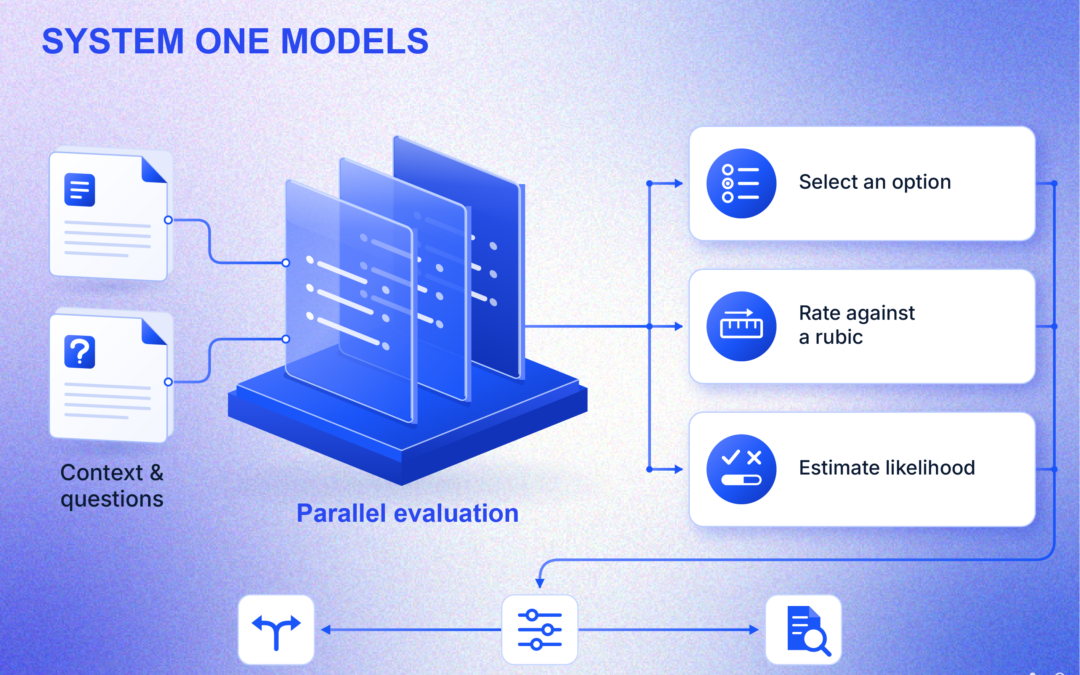
System One Models: A Technical and Enterprise Architecture Deep Dive
A System One model is a proposed class of AI model optimized for fast, bounded judgments that software can consume directly.
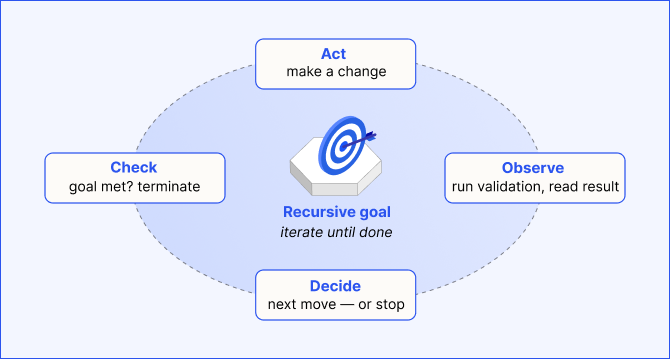
Loop engineering for AI agents: Building reliable autonomous systems
Loop engineering is the practice of designing, operating, and improving the feedback systems that let an AI agent plan, act, observe the results, and revise its approach until a goal is reached without a human driving every turn.
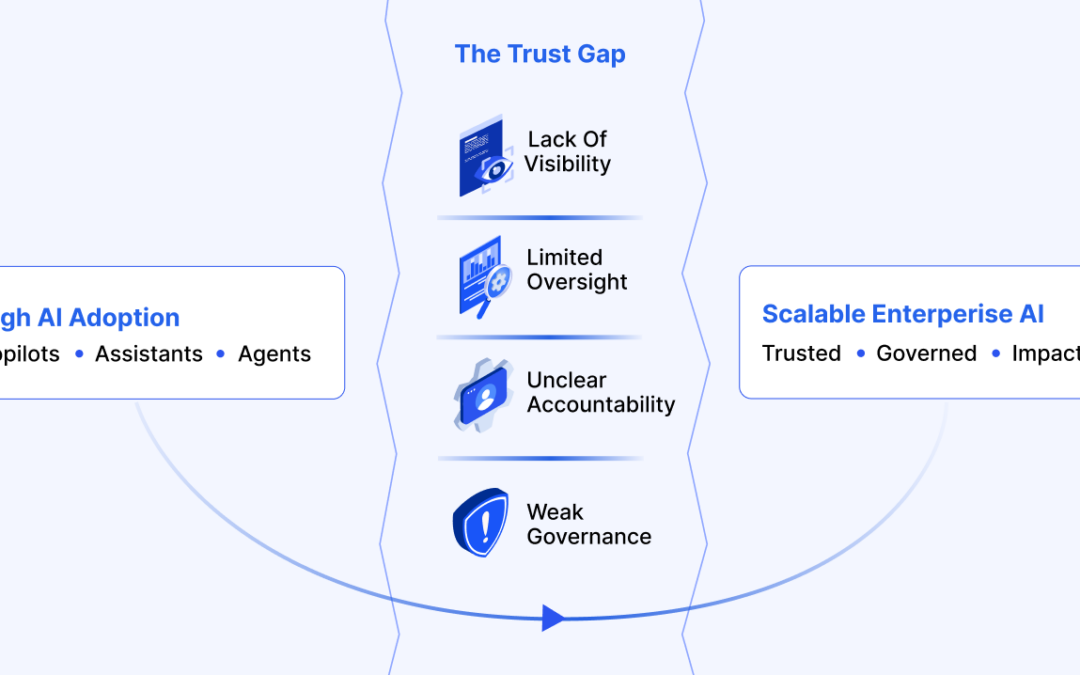
The AI trust gap: Why governance architecture determines enterprise value
The trust gap surrounding enterprise AI is fundamentally an architectural challenge, and its solution is increasingly well understood.
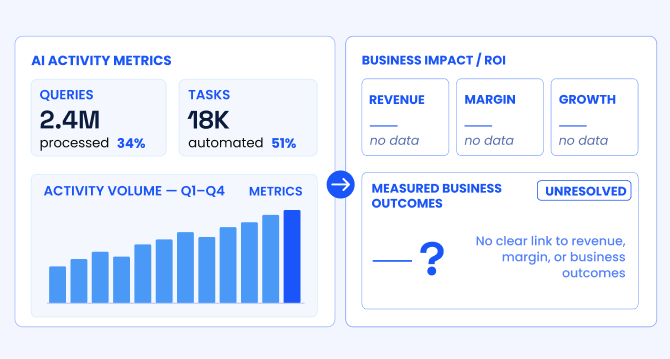
The AI ROI illusion: Why enterprises struggle to measure AI impact
Organizations with stronger measurement discipline are better positioned to link AI deployments to measurable business outcomes, prioritize high-impact use cases across the enterprise, allocate capital more effectively, and continuously refine models using real-world performance feedback.
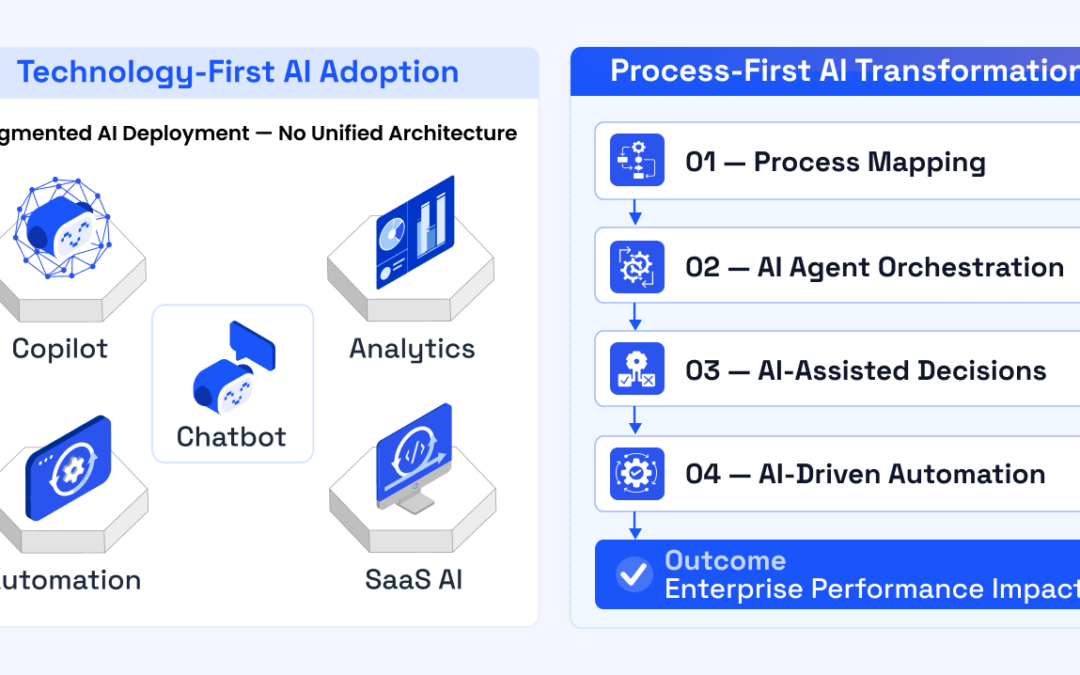
The agentic enterprise: Why AI success requires an operating model redesign
Organizations that redesign their operating models around agentic AI are beginning to outperform those that apply AI only incrementally.
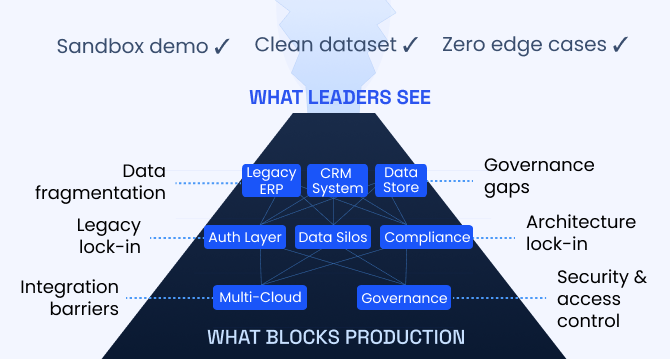
Enterprise AI pilot-to-production gap: Root causes & how to address them
The underlying cause is structural. In many enterprises, AI pilots are developed on infrastructure that was not designed to support production deployment.
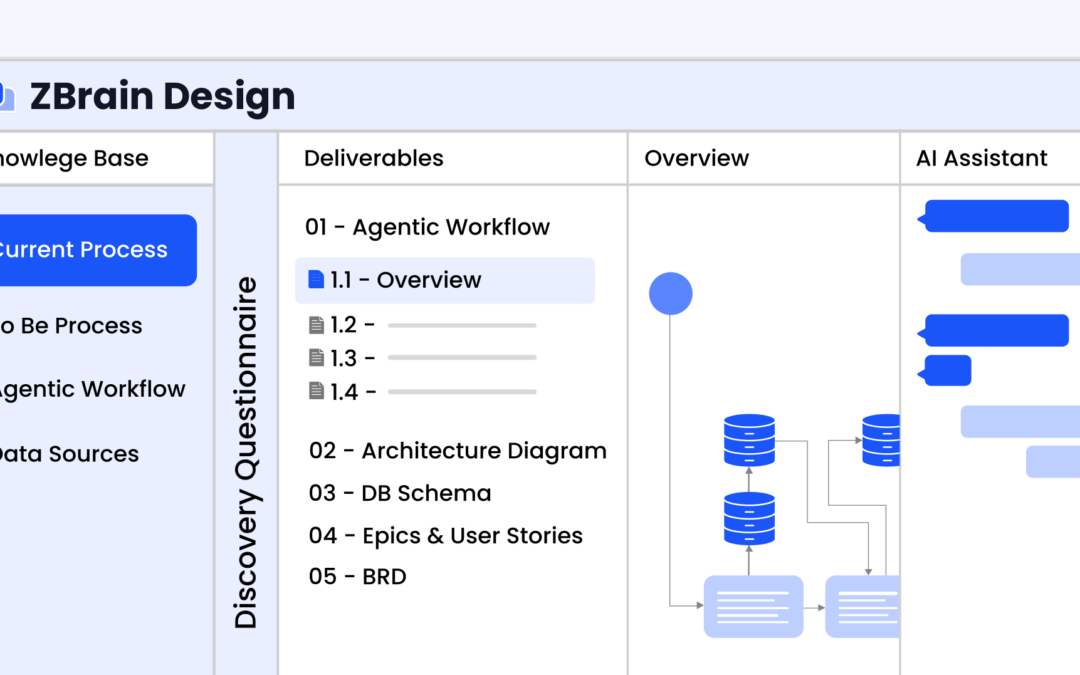
Solution architecture best practices: A guide for enterprise teams
The architecture design process culminates in a set of documented artifacts that communicate the solution to development, operations, and business teams.
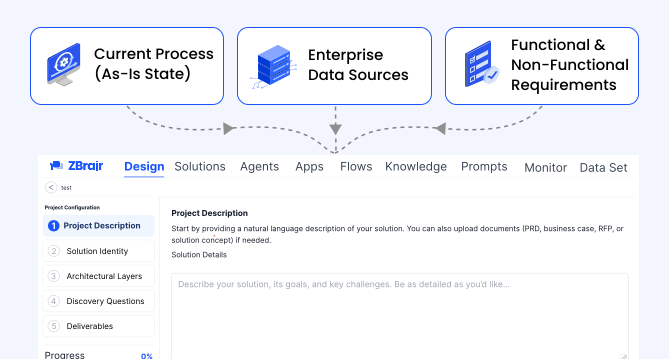
Common solution architecture design challenges and solutions
Solution architecture must evolve from fragmented documentation practices to a structured, collaborative, and continuously validated design capability.
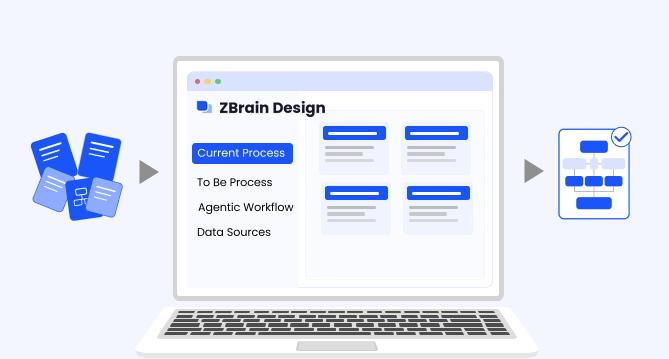
Why structured architecture design is the foundation of scalable enterprise systems
Structured architecture design guides enterprises from requirements to build-ready blueprints. Learn key principles, scalability gains, and TechBrain’s approach.