Manufacturing
 Logistics
 Real Estate
 Retail
 Finance
 Healthcare
 Hospitality
 Automotive
AI in accounts payable and receivable: Scope, integration, use cases, challenges and trends

Listen to the article
Accounts payable (AP) and accounts receivable (AR) are no longer just back-office functions—they’ve become central to how finance teams manage operational efficiency, cash flow, and risk. Transaction volumes are increasing, payment methods are diversifying, e-invoicing mandates are expanding across markets, and legacy enterprise systems remain fragmented. As a result, traditional AP and AR processes are struggling to keep up.
The data highlights the urgency. Around 78% of CFOs recognize that AI integration is crucial for AP, yet only 17% of enterprise firms have achieved automation for minimal human intervention in their source-to-pay cycles, according to PYMNTS research [1] In AR, late payments remain widespread, with Forrester’s 2025 report [2] identifying key AI use cases in collection management, cash application, payment notice management, deduction management, and electronic invoice presentment.
AI-driven automation and agentic workflows offer a way to redesign AP and AR around speed, accuracy, and control. Instead of simply digitizing existing steps, AI can help extract invoice data, match payments, identify exceptions, recommend next actions, summarize account histories, and support finance teams with context-aware decision-making across AP and AR.
The market is catching up. According to Gartner’s 2025 AI in Finance survey [3], 59% of finance leaders are already using AI in their operations, with AP automation being one of the three most-adopted use cases. The AP automation market is projected to grow at a 12.8% CAGR through 2030 [4], driven by AI adoption, e-invoicing mandates, fraud threats, and the shift to cloud-based ERP systems.
The question has shifted from whether AI can improve AP and AR to how AI can optimize these processes—transforming invoice intake, exception handling, cash application, collections prioritization, payment forecasting, and dispute resolution. Traditional, rule-based systems are simply unable to keep pace with increasing transaction volumes or the rise of AI-enabled fraud.
This article explores how AI is transforming accounts payable (AP) and accounts receivable (AR), the use cases creating practical value, the adoption considerations finance teams should address, and the integration challenges organizations need to manage. It also examines emerging trends in AI-driven financial operations and how enterprises can move from isolated automation efforts to more scalable, governed finance workflows. It also explores ZBrain Builder, a powerful low-code AI orchestration platform that helps organizations streamline AP and AR processes, integrate seamlessly with existing systems, and maintain governance across workflows, enabling finance teams to drive efficiency and optimize financial operations.
- Introduction to Accounts Payable and Accounts Receivable
- The Role of AI in Transforming Accounts Payable and Accounts Receivable
- What is ZBrain?
- Approaches to Integrating AI into Accounts Payable and Accounts Receivable
- AI Applications in Accounts Payable
- AI Applications in Accounts Receivable
- AI in AP and AR for small and mid-sized businesses
- Benefits of AI in Accounts Payable and Accounts Receivable
- Challenges of AI Integration in AP and AR
- Best Practices for Implementing AI in Accounts Payable and Accounts Receivable
- Future Trends of AI in AP and AR Automation
Introduction to Accounts Payable and Accounts Receivable
Accounts payable and accounts receivable are core finance operations that directly shape working capital, cash visibility, vendor relationships, customer collections, and financial control. Accounts payable manages the company’s obligations to suppliers and vendors, while accounts receivable manages the money owed by customers for goods or services delivered on credit.
In modern finance environments, AP and AR are no longer just back-office processing functions. They depend on accurate data capture, timely approvals, exception handling, payment discipline, reconciliation, and cross-system visibility. When these workflows remain manual or fragmented, finance teams face delays, higher error rates, weaker forecasting, and limited control over cash flow.

Deep dive into accounts payable
Accounts payable manages the end-to-end process of recording, validating, approving, and paying supplier obligations. It typically begins with procurement activity and ends with payment reconciliation, covering several critical stages:
- Purchase requisition and order creation: The process begins with a formal request for goods or services, which becomes a purchase order upon approval. The PO defines the items requested, quantities, pricing, delivery terms, and approval context.
- Receipt of goods or services: The company receives the ordered goods or services, usually documented through a receiving report or service confirmation. This verifies whether the delivery matches what was ordered.
- Invoice receipt: Vendors submit invoices through different channels, including paper, email attachments, portals, electronic documents, or EDI files. These varied formats make data extraction and standardization difficult.
- Invoice processing: Invoice data is captured, coded, validated, and prepared for review. In manual environments, this step often depends on repetitive data entry and the finance team’s judgment.
- Invoice matching: Invoices are matched against the purchase order and receipt records to identify discrepancies in price, quantity, tax, or delivery. Exceptions often require manual investigation across procurement, finance, and supplier communication records.
- Approval workflow: Once verified, invoices are routed for approval based on policies, thresholds, business units, cost centers, or exception rules.
- Payment processing: Approved invoices are paid via the company’s preferred payment methods, including ACH, wire transfer, card, or check. This step requires accurate supplier master data and banking information.
- Payment reconciliation and reporting: Payments are reconciled with invoices and recorded in the accounting system to maintain accurate books, support audits, and improve financial reporting.
Common AP challenges include manual data entry, inconsistent invoice formats, document discrepancies, fragmented systems, weak audit trails, delayed approvals, duplicate payments, compliance demands, and fraud risk. The fraud exposure is no longer hypothetical: the 2025 AFP Payments Fraud and Control Survey [5] found that 79% of organizations experienced attempted or actual payments fraud in 2024, with business email compromise cited by 63% of respondents and vendor imposter fraud rising 11 percentage points year over year. These inefficiencies and risks reduce financial visibility, strain supplier relationships, and make it harder for finance teams to manage cash with confidence.
Deep dive into accounts receivable
Accounts receivable manages the process of invoicing customers, collecting payments, applying cash, resolving disputes, and maintaining accurate customer balances. It plays a direct role in cash flow, revenue realization, and customer relationship management.
The AR process typically includes the following steps:
- Credit approval: Before extending credit, the customer’s creditworthiness is assessed to determine suitable credit limits, payment terms, and risk controls.
- Order processing: Customer orders are verified and processed to confirm accuracy, pricing, availability, contractual terms, and fulfillment readiness.
- Invoice generation: After fulfillment, an invoice is generated with the products or services delivered, the amount due, tax details, payment terms, and due date.
- Invoice delivery: The invoice is sent to the customer via the agreed channel, such as email, a portal, EDI, or the customer’s billing system. Delivery accuracy can influence payment speed.
- Payment collection: Incoming payments are tracked, and overdue accounts are followed up through reminders, collection workflows, or account team intervention.
- Payment application: Payments are matched against open invoices to update customer balances. This can become complex when payments are partial, bundled, delayed, or missing remittance details.
- Reconciliation: Payments, invoices, credits, deductions, and adjustments are reconciled to ensure the accounting system reflects the correct customer balance.
- Debt collection: For overdue receivables, AR teams may escalate collection efforts, coordinate with account managers, negotiate payment plans, or involve external collection agencies where appropriate.
AR challenges include customer disputes, delayed payments, bad debt, high Days Sales Outstanding, inaccurate cash forecasting, inefficient credit management, manual reconciliation, poor communication, and limited visibility into customer payment behavior. These issues can disrupt cash flow, complicate financial planning, and weaken customer relationships.
The following table summarizes the current pain points in the AP and AR processes and their business impacts.
| Pain point | Description | Example | Impact on business |
|---|---|---|---|
| Manual workflows and inefficiencies | Manual verification relies on physical checks, leading to inefficiencies and potential for error. | A misfiled document leads to a duplicated payment of $15,000, causing an accounting discrepancy and audit issue. | Delays in financial reporting and increased risk of audit complications. |
| Prolonged dispute resolution | Time-consuming resolution processes for discrepancies in invoices, delaying the entire payment cycle. | Discrepancy over quantity delivered holds up payment for a month, impacting supplier trust and future collaborations. | Extended payment cycles and weakened supplier relations. |
| Exposure to payment fraud | Increased vulnerability to fraud in manual systems due to a lack of sophisticated checks. | Fraudulent redirection of payment due to compromised email instructions results in a loss of $20,000. | Direct financial losses and increased security risk. |
| Data integration issues | Challenges in integrating data across different financial systems and platforms. | Inconsistent data entries between the procurement and finance systems delay monthly financial closings. | Inefficiencies in financial operations and reporting. |
| Inadequate cash flow management | Difficulty in managing liquidity due to unclear visibility of incoming and outgoing funds. | An unexpected delay in payment from a major client forces a company to dip into its credit line unexpectedly. | Liquidity issues that can affect daily operations. |
| Escalating processing costs | High costs associated with manual handling of invoices and payments due to inefficient processes. | Hiring temporary staff during peak billing periods significantly raises operational costs. | Increased administrative expenses, reducing profitability. |
| Inconsistent payment enforcement | Challenges in enforcing payment discipline across different customers and suppliers. | Variations in payment terms with clients lead to cash inflow issues, complicating financial planning. | Disruptions in cash flow and financial planning difficulties. |
Efficient AP and AR management is essential for maintaining financial stability, liquidity, and operational continuity. Yet the traditional model depends heavily on manual review, fragmented data, and delayed exception resolution. As transaction volumes increase, these limitations become harder to manage through process discipline alone.
This is where AI becomes relevant. By applying AI to document extraction, invoice matching, payment application, exception routing, collections prioritization, and cash-flow forecasting, finance teams can move from reactive processing to more intelligent, controlled, and scalable financial operations.
Streamline your operational workflows with ZBrain AI agents designed to address enterprise challenges.
The Role of AI in Transforming Accounts Payable and Accounts Receivable
AI is changing AP and AR by helping finance teams manage high-volume, document-heavy, and exception-driven workflows with greater consistency. Instead of relying only on manual review, static rules, and fragmented spreadsheets, finance teams can use AI to extract data, interpret context, identify anomalies, recommend next actions, and route work to the right person or system.
In accounts payable, AI now spans the invoice lifecycle from receipt to payment. Forrester’s Top AI Use Cases for Accounts Payable Automation in 2025 [6] groups the highest-impact applications into six areas: invoice data capture (where generative AI and computer vision are outperforming traditional OCR), invoice matching (where ML and RPA handle complex multiway validations), reporting and dashboarding (where predictive analytics and genAI deliver real-time insights), fraud management (where ML and genAI flag noncompliant invoicing), payment management (where AI surfaces early-payment discount opportunities), and e-invoicing and tax compliance (where AI automates tax-code determination and country-specific rules).
In accounts receivable, AI now supports billing, collections, cash application, dispute management, and cash-flow visibility. AI systems can match incoming payments to open invoices, summarize customer account histories, prioritize overdue accounts, identify potential payment delays, and provide context-aware follow-up recommendations to collections teams.
The value of AI in AP and AR extends beyond automation. Its larger role is to improve how finance work is coordinated. AI can help teams identify where exceptions are emerging, which transactions need review, which customers or suppliers require attention, and what actions are most likely to improve payment accuracy, working capital, and financial control. McKinsey’s 2025 finance research [7] found that finance professionals using AI spend 20 to 30 percent less time crunching data, reinvesting that time into business partnering, and that agentic workflows are now enabling the next level of automation in payable and receivable processes—with one global biotech company introducing invoice-to-contract compliance using an agentic AI system that ingests contracts and invoices throughout the cycle.
Key AI technologies used in accounts payable and accounts receivable
AI in AP and AR brings together several technologies that support data extraction, prediction, language understanding, anomaly detection, and workflow orchestration. These technologies are most effective when applied to specific finance processes rather than treated as standalone tools.
-
Machine learning: Machine learning models identify patterns in historical transaction data and use those patterns to support predictions, classifications, and risk scoring. In AP, machine learning can help detect duplicate invoices, unusual payment behavior, coding anomalies, or supplier-specific exception patterns. In AR, it can help predict late payments, segment customers by payment behavior, and prioritize collections activity.
-
Further anomaly detection helps identify transactions that deviate from expected patterns. In AP, this may include duplicate invoices, unusual supplier bank changes, abnormal payment amounts, or mismatches between invoices and purchase orders. In AR, it can help flag unusual payment behavior, unexpected deductions, disputed balances, or accounts at risk of delayed payment.
-
Predictive analytics: Predictive analytics helps finance teams anticipate future outcomes based on historical and current data. In AP, it can support payment timing, cash requirement planning, and early-payment discount decisions. In AR, it can support cash flow forecasting, Days Sales Outstanding analysis, bad-debt risk assessment, and collections prioritization.
-
Natural language processing: Natural language processing helps AI systems interpret text from invoices, contracts, purchase orders, remittance advice, emails, dispute notes, and customer communications. In AP, NLP can extract invoice fields, identify payment terms, and interpret supplier correspondence. In AR, it can summarize account histories, classify dispute reasons, and assist collections teams in drafting follow-up communications.
-
Document AI and intelligent data extraction: AP and AR depend heavily on documents arriving in various formats. Document AI combines OCR, layout understanding, NLP, and validation logic to extract structured data from invoices, receipts, statements, remittance documents, credit memos, and supporting files. This is especially important where finance teams still receive PDFs, scanned documents, email attachments, or inconsistent supplier and customer formats.
-
Generative AI: Generative AI adds value where finance teams need to synthesize information, generate summaries, or support communication. In AP, it can summarize invoice exceptions, supplier histories, approval context, and policy guidance. In AR, it can create collection notes, draft customer follow-ups, summarize disputes, and explain account status to finance teams in natural language.
-
Agentic AI: Agentic AI extends automation by coordinating multi-step finance tasks across systems, documents, and people. For example, an AP agentic workflow can receive an invoice, extract data, check it against the purchase order, flag exceptions, request clarification, and prepare it for approval. In AR, an agentic workflow can review overdue accounts, analyze customer history, recommend collection actions, draft follow-up messages, and escalate unresolved disputes.
AI is changing AP and AR by helping finance teams manage high-volume, document-heavy, and exception-driven workflows with greater consistency. Instead of relying only on manual review, static rules, and fragmented spreadsheets, finance teams can use AI to extract data, interpret context, identify anomalies, recommend next actions, and route work to the right person or system.
In accounts payable, AI now spans the invoice lifecycle from receipt to payment. Forrester’s Top AI Use Cases for Accounts Payable Automation in 2025 [6] groups the highest-impact applications into six areas: invoice data capture (where generative AI and computer vision are outperforming traditional OCR), invoice matching (where ML and RPA handle complex multiway validations), reporting and dashboarding (where predictive analytics and genAI deliver real-time insights), fraud management (where ML and genAI flag noncompliant invoicing), payment management (where AI surfaces early-payment discount opportunities), and e-invoicing and tax compliance (where AI automates tax-code determination and country-specific rules).
In accounts receivable, AI now supports billing, collections, cash application, dispute management, and cash-flow visibility. AI systems can match incoming payments to open invoices, summarize customer account histories, prioritize overdue accounts, identify potential payment delays, and provide context-aware follow-up recommendations to collections teams.
The value of AI in AP and AR extends beyond automation. Its larger role is to improve how finance work is coordinated. AI can help teams identify where exceptions are emerging, which transactions need review, which customers or suppliers require attention, and what actions are most likely to improve payment accuracy, working capital, and financial control. McKinsey’s 2025 finance research [7] found that finance professionals using AI spend 20 to 30 percent less time crunching data, reinvesting that time into business partnering, and that agentic workflows are now enabling the next level of automation in payable and receivable processes—with one global biotech company introducing invoice-to-contract compliance using an agentic AI system that ingests contracts and invoices throughout the cycle.
Key AI technologies used in accounts payable and accounts receivable
AI in AP and AR brings together several technologies that support data extraction, prediction, language understanding, anomaly detection, and workflow orchestration. These technologies are most effective when applied to specific finance processes rather than treated as standalone tools.
- Machine learning: Machine learning models identify patterns in historical transaction data and use those patterns to support predictions, classifications, and risk scoring. In AP, machine learning can help detect duplicate invoices, unusual payment behavior, coding anomalies, or supplier-specific exception patterns. In AR, it can help predict late payments, segment customers by payment behavior, and prioritize collections activity.
- Further anomaly detection helps identify transactions that deviate from expected patterns. In AP, this may include duplicate invoices, unusual supplier bank changes, abnormal payment amounts, or mismatches between invoices and purchase orders. In AR, it can help flag unusual payment behavior, unexpected deductions, disputed balances, or accounts at risk of delayed payment.
- Predictive analytics: Predictive analytics helps finance teams anticipate future outcomes based on historical and current data. In AP, it can support payment timing, cash requirement planning, and early-payment discount decisions. In AR, it can support cash flow forecasting, Days Sales Outstanding analysis, bad-debt risk assessment, and collections prioritization.
- Natural language processing: Natural language processing helps AI systems interpret text from invoices, contracts, purchase orders, remittance advice, emails, dispute notes, and customer communications. In AP, NLP can extract invoice fields, identify payment terms, and interpret supplier correspondence. In AR, it can summarize account histories, classify dispute reasons, and assist collections teams in drafting follow-up communications.
- Document AI and intelligent data extraction: AP and AR depend heavily on documents arriving in various formats. Document AI combines OCR, layout understanding, NLP, and validation logic to extract structured data from invoices, receipts, statements, remittance documents, credit memos, and supporting files.
- Generative AI: Generative AI adds value where finance teams need to synthesize information, generate summaries, or support communication. In AP, it can summarize invoice exceptions, supplier histories, approval context, and policy guidance. In AR, it can create collection notes, draft customer follow-ups, summarize disputes, and explain account status.
- Agentic AI: Agentic AI extends automation by coordinating multi-step finance tasks across systems, documents, and people. For example, an AP agentic workflow can receive an invoice, extract data, check it against the purchase order, flag exceptions, request clarification, and prepare it for approval. In AR, an agentic workflow can review overdue accounts, analyze customer history, recommend collection actions, draft follow-up messages, and escalate unresolved disputes.
Together, these technologies help AP and AR teams move beyond isolated task automation. They make finance operations more adaptive by combining document intelligence, predictive insight, exception handling, and workflow coordination. The result is a finance function that can process transactions more consistently, improve visibility into cash flows, and focus human effort on judgment-intensive issues such as disputes, supplier risk, customer relationships, and financial controls.
What is ZBrain?
ZBrain™ is an AI enablement platform designed to help organizations assess, build, and scale intelligent agents and applications without requiring deep AI expertise. It includes the following core components:
- ZBrain XPLR™: For assessing AI readiness and generating implementation roadmaps.
- ZBrain Design: An AI-assisted solution architecture design platform that transforms solution requirements into structured, build-ready architecture blueprints.
- ZBrain Builder: A low-code, model-agnostic agentic AI orchestration platform for building, deploying, and orchestrating custom AI agents and workflows.
What is ZBrain Builder?
ZBrain Builder is a low-code, model-agnostic agentic AI orchestration platform within the ZBrain suite. It enables finance, IT, and business teams to design and deploy AI-powered agents, workflows, and applications by combining proprietary knowledge, business logic, enterprise data, and model orchestration through an intuitive visual interface called Flows.
In AP and AR, ZBrain Builder supports critical workflows such as invoice intake, invoice matching, exception routing, approval support, payment reconciliation, collections prioritization, dispute management, and cash-flow visibility. It helps finance teams coordinate AI workflows across documents, systems, approvals, exceptions, and human review.
Key capabilities of ZBrain Builder
- Low-code AI workflow design: Users can visually create workflows, define multi-step logic, invoke tools, and integrate LLMs, APIs, and data sources through Flows. This enables rapid deployment without deep coding expertise.
- Agentic AI orchestration: Teams can build and manage intelligent agents that can plan, reason, retrieve knowledge, and take action using LLMs and other tools. Agent Crew allows multiple specialized agents to collaborate on complex AP and AR tasks (e.g., an invoice intake agent handing off to a matching agent, then to an exception agent, and finally to a payment-prep agent).
- Model-agnostic integration: Choose from leading frontier LLMs, including Claude 4.6, GPT-5.4, and Gemini 3.1, and orchestrate them with enterprise data for context-based actions. ZBrain supports dynamic workflows by allowing teams to swap models as needed without rewriting the entire process.
- Tool and API integration via zMCP: Connect with external APIs, CRMs, cloud applications, databases, ERP systems, accounting platforms, procurement tools, banking systems, and payment platforms. ZBrain ensures AI agents can read from and write to enterprise systems, providing full operational integration.
- Enterprise system compatibility: ZBrain integrates with enterprise tools such as Slack, Microsoft Teams, Salesforce, and ERP systems (SAP, Oracle) to embed AI into daily financial operations, ensuring seamless communication and data exchange across teams.
- Prebuilt agents and customization through the Agent Store: The ZBrain Agent Store offers ready-to-use agents for AP and AR workflows, such as invoice matching, dispute resolution, and payment reconciliation. Teams can customize these agents or create new ones tailored to their specific business needs.
- Monitoring and governance: ZBrain supports role-based access, audit trails, observability, and human-in-the-loop oversight for every workflow. This ensures secure AI operations and compliance with governance frameworks.
- Security and compliance: ZBrain is SOC 2 Type II, ISO 27001, HIPAA, and GDPR-compliant, ensuring AI workflows meet stringent security and data protection standards.
ZBrain Builder integrates orchestration, retrieval, and reasoning to help enterprises move from AI opportunity discovery to governed intelligent automation. For AP and AR teams, it provides a scalable way to manage AI agents and workflows across invoice processing, payment reconciliation, collections, dispute management, and broader finance operations.
Approaches to Integrating AI into Accounts Payable and Accounts Receivable
When an organization decides to apply AI to accounts payable and accounts receivable, the first architectural choice is how to build. In practice, three approaches arise, each with a different balance of control, deployment speed, governance, integration complexity, and long-term scalability.
1. Build a custom, in-house AI stack
In this approach, the organization builds its own AI stack for AP and AR workflows. This may include foundation models, document intelligence, retrieval layers, enterprise integrations, orchestration logic, evaluation workflows, access controls, and monitoring.
The organization owns the architecture, data flow, governance model, and release cycle. This level of control can be useful when AP and AR processes are highly specialized, financial data policies require strict internal ownership, or the business wants direct control over how AI interacts with ERP, procurement, CRM, banking, and accounting systems.
This approach is best suited for organizations that need:
- Highly customized AP and AR workflows
- Direct ownership of data flow, controls, and model behavior
- Deep integration with internal systems and finance policies
- Strong internal AI, engineering, security, and governance teams
The trade-off is operational complexity. Production-grade AI in finance requires sustained investment in engineering, compliance, data governance, testing, monitoring, and lifecycle management. Custom builds can also create technical debt if integrations, evaluation pipelines, model configurations, security controls, and monitoring processes are not continuously maintained. This approach is usually the right fit when the workflows are specialized enough to justify a bespoke build.
2. Use AP and AR AI point solutions
In this approach, the organization adopts pre-built AI tools designed for specific finance tasks. These may include invoice capture, three-way matching, duplicate payment detection, cash application, collections prioritization, remittance matching, dispute classification, or payment forecasting.
Point solutions can be practical when the problem is narrow and clearly defined. For example, an AP team struggling with manual invoice intake may use a document-extraction tool, while an AR team dealing with delayed cash application may choose a payment-matching solution.
This approach is best suited for organizations that need to:
- Solve one high-friction AP or AR bottleneck quickly
- Improve a specific process without redesigning the broader finance workflow
- Deploy specialized functionality with less internal engineering effort
- Test AI adoption in a limited, lower-complexity area
The trade-off is fragmentation. Point solutions often solve one problem at a time, but they may not share context, governance, workflow logic, or data models across AP and AR. Over time, organizations can accumulate disconnected tools, duplicated integrations, separate vendor dependencies, and data silos. For example, insights from supplier payment behavior in AP may remain disconnected from customer credit or collections intelligence in AR. For teams addressing a single immediate bottleneck, point solutions can be a useful starting point. For organizations aiming to scale AI across finance operations, integration debt can build quickly.
3. Adopt an agentic AI orchestration platform
An agentic AI orchestration platform provides a shared environment for designing, deploying, and managing AI apps, agents, and multi-step workflows across AP and AR. It sits between foundation models and enterprise systems, providing an orchestration layer, an integration framework, governance controls, and observability to operationalize AI across finance workflows.
This approach is suited to organizations that want to move beyond isolated automation and coordinate AI across connected processes. In AP, this may include invoice intake, data extraction, PO matching, exception routing, approval support, payment preparation, and reconciliation. In AR, it may include invoice delivery, cash application, collections prioritization, dispute management, customer communication support, and cash-flow forecasting.
This is where platforms like ZBrain Builder fit. As a low-code, model-agnostic agentic AI orchestration platform, ZBrain Builder enables teams to design and deploy AI apps, agents, and workflows that connect with enterprise systems, apply governance controls, and support human-in-the-loop review across finance processes.
This approach is best suited for organizations that need:
-
Reusable integrations across ERP, procurement, CRM, accounting, banking, payment, and document systems
-
Shared governance, access controls, audit trails, and escalation rules
-
Multi-step workflows that coordinate data, documents, systems, and human review
-
Human-in-the-loop controls for approvals, exceptions, escalations, and high-value transactions
-
A scalable operating layer for AP, AR, and adjacent finance processes
The advantage of orchestration is consistency. Finance teams can expand AI from a single workflow to multiple finance processes without creating a separate tool, data flow, or governance model for each use case. This is especially important in finance, where AI workflows often need to pause for human approval, escalate exceptions, document decisions, and maintain auditability. Compared with narrow point tools, orchestration platforms provide a more connected operating layer. Compared with building every workflow from scratch, they reduce the engineering burden by offering reusable components, integrations, and governance patterns.
AI Applications in Accounts Payable
AI has transformed the landscape of accounts payable, evolving from basic task automation to deploying advanced applications that enhance efficiency, accuracy, and strategic impact across financial operations.

Intelligent Document Processing (IDP)
| Use Case | Description | How ZBrain Helps |
|---|---|---|
| Advanced OCR and Intelligent Character Recognition (ICR) | AI-driven OCR and ICR technologies extract data from various document formats. | AI enhances the accuracy of extracting data from semi-structured and unstructured documents, including handwritten texts. E.g., ZBrain’s content extractor agent can extract content from PDFs, Docx, txt, and PPT files using multimodal LLM and OCR capabilities, ensuring accessibility to financial data. |
| Handling semi-structured and unstructured data | Processing documents without standardized formats like PDFs and scanned images. | AI adapts to diverse invoice formats, automating the processing and reducing the need for manual data entry. This includes PDFs, scanned images and email attachments. |
| Document classification and routing | Classification and routing documents to appropriate workflows. | AI streamlines the document classification process by reducing manual sorting and routing, ensuring documents are processed more swiftly and accurately. |
Dynamic discounting and early payment programs
| Use Case | Description | How AI Helps |
|---|---|---|
| Instant adjustment to discount strategies | Adjusting discount offerings instantly based on various parameters. | AI helps adjust discount offers based on current financial conditions and vendor participation for better financial decisions. ZBrain’s discount verification agent can validate applied discounts on invoices, ensuring alignment with company policies and eligibility. |
| Vendor participation tracking | Monitoring and managing vendor participation in early payment programs. | AI streamlines the tracking process for vendor participation, ensuring efficient processing of payments qualifying for discounts. |
| Automated compliance verification | Ensuring that transactions comply with the terms of early payment discount programs. |
ZBrain’s Vendor Compliance Verification Agent can automate the validation of vendor credentials, their compliance history, and certifications against regulatory and organizational policies, ensuring that procurement decisions meet compliance standards |
Spend analysis and optimization
| Use Case | Description | How AI Helps |
|---|---|---|
| Categorization of spending | Automatic categorization of expenses aiding in a detailed analysis of spending patterns and budget management. |
ZBrain’s Procurement Spend Analysis Agent can deliver AI-powered insights into expenses by categorizing and summarizing spending patterns to optimize sourcing and cost control. |
| Vendor performance analysis | Comprehensive evaluation of vendor performance focusing on delivery, quality, and compliance metrics. |
ZBrain’s Vendor Performance Improvement Agent can monitor vendor performance, analyze key metrics, and provide actionable insights to improve service quality and contract compliance in vendor management, and identify areas for improvement. |
Supplier risk management
| Use Case | Description | How AI Helps |
|---|---|---|
| Assessment of supplier financial health | Evaluation of financial stability of suppliers through AI analysis. |
ZBrain’s Vendor Qualification Assessment Agent can automate vendor qualification, ensuring compliance and flagging risks to optimize procurement efficiency, providing its role in reviewing, categorizing. |
| Monitoring of supplier performance | Assessment of supplier reliability and performance, focusing on various performance metrics. |
ZBrain’s Supplier Performance Monitoring Agent can monitor and evaluate supplier performance across key metrics, including delivery, quality, and responsiveness, to optimize procurement decisions. |
| Compliance checks and regulatory monitoring | Automation of compliance verification with regulatory standards and company policies. |
ZBrain’s Regulatory Compliance Monitoring Agent can monitor government regulation pages, maintain a knowledge base of regulations, and send summaries of regulatory changes to stakeholders. |
Automated audit trail and compliance
| Use Case | Description | How AI Helps |
|---|---|---|
| Generation of audit trails | Automatic documentation of every transaction in accounts payable. |
ZBrain’s Document Audit Trail Creation Agent can generate and maintain audit trails for financial documents, ensuring traceability, compliance, and transparency in accounts payable workflows. |
| Automated compliance checks | Routine verification of compliance with regulations and policies. |
ZBrain’s Document Audit Trail Creation Agent can generate and maintain audit trails for financial documents, ensuring traceability, compliance, and transparency in accounts payable workflows. |
| Anomaly detection for audit requirements | Automated monitoring for unusual transactions within accounts payable. |
ZBrain’s Document Audit Trail Creation Agent can generate and maintain audit trails for financial documents, ensuring traceability, compliance, and transparency in accounts payable workflows. |
| Automated customer reminder | Streamlining audit prep by automating financial document gathering. |
ZBrain’s Document Audit Trail Creation Agent can generate and maintain audit trails for financial documents, ensuring traceability, compliance, and transparency in accounts payable workflows. |
Chatbots for AP support
| Use Case | Description | How AI Helps |
|---|---|---|
| AI-driven chatbots for inquiries | Instant responses to user queries via AI-powered chatbots. |
ZBrain’s Inquiry Resolution Agent can provide summaries and a link to the stakeholders. |
| Automated responses to common queries | Chatbots handle routine accounts payable inquiries efficiently. |
ZBrain’s Service Inquiry Resolution Agent can streamline service requests across channels like email, WhatsApp, etc, with intelligent, personalized responses that boost efficiency and customer engagement. |
| Ticket routing for complex queries | Intelligent routing of complex inquiries to appropriate staff. |
ZBrain’s Inquiry Routing Agent can route client inquiries to the right team/individual, enhancing support via real-time analysis of content |
Enhanced transaction management
| Use Case | Description | How AI Helps |
|---|---|---|
| Three-way matching | Automating matching invoices, purchase orders, and delivery receipts. | AI enhances transaction accuracy and speed to align documents and flag discrepancies. ZBrain’s purchase order-invoice matching agent can match purchase orders and invoices to ensure accuracy in quantities, prices, and delivery terms before payment approval. |
| Duplicate invoice detection | Identifying and flagging duplicate invoices, streamlining the accounts payable process. | ZBrain’s duplicate invoice detection agent can streamline the accounts payable process by identifying and flagging potential duplicate invoices, preventing overpayments. |
| Exception handling | Identifying discrepancies and automating their resolution. |
ZBrain’s AP Exception Response Optimization Agent uses AI to analyze and prioritize accounts payable exceptions, enabling faster, more accurate resolutions and reducing processing delays. |
| Automated transaction entries | Automating the recording of transactions into the general ledger. | AI enables data extraction and automation to ensure accurate ledger entries, reducing human error and improving financial data reliability. |
Contract management automation
| Use Case | Description | How AI Helps |
|---|---|---|
| Term extraction and analysis | Scanning contracts to identify and extract key terms and conditions. | Natural Language Processing (NLP) helps parse complex legal language, enhancing accuracy in contract analysis and compliance checks. ZBrain’s contract clause extraction agent can extract and categorize key contract clauses to streamline contract reviews, reducing human oversight. |
| Renewal management | Alerting teams about upcoming contract renewals. | ZBrain’s contract renewal notification agent can monitor contract expirations and send reminders for timely renewals, aiding teams in strategic decision-making. |
| Compliance monitoring | Monitoring contract performance against agreed terms. | ZBrain’s contract compliance check agent can validate contracts against compliance standards, ensuring no critical terms were altered in the data population process. |
AP audit and reporting automation
| Use Case | Description | How AI Helps |
|---|---|---|
| Automated report generation | Generation of comprehensive reports on demand. | AI helps aggregate data from multiple sources, analyze trends, and produce detailed reports that support strategic decision-making. |
| Real-time auditing and automated reminders | Performing real-time audits on transactions and automation of reminders. | ZBrain’s financial audit preparation agent can facilitate automated reminders to optimize customer communication and cash flow by notifying them about upcoming or overdue payments. |
Vendor portal integration
| Use Case | Description | How AI Helps |
|---|---|---|
| Automated data synchronization | Updating and synchronization of vendor data across systems. |
ZBrain’s Vendor Data Validation Agent can automate the verification of vendor information against multiple reliable sources to ensure accurate, compliant, and up-to-date procurement records. |
| Streamlined communications | Facilitating smoother interactions with vendors through automated updates and notifications. |
ZBrain’s Supplier Communication Automation Agent can automate communications for seamless contract renewals and routine interactions. Also, the AP Insights AI Agent can optimize supplier interactions by automating invoice-related queries with instant, accurate responses. |
| Enhanced transaction tracking | Tracking all transactions through the vendor portal. |
ZBrain’s AP Risk Intelligence Agent can proactively identify and flag payment risks, anomalies, duplicates and compliance issues within accounts payable workflows. |
Expense and corporate travel management
| Use case | Description | How ZBrain helps |
|---|---|---|
| Expense report processing | Automating the extraction, classification, and validation of expense reports submitted by employees. | ZBrain’s Expense Report Processing Agent uses OCR and LLMs to extract and classify expense data from receipts, ensuring compliance and reducing the time and errors in expense reporting. |
| Travel expense compliance | Automating the validation of travel-related expenses and ensuring compliance with corporate travel policies. | ZBrain’s Travel Expense Compliance Agent automatically analyzes travel receipts and logs, classifying them into authorized, unauthorized, or flagged for review, ensuring policy adherence. |
AI Applications in Accounts Receivable
AI is transforming accounts receivable, enhancing accuracy and speeding up financial transactions. From automating invoice processing to providing comprehensive analytics, AI enables more efficient and proactive financial management.
Advanced credit scoring and risk assessment
| Use Case | Description | How AI Helps |
|---|---|---|
| Analysis of customer behavior and market data | Analysis of customer payment history, purchasing patterns, and external market data. |
AI analyzes customer payment history, purchasing behavior, credit patterns, and market signals to identify delayed-payment risks, prioritize collections, improve cash-flows, and support more informed AR decisions. |
| Dynamic credit scoring models | Adjustment in credit scoring models based on changing customer behavior and other factors. |
ZBrain’s Credit Evaluation AI Agent can assess customer creditworthiness by analyzing financial behavior, payment history, and risk indicators to generate real-time, data-driven credit scores. |
Personalized payment portals and experiences
| Use Case | Description | How AI Helps |
|---|---|---|
| Customization of payment portals | Customization of payment portals to individual customer preferences. | AI helps adapt payment interfaces to match customer preferences and usage patterns, making transactions easier and more intuitive. |
| Personalized payment options and schedules | Customization of payment options and schedules based on customer history and preferences. |
ZBrain’s Client Payment Scheduling Agent can automatically suggest a payment schedule, optimizing cash flows based on payment terms, cash flow needs, and historical data. |
| AI-powered chatbots for payment queries | AI chatbots offer instant support for customers with payment inquiries. |
ZBrain’s Dynamic Query Resolution Agent can instantly resolve diverse customer queries—including payment-related issues—by understanding intent and delivering accurate, context-aware responses. |
Optimized payment reminders and collections
| Use Case | Description | How AI Helps |
|---|---|---|
| Personalized communication for collection | Facilitating tailored messaging based on customer behavior, enhancing collection rates. |
ZBrain’s Automated Customer Reminder Agent can streamline receivables by sending timely, personalized payment reminders to customers, reducing delays and improving cash flow efficiency. |
| Automated invoice collection | Automation of overdue invoice collection with personalized reminders. |
ZBrain’s Automated Invoice Collection Agent can automate overdue invoice collection with personalized reminders, enhancing cash flow and streamlining accounts receivable. |
| Late payment follow-up | Tracking of overdue invoices and sending reminders to clients. |
ZBrain’s Late Payment Follow-Up Agent can automate the tracking of overdue invoices, sending reminders to clients to enhance collections, improve recovery rates and reduce bad debt. |
| Client payment tracking | Monitoring client payments to update statuses in real-time. |
ZBrain’s Client Payment Tracking Agent can monitor client payments, updating payment statuses in real-time to improve transparency and accuracy in accounts receivable. |
| Dynamic reminder scheduling | Optimizing payment reminder schedules by analyzing customer payment patterns. |
ZBrain’s Automated Dunning Agent can automatically send reminders for overdue invoices and customizing follow-ups. |
Dispute management and resolution
| Use Case | Description | How AI Helps |
|---|---|---|
| Identification and categorization of disputes | Categorization of disputes by analyzing transaction data, speeding up the resolution process. |
ZBrain’s Customer Payment Dispute Resolution Agent can automatically analyze and categorize payment disputes, providing recommendations to accelerate resolution in accounts receivable operations. |
| Automated routing of disputes to relevant teams | Routing disputes to the appropriate teams for efficient resolution. |
ZBrain’s customerPayment Dispute Resolution Agent can resolve customer payment disputes by identifying invoice issues, ensuring speedy resolution and improved cash flow. |
| Dispute data analysis to prevent further occurrences | Analysis of dispute data to identify patterns and prevent potential issues. |
ZBrain’s Dispute Case Routing Agentcan intelligently direct dispute cases to the appropriate teams based on type, urgency, and history—streamlining resolution and enabling proactive issue prevention by analyzing incoming case patterns. |
Revenue optimization and customer value analysis
| Use Case | Description | How AI Helps |
|---|---|---|
| Identification of revenue risks and opportunities | Identifying risks and opportunities within revenue streams. |
ZBrain’s Revenue Narration Agent can transform complex financial data into clear, narrative summaries, helping stakeholders quickly understand revenue trends, drivers, and variances. |
| Analysis of customer lifetime value | Assessing the long-term revenue potential from customers. | AI supports retention strategies for high-value clients and optimizes resource allocation to maximize customer lifetime value. |
Automated cash application
| Use Case | Description | How AI Helps |
|---|---|---|
| Matching of payments to invoices | Matching incoming payments to the appropriate invoices. |
ZBrain’s Invoice Validation Agent can automatically verify invoices by matching them with purchase orders and delivery records to detect discrepancies and prevent payment errors. |
| Handling of partial payments and complex scenarios | Managing intricate payment details like partial payments. | AI ensures precise account reconciliation and reduces accounting errors by effectively managing complex payment scenarios. |
| Automated reconciliation of bank statements | Automating the reconciliation of bank statements. |
ZBrain’s Cash Application Automation Agent can automate the application of cash receipts, ensuring accurate and faster customer account reconciliation and reducing manual effort. |
Automated document management
| Use Case | Description | How AI Helps |
|---|---|---|
| Document indexing and retrieving | Automating the indexing, filing, and retrieving of financial documents. | AI ensures documents are easily accessible and well-organized, enhancing document management efficiency. |
| Version control and audit trails | Managing versions of documents and maintaining detailed audit trails of changes. |
ZBrain’s Contract Version Tracking Agent can automate draft revision tracking to ensure current versions are used, and all changes are documented for efficient management. |
| Automated invoice creation | Generation of invoices from purchase orders and service delivery data. | ZBrain’s invoice generation agent can generate invoices based on specific billing parameters and adjustments, with access to customer billing details for accuracy and customization. Also, its client invoice summarization agent can summarize client invoices, highlighting key details for quicker finance reviews. |
| Automated document validation | Validating documents against pre-set rules and criteria. |
ZBrain’s Invoice Generation Agent can automate the creation of accurate and compliant invoices based on validated transaction details. Also, its Client Invoice Summarization Agent can summarize client invoices, highlighting key details for quicker finance reviews. |
Payment negotiations
| Use Case | Description | How AI Helps |
|---|---|---|
| Automated negotiation bots | AI-powered bots that handle and negotiate payment terms automatically. | AI optimizes payment terms based on customer profiles and past interactions, streamlining negotiations. |
| Dynamic payment plans | Suggesting dynamic payment plans for customers facing financial difficulties. | AI helps maintain customer loyalty and reduce churn by accommodating financial situations flexibly. |
| Real-time adjustment of credit terms | Recommending adjustments to credit terms based on ongoing risk assessments. |
ZBrain’s A2R Account Risk Classification Agent can continuously assess customer risk profiles using real-time and historical data and produce reports to support dynamic credit decisioning. |
Enhanced reporting and analytics
| Use Case | Description | How AI Helps |
|---|---|---|
| Real-time reporting | Real-time reporting capabilities for up-to-the-minute financial data. | AI enhances the ability to quickly respond to changes in the financial landscape through its real-time reporting. |
| Custom analytics dashboards | Customizable analytics dashboards for quick decisions. | AI enables stakeholders to make informed decisions rapidly through custom analytics dashboards with powerful visualizations for key metrics and insights. |
| Profitability analysis | Assessing the profitability of different customer segments. | AI helps in strategic decision-making about customer relationships and terms. It analyzes payment timeliness and associated costs to determine the profitability of different customer segments optimizing interactions and tailoring strategies for better financial outcomes. |
AI has transformed accounts payable and accounts receivable, transitioning from basic automation to advanced applications that enhance efficiency, accuracy, and strategic impact. This section explores transformative AI applications that redefine the norms of financial management.
Streamline your operational workflows with ZBrain AI agents designed to address enterprise challenges.
AI in AP and AR for small and mid-sized businesses
Small and mid-sized businesses (SMBs) face unique challenges in accounts payable (AP) and accounts receivable (AR). Unlike larger enterprises, SMBs often operate with limited resources, which means their finance teams manage core processes such as invoice intake, matching, payment, cash application, collections, and dispute handling without the benefit of large-scale ERP systems or dedicated support staff. This leads to a heavier workload per team member and an increased vulnerability to cash flow disruptions.
The opportunity for AI in SMBs is significant. AI can automate routine tasks like invoice processing, payment reminders, and collections, helping SMBs overcome challenges like high processing costs and late payments. AI also improves operational efficiency, enabling SMBs to manage cash flow more effectively, reduce Days Sales Outstanding (DSO), and capture early-payment discounts, which are often missed in manual processes.
As AI adoption grows, SMBs are increasingly turning to integrated solutions that work with the diverse spectrum of tools that they already use. These AI-driven systems offer low-barrier integration, reducing deployment complexity. With AI-powered workflows, finance teams can automate invoice intake, cash application, dispute resolution, and collections management—enabling them to focus on higher-value tasks like customer and supplier relationship management.
By leveraging ZBrain Builder, SMBs can implement a low-code AI orchestration platform that integrates seamlessly with existing systems, providing a model-agnostic solution that can be scaled as needed. The platform’s Agent Store offers ready-to-use agents for key financial processes, while human-in-the-loop controls ensure finance teams retain control over critical decisions. ZBrain’s solutions empower SMBs to embrace AI without needing specialized technical expertise, making it easier for them to drive efficiency, improve cash flow, and stay competitive in today’s fast-evolving financial landscape.
Benefits of AI in Accounts Payable and Accounts Receivable
Adopting artificial intelligence (AI) in accounts payable (AP) and accounts receivable (AR) delivers substantial improvements across both quantitative and qualitative dimensions of financial operations. From automating routine tasks to enhancing decision-making, AI helps optimize workflows, reduce operational costs, and improve cash flow management.

Quantifiable benefits of AI in AP and AR
-
Cost reduction: AI minimizes operational costs in AP and AR by automating routine tasks such as data entry, invoice processing, and reconciliation. AI also optimizes payment schedules, capturing early-payment discounts and avoiding penalties, ensuring further cost savings.
-
Improved efficiency and processing time: By automating invoice and payment processing, AI significantly cuts down the time required for these activities. This swift processing enables finance teams to manage higher transaction volumes, boosting overall productivity.
-
Enhanced accuracy and reduced errors: AI eliminates common errors in manual data-handling processes, ensuring higher accuracy in tasks such as data extraction and financial reconciliation. This accuracy results in fewer downstream corrections and adjustments, saving both time and resources.
-
Improved cash flow management: With advanced analytics, AI enhances visibility into cash flows, facilitating more effective management of incoming and outgoing funds. This capability allows businesses to optimize their financial resources for better liquidity management. This improvement typically occurs without significant changes to customer or supplier relationships, enabling businesses to quickly and effectively optimize cash flow.
-
Reduced Days Sales Outstanding (DSO): AR automation reduces DSO by accelerating invoice delivery, prioritizing at-risk accounts, and speeding up cash application.
Qualitative benefits of AI in AP and AR
-
Stronger vendor relationships: Timely and accurate payments processed via AI-driven systems enhance vendor trust and reliability, fostering stronger business relationships and potentially better terms.
-
Enhanced customer experience: AI improves customer experience in AR through personalized payment options, faster dispute resolution, and clearer communication.
-
Reduced fraud risk: AI’s ability to monitor and analyze transaction patterns in real time helps identify and mitigate fraud earlier. This matters because only 17% of organizations [8]currently use AI for fraud prevention, according to the 2026 AFP Payments Fraud and Control Survey, leaving substantial headroom for AI-driven fraud-prevention gains.
Team productivity and satisfaction: Automating repetitive tasks lets AP and AR teams shift to exception handling, analysis, supplier and customer relationship work, and strategic projects.
Better strategic decision-making: Real-time data and insights from AI enable more informed, timely decisions, allowing finance teams to play a more strategic role in business growth.
Measuring return on investment
To measure ROI from AI in AP and AR, organisations should track cost savings (reductions in labour and operational cost pre- and post-AI integration), efficiency gains (decrease in time spent on processing invoices and payments), accuracy improvements (reduction in error rates in invoicing and reconciliation), cash flow improvements (faster collections and optimised payment timing), and total cost of ownership (the financial benefits compared with the cost of implementation, integration, training, and ongoing maintenance).
Challenges of AI Integration in AP and AR
While the benefits of AI in AP and AR are undeniable, the integration process presents several challenges that finance teams must carefully navigate. Successful implementation requires strategic planning, clear communication, and careful resource allocation to overcome these obstacles.
Integration complexity
Integrating AI with existing financial systems—such as ERP systems, accounting software, banking platforms, procurement tools, and CRMs—is rarely straightforward. Differing data standards, system architectures, and workflows can lead to unexpected technical mismatches, delaying the realization of AI’s full potential. Deloitte’s 2025 research found that integration complexity is the second-biggest barrier to agentic AI adoption in finance, cited by 20.1% of professionals [9]. Ensuring seamless integration requires careful planning and alignment of systems.
Data privacy and security
AI in AP and AR must handle sensitive vendor, customer, banking, and tax data. As financial data is increasingly digitized, protecting against cyber threats becomes paramount. These threats, including BEC (Business Email Compromise) and vendor-impersonation fraud, are becoming more sophisticated—partly driven by generative AI. AI systems must comply with evolving data protection regulations such as GDPR and CCPA, while ensuring cybersecurity measures are robust enough to safeguard against emerging risks.
Cost of implementation and maintenance
Beyond the initial investment in AI technology, organizations must plan for the full scope of integration costs, training, change management, and ongoing data-management expenses. Balancing these costs with the expected benefits of AI is critical for building a defensible business case. AI offers substantial long-term benefits, but careful financial planning is required to ensure that the upfront and operational costs align with organizational goals.
Change management and user adoption
Resistance to change is common in finance teams, especially as AI transforms AP and AR workflows. Employees may fear job displacement or struggle with adapting to new, AI-enabled processes. Clear communication, training, and active involvement from finance, IT, internal audit, and risk teams can help improve user adoption and ease the transition. Engaging stakeholders throughout the implementation process ensures smoother transitions and higher acceptance rates.
Data quality and availability
AI systems are highly dependent on high-quality data. If the data is siloed, outdated, or inconsistent—particularly across supplier master, customer master, payment history, and ERP records—AI will be less effective. These challenges can lead to trust issues and AI models that make incorrect predictions or decisions. Ensuring data governance and standardization is a key step before integrating AI into AP and AR systems.
Security and compliance risks
AI in AP and AR must comply with internal control frameworks, segregation-of-duties requirements, and audit expectations. Aligning AI workflows with regulations like SOX and SOC 2 is essential. Companies must design security controls into their AI systems from the outset to avoid compliance issues later. This includes role-based access controls and audit trails to monitor the performance of AI systems and ensure they comply with financial regulations.
Algorithmic bias and fairness
AI systems are only as unbiased as the data they are trained on. If training data reflects historical biases—whether in payment patterns, credit assessments, or vendor relationships—AI decisions can perpetuate or even amplify these biases. This could lead to unfair outcomes for customers or suppliers.
Trust and explainability
Trust in AI remains a barrier to full adoption in finance. According to Deloitte’s 2025 poll [10], trust in agentic AI is the leading barrier to AI adoption, cited by 21.3% of finance and accounting professionals. Moreover, 59.7% of respondents [11] trust AI agents to make decisions only within a defined framework. To address these concerns, AI systems must offer explainable workflows and human-in-the-loop controls, ensuring that AI-driven decisions are transparent and easily understood.
Lack of internal expertise
Successfully implementing AI in AP and AR requires specialized skills and knowledge that many organizations may lack internally. This creates a significant barrier to the effective deployment and maintenance of AI technologies. Companies may need to invest in training current employees or hiring new talent with expertise in AI and machine learning. Both options can be costly and time-consuming, but are essential for ensuring the effective use of AI in finance operations.
Best Practices for Implementing AI in Accounts Payable and Accounts Receivable
Implementing AI in AP and AR requires careful planning and clear objectives. AI is not just a tool, but a means to transform workflows, enhance decision-making, and optimize financial processes. Finance teams should focus on workflow clarity, strong data governance, and a clear path for adoption to ensure AI delivers measurable improvements without compromising compliance or security.
Define the workflow and KPIs first
Start by identifying the specific AP or AR workflow where AI can create the most measurable improvement. Common starting points for AI integration include invoice intake, three-way matching, exception routing, payment reconciliation, cash application, collections prioritization, dispute management, and cash-flow forecasting.
Once the workflow is defined, set KPIs to measure performance improvements. Common KPIs include invoice cycle time, exception resolution time, duplicate payment rate, reconciliation accuracy, cash application rate, DSO (Days Sales Outstanding), and forecast accuracy.
Strengthen data quality and governance
AI systems depend heavily on high-quality, well-governed data. Prior to AI deployment, organizations should review data sources such as invoice data, supplier and customer master records, purchase orders, receipts, remittance details, and payment history.
The data must be standardized, cleaned, and governed, with clear ownership rules. Small data issues, such as incorrect supplier banking details or inconsistent customer names, can introduce significant risks, undermining the effectiveness of AI models and leading to incorrect predictions or misclassifications.
Choose the right integration approach
Select the right AI approach based on the specific process challenges. For invoice extraction or cash application, a point solution may suffice. For more complex approval logic or specialized exception handling, a custom workflow might be required.
For broader and more integrated needs, an orchestration platform like ZBrain Builder may be necessary, as it can coordinate multiple steps across ERP systems, procurement, CRM, banking, and document management systems. This approach is ideal for organizations seeking scalable, AI-powered automation with built-in compliance and governance controls.
Start with a controlled pilot, then scale
A successful AI adoption strategy begins with a well-defined pilot in a high-impact, manageable area such as accounts payable or cash application. A focused pilot allows teams to test data readiness, validate workflow logic, assess user adoption, and ensure that exception handling works as expected.
Once proven, the organization can scale AI to adjacent workflows or across additional business units, allowing for a smooth, incremental rollout that minimizes disruption.
Build human oversight, explainability, and auditability into the Design
AI in finance should never operate in a fully autonomous mode without clear review and escalation rules. Define where AI can automate tasks, where it can recommend actions, and where a human must approve. High-value payments, supplier bank-detail changes, unresolved invoice exceptions, customer disputes, and unusual deductions should have clear approval or escalation paths.
AI systems should capture audit trails—logging inputs, outputs, decisions, approvals, overrides, and system actions. This transparency supports compliance with internal controls and provides an audit trail for future reviews.
Align AI workflows with security, compliance, and internal controls
AI-enabled AP and AR workflows must comply with security controls that cover data access, authentication, role-based permissions, encryption, logging, and third-party system integrations.
Compliance considerations, including segregation-of-duties requirements, SOX, and SOC regulations, should be addressed during workflow design, not after deployment. AI workflows should ensure that the integrity of financial transactions and data privacy are maintained throughout the process.
Prepare finance teams for new ways of working
AI fundamentally changes how AP and AR teams interact with data, resolve exceptions, and make decisions. Training should focus on using AI outputs, trusting recommendations, escalating issues, and handling exceptions.
Change management should include finance, IT, risk, compliance, and other relevant departments. It’s crucial that teams understand the potential of AI, the benefits of the new workflow, and how to seamlessly integrate AI into their daily operations.
Monitor performance and continuously improve
Once AI is deployed, teams should continuously monitor operational metrics and control indicators. This includes processing times, exception rates, accuracy, user overrides, unresolved escalations, duplicate payments, delayed collections, and audit findings.
It is essential to capture human feedback systematically. For instance, if a finance user overrides an AI recommendation or adjusts an invoice classification, this feedback should be used to fine-tune prompts, rules, retrieval logic, or workflow design. This continuous feedback loop ensures that AI workflows remain aligned with business rules and adapt to changing operating conditions.
Anchor adoption to a recognized maturity framework
To effectively communicate the AI roadmap, CFOs should anchor AI adoption to a recognized maturity framework, rather than relying on vendor-defined models. Gartner’s Autonomous Finance operating model [12] provides a framework where finance capabilities are partly governed and mostly operated by self-learning software agents. Using this model helps finance leaders identify their current position and plan for future AI adoption.
Defend against AI-generated fraud
Fraud prevention is a significant concern in AI adoption. According to the 2025 AFP Payments Fraud and Control Survey [13], generative AI is now being used to produce highly convincing BEC (Business Email Compromise) emails, leading to higher-quality fraud attempts. AI-driven anomaly detection in AP and AR can help mitigate fraud risks, providing layered security through callback verification, multi-factor authentication, and AI-driven fraud detection for invoices and payments.
Plan for real-time payments and irrevocability
With the rise of real-time payment systems, AP teams need to validate, screen, and reconcile payments in real time. AI workflows should perform fraud screening, sanctions checks, supplier identity verification, and anomaly detection synchronously, ensuring that payments are processed accurately and without delay.
Apply AI TRiSM controls to financial AI
AI Trust, Risk, and Security Management (TRiSM) is a growing discipline in finance. Gartner predicts [15] that AI TRiSM will be essential for safeguarding against fraud, compliance breaches, and insider threats. Finance teams adopting AI in AP and AR should plan for model monitoring, drift detection, decision logging, fairness evaluation on credit decisions, and incident response procedures to ensure accountability and transparency.
Future Trends of AI in AP and AR Automation
AI is transforming Accounts Payable (AP) and Accounts Receivable (AR) from basic task-level automation to connected, intelligent finance workflows. In the next phase, AI will move beyond faster invoice processing or automated reminders, focusing on how well AI coordinates documents, payments, approvals, exceptions, forecasts, and controls across enterprise systems.
Greater adoption of agentic finance workflows
AI adoption in AP and AR is expected to shift from isolated automation tools to agentic workflows that can manage multi-step finance tasks. In AP, this may include AI agents that extract invoice data, compare it with purchase orders and receipts, detect exceptions, route approvals, and prepare payment recommendations. In AR, agents may assist with cash application, collections prioritization, dispute triage, customer communication, and cash-flow forecasting.
This transition to agentic workflows will make AI more useful for end-to-end finance operations, as the technology will not only complete individual tasks but also coordinate work across systems, documents, and teams, enabling a smoother, more efficient financial process.
More predictive cash-flow management
Predictive analytics will become more central to AP and AR. Instead of relying solely on static reports, finance teams will use AI to analyze payment history, customer behavior, supplier terms, invoice aging, dispute patterns, and relevant external signals to anticipate cash movement.
In AR, this will help identify accounts at risk of delayed payment and prioritize collections. In AP, it will support payment timing, working capital planning, and early-payment discount decisions, transforming finance from a reactive to a forward-looking function. AI will allow finance teams to act earlier, rather than respond after delays occur.
Deeper ERP and finance system integration
As AI integration with ERP, accounting, procurement, CRM, banking, payment, and document management systems advances, the potential for more seamless workflow orchestration increases. AP and AR processes depend on data spread across invoices, purchase orders, customer records, payment files, remittance documents, and more.
Better integrations will enable AI workflows to support real-time validation, exception routing, reconciliation, and reporting, helping reduce data silos and making finance operations more coordinated across departments.
In the agentic ERP model, Deloitte’s 2026 research [16] emphasizes that lean and composable cores will be surrounded by AI agents that can operate autonomously and integrate smoothly with enterprise systems without disrupting the core. This architecture will enable businesses to scale AI agents incrementally without overhauling their ERP infrastructure.
Real-time payment validation and reconciliation
As B2B payments move toward faster and more real-time settlement models such as same-day ACH, finance teams will need faster validation, fraud screening, payment matching, and reconciliation. AI can support this shift by checking payment details, identifying anomalies, matching remittance information, and flagging exceptions closer to the point of transaction.
This will be especially important for AP and AR teams that need to manage payment accuracy and control without slowing down payment execution.
Support for global e-invoicing and tax compliance
As e-invoicing and digital tax reporting requirements grow across regions, finance teams will face increasing compliance demands. AI can help validate invoice formats, check tax fields, classify documents, and route exceptions based on country-specific requirements.
AI won’t replace the need for human oversight but will automate the regulatory complexity, enabling organizations to consistently manage changing invoicing rules and e-invoicing mandates.
Stronger human-in-the-loop controls
AI in AP and AR will require strong human oversight. While AI will automate many tasks, high-value payments, supplier banking changes, disputed balances, and policy exceptions will still require human approval.
The future of AI in AP and AR depends on well-designed human-in-the-loop controls that ensure auditability, compliance, and trust. Transparent escalation paths, explainable AI decisions, and approval logs will be essential.
More autonomous exception management
Exception handling in AP and AR is still heavily manual, but AI is changing that. AI will help classify exceptions, identify root causes, retrieve supporting documents, recommend next actions, and route issues to the right team.
AI adoption in exception management will dramatically reduce the manual-touch cost, which is 14% of invoices in AP that currently require exception handling (according to Quadient’s 2025 AP benchmark) [17]. This will enable teams to focus on complex cases and improve consistency in handling exceptions.
AI TRiSM as a Finance Discipline
As AI becomes integral to finance operations, organizations must adopt AI Trust, Risk, and Security Management (AI TRiSM). Continuous monitoring, real-time audit logging, model drift detection, fairness evaluation, and incident response must be embedded in the operating model. Gartner [18] sees AI TRiSM as one of the five core themes driving cloud ERP finance applications through 2028.
Talent reshaping in AP and AR
As AI continues to evolve, the skills required within AP and AR teams will shift. Gartner has projected that over 40% of finance roles [19] will be new or significantly reshaped by AI technology, with a significant portion of the new hires focusing on process design, data governance, AI operations, and exception management, rather than traditional transactional processing.
The future direction
The future of AI in AP and AR is moving beyond just broader automation. It is the transition toward intelligent, governed finance workflows that combine document understanding, predictive insights, system integration, exception handling, real-time payment validation, compliance support, and human oversight. Organizations that succeed in this transformation will redesign their AP and AR processes around better data, clearer controls, and workflows that allow AI to assist, recommend, and act within defined boundaries.
This will help finance teams manage growing transaction complexity while improving visibility, accuracy, and operational resilience.
Transforming Accounts Payable and Accounts Receivable with ZBrain: A Full-Stack Agentic AI Orchestration Platform
ZBrain’s advanced AI capabilities make it an excellent tool for optimizing Accounts Payable (AP) and Accounts Receivable (AR) processes, enhancing automation, boosting efficiency, and supporting strategic decision-making.
-
AI readiness assessment: ZBrain’s AI readiness assessment framework, ZBrain XPLR, evaluates an organization’s current capabilities and readiness for AI adoption in AP and AR processes. It provides actionable insights, helping businesses identify strengths and areas for improvement to ensure a successful AI integration.
-
Low-code development: The ZBrain Builder low-code platform enables the creation of custom AI solutions tailored to the unique challenges of AP and AR processes, accessible even to users without deep technical skills.
-
Proprietary data utilization: ZBrain allows organizations to effectively use their proprietary data, ensuring AI solutions are customized to meet their financial operations’ specific needs and objectives.
-
Enterprise-ready: Designed for large-scale environments, ZBrain offers robust security, scalability, and integration with existing financial systems, making it ideal for large organizations.
-
End-to-end support: ZBrain provides comprehensive management of AP and AR AI applications—from development through deployment and ongoing maintenance—ensuring continuous optimization and seamless operation.
-
Flexible data ingestion: By integrating data from various sources, ZBrain supports AP and AR processes with real-time financial information, enhancing decision-making, financial reporting, and operational efficiency.
-
Intelligent agent creation: AI agents developed on ZBrain Builder can automate essential tasks in AP and AR, such as invoice processing, payment reconciliation, and financial reporting, significantly reducing manual labor and increasing efficiency.
These features make ZBrain a powerful platform that helps organizations streamline their AP and AR processes, improving overall financial operations’ efficiency, accuracy, and scalability.
Endnote
The integration of AI in Accounts Payable (AP) and Accounts Receivable (AR) is transforming how companies manage their financial transactions by automating routine tasks and providing deep analytical insights. This technology reduces the reliance on manual input, enhances compliance, and accelerates financial processes, aligning perfectly with broader strategic business objectives. As AI continues to evolve, its ability to refine AP and AR functions will help organizations remain competitive, nimble, and better prepared for future financial challenges. Adopting AI-driven solutions empowers businesses to excel, fostering enhanced operational efficiency and continuous innovation in financial management.
ZBrain Builder is designed to address this operational stage. As a low-code, model-agnostic agentic AI orchestration platform, ZBrain Builder enables finance, IT, and business teams to compose and deploy AI agents and workflows across the entire AP and AR lifecycle. It integrates seamlessly with existing ERP systems and document management platforms, applies consistent governance controls, and ensures human oversight for high-value decisions. As organizations scale AI across multiple processes, this orchestration layer turns isolated wins into a coherent, governed finance operating model, driving both efficiency and compliance.
Ready to transform your AP and AR operations with AI? ZBrain Builder’s low-code, model-agnostic platform optimizes invoice management, cash application, and collections. Reach out to see how our solutions can drive efficiency and boost your bottom line.
Listen to the article
Author’s Bio


CEO LeewayHertz
An early adopter of emerging technologies, Akash leads innovation in AI, driving transformative solutions that enhance business operations. With his entrepreneurial spirit, technical acumen and passion for AI, Akash continues to explore new horizons, empowering businesses with solutions that enable seamless automation, intelligent decision-making, and next-generation digital experiences.
Table of content
- Introduction to Accounts Payable and Accounts Receivable
- The Role of AI in Transforming Accounts Payable and Accounts Receivable
- What is ZBrain?
- Approaches to Integrating AI into Accounts Payable and Accounts Receivable
- AI Applications in Accounts Payable
- AI Applications in Accounts Receivable
- AI in AP and AR for small and mid-sized businesses
- Benefits of AI in Accounts Payable and Accounts Receivable
- Challenges of AI Integration in AP and AR
- Best Practices for Implementing AI in Accounts Payable and Accounts Receivable
- Future Trends of AI in AP and AR Automation
Share Article


What is the difference between AP and AR automation, and where does AI add the most value in each?
AP automation focuses on the procure-to-pay cycle, which includes invoice intake, matching, approval, payment, and reconciliation. AR automation, on the other hand, focuses on the credit-to-cash cycle, which includes invoicing, payment collection, cash application, dispute management, and collections. AI adds the most value in both areas by automating repetitive tasks, improving accuracy, and enhancing decision-making. In AP, AI is most beneficial for invoice capture, matching, fraud detection, and reporting. In AR, AI excels in collections management and cash application, helping teams prioritize overdue accounts and reduce manual payment-matching time. AI delivers the most value when document volumes are high, exceptions are frequent, or where prediction can replace reactive tasks like chasing payments.
How does AI improve efficiency in Accounts Payable (AP) and Accounts Receivable (AR)?
AI enhances efficiency in AP and AR by automating routine, time-consuming tasks and accelerating decision-making processes. In AP, AI streamlines invoice intake, data extraction, and matching invoices with purchase orders, enabling faster processing and reducing human error. It also automates approval workflows, minimizing delays and ensuring compliance. In AR, AI automates cash application, collections prioritization, and dispute management, improving cash flow by reducing manual work and speeding up payment processing. By automating these core functions, AI allows finance teams to focus on more strategic, high-value tasks, improving overall prod
How does AI benefit Accounts Payable (AP) and Accounts Receivable (AR)?
AI offers significant benefits to both AP and AR by automating routine tasks, improving decision-making, and driving efficiency across the finance department. In AP, AI reduces manual workloads by automating invoice processing, invoice matching, and payment scheduling, ensuring faster processing times and increased accuracy. AI also helps optimize cash flow by identifying early-payment discount opportunities and preventing late payments. In AR, AI enhances collections prioritization, automates cash application, and provides predictive insights to improve cash flow visibility and reduce Days Sales Outstanding (DSO). AI-driven anomaly detection further reduces fraud risk and ensures compliance. Ultimately, AI empowers finance teams to focus on more strategic, high-value activities, enabling faster decision-making, stronger supplier/customer relationships, and better financial management.
What are the key challenges of integrating AI into AP and AR workflows?
Integrating AI into AP and AR can be challenging due to issues such as data quality, complex system integration, and user adoption. AI requires high-quality, consistent data to function effectively, and existing systems like ERP or accounting software may need to be updated or modified to integrate with AI. Overcoming these challenges requires careful planning, clear governance, and ongoing training for finance teams to successfully leverage AI technologies.
What is ZBrain, and how can it optimize AP and AR processes with AI?
ZBrain is a comprehensive AI enablement platform designed to streamline the assessment, development, and deployment of AI solutions for accounts payable and accounts receivable. ZBrain offers comprehensive support for integrating AI across these financial functions.
-
AI readiness assessment with ZBrain XPLR: This tool evaluates your organization’s preparedness for AI, providing insights to adopt AI for AP and AR enhancements strategically.
-
Seamless data integration with ZBrain Builder: Connects with financial systems to enable efficient data ingestion, creating a unified pipeline for real-time financial processing.
-
Low-code development environment: ZBrain Builder’s intuitive interface allows finance teams to develop AI solutions with minimal programming, speeding up the deployment process.
-
Cloud and model flexibility: Supports various AI models and integrates with multiple cloud environments, ensuring optimal infrastructure use for AP and AR processes.
-
Enhanced compliance and governance: ZBrain enhances regulatory compliance and governance, ensuring data security and continuous audit readiness throughout financial operations.
ZBrain’s capabilities streamline critical financial tasks, from invoice processing to payment reconciliation, enhancing efficiency and accuracy in AP and AR operations.
How does ZBrain ensure the security and privacy of data in AP and AR processes?
ZBrain is designed with a strong emphasis on data privacy and security, ensuring that sensitive information involved in AP and AR operations is safeguarded at all stages. Here’s how ZBrain protects sensitive financial data:
-
Private cloud deployments: Allows deployment in a secure private cloud, ensuring that sensitive financial data remains within the organization’s control.
-
Robust security features: Incorporates comprehensive security measures, including:
-
Access controls: Granular role-based access controls ensure that only authorized personnel can view or manage sensitive financial information.
-
Compliance adherence: ZBrain is built to adhere to industry-specific regulations and standards, ISO 27001:2022 and SOC 2 Type II, ensuring that data is handled in a manner that meets compliance requirements for confidentiality, integrity, and accountability.
-
Can ZBrain agents integrate with existing AP and AR systems?
Yes, ZBrain agents are specifically designed to integrate seamlessly with existing AP and AR systems. The platform accommodates various data formats and adheres to organizational standards, ensuring smooth interoperability with legacy financial systems, ERP solutions, and accounts management tools.
This integration facilitates organizations to:
-
Leverage existing infrastructure: Enhance current AP and AR processes without the need for a complete overhaul of existing systems.
-
Enrich data and workflows: Connect ZBrain agents with existing tools to automate workflows and improve the accessibility and utility of financial data.
-
Drive AI-driven insights: Utilize AI capabilities to refine payment processing, risk assessment, and customer credit management while enhancing decision-making capabilities and maintaining compatibility with existing technologies.
By enabling seamless integration, ZBrain ensures that organizations can upgrade their AP and AR processes effectively, aligning with modern AI advancements without disrupting established systems.
What types of AP and AR agents can be built on ZBrain Builder?
ZBrain Builder enables the development of AI agents specifically tailored for accounts payable and accounts receivable processes. These agents are designed to assist in automating invoice matching, optimizing payment schedules, enhancing customer credit assessments, and improving financial transaction accuracy. ZBrain’s advanced AI capabilities enable organizations to streamline data integration, reduce manual tasks, and leverage AI-driven insights for more effective decision-making in financial operations.
How does ZBrain cater to diverse AP and AR needs across finance operations?
ZBrain’s versatility allows it to meet various accounts payable and accounts receivable needs. Organizations can utilize ZBrain Builder to develop customized AI agents that automate invoice processing, optimize payment collections, streamline account reconciliations, and ensure compliance with financial regulations. Its powerful AI agents help businesses enhance operational efficiency, accuracy, and adherence to regulatory standards in their AP and AR processes across various industries.
How can we measure the ROI of ZBrain in our accounts payable and receivable processes?
Evaluating the ROI of ZBrain in AP and AR processes requires examining key performance indicators (KPIs) related to automation, accuracy, and operational efficiency. Here are essential metrics to consider:
-
Reduced manual processing: Automating tasks such as invoice matching, payment scheduling, and account reconciliations can lead to quicker processing times, fewer mistakes, and greater accuracy.
-
Accelerated transaction processing: Automating payment and collection cycles enhances the speed of financial transactions, contributing to more timely financial operations.
-
Enhanced compliance: Automated systems help maintain regulatory compliance by ensuring consistent application of rules and reducing human error, enhancing overall governance.
-
Operational efficiency: Integrating real-time data updates and automating financial processes can reduce operational costs and improve financial management efficiency.
Monitoring these KPIs helps businesses understand the extent to which ZBrain enhances their financial operations, streamlines workflows, and ensures compliance, thereby demonstrating tangible returns on investment.
How can I get started with ZBrain for optimizing AP and AR?
To begin using ZBrain for your AP and AR processes, contact us at hello@zbrain.ai or complete the inquiry form on our website. Our team will assist in assessing your process, build required agents/apps and integrate ZBrain Builder with your existing systems to streamline and enhance your financial operations.
Insights
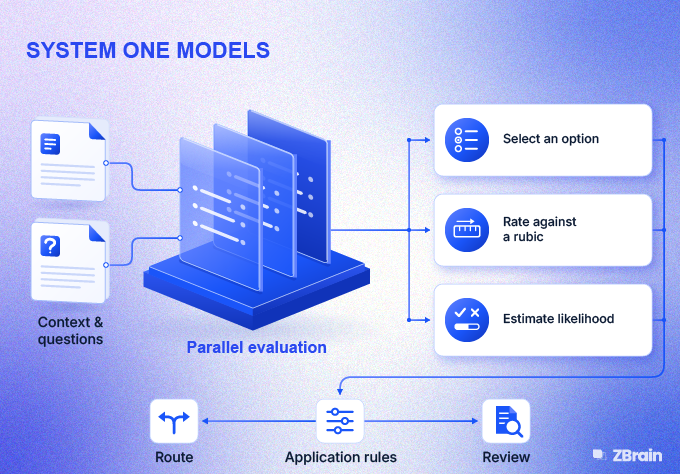
System One Models: A Technical and Enterprise Architecture Deep Dive
A System One model is a proposed class of AI model optimized for fast, bounded judgments that software can consume directly.
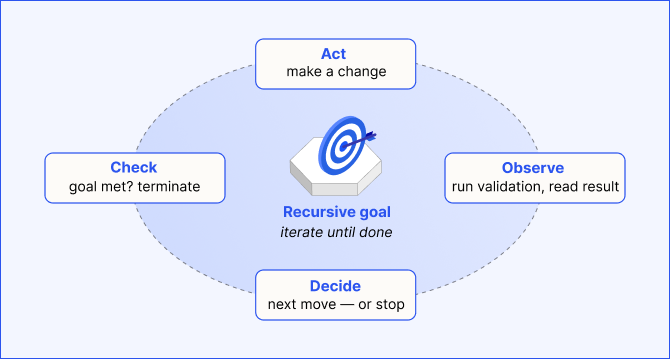
Loop engineering for AI agents: Building reliable autonomous systems
Loop engineering is the practice of designing, operating, and improving the feedback systems that let an AI agent plan, act, observe the results, and revise its approach until a goal is reached without a human driving every turn.
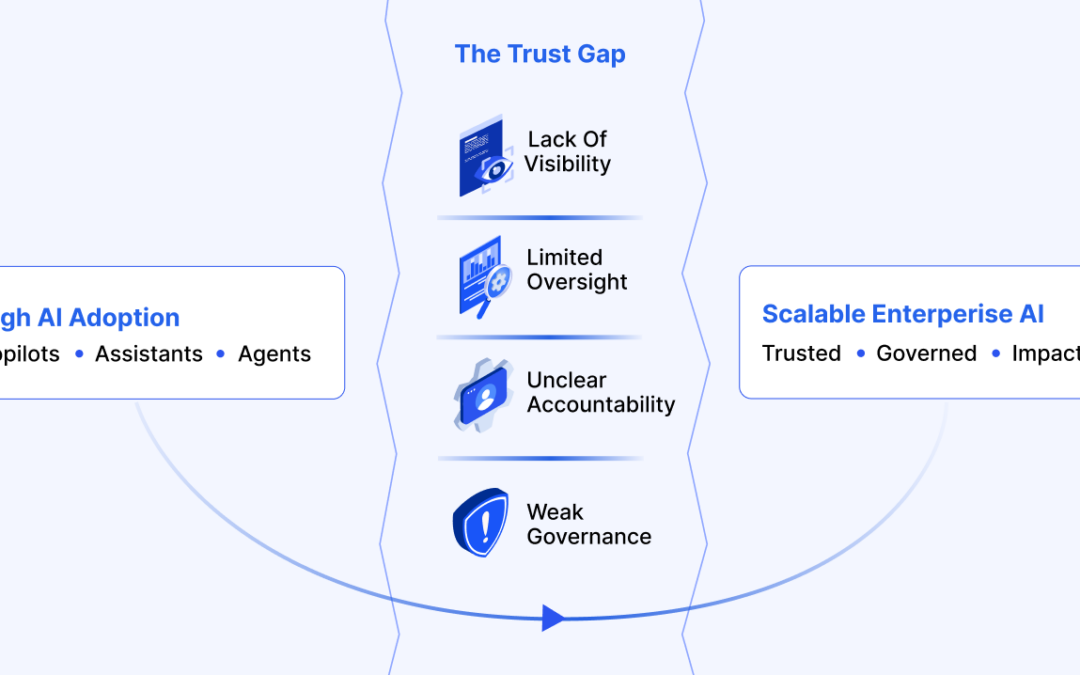
The AI trust gap: Why governance architecture determines enterprise value
The trust gap surrounding enterprise AI is fundamentally an architectural challenge, and its solution is increasingly well understood.
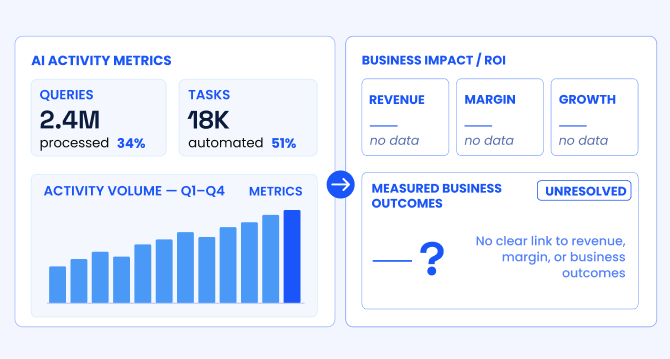
The AI ROI illusion: Why enterprises struggle to measure AI impact
Organizations with stronger measurement discipline are better positioned to link AI deployments to measurable business outcomes, prioritize high-impact use cases across the enterprise, allocate capital more effectively, and continuously refine models using real-world performance feedback.
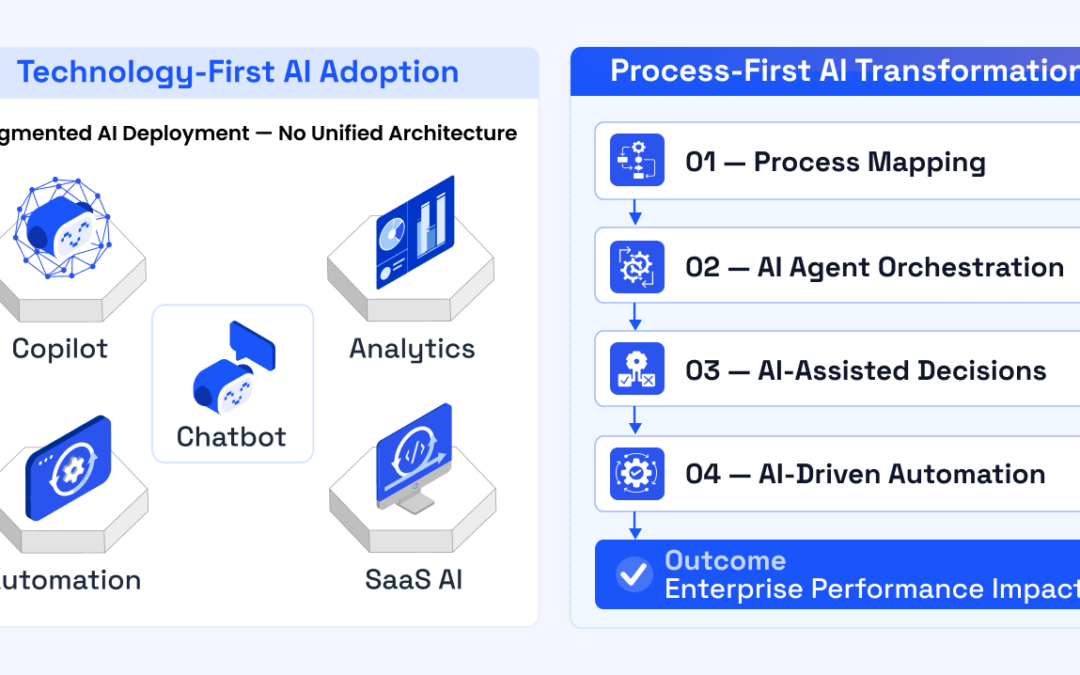
The agentic enterprise: Why AI success requires an operating model redesign
Organizations that redesign their operating models around agentic AI are beginning to outperform those that apply AI only incrementally.
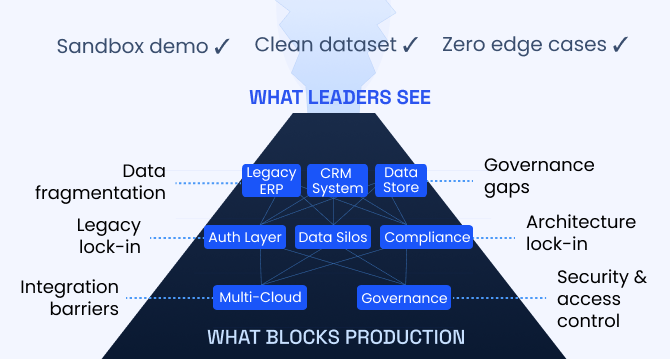
Enterprise AI pilot-to-production gap: Root causes & how to address them
The underlying cause is structural. In many enterprises, AI pilots are developed on infrastructure that was not designed to support production deployment.
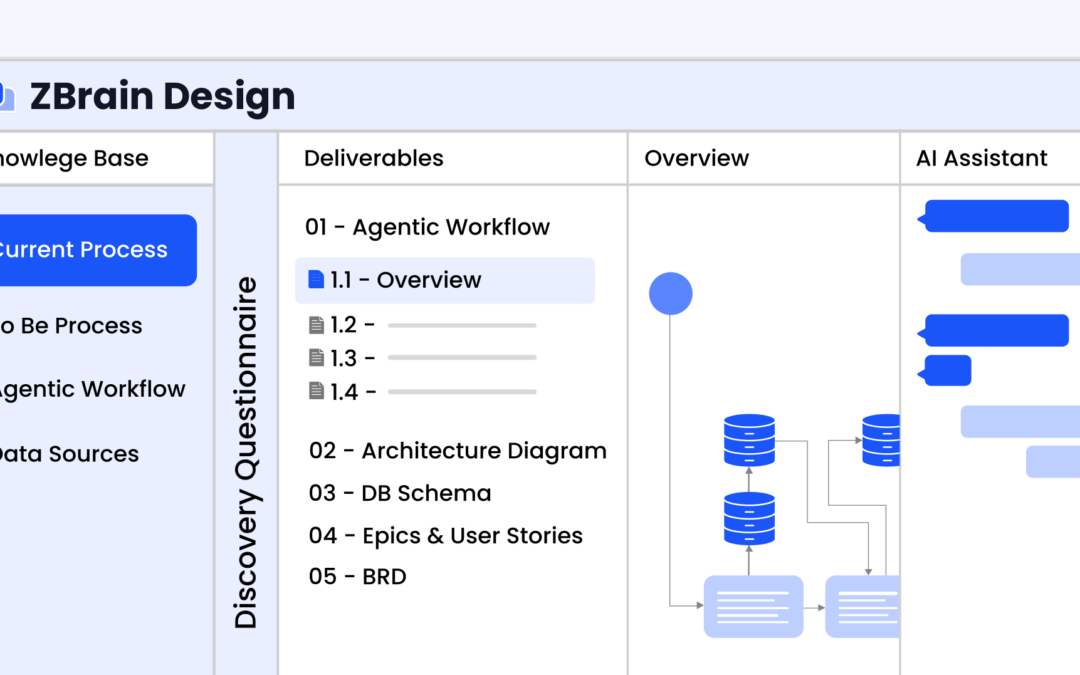
Solution architecture best practices: A guide for enterprise teams
The architecture design process culminates in a set of documented artifacts that communicate the solution to development, operations, and business teams.
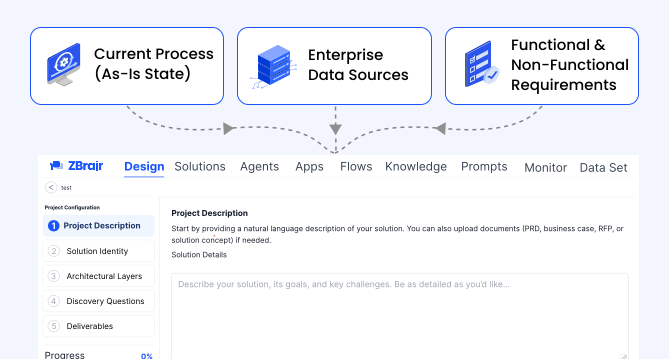
Common solution architecture design challenges and solutions
Solution architecture must evolve from fragmented documentation practices to a structured, collaborative, and continuously validated design capability.
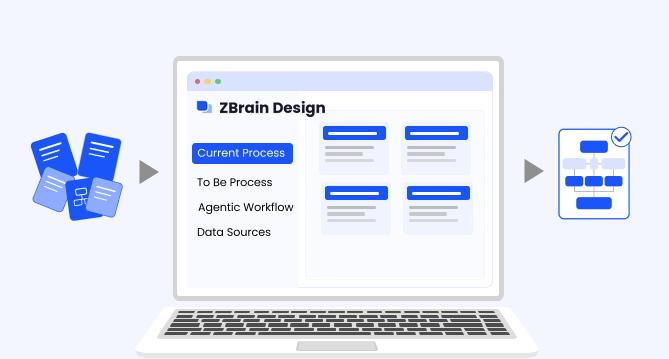
Why structured architecture design is the foundation of scalable enterprise systems
Structured architecture design guides enterprises from requirements to build-ready blueprints. Learn key principles, scalability gains, and TechBrain’s approach.